
Cristian Mungiu's 'Fjord' Wins Palme d'Or at Cannes 2026, Neon Claims Seventh in a Row
Share this post:
Cristian Mungiu's 'Fjord' Wins Palme d'Or at Cannes 2026, Neon Claims Seventh in a Row
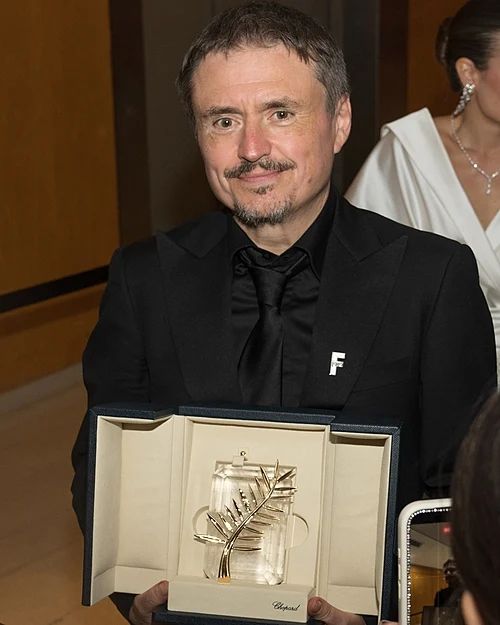
Cristian Mungiu's "Fjord" won the Palme d'Or at the 79th Cannes Film Festival, announced at the closing ceremony on May 23, 2026. The Romanian director becomes the 11th filmmaker in festival history to win the award twice. His first Palme came in 2007 for "4 Months, 3 Weeks and 2 Days".
The Film
"Fjord" stars Sebastian Stan as a Romanian man who relocates to a remote Norwegian fjord village with his Norwegian partner, played by Renate Reinsve. The film received a 12 minute standing ovation at its festival premiere, one of the longest of the Cannes 2026 competition.
After the ceremony, Mungiu addressed the political moment his film had landed in. "I just encourage this attitude, where we don't rush to judge the other", he told reporters at the Deadline gathering after the ceremony.
Mungiu's Career and the Second Palme
Mungiu's first Palme d'Or arrived in 2007 for "4 Months, 3 Weeks and 2 Days," a film shot on digital video with no music score, depicting an illegal abortion in communist Romania. The film bypassed the established Romanian film infrastructure and became the country's most internationally recognized title. It was the first Romanian film to compete for the Palme and to win it.
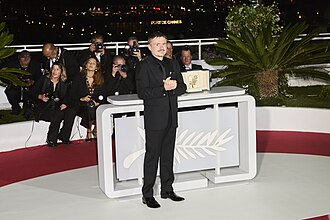
Gabriel Hutchinson / WikiPortraits
In the years between his two Palme d'Or wins, Mungiu made three features: "4 Months, 3 Weeks and 2 Days," "Beyond the Hills" (which won Best Screenplay and Best Actress at Cannes 2012), and "Graduation" (which competed at Cannes 2016). His work has been defined by an unflinching focus on moral compromise in institutional settings, a consistent thematic line across every film.
"Fjord" extends that concern into a new geography, placing a Romanian protagonist inside a Norwegian village community and examining how identity, belonging, and judgment operate across cultural borders. The 12 minute standing ovation suggests the film landed as fully as any of his previous work.
Neon's Seventh Consecutive Palme d'Or
"Fjord" extends Neon's record to seven consecutive Palme d'Or wins: Parasite (2019), Titane (2021), Triangle of Sadness (2022), Anatomy of a Fall (2023), Anora (2024), It Was Just an Accident (2025), and Fjord (2026). No distributor in the award's history has matched the streak.
Each of those films was made outside the Hollywood studio system, each won over studio backed competition, and each introduced a director or national cinema to international audiences on its own terms.
Neon's record at Cannes reflects a deliberate acquisitions strategy. The company does not compete for Palme winners by luck. It has built relationships with European auteur filmmakers and positioned itself as the North American distributor for the specific kind of cinema that Cannes rewards: formally ambitious, politically alert, and resistant to easy commercial categorization. The seven consecutive wins are the measurable outcome of that positioning.
Tilda Swinton at the Podium
Tilda Swinton presented the Palme d'Or and used the moment to speak directly to the AI debate that had defined the festival week. "I believe humans can do better than AI in almost every capacity", she said, then added the qualifier: "as long as we make formulaic films that AI could do, we're sunk".
She concluded that the films honored that night were "really particular, really messy and about the human experience", and added: "we're safe". The statement was made at the closing ceremony itself, distinct from the longer arguments she developed at her Cannes masterclass earlier that week.
Swinton's qualifier is the more pointed observation. Her warning is not that AI threatens cinema in general. It is that AI threatens the specific type of cinema that has no argument for its own existence beyond formula satisfaction. Mungiu's work is the counterexample she was implicitly presenting.
The Jury and Other Winners
Park Chan-wook chaired the jury at the 79th edition. The Grand Prix went to Andrey Zvyagintsev's "Minotaur" and the Jury Prize to Valeska Grisebach's "The Dreamed Adventure". Best Actor was shared by Emmanuel Macchia and Valentin Campagne for "Coward"; Best Actress went to Virginie Efira and Tao Okamoto for "Soudain".
Barbra Streisand received an honorary Palme d'Or in absentia due to a knee injury. She accepted via video message, with Isabelle Huppert collecting the trophy on her behalf at the ceremony.
Park Chan-wook's presence as jury president added a specific frame to the competition. His own films, including "Oldboy" and "Decision to Leave," are formally intricate works that draw on genre conventions while subverting them. A jury under his leadership was unlikely to reward formula, and the winners across all categories reflect that orientation.
A Festival Split in Two
Not one Hollywood studio film appeared in the official Cannes competition. Christopher Nolan, currently in DGA negotiations over AI protections, declined to bring "The Odyssey" to the Croisette. Steven Spielberg's "Disclosure Day" also passed on an invitation, continuing the absence of major American productions that defined the 2026 edition.
The competition and the Marché du Film told opposite stories about AI. Cannes officially banned generative AI from competition. In the same week, the Marché hosted more than 20 AI sessions in its final four days and Meta signed a multiyear official partnership with the Festival de Cannes. Meta AI tools were used in Steven Soderbergh's documentary "John Lennon: The Last Interview," a competition selection. The World AI Film Festival, running across the Palais des Festivals the same week, drew 5,500 submissions from 80 countries.
Barbra Streisand's Honorary Palme
Barbra Streisand received an honorary Palme d'Or at the closing ceremony, accepted in absentia due to a knee injury. Isabelle Huppert collected the trophy on her behalf while Streisand delivered her acceptance via video message.
Streisand's honorary recognition placed her alongside a short list of artists who have received the award outside competition. The choice to present it at the same ceremony where Swinton argued for human cinema's irreplaceability gave the evening a consistent thematic line: honoring the specific human lives behind the work.
What the Award Pattern Signals for 2027
Every Palme d'Or from 2019 through 2026 went to a film distributed by Neon in North America. The streak has changed how the acquisition market functions. Distributors who want to compete for Palme contenders have to compete against Neon's relationships with European auteur filmmakers, which Neon has been building since the company launched in 2017.
The practical question for 2027 is whether any distributor can break the streak by presenting filmmakers with a compelling enough alternative. Neon's success is not purely financial. It is relational. The directors and producers who have won under Neon's distribution are the same people who recommend the company to their peers in the European art film ecosystem.
Sebastian Stan's Role
Sebastian Stan plays the Romanian man at the center of "Fjord", a character whose national identity forms the film's central tension inside a Norwegian village community. Stan's casting in a Mungiu film was itself a departure from the director's previous work, which has typically been cast entirely with actors from Eastern European theater traditions.
Stan had recently completed significant Hollywood productions before "Fjord" and his casting suggests Mungiu's willingness to work with international talent when the role calls for it. The film's 12 minute standing ovation at its premiere reflected reception from a Cannes audience that assessed the performance within the competition, not through the frame of Stan's American career.
The Jury's Other Selections
Park Chan-wook's jury distributed awards across multiple national cinemas and career stages. Andrey Zvyagintsev's Grand Prix for "Minotaur" recognizes a Russian director who has navigated the festival circuit's political tensions around Russian state cinema without abandoning his artistic practice. Valeska Grisebach's Jury Prize for "The Dreamed Adventure" gives Germany another Cannes recognition alongside her previous competition appearances.
The Best Actor award shared between Emmanuel Macchia and Valentin Campagne for "Coward" is the least conventional result in the main category list. Sharing a Best Actor prize between two actors for the same film is rare. The jury's choice to do so signals that the performances were considered inseparable from each other, which reflects something about how the film was constructed.
The Larger Pattern of 2026
No Hollywood studio film appeared in the official Cannes competition. Christopher Nolan, currently in DGA negotiations over AI protections, declined to bring "The Odyssey" to the Croisette. Steven Spielberg's "Disclosure Day" also passed on an invitation, continuing the absence of major American productions that defined the 2026 edition.
The competition and the Marché du Film told opposite stories about AI. Cannes officially banned generative AI from competition while the Marché hosted more than 20 AI sessions in its final four days and Meta signed a multiyear official partnership with the Festival de Cannes. The World AI Film Festival, running across the Palais des Festivals the same week, drew 5,500 submissions from 80 countries.
Swinton's Qualifier and Its Precision
Swinton's closing ceremony statement is worth reading exactly. She said she believes humans can do better than AI "in almost every capacity", then immediately qualified: "as long as we make formulaic films that AI could do, we're sunk". The structure of the statement is not reassurance. It is a conditional.
Human cinema is safe, in Swinton's argument, only if human filmmakers do what AI cannot do. A film that follows established genre conventions, predictable narrative arcs, and familiar visual language is precisely the kind of film AI is increasingly capable of producing. The films that "really particular, really messy and about the human experience" she described at the podium are the ones AI cannot yet make. The argument puts pressure on the industry to understand which category its own films fall into.
Mungiu's Films and the Consistent Theme
"Fjord" is Mungiu's fifth feature. Every film he has made returns to the same territory: institutions that create moral pressure on individuals, communities that enforce unspoken rules, and protagonists forced to make decisions with no good options. "4 Months, 3 Weeks and 2 Days" depicted this in a communist Romania abortion case. "Beyond the Hills" depicted it in an Orthodox monastery. "Graduation" depicted it in a school system where a father's choices for his daughter implicate the entire community.
"Fjord" moves this pattern into a new national context, a Norwegian village with a Romanian immigrant at its center, but the moral architecture is the same. A community's unspoken rules create impossible positions for individuals who cannot fully belong to them. That thematic consistency across five films over nearly 20 years is what Mungiu's second Palme recognizes: not a single outstanding film but a sustained body of work with a coherent vision.
The Jury's Shared Best Actor Award
Park Chan-wook's jury shared the Best Actor prize between Emmanuel Macchia and Valentin Campagne for "Coward," an unusual result in the category's history. Sharing a Best Actor prize between two actors from the same film signals that the performances were considered inseparable from each other.
That choice reflects something about how the jury evaluated performance: as a function of the dramatic relationship, not as an individual achievement separable from its context. That orientation matches the thematic preoccupations of Park Chan-wook's own filmmaking, where characters rarely occupy moral space alone.
Barbra Streisand's Honorary Recognition
The honorary Palme d'Or to Barbra Streisand, presented while she appeared via video message due to a knee injury, placed her alongside a short list of artists who have received the award outside competition. Isabelle Huppert accepted the trophy on her behalf at the ceremony.
For a closing night defined by Swinton's argument for human cinema's irreplaceability, the Streisand honorary recognition reinforced the evening's consistent theme: honoring the specific human lives and careers behind the work, at whatever physical remove circumstance requires.
Park Chan-wook as Jury President
Park Chan-wook's films combine popular genre mechanics with moral complexity and visual precision. A jury under his leadership was structured to reward exactly that combination. The winners across the 2026 main competition reflect that orientation consistently.
Mungiu's "Fjord," Zvyagintsev's "Minotaur," and Grisebach's "The Dreamed Adventure" are all films where formal ambition and thematic seriousness coexist with accessible dramatic situations. They occupy the middle ground Park Chan-wook's own work has always inhabited: neither genre exercise nor purely formal experiment.
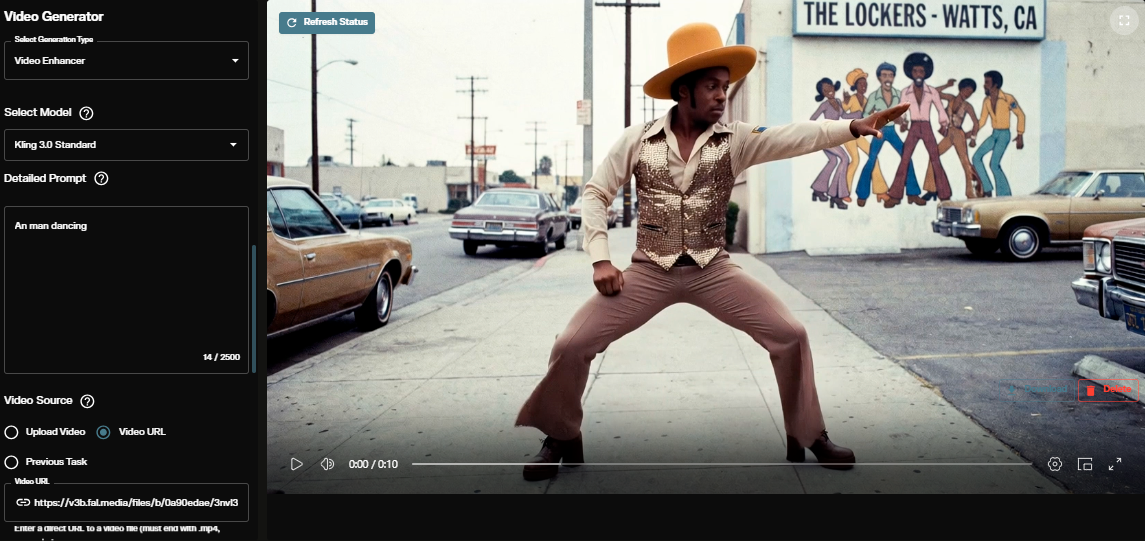
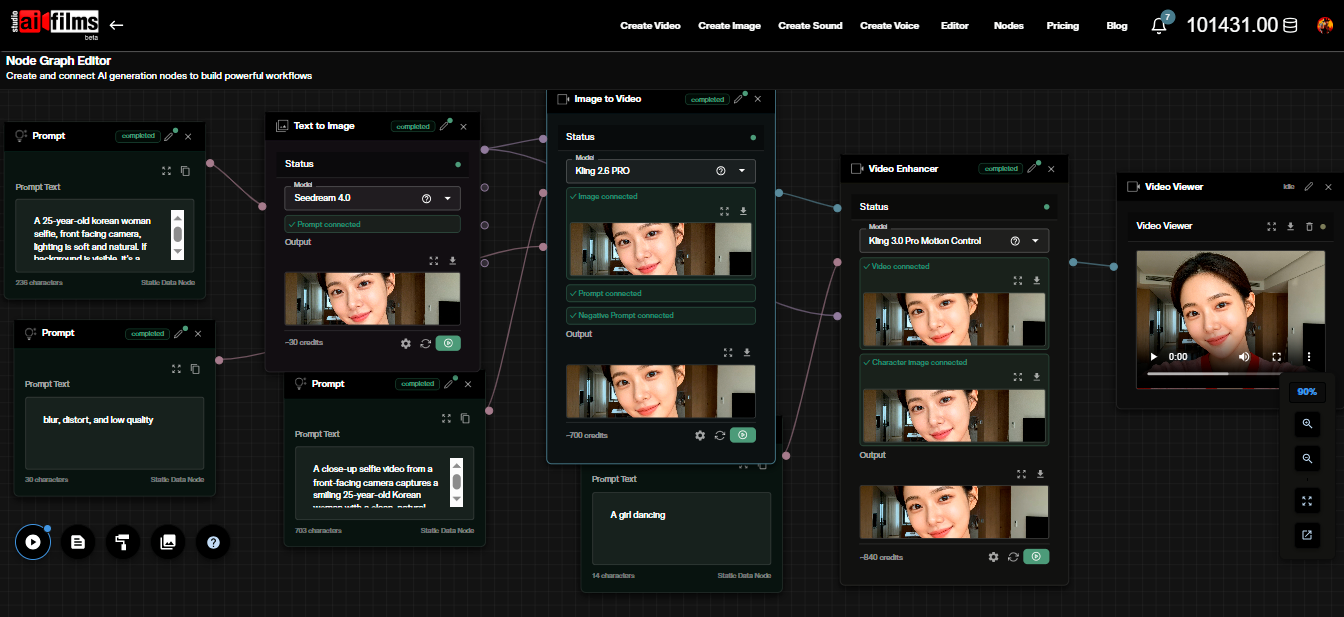
The Palme winner and the market's dominant conversation pointed in opposite directions. Swinton's closing ceremony remarks turned that gap into the central argument of the night. Filmmakers exploring what AI video generation can produce today can try the tools in the AI FILMS Studio video workspace.
Sources
Variety | Deadline | The Hollywood Reporter | IndieWire | Screen Daily | France 24
Continue Reading
.jpg?w=3840)


Video & LipSync
- Video Generator
- Text to Video
- Image to Video
- Start-End Frame to Video
- Draw to Video
- Motion Control
- Video Enhancer
- Video Upscaler
- Video Extend
- Video to Video LipSync
- Audio to Video LipSync
- Image to Video LipSync
- Video FaceSwap
- Seedance 2.5
- WAN 3.0
- Seedance 2
- FLUX 3
- Minimax H3
- Vidu Q3 Pro
- Grok Imagine Video 1.5
- Gemini Omni
- Google Veo 3.1
- Kling 3.0 Pro
- Luma Ray 3.2
- LTX 2.3
- Happy Horse 1.1
- Kling 3.0 Motion
- ByteDance Upscaler
- InfiniteTalk
- InsightFace
Image & Edit
- AI Character
- AI Actor
- Art Generator
- Text to Image
- Image to Image
- LoRA Image to Image
- Draw to Edit
- Image LoRA Training
- Remove Background
- Image Enhancer
- MidJourney 8.0
- Krea 2
- OpenAI GPT Image 2.0
- Nano Banana Pro Ultra
- Nano Banana 2 Lite
- Nano Banana Pro
- Minimax Image
- Clarity Pro
- Z-Image Turbo LoRA
- Krea 2 Turbo LoRA
- Z-Image LoRA Trainer
- Qwen Image LoRA Trainer
- Background Erase Network 2 (BEN2)