
World AI Film Festival at Cannes 2026: 5,500 Films from 80 Countries
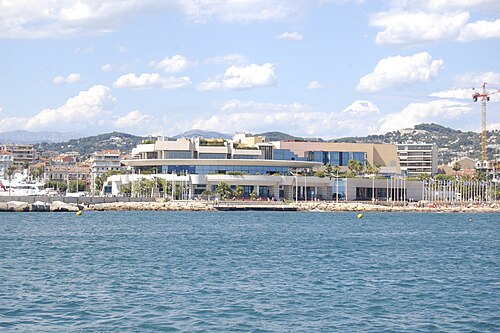
Timantha102938, Public Domain, via Wikimedia Commons
Share this post:
World AI Film Festival at Cannes 2026: 5,500 Films from 80 Countries
The second edition of the World AI Film Festival drew nearly 5,500 film submissions from over 80 countries to the Palais des Festivals in Cannes on April 21 and 22, 2026. The scale represents more than a fivefold increase from the inaugural edition held in Nice, which received roughly 1,000 submissions.
A Festival Separate from Official Cannes
WAiFF is not affiliated with the Festival de Cannes, the Palme d'Or competition, or the Marché du Film. It runs at the same Palais des Festivals venue as an independent event, using the physical infrastructure of the Palais while operating entirely outside the selection and jury processes of the 79th Cannes Film Festival.
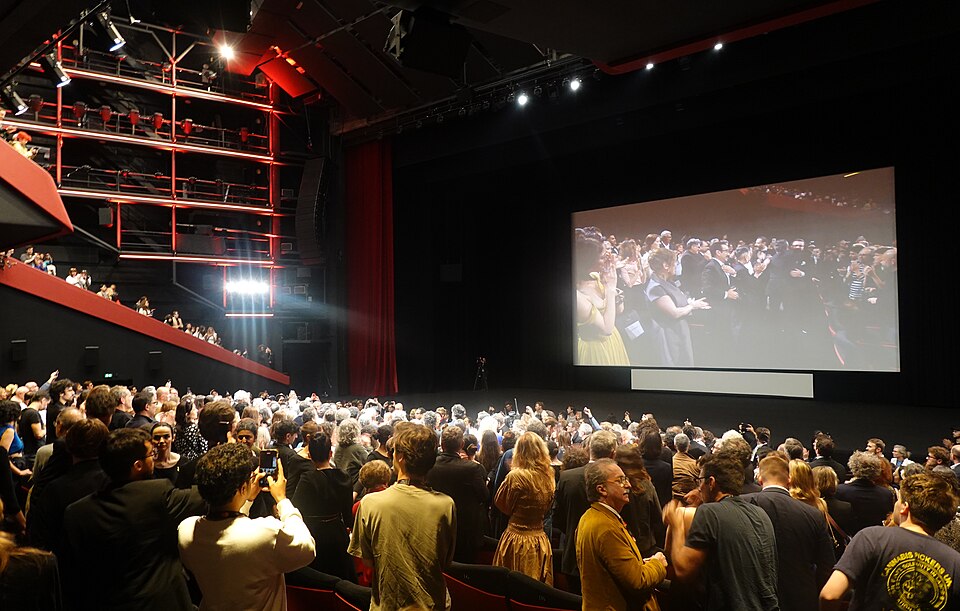
Yuan Hsien-Chieh / WikiPortraits
Official Cannes banned generative AI from the Palme d'Or and Official Competition in April 2026, excluding films where AI drives scripting, visual generation, or principal performance. WAiFF functions as a dedicated space for exactly the work Cannes has placed outside its own competition.
Leadership
Claude Lelouch, whose directorial career spans more than sixty years and includes A Man and a Woman, served as honorary president. Gong Li, the internationally recognized Chinese actress whose career spans the films of Zhang Yimou and Chen Kaige, was named festival president. Agnès Jaoui, the French filmmaker and actress, served as jury president.
Hollywood figures including Ron Howard, James Cameron, and Matthew McConaughey have publicly backed the festival. Their association gives WAiFF a credibility anchor in the English language market even as its programming reflects the global reach of AI filmmaking tools.
Entry Requirements
Films competing at WAiFF were required to use at least three generative AI tools in their production, including at least one for image creation. The rule is more demanding than most awards bodies: WAiFF is not asking whether AI was present in the pipeline but verifying that AI was constitutive of the work itself.
Venues beyond the Palais included the Marriott Hotel, Espace Miramar, and Les Arcades cinema. The distribution across multiple Cannes locations reflected both the volume of programming and the logistical challenge of hosting an event at this scale during a busy festival week.
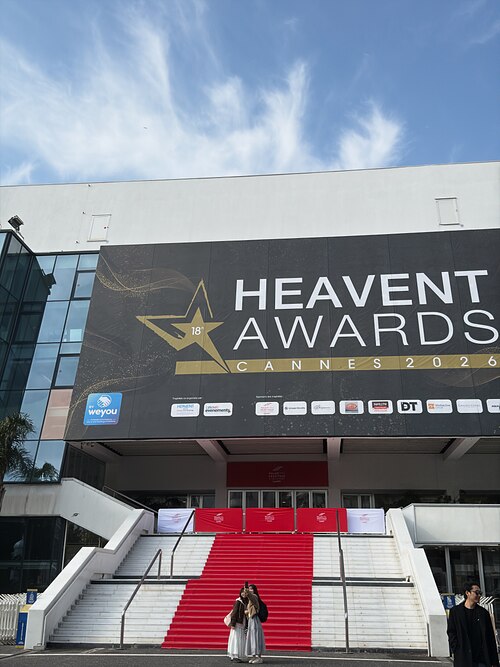
Mike is Michi, CC BY-SA 4.0, via Wikimedia Commons
Best Film: Costa Verde
The festival's top prize went to "Costa Verde", a twelve minute short directed by French filmmaker Léo Cannone. The film draws on a personal childhood story and was produced by New Forest Films, a UK production company.
Cannone's win points to the profile WAiFF is attracting: filmmakers using AI tools to tell personal, narrative driven stories rather than creators building demonstrations of what the technology can do on its own.
Global Expansion
Satellite editions of WAiFF are established in Japan, Korea, China, and Brazil. Four markets joined in 2026: Turkey, India, Mexico, and the United States. The addition of a US edition is notable given that Hollywood's union contracts, including the SAG-AFTRA four year deal announced the same week, are actively defining where AI is and is not permitted in professional production.
The WAiFF model treats those regulatory questions as outside its scope. It is a showcase for what AI can produce when treated as a primary creative tool, not a negotiated concession within a union contract.
The WAIFF partnership with SSFF & ASIA grew more formal in 2026, when SSFF & ASIA launched a Cinematic Frontier: AI Program in Tokyo with WAIFF as coprogrammer, screening WAIFF award winning competition films at the Academy accredited festival.
Outside AI specific festivals, Swiss Kenyan director Damien Hauser's AI assisted film "Memory of Princess Mumbi" won the Golden Tulip at the 45th Istanbul Film Festival in April 2026, the first AI assisted film to win the top award at a prominent mainstream event.
A Second AI Film Event at Cannes
A separate event, the AI Film and Ads Awards, held its third edition at the Hotel Gray d'Albion and Majestic Hotel Beach on May 21 and 22. Organized by KM Universe, it offered a Crystal Brain Award across six categories. It is not affiliated with WAiFF, with the Festival de Cannes, or with the Palais des Festivals. Filmmakers submitting or attending should verify which event they are engaging with, as the two are regularly conflated in coverage.
Running alongside the WAiFF, the official competition crowned a human centered drama, Cristian Mungiu's "Fjord", as AI debates dominated the Marché.
The Inaugural Edition in Nice
The first WAiFF was held in Nice and drew approximately 1,000 submissions. The move to the Palais des Festivals for the 2026 edition was a deliberate upgrade in venue prestige. The Palais has hosted the Cannes Film Festival for decades. Placing an AI film festival at the same address as the world's most competitive non AI film competition is a positioning statement, not just a logistical choice.
The jump from Nice to the Palais des Festivals in a single edition is unusual for festival growth. Most festivals spend multiple years building programming before accessing a venue with the Palais's global recognition. WAiFF's organizers used the Nice edition to test operations at scale, then relocated to Cannes once they had the submission volume to justify the venue.
Ron Howard and James Cameron as Supporters
Cameron built his filmmaking career on technology adoption at a scale other directors could not match. His 3D production work and underwater filming innovations each defined what theatrical exhibition could deliver at the time they arrived. His public support for WAiFF reflects a view of AI as another technology wave in a career built on them. Howard's association, as an established commercial filmmaker with a track record of formal experimentation, complements Cameron's.
The distinction between Cameron's support and Howard's is notable. Cameron's endorsement carries the authority of someone who has repeatedly bet his career on technology that most directors avoided. Howard's carries the authority of someone who has worked in Hollywood's mainstream commercial system for decades without being defined by technology adoption.
The Three Tool Minimum and What It Tests
WAiFF requires at least three generative AI tools in production, including at least one for image creation. This threshold separates work that integrated AI as a primary creative tool from work that used AI as a single effect or processing step. A film that uses AI only for color grading and one stock image does not qualify. The requirement is about creative process authorship, not technical compliance.
The image creation requirement specifically ensures that AI is doing the visual work of the film and not just supporting tasks that would otherwise require software already standard in post production. WAiFF's rules are written to separate AI as a production creative from AI as a production utility.
Costa Verde: Personal Film, Industrial Tools
Léo Cannone's award winning "Costa Verde" draws on his own childhood story. The subject matter is the kind of personal autobiographical narrative independent film has always produced. What makes it a WAiFF story is that its production routed through AI image generation tools at a level that qualifies for the three tool minimum. The tools changed but the impulse driving them is the same one that has motivated independent filmmaking for decades.
Cannone's autobiographical approach also sidesteps a recurring challenge in AI generated narrative films. A director working from personal memory supplies the story's content; the AI produces the visual form that communicates it. The question of whose imagination the AI is expressing has a clear answer when the source material is autobiographical.
Gong Li as Festival President in Context
Gong Li was named festival president, not jury president. Jury presidents select winning films. Festival presidents represent the event's identity to the press and public. WAiFF placed its highest ceremonial position with someone whose name registers in every major film market its submissions come from, across Chinese cinema, European art film, and major English language productions.
The leadership combination of Lelouch as honorary president and Gong Li as festival president places European art cinema and Chinese cinema at the ceremonial top of a festival whose submissions came from over 80 countries. Agnès Jaoui as jury president adds a third national tradition. The structure signals that WAiFF's identity is intentionally international rather than centered on any single film culture.
What 5,500 Submissions Actually Measures
The nearly 5,500 submissions came from over 80 countries in the festival's second year. Sundance receives approximately 17,000 submissions annually after four decades of operation. WAiFF's volume in year two reflects how broadly AI filmmaking tools have reached non professional and semi professional makers globally, since most established directors are not submitting to a two year old festival.
The submission count is also a proxy for tool availability. AI video generation tools have become sufficiently accessible since WAiFF's founding that filmmakers in 80 countries can complete productions meeting the three tool minimum. The geographic spread reflects distribution of the software itself more than distribution of festival awareness.
The Jury Structure and What It Signals
Agnès Jaoui presided over the jury. Her background as a filmmaker and actress in French cinema provides curatorial credentials that help separate WAiFF from technology showcase events. A jury president with an established artistic identity makes a festival's awards legible to mainstream film industry audiences who might otherwise dismiss AI film competitions as marketing events for AI tool vendors.
The best film prize went to a personal narrative rather than a technically impressive demonstration. That outcome, a film about childhood memory winning over more spectacular AI output, reflects a preference in the jury's evaluation for human story over technological exhibitionism. The distinction matters for the kind of filmmakers WAiFF will attract in future editions.
The Satellite Edition Strategy
WAiFF's global expansion follows a hub and spoke model. The main competition anchors in Cannes. The satellite editions in Japan, Korea, China, Brazil, Turkey, India, Mexico, and the United States serve as regional submission pipelines and screening venues. That structure is typical of how established film festivals expand internationally, with the prestige event maintaining a fixed address while building regional outposts.
The US satellite edition, added in 2026, arrives alongside SAG-AFTRA's four year AI deal and ongoing WGA and DGA provisions on AI use. Independent filmmakers in the United States who produce AI work outside guild covered productions can submit to the US WAiFF edition without the institutional constraints that apply to union work. The US satellite functions as an accessible entry point for that segment of the American filmmaking community.
Independent filmmakers generating AI video for festival submission can use AI FILMS Studio to create work across the formats WAiFF accepts.
Sources
Screen Daily | Format Biz | Curious Refuge
World AI Film Festival: worldaifilmfestival.com
Palais des Festivals: World Artificial Intelligence Film Festival listing
Continue Reading
.jpg?w=3840)


Video & LipSync
- Video Generator
- Text to Video
- Image to Video
- Start-End Frame to Video
- Draw to Video
- Motion Control
- Video Enhancer
- Video Upscaler
- Video to Video LipSync
- Audio to Video LipSync
- Image to Video LipSync
- Video FaceSwap
- Seedance 2.5
- WAN 3.0
- Seedance 2
- FLUX 3
- Minimax H3
- Vidu Q3 Pro
- Grok Imagine Video 1.5
- Gemini Omni
- Google Veo 3.1
- Kling 3.0 Pro
- Luma Ray 3.2
- LTX 2.3
- Happy Horse 1.1
- Kling 3.0 Motion
- ByteDance Upscaler
- InfiniteTalk
- InsightFace
Image & Edit
- AI Character
- AI Actor
- Art Generator
- Text to Image
- Image to Image
- LoRA Image to Image
- Draw to Edit
- Image LoRA Training
- Remove Background
- Image Enhancer
- MidJourney 8.0
- Krea 2
- OpenAI GPT Image 2.0
- Nano Banana Pro Ultra
- Nano Banana 2 Lite
- Nano Banana Pro
- Minimax Image
- Clarity Pro
- Z-Image Turbo LoRA
- Krea 2 Turbo LoRA
- Z-Image LoRA Trainer
- Qwen Image LoRA Trainer
- Background Erase Network 2 (BEN2)