
Thierry Frémaux Proposes Organic Film Labels to Certify AI Free Cinema
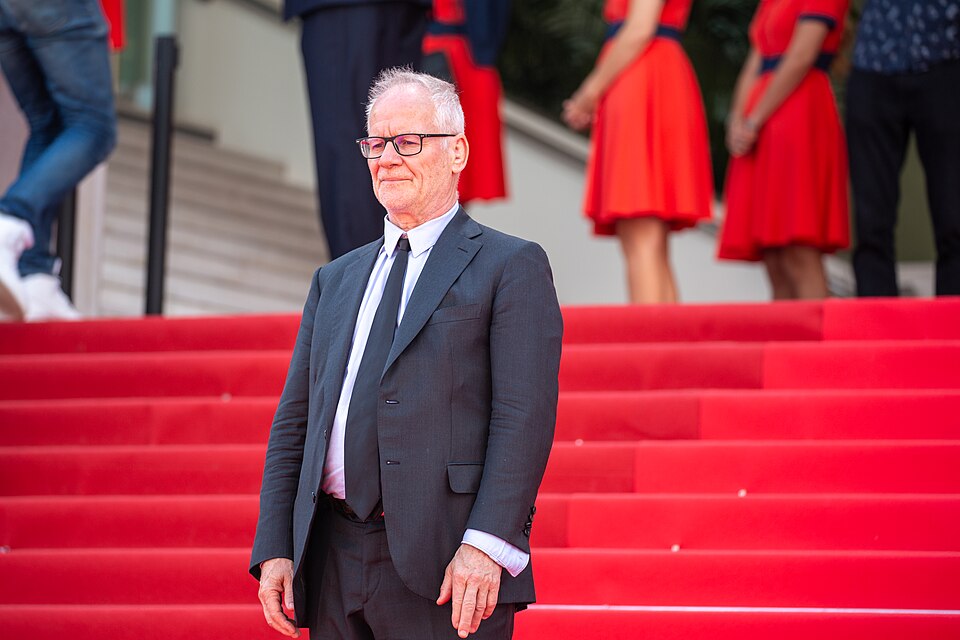
Kacy Bao / WikiPortraits
Share this post:
Thierry Frémaux Proposes Organic Film Labels to Certify AI Free Cinema
Festival de Cannes General Delegate Thierry Frémaux opened the 79th edition on May 12 with a proposal that no major festival had floated publicly before: a certification label for films made entirely without artificial intelligence, modeled on organic food and wine standards. The idea drew immediate attention because it moves the AI debate in cinema from eligibility rules to audience communication.
What Frémaux Proposed
At the opening press conference, Frémaux told reporters: "We will say, 'This film has been made without artificial intelligence'". He framed it the way food regulators approach organic labeling: a positive declaration of what went into the product, not a warning about what was left out.
He was responding in part to questions about the Academy's new rules barring AI generated performances and AI written scripts from Oscar eligibility, which he called "obvious". The word implied the Academy had simply caught up with what serious cinema already assumed. The label idea extends that logic from awards eligibility into how films are presented to audiences at the distribution level.
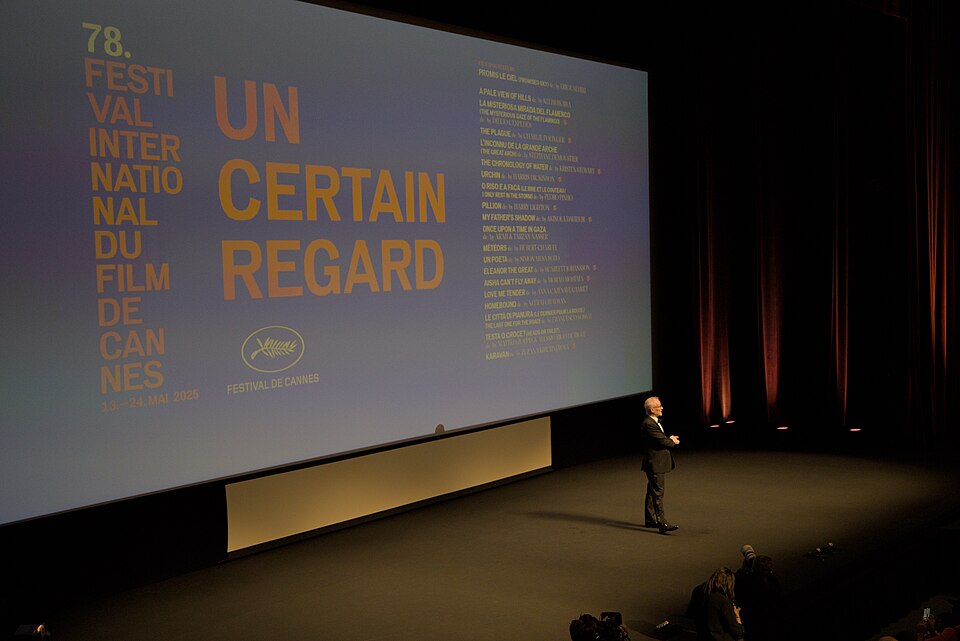
Jonas Schneider / WikiPortraits
Frémaux has served as General Delegate of the Festival de Cannes since 2007. In that role he has final authority over the Official Selection, making his public statements on AI particularly consequential: they are simultaneously personal positions and signals about how the festival's selection criteria may evolve. His opening press conference remarks set the tone for the entire edition.
The Organic Food Analogy
Organic certification in food and wine rests on a clear principle: third party verification that a product was made without synthetic inputs, combined with a visible label that consumers can trust. The label does not argue that organic produce tastes better. It tells consumers what they are buying so they can choose.
Frémaux's proposal maps onto that structure. The label would not claim that human made films are artistically superior to AI films. It would tell audiences what they are about to watch, leaving the value judgment to the viewer rather than encoding it in the certification.
The analogy has a practical limit. Organic food systems require an accreditation body, an inspection regime, and a documented chain from source to shelf. No equivalent infrastructure exists for cinema, and Frémaux did not propose one. What he proposed was the concept, not the institution.
How Organic Certification Actually Works
The USDA Organic certification in the United States requires producers to document their processes, submit to third party inspection, and maintain audit trails that allow certifiers to verify claims back through the supply chain. The EU organic regulation follows a comparable structure. Both systems rely on accredited third party certifiers rather than government inspectors at each production site.
Translating that model to cinema would require defining what counts as an AI input, identifying which AI inputs disqualify a film from certification, establishing which accreditation bodies would conduct inspections, and determining what documentation filmmakers would need to maintain during production. None of those questions have agreed answers. Frémaux's proposal is a direction, not a ruleset, and he acknowledged that.
What the Label Would Have to Define
Cannes' April ruling on generative AI in the Official Competition drew its line at AI functioning as a creator: scripting, performance synthesis, and primary visual generation. Technical AI in post production, sound restoration, and image cleanup is permitted under the same rules.
A certification label would face the same definitional problem, and possibly a stricter version of it. A film that used AI to clean archival footage sits in a different category than a film whose visual world was generated by a model, even though both used AI somewhere in the pipeline. The label would need to specify which uses disqualify a film from the certification.
The Post Production AI Threshold
The most contested boundary for any AI certification scheme is post production. Modern finishing pipelines use AI in ways that are now standard: noise reduction, color correction assist, dialogue cleanup, subtitle generation. A definition strict enough to exclude all AI from a certified film would effectively bar every film made with contemporary tools.
The more workable threshold is the one Cannes already uses for competition eligibility: AI as a creative originator versus AI as a technical processor. A film that used AI to write its screenplay or synthesize a performance would not qualify. A film that used AI noise reduction in the mix would. Where exactly to draw that line for a consumer facing label is a governance problem that requires industry consensus, not just a festival announcement.
A Governance Move Before the Regulations Arrive
Festivals set industry norms before legislation does. The Creators Coalition on AI, launched by Oscar winners Daniel Kwan and Sian Heder, established training data compensation as a governance demand before any studio contract addressed it. The DGA's position on director authority over AI deployment is being built into contract language that does not yet exist. Public position-taking precedes enforceable rules.
An "organic film" label follows the same arc. If the idea gains traction at the market level, it could become a standard that distribution contracts, streaming licenses, and international sales agreements reference before any regulatory body formalizes it.
Other Festivals Watching the Cannes Move
The Marché du Film's expanded AI programming runs the same week as the opening day proposal, showing buyers and sellers how AI tools fit into commercial production. The label concept sits on the other side of that conversation. Rather than guiding how to use AI, it addresses how to communicate transparently when you did not.
Frémaux's label proposal lands in a year when Venice, Toronto, and Sundance are all navigating the same disclosure questions without yet having moved to formal positions. A label system that Cannes champions publicly creates pressure on other major festivals to define their own positions, even if they do not adopt the same structure. Festival brand differentiation increasingly turns on how clearly institutions communicate their values to filmmakers and audiences.
The Distribution Layer Question
The gap between the two positions is concrete this week. David Mamet's "Speed the Plow" adaptation starring Anthony Mackie and Sharon Stone was announced at the Marché as the first prestige production to use the New Hollywood AI platform. Under Frémaux's proposed labeling system, that production would not carry the AI free certification.
For distributors and streaming platforms, a film certification label creates a new variable in acquisition decisions. A platform that wants to offer consumers a curated "AI free" category would need a reliable certification system to populate it. Frémaux's proposal, if it evolved into an institutional framework, would be the upstream source of that reliability. The demand for the label in distribution markets may be what drives the infrastructure investment that the concept currently lacks.
Who Would Run Such a System
The organic food certification model operates through accredited third party certifiers, not through the producers themselves or the retail channels that sell the product. A cinema equivalent would require an independent body that could develop inspection protocols, maintain auditor training, and issue certifications that are trusted by buyers and audiences alike.
No such body exists for cinema. The closest institutional equivalents are the national film commissions and coproduction bodies that verify production locations for tax incentive purposes. Their audit capacity focuses on financial records, not creative process documentation. Building a certification infrastructure for AI use in production would require new institutional investment and international agreement on standards that currently do not exist in draft form.
The national film agency model shows why the challenge is structural. Bodies like France's Centre national du cinéma or the British Film Institute are embedded in production finance and cultural preservation, not creative process verification. Repurposing them for AI certification would require legislative authorization in most jurisdictions.
A purpose-built certification body would need an international governance structure from the start. Film moves across borders in ways that food products do not. A standard recognized in France but not in the United States or South Korea would fragment before it could function as one.
The window for establishing such a body may be narrow. Once AI production tools become standard workflow components rather than novel additions, the case for certification weakens. The organic food movement established its certification infrastructure during a period when conventional production was still the majority. Cinema is still in that window.
The Wine Appellation Model as a More Precise Analogy
Wine appellation systems, particularly Champagne and Burgundy's controlled designations of origin, offer a more precise model than broad organic certification. Champagne cannot be labeled Champagne unless it comes from a specific French region and follows a specific production method. The designation is legally enforced and internationally recognized through trade agreements.
A cinema equivalent might certify not just that no AI was used, but that specific human roles, screenwriter, director of photography, lead actors, were filled by humans with genuine creative decision authority over those elements. That definition is closer to what the Cannes competition rule already requires. A label built on that structure would be more defensible than a simple "no AI" declaration, which cannot account for the many technical AI tools that are already embedded in standard production workflows.
How Cannes Has Used Its Platform Before
Frémaux and Cannes have a history of using the festival's position to advance governance conversations before institutions are ready to formalize them. The festival's response to colorization of classic films in the 1980s, its position on digital projection standards in the 2000s, and its treatment of streaming acquired films in the 2010s all preceded formal industry agreements.
Each of those positions eventually influenced how the industry handled those transitions, even when Cannes' initial stance was contested. The organic film label proposal follows the same pattern: a statement of direction from an institution whose annual platform gives it disproportionate influence over industry norms, made before the infrastructure exists to implement what the direction implies.
Later in the festival, Frémaux expanded on his position in a series of interviews, calling the new Oscar AI rules 'obvious' and arguing that protecting screenwriters and voice actors from AI displacement 'requires legislation'.
The Filmmaker Perspective on Disclosure
From the filmmaker's side, a certification label creates a burden of documentation during production rather than after it. A director who wants to qualify for an "organic film" certification would need to track which tools were used at which stages, by which departments, in a way that conventional productions do not currently do.
Production workflows do not generally maintain documentation of every software tool used in post. Editors use tools with AI noise reduction without documenting those uses separately. Colorists use AI assist without logging the specific features engaged. A certification regime that required this documentation would add administrative overhead that smaller productions would find proportionally more burdensome than major studio releases.
What "Organic" Would Mean for Archival Films
A certification system that applies to new productions faces a different question when applied to archival material. Documentaries built on archival footage frequently use AI tools to restore, colorize, or enhance historical material. A film that uses AI for archival restoration while shooting its interviews and b-roll conventionally sits in a genuinely ambiguous position relative to any certification scheme.
Frémaux's proposal focuses on narrative cinema in competition rather than on the full range of films that move through Cannes' market and parallel sections. That narrower scope makes the definitional problem more tractable, but also means a label developed for competition films would not address the broader restoration and archival work that is already deeply integrated with AI tools.
What Frémaux Proposed for the Distribution Level
The organic label idea, as Frémaux described it, operates at the audience communication level rather than at the competition eligibility level. Competition rules govern which films Cannes accepts. A label would govern how films are described to audiences at distribution, exhibition, and streaming.
That extension beyond festival eligibility into general distribution is what makes the proposal potentially significant at scale. If a label that originated at Cannes were adopted by theatrical chains, streaming platforms, or national broadcasters as a certification they communicate to ticket buyers and subscribers, it would become part of how audiences everywhere make viewing choices. Frémaux cannot mandate that adoption. He can model the concept at a festival whose influence on industry norms exceeds its direct regulatory authority.
The Label and the AI Ban Working Together
Cannes' April 2026 ban on generative AI in competition and Frémaux's May organic label proposal are not redundant. They address different parts of the same governance question. The ban determines what the festival accepts. The label would determine what audiences are told.
A festival that bans AI from competition but does not communicate that ban to audiences through visible labeling has moved half the distance. Audiences watching competition films at Cannes in 2026 do not automatically know that those films comply with the AI ban. A certification visible at the screening level would close that gap, making the ban a statement to audiences rather than just an internal selection criterion. Frémaux proposed both ends of that chain within the same week. Whether a label gets built depends on whether institutions and distributors with more direct commercial relationships with audiences treat the concept as a standard worth adopting. Frémaux's role is to propose it from a platform with enough authority that the proposal cannot be easily dismissed.
Filmmakers navigating these questions can generate and explore AI production approaches in the AI FILMS Studio video workspace.

Sources
Variety | Deadline | Screen Daily | France24 | Comic Basics
Continue Reading
.jpg?w=3840)


Video & LipSync
- Video Generator
- Text to Video
- Image to Video
- Start-End Frame to Video
- Draw to Video
- Motion Control
- Video Enhancer
- Video Upscaler
- Video Extend
- Video to Video LipSync
- Audio to Video LipSync
- Image to Video LipSync
- Video FaceSwap
- Seedance 2.5
- WAN 3.0
- Seedance 2
- FLUX 3
- Minimax H3
- Vidu Q3 Pro
- Grok Imagine Video 1.5
- Gemini Omni
- Google Veo 3.1
- Kling 3.0 Pro
- Luma Ray 3.2
- LTX 2.3
- Happy Horse 1.1
- Kling 3.0 Motion
- ByteDance Upscaler
- InfiniteTalk
- InsightFace
Image & Edit
- AI Character
- AI Actor
- Art Generator
- Text to Image
- Image to Image
- LoRA Image to Image
- Draw to Edit
- Image LoRA Training
- Remove Background
- Image Enhancer
- MidJourney 8.0
- Krea 2
- OpenAI GPT Image 2.0
- Nano Banana Pro Ultra
- Nano Banana 2 Lite
- Nano Banana Pro
- Minimax Image
- Clarity Pro
- Z-Image Turbo LoRA
- Krea 2 Turbo LoRA
- Z-Image LoRA Trainer
- Qwen Image LoRA Trainer
- Background Erase Network 2 (BEN2)