
DGA Opens Contract Talks With Studios on May 11
.jpg?w=3840&q=90)
Share this post:
DGA Opens Contract Talks With Studios on May 11
The Directors Guild of America opens formal contract negotiations with the Alliance of Motion Picture and Television Producers on May 11, the DGA confirmed in a March 2026 guild update. The guild enters talks as the last of Hollywood's three major production guilds without a 2026 deal, five weeks after SAG-AFTRA completed its new agreement and with its current contract expiring June 30.
AI protections, declining production volume, healthcare costs, and studio consolidation are the four priorities DGA leadership has named publicly. The guild's central concern on AI is specific: ensuring directors cannot be cut out of the creative process as studios deploy generative tools across pre production, production, and post production.
That concern is not hypothetical. Studios have already begun using AI tools to generate visual development material, produce alternate versions of scenes in post production, and train internal models on footage from completed productions. Each of those uses touches creative decisions that have historically been the director's domain.
_(53532289710)_(cropped2).webp)
Nolan Rejects a Five Year Deal
DGA President Christopher Nolan has already drawn one public line ahead of negotiations. When studios floated a five year contract, Nolan told Deadline in February 2026 that it is "not in any way a realistic proposal." Shorter contract cycles allow the DGA to revisit AI provisions as the technology evolves rather than locking in terms before the landscape is clear.
Nolan chairs both the DGA's AI Committee and its Theatrical Creative Rights Committee, unusual overlap that signals how closely the guild ties its AI agenda to the broader question of the director's authority over a finished film. A detailed breakdown of his framework appears in our earlier coverage of how Nolan is positioning the DGA ahead of the talks.
The five year rejection was also a negotiating position shaped by technical reality. AI video generation tools in May 2026 are substantially more capable than the tools that existed when the 2023 strike era contracts were written. The tools in use in 2030 will be more capable still. A five year contract locks in AI language written against a snapshot of a technology that will be materially different by the time the contract expires. The DGA's preference for shorter cycles reflects the view that locking in governance frameworks for technology that will change significantly is bad practice, not just a weak negotiating outcome.
The studios' preference for a five year term reflects the opposite logic. A longer contract provides cost predictability and reduces the frequency of disruptive negotiations. For studios integrating AI into production pipelines, a longer contract also reduces the frequency with which guild agreements can be revised to address that integration. The studios did not get five years. The DGA's four year counter was the final term.
The Negotiating Team
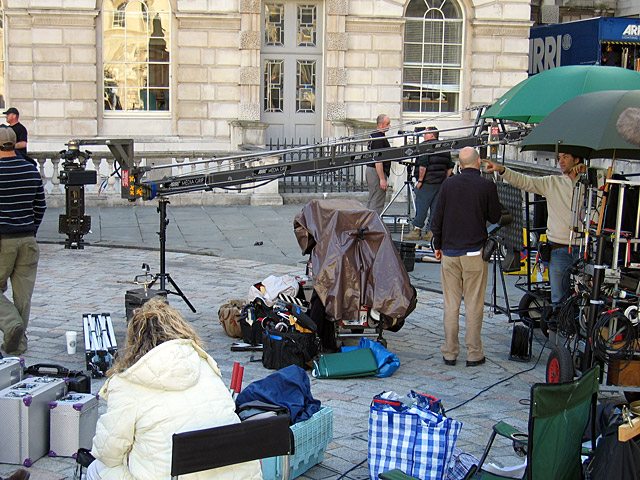
Chief negotiator Russell Hollander leads the DGA's bargaining team. The guild extended Hollander's contract through 2029 this year, signaling the guild expects negotiations to run beyond this contract cycle. Jon Avnet and Karen Gaviola head the guild's negotiations committee on the member side.
The AMPTP brings the same studio coalition that concluded deals with the WGA and SAG-AFTRA into these talks. Both of those agreements established AI provisions, giving the DGA a floor to build from rather than precedent to set from scratch. The WGA ratified its four year deal in April at 90% approval, securing $321 million for writer health plans and new AI licensing requirements, though studios did not agree to pay writers for training data use.
Hollander's position entering the May 11 talks was structurally different from the position he would have had entering the same talks two years earlier. In 2024, the DGA was negotiating AI language with limited case law, limited precedent from other creative industry agreements, and limited knowledge of how studios were actually deploying generative tools in production. By May 2026, two other major guild agreements with AI provisions had been ratified and were in early enforcement. Industry legal scholars had published analysis of what the WGA and SAG-AFTRA frameworks did and did not cover. The AMPTP's negotiating positions were more documented. The DGA team entered May 11 with more information about the territory than any guild had when it first negotiated AI contract language.
SAG-AFTRA as the Benchmark
SAG-AFTRA's tentative four year agreement reached May 2 expanded protections for synthetic performers and added restrictions on AI generated characters. Studios accepted those terms in exchange for the longer contract term, a trade the DGA can now observe as it structures its own position.
The DGA's AI exposure differs from SAG-AFTRA's. Performers face direct substitution via synthetic performers and digital replicas. Directors face a subtler displacement: AI tools that automate post production decisions or allow studios to generate alternate cuts without director involvement. The guild's framework targets that gap.
The SAG-AFTRA deal also gives the DGA a data point on what studios were willing to accept when the stakes are highest. The performer consent requirement directly addresses a legal risk: using an actor's digital likeness without consent creates potential right of publicity claims that studios actively want to avoid. The DGA's AI risk does not carry the same legal exposure, which means the AMPTP's willingness to make legal concessions on performer likeness does not automatically translate into equivalent concessions on director creative authority. Nolan's team entered talks knowing the WGA and SAG-AFTRA frameworks as precedent, but also knowing that the precedents reflected different legal and commercial contexts.
What Healthcare Numbers Tell Negotiators
The 11.25% contribution rate that the DGA was working with entering negotiations tells a specific story about plan stability. Guild health plans in the entertainment industry depend on a combination of contribution rate and total working hours. When productions slow and hours fall, a flat contribution rate produces less revenue for the plan. The rate had remained stable while the industry contracted, squeezing plan revenues without any change in what studios paid per hour.
The jump to 14% in the ratified agreement does not restore the total plan revenue that existed when production volume was higher. It partially offsets the loss. For DGA members who rely on the plan for coverage, the distinction matters: the improvement is real, but it operates against a backdrop of continued lower production volume. The plan is more stable than it was. It is not at the level it was before the 40% employment decline.
Six Weeks, One Deadline
The DGA and AMPTP have six weeks between the May 11 opening and the June 30 contract expiry. Negotiations open one week before the Cannes Film Festival, a timing that splits industry attention between Paris and the bargaining table.
Six weeks is a compressed timeline by the standards of major guild negotiations, but it is not unprecedented for a DGA cycle. The guild's contracts have historically moved faster than the WGA and SAG-AFTRA agreements, in part because the DGA's membership is smaller and its AI exposure is more specific. A guild negotiating a targeted consultation framework does not need the same runway as one negotiating opt out rights or consent requirements that touch a wider range of production activities.
The compressed schedule also suited both parties' production calendars. Studios entering the summer production push wanted labor certainty before committing to major productions. The DGA wanted to avoid any lapse in contract coverage that could complicate ongoing shoots. The six week window was tight enough to force decisions while leaving sufficient time for real negotiation.
Talks formally opened on May 11 as scheduled. What Nolan is bringing to the table on AI, jobs, and healthcare is covered in our follow-up report on the opening of negotiations.
If the DGA succeeds, Hollywood's three core guilds will have updated AI protections in place before any major 2027 productions begin principal photography. The DGA reached that agreement on June 9. The guild and AMPTP announced a four year deal requiring studios to consult directors before deploying generative AI on the creative elements of a production, completing the picture across all three guilds ahead of the June 30 contract expiry.
For directors working in AI assisted production today, the AI FILMS Studio video workspace provides tools that operate independently of studio negotiations, accessible to independent filmmakers at any scale.
The AI Exposure Specific to Directors
The DGA's AI concern is structurally different from SAG-AFTRA's and the WGA's. Performers face identity substitution: a studio can generate a synthetic version of an actor using AI, potentially replacing the performer's presence without their involvement. Writers face creative substitution: AI can generate or revise script material, reducing or eliminating the need for the writer's ongoing contribution.
Directors face a more diffuse risk. AI tools can be used to generate alternate versions of a film after the director's cut is complete, allowing studios to change visual style, recut scenes, or produce alternate endings without the director's involvement. That risk sits in post production rather than in the writing or performance stages, and it targets the director's authority over the finished film rather than their creative contribution during the shoot.
The gap between that risk and the options available to address it contractually is what shaped the DGA's framework. A director cannot refuse to let a studio use AI on a production the way a writer can refuse to have AI applied to their script: the director does not own the footage, the studio does. The consultation requirement works within that ownership structure rather than against it, creating a procedural right rather than a property right.
Why the Six-Week Timeline Mattered
Opening negotiations on May 11 with a June 30 expiry gave the DGA and AMPTP six weeks to reach an agreement. That timeline is short by historical standards: the WGA negotiations ran for several months in 2023 before the strike began, and the subsequent settlement required additional months of talks. The 2026 DGA cycle compressed what would normally be a longer process into a single six week window.
The compression worked in both parties' interests. Studios wanted to close the cycle before the fall production push. The DGA wanted to ratify before the June 30 expiry to avoid any period without a contract in force. Nolan's team had prepared its positions extensively in the months before May 11, publishing frameworks and making public statements that signaled the guild's priorities clearly enough that the AMPTP could begin shaping a response before formal talks opened.
The short timeline also limited the role of member mobilization. Guild campaigns that build member sentiment and public visibility typically require weeks of sustained activity. The DGA's six week window did not allow for that kind of campaign. The agreement that emerged reflects what two prepared negotiating teams could produce under time pressure, which is different from what a longer cycle with full member mobilization might have produced.
What Hollander's Contract Extension Signals
Russell Hollander's extension through 2029 was announced alongside the May 11 negotiation opening. The timing was deliberate: it communicated to the AMPTP that the DGA's chief negotiator would be in place to enforce whatever agreement was reached, not just to sign it.
Guild contract extensions for chief negotiators are uncommon enough that the announcement carried specific meaning. Hollander has led DGA negotiations through multiple cycles and understands the studio coalition's positions and personnel at the level of detail that only sustained engagement produces. Extending his contract before the new one was signed told studios that the DGA planned continuity in its bargaining approach, not a fresh start.
That continuity matters for the AI framework specifically. The consultation and training notice requirements the contract creates will generate disputes during their application. Grievances will be filed over whether studios provided adequate notice, whether consultations were meaningful, or whether AI generated footage was properly disclosed. Hollander's contract through 2029 puts the same person who wrote those provisions in charge of enforcing them for the first three years of the contract period.
The Ratification That Completed the Cycle
The June 9 tentative agreement required a membership vote before it became binding. DGA members voted 87% in favor on June 30, the day the previous contract expired, completing the 2026 bargaining cycle with all three major guilds under new agreements.
The margin confirmed that Nolan's strategic choices, accepting consultation rather than opt out rights, agreeing to a four year term, and committing to a skills program, reflected member sentiment accurately. A narrower margin would have left those choices open to question. The 87% result closed the question.
The DGA's June 30 ratification completed what the AMPTP described as the most important spring bargaining cycle since 2023. With the WGA, SAG-AFTRA, and DGA all ratified, every major Hollywood production guild is operating under new agreements with AI governance language for the first time.
The May 11 start date that opened this six week sprint will be remembered as the moment the last major guild joined Hollywood's 2026 AI governance framework. The ratification that closed it on June 30 confirmed that the framework members voted for was the one Nolan's team had promised to deliver.
Sources
Deadline | The Hollywood Reporter | The Wrap | Directors Guild of America
Continue Reading
.jpg?w=3840)


Video & LipSync
- Video Generator
- Text to Video
- Image to Video
- Start-End Frame to Video
- Draw to Video
- Motion Control
- Video Enhancer
- Video Upscaler
- Video Extend
- Video to Video LipSync
- Audio to Video LipSync
- Image to Video LipSync
- Video FaceSwap
- Seedance 2.5
- WAN 3.0
- Seedance 2
- FLUX 3
- Minimax H3
- Vidu Q3 Pro
- Grok Imagine Video 1.5
- Gemini Omni
- Google Veo 3.1
- Kling 3.0 Pro
- Luma Ray 3.2
- LTX 2.3
- Happy Horse 1.1
- Kling 3.0 Motion
- ByteDance Upscaler
- InfiniteTalk
- InsightFace
Image & Edit
- AI Character
- AI Actor
- Art Generator
- Text to Image
- Image to Image
- LoRA Image to Image
- Draw to Edit
- Image LoRA Training
- Remove Background
- Image Enhancer
- MidJourney 8.0
- Krea 2
- OpenAI GPT Image 2.0
- Nano Banana Pro Ultra
- Nano Banana 2 Lite
- Nano Banana Pro
- Minimax Image
- Clarity Pro
- Z-Image Turbo LoRA
- Krea 2 Turbo LoRA
- Z-Image LoRA Trainer
- Qwen Image LoRA Trainer
- Background Erase Network 2 (BEN2)