
Bitcoin: Killing Satoshi Arrives at Cannes as a $70M AI Feature
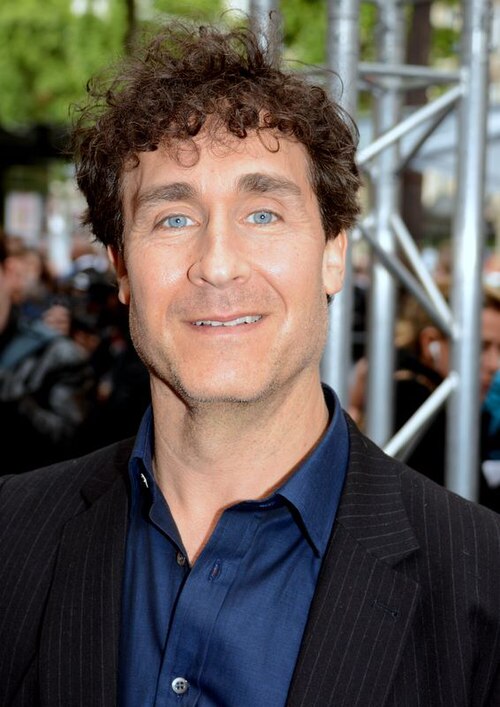
Georges Biard, CC BY-SA 3.0, via Wikimedia Commons
Share this post:
Bitcoin: Killing Satoshi Arrives at Cannes as a $70M AI Feature
Bitcoin: Killing Satoshi, Doug Liman's $70 million thriller, arrived at the 2026 Cannes Film Market with a complete cast and 30 weeks of post production already underway. International sales are handled by Patrick Wachsberger's company 193, with CAA representing North American rights.
The film stars Casey Affleck as computer scientist Craig Wright, Pete Davidson, Gal Gadot, and Isla Fisher. Gadot and Fisher confirmed their roles after the initial announcement in February 2026.
How the Film Was Shot
Principal photography ran 20 days on a custom grey stage with no practical sets. Actors performed on what the production describes as a "markerless performative capture stage", tracking movement through cameras rather than the body suits used in standard motion capture. Every background, location, and environment in the film will be generated by AI during post production.
Casey Affleck described the on set experience directly. "It was much more like acting in a Broadway play than in a giant event film", he told The Wrap. "The entire focus on set was on performances".
ACME AI's Markerless Performance Capture
Markerless performance capture records actors' movements through camera arrays rather than physical suits with reflective markers. Traditional motion capture requires actors to wear suits covered in tracking dots, which are then read by surrounding cameras. Markerless systems use computer vision and AI to extract movement data directly from standard footage.
ACME AI built the system used on Bitcoin: Killing Satoshi. The approach allows actors to perform in ordinary costumes and footwear, without the preparation time that marker application requires and without the physical constraints of wearing the suit. The capture data is then used to position the actors within the AI generated environments built during post production.
The technical advantage for this specific production is that the 20 day principal photography schedule was achievable because the stage required no set dressing, no lighting for practical locations, and no location logistics. The ACME system focused the entire production schedule on performance capture, compressing what would typically be an 80 to 100 day shoot for a production of this budget.
The Cast: Why This Ensemble
Casey Affleck's public AI statements make him the ensemble member whose participation is most significant beyond his above the line credit. He has spoken directly about AI as a creative tool on multiple occasions, including his work on this production, where he described the grey stage experience as closer to theatre than event filmmaking. His willingness to become the face of a production built around AI generated environments is a deliberate statement.
Gal Gadot and Isla Fisher joined following Affleck's February 2026 announcement. The film follows the search for Satoshi Nakamoto's identity through thriller conventions, giving the ensemble a narrative framework that translates commercially across international markets.
For a $70 million production that has not closed distribution before completing its AI generated environments, the cast is the primary asset in every sales conversation at Cannes. Buyers evaluating an incomplete film are evaluating the talent attached to it. Affleck, Gadot, Davidson, and Fisher together represent a commercial argument that does not depend on seeing finished footage.
What 55 AI Artists Did for 30 Weeks
The 55 AI artists working on post production are performing tasks that would be distributed across multiple departments in a conventional production: location scouting and environment design, art direction and set decoration, lighting and color integration, and visual effects compositing. On Bitcoin: Killing Satoshi, all of those functions are consolidated into a single AI generation pipeline.
The 30 week timeline reflects what AI environment production requires at feature quality. A traditional VFX house would staff a comparable project with a larger team across a shorter window, with work divided by discipline. The AI model concentrates the workforce and extends the schedule because each environment must be generated, reviewed for consistency, integrated with the captured performance footage, and adjusted based on director notes in iterative cycles.
What the 55 person team produces is not a collection of discrete VFX shots layered over live action footage. Every background and setting in the film is generated from scratch. The performers exist in a wholly constructed visual world that the AI team built around their captured performances.
The Scale of the Production
Post production is now 30 weeks deep, with 55 AI artists building the film's entire visual world from scratch. Producers say the approach brought the budget to $70 million, compared to the $300 million a conventional location shoot of the same scope would cost.
The subject matter fits the method. Bitcoin: Killing Satoshi follows the real world search for the identity of Satoshi Nakamoto, the pseudonymous creator of Bitcoin whose real name remains unknown. Affleck plays Craig Wright, the Australian computer scientist who has publicly claimed to be Nakamoto. Wright's legal battle to prove his Nakamoto claim was a widely reported ongoing story at the time of the production announcement, giving the film a news peg already in place beyond its AI production method.
The $70M Number in the AI Production Landscape
$70 million places Bitcoin: Killing Satoshi at the upper end of publicly disclosed AI integrated production budgets. The full production of "Dreams of Violets" at Tribeca cost approximately $2,000. India's first fully AI generated feature required 1,500 hours of a single director's time but no comparable capital expenditure.
The $70 million figure includes the cast, the ACME AI system, the 30 week post production period, and the 55 AI artists building the environments. It does not include marketing or distribution. At AI efficiency ratios, that budget could support a production scope that would cost five times as much through conventional means.
What $70 million buys in this production model is primarily talent and time. The cast is the film's primary commercial asset. The AI artists are the post production workforce that would, in a conventional production, be location scouts, art directors, set decorators, and cinematography teams operating across multiple practical locations on multiple continents.
.jpg)
Abxbay, CC0, via Wikimedia Commons
The film launched its international sales campaign at the Majestic Hotel during the 2026 Cannes Film Market. Deadline reported a steady stream of curious buyers throughout the festival's run, though no distribution deal closed by the festival's end.
The Cannes market is the primary annual venue for international theatrical and streaming rights transactions. A $70 million production with a recognizable cast, AI generated environments, and a completed post production pipeline is unusual enough at the market to attract attention. Whether that attention translates to signed deals is what Cannes tests.
Industry Reaction
CinemaCon 2026 is the annual gathering of theatrical exhibitors, held in Las Vegas before the summer release window. Studios screen footage from upcoming productions for the theater operators who will carry them. Bitcoin: Killing Satoshi screening at CinemaCon placed it in front of the buyers who decide which films get premiere screens in major markets.
A film screened at CinemaCon before its distribution deal is closed is making a pitch to the industry simultaneously with its creative preview. The footage is both a first look and a sales argument.
The production sparked controversy at CinemaCon 2026, where exhibitors saw early footage. Producer Lawrence Grey acknowledged the split reaction. "Generally, the community was apprehensive, but underneath everyone was understanding that, yeah, this is inevitable. It's here", he told The Wrap.
That response mirrors a broader shift at Cannes 2026, where filmmakers stopped concealing their use of AI tools. The Cannes 2026 AI acceptance story documents how the festival marked the moment studios began disclosing AI usage openly.
The "apprehension underneath understanding" reading from Grey is the most honest description of how theatrical exhibitors are processing AI production in 2026. They understand the economics. They are uncertain about audiences. Their concern is not that AI production is impossible but that audiences might decide they can tell the difference, and decide they prefer the other kind.
Patrick Wachsberger and 193 as Sales Agent
Patrick Wachsberger was co chief of Summit Entertainment during the Twilight and Hunger Games years, overseeing one of the most commercially successful franchise runs in modern independent film. He founded 193 after departing Summit as a bet on the international theatrical sales market.
His involvement as sales agent on Bitcoin: Killing Satoshi signals something about where the film is positioned commercially. Wachsberger has experience moving large commercial packages in international markets. His willingness to represent an AI generated environment feature with a cast of stars suggests he sees a commercial market for it, not just a festival circuit.
CAA handles North American rights. The split between a Hollywood agency on domestic rights and an established international sales company reflects how $70 million productions are typically structured when no US deal is in place before Cannes. CAA is working the domestic streaming and theatrical market; 193 is working the rest of the world simultaneously.
Liman's Career and Why This Method Fits
Doug Liman has built his career on productions that require complex location logistics. The Bourne Identity required Prague and Paris standing in for multiple European cities. Edge of Tomorrow required coastal French environments. Mr. and Mrs. Smith required multiple distinct environments across a single film. Fair Game required Washington DC and Iraq.
Each of those productions involved the kind of practical location work that is both expensive and logistically demanding. AI location generation is a direct solution to the specific category of problem his films have always presented. A director whose films need environments that are difficult or expensive to achieve practically has a stronger incentive to adopt AI generation tools than a director who works in studios and controlled locations.
Affleck described the on set experience as closer to theatre than event filmmaking. That observation reflects what markerless performance capture on a grey stage requires from actors: full performance commitment without the physical environment that normally supports it. The actors are performing in a void that will be filled in later by AI artists. The performance has to carry the scene before the scene exists.
That acting challenge is different from green screen work, where actors have a reference point for where they are in space even if the background is added later. On a grey stage with markerless capture, the environment is entirely absent at the performance stage.
.jpg)
Rogue Artists, CC BY 3.0, via Wikimedia Commons
The Missing Distribution Deal
No US or major market distribution deal closed during the two week Cannes run despite the cast, the Liman name, and the Patrick Wachsberger sales agency. For a $70 million production, that is a notable absence.
The most likely explanation is the production method itself. Theatrical distributors and streaming platforms evaluating a film that has not yet completed its AI generated environments are being asked to acquire something they cannot fully evaluate. The 30 week post production timeline means the finished film does not exist yet. Buyers are being asked to commit based on cast, director, and concept, not on finished footage.
A May 22 exclusive revealed that the film uses AI to recreate specific living public figures including Bezos and Zuckerberg, with guild sign-off confirmed. For more detail on the production process and original announcement, see the initial Killing Satoshi production report from February 2026.
The production has no confirmed theatrical release date. What follows the Cannes launch is a sales campaign that continues through the fall festival cycle. The Venice Film Market in September and the American Film Market in November are the next windows for closing international deals. Productions that leave Cannes without distribution routinely close deals at those subsequent markets. The question for Bitcoin: Killing Satoshi is whether a finished cut of the film, with AI environments completed, produces different buyer responses than the pitch package that circulated at the Majestic Hotel in May.
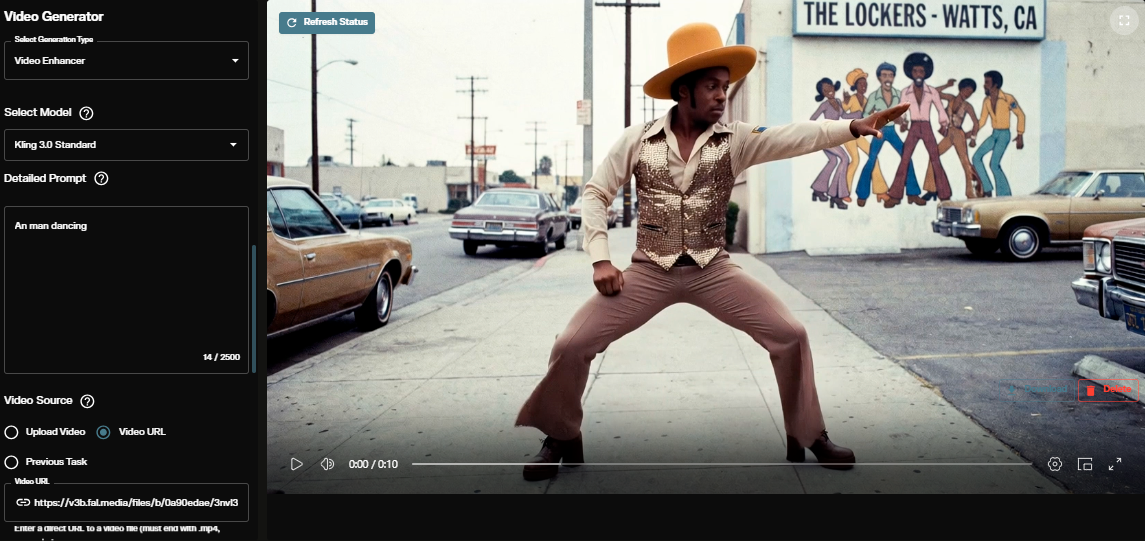
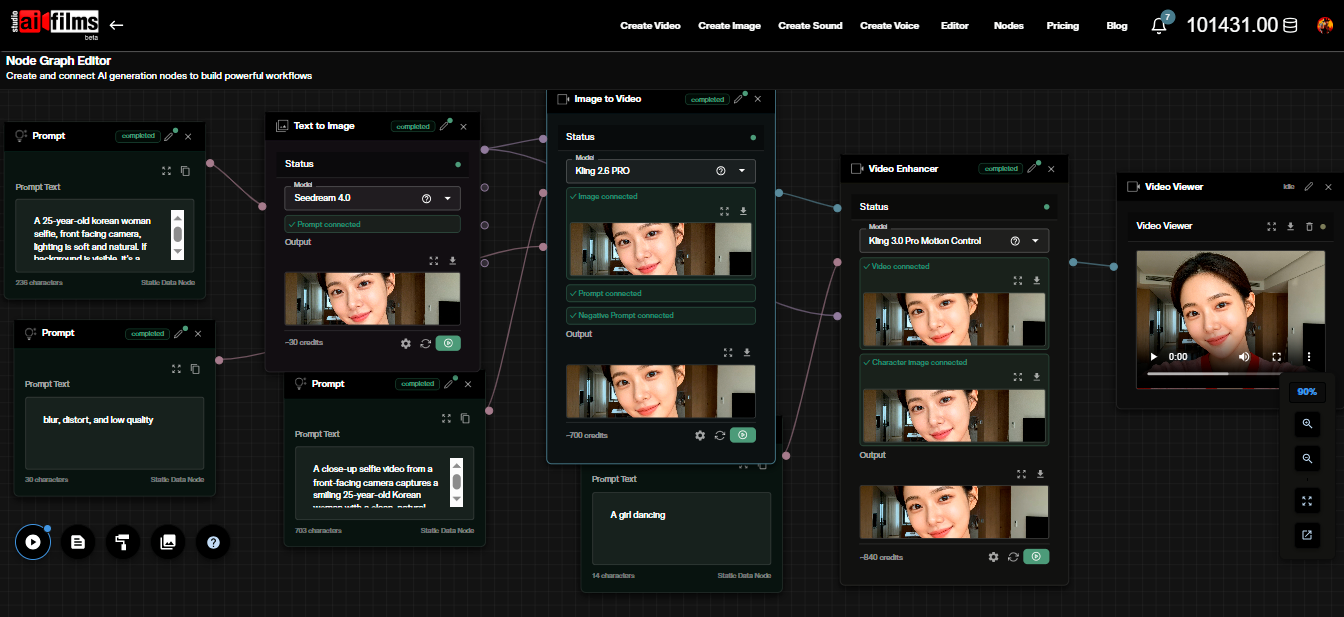
Filmmakers and producers can access text-to-video and image-to-video generation through AI FILMS Studio, including tools for generating the kind of AI environments central to this production.
Bitcoin: Killing Satoshi is the highest budget AI generated environment feature currently in post production. Whether its distribution outcome matches its production ambition will determine how studios and independent financiers evaluate similar projects for years ahead.
Update (August 19, 2026): Brad Pitt argued in August 2026 that AI can bring back films in the $40 million to $90 million band. This production is the closest working example of that claim. Full story here.
Sources
The Wrap | Deadline | Variety | Screen Daily
Continue Reading
.jpg?w=3840)


.jpg)
Video & LipSync
- Video Generator
- Text to Video
- Image to Video
- Start-End Frame to Video
- Draw to Video
- Motion Control
- Video Enhancer
- Video Upscaler
- Video Extend
- Video to Video LipSync
- Audio to Video LipSync
- Image to Video LipSync
- Video FaceSwap
- Seedance 2.5
- WAN 3.0
- Seedance 2
- FLUX 3
- Minimax H3
- Vidu Q3 Pro
- Grok Imagine Video 1.5
- Gemini Omni
- Google Veo 3.1
- Kling 3.0 Pro
- Luma Ray 3.2
- LTX 2.3
- Happy Horse 1.1
- Kling 3.0 Motion
- ByteDance Upscaler
- InfiniteTalk
- InsightFace
Image & Edit
- AI Character
- AI Actor
- Art Generator
- Text to Image
- Image to Image
- LoRA Image to Image
- Draw to Edit
- Image LoRA Training
- Remove Background
- Image Enhancer
- MidJourney 8.0
- Krea 2
- OpenAI GPT Image 2.0
- Nano Banana Pro Ultra
- Nano Banana 2 Lite
- Nano Banana Pro
- Minimax Image
- Clarity Pro
- Z-Image Turbo LoRA
- Krea 2 Turbo LoRA
- Z-Image LoRA Trainer
- Qwen Image LoRA Trainer
- Background Erase Network 2 (BEN2)