
Thierry Fremaux on AI: "We Are on the Side of the Artists"
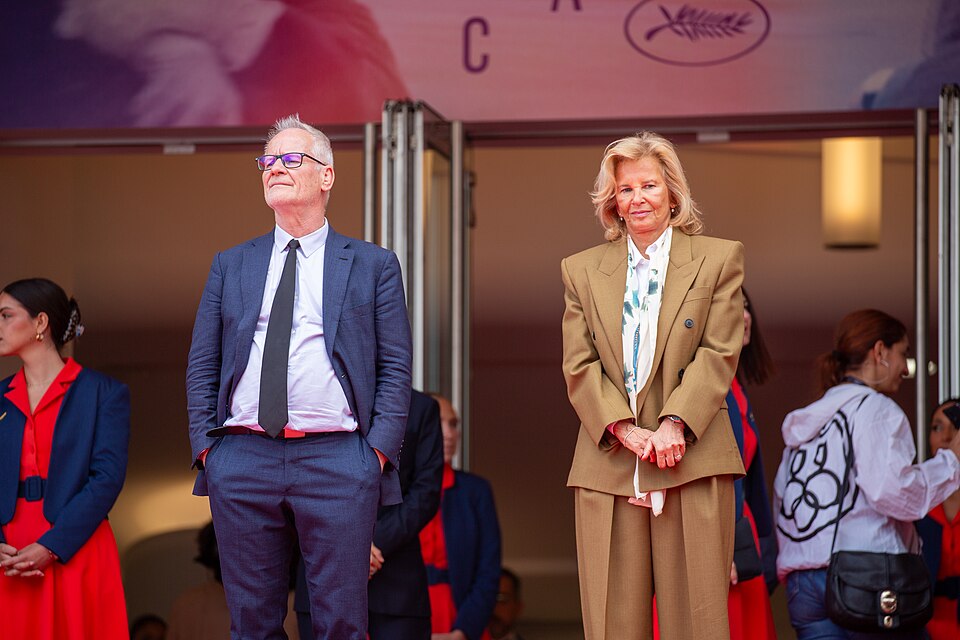
Kacy Bao / WikiPortraits
Share this post:
Thierry Fremaux on AI: "We Are on the Side of the Artists"
Cannes festival director Thierry Fremaux took a clear position in interviews during the festival: the festival stands with the workers AI threatens, not with the technology itself. "What I can say with certainty in relation to artificial intelligence is that we are on the side of the artists, the screenwriters, actors and voice actors", Fremaux told Deadline. "We stand with everyone whose job could be negatively impacted by artificial intelligence. It requires legislation."
The statement came during a stretch of Cannes 2026 where AI was the defining conversation in the Marché du Film. Fremaux's interviews covered the new Oscar rules on AI, Hollywood's conspicuous absence from the festival, and the Academy's changes to the international film category.
The Oscar AI Rules: "Obvious"
Variety asked Fremaux to react to the Academy's new rules barring AI generated characters from Best Actor consideration and restricting AI scripted films from certain categories. His answer was brief: he called the rules "obvious".
"The Oscars decided recently that an AI character cannot run for the best actor prize", Fremaux said, speaking nostalgically about the transition from celluloid. He referenced a "high risk of lies" in the way digital tools now allow manipulation of images in films that present themselves as authentic. The full Academy rule changes covering AI actors and scripts had been announced earlier in the spring.
The Academy's rules arrived after months of guild pressure and public debate. Protecting performers from replacement by AI generated versions of themselves is, in Fremaux's framing, not a nuanced position. It is a starting point. His "obvious" phrasing signals that the Cannes leadership never found the question difficult.
The Electric Bike Analogy
Pressed on what responsible AI use looks like in practice, Fremaux reached for an analogy: "To ride an electric bike, you have to know how to ride a normal bike".
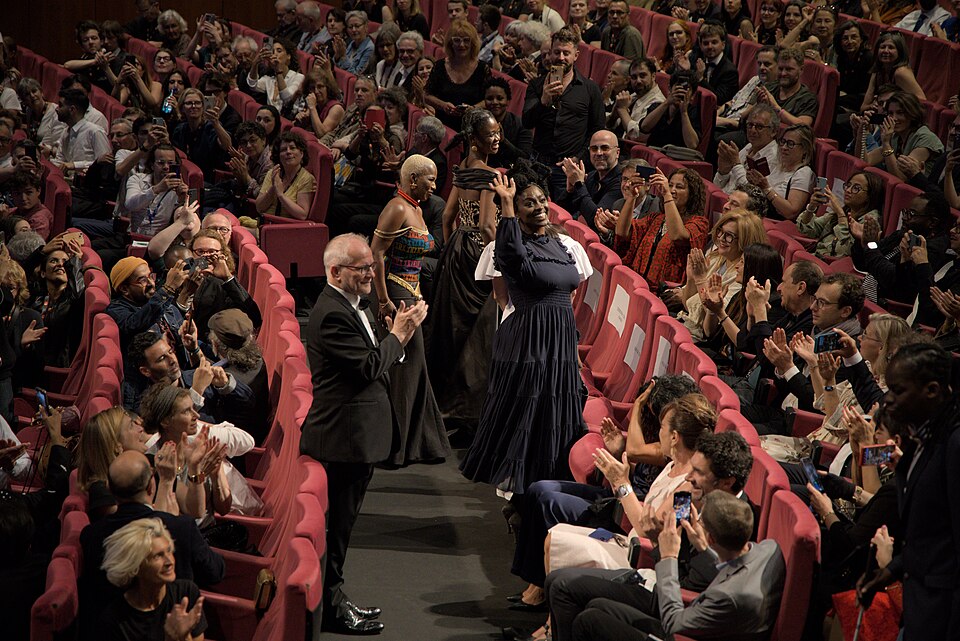
Jonas Schneider / WikiPortraits
The analogy frames AI as an amplifier of existing craft rather than a replacement for it. Fremaux did not elaborate on how the festival would apply that principle to submissions going forward, but the statement aligns with his earlier proposal for an organic film label at the opening press conference, which would distinguish films made with minimal AI intervention.
The electric bike analogy holds precisely in filmmaking. An electric bike still requires balance, judgment, and physical effort. The motor assists but does not replace the skill. Applied to cinema, AI tools work best when the filmmaker operating them has first learned to work without them.
Hollywood's Absence and the AI Connection
Fremaux addressed the departure of major Hollywood studios and directors from the 2026 festival directly. "Hollywood is undergoing a major shake-up", he told Deadline. "After COVID, the writers' strike, which, incidentally, is linked to issues surrounding artificial intelligence, followed by restructuring, mergers, acquisitions, and so on."
The framing was notable: Fremaux explicitly connected the WGA strike, which was driven in part by AI protections, to the broader disruption that pulled Hollywood back from Cannes. He expressed hope that studios would return the following year, but did not minimize the scale of what he described as a "major shake-up".
The WGA's four year deal established specific AI use restrictions for covered writers. But the structural questions that drove the strike remain unresolved. Studios are still determining how AI tools fit into production pipelines built around human creative labor at every stage. That recalibration continues and does not follow a festival calendar.
The Organic Film Label
Fremaux's proposal for an "organic film label" at the opening press conference drew significant attention. The label would identify films made with minimal or no AI intervention, allowing audiences to distinguish productions that relied on human craft at every stage from those that incorporated generative tools.
The label would not ban AI from the festival or from submissions. Its purpose would be additive: giving filmmakers a mark to seek if they want to signal a specific production approach. Critics of the proposal noted that "minimal AI" is difficult to define and that distinguishing tool use at the submission stage requires verification systems that do not currently exist.
Fremaux acknowledged the practical difficulty but maintained the principle. The festival's position is not that AI is illegitimate as a tool. It is that human authorship deserves recognition and that audiences have a right to know what they are watching.
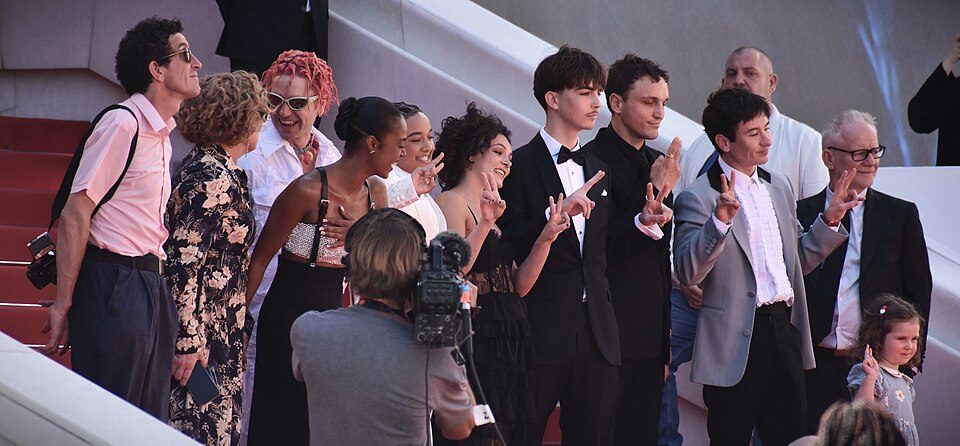
Ariela Ortiz-Barrantes, CC BY-SA 4.0, via Wikimedia Commons
Opening Up to the World
Fremaux was more enthusiastic when the conversation shifted to the Academy's changes to the Best International Feature Film category, which now allows films that won top prizes at Cannes to qualify directly. He cited 19 Cannes film nominations in the run-up to the 98th Academy Awards as evidence of the relationship's strength.
"Hollywood is opening up to the international scene, opening up to universality; that's what Cannes is all about", Fremaux told Variety.
Cannes president Iris Knobloch offered a complementary read in a separate interview. "What's changed isn't Cannes' relationship with Hollywood", she said. "It's Hollywood itself". The two statements together position Cannes as a stable anchor while the American industry processes its own structural crisis.
The new Academy rule on international films carries practical weight. A film that wins the Palme d'Or now has a clearer path to Oscar eligibility without the submission process that previously required national selection. That change benefits filmmakers from countries with strong Cannes track records and reinforces the festival's role as a primary route to international awards recognition.
Fremaux's Position in a Divided Festival
The 79th Cannes festival was defined by two parallel conversations pointing in opposite directions. The competition banned AI generated work from Palme eligibility. The Marché du Film ran more than 20 AI sessions and hosted over 100 AI companies on its floor in the same two weeks.
Fremaux's public statements navigated this split carefully. He defended the competition's position without condemning AI as a category. He called the Oscar rules obvious without proposing that Cannes adopt equivalent restrictions across all submissions. His electric bike analogy left room for AI in filmmaking, as long as the filmmaker brought craft to the tool.
What "On the Side of the Artists" Actually Means
Fremaux's statement that Cannes stands with workers whose jobs AI threatens is not a temporary festival position. It is the founding principle of the festival's relationship with human creative labor: Cannes exists to recognize artistic work by individuals, and an industry that replaces those individuals with automated systems removes the human authors the festival was created to honor.
The principle has direct consequences for the competition's AI policy. A festival that identifies with artists facing displacement cannot simultaneously award a Palme d'Or to a film that displaced those artists in its production. The connection between the labor protection position and the competition rules is not coincidental. It is the same argument made twice: once as a values statement and once as a rule.
The Competition's 2026 AI Rule in Practice
The festival's competition rules barring AI generated films from Palme eligibility were not Fremaux's personal decision alone. They reflect the festival's broader editorial position, developed in consultation with the jury and the selection committee. The rules did not ban AI entirely from submissions. They required that films competing for the Palme d'Or be directed by a human filmmaker who made creative decisions throughout the production.
The practical effect of that rule was widely discussed during the 2026 edition. Films that used AI tools for specific tasks, including Steven Soderbergh's documentary which used Meta AI for technical purposes, remained in competition. Films where AI was the primary author of the visual content did not qualify. The boundary was AI as tool versus AI as author.
Fremaux's Career at the Institut Lumière
Fremaux has directed both the Cannes Film Festival and the Institut Lumière in Lyon since 2004. The Lumière position gives him a specific perspective on cinema history that shapes how he thinks about the current moment.
The Institut Lumière is where cinema was invented. Fremaux has spent two decades as its director while simultaneously running the world's most important film festival. When he speaks about AI as a threat to artists, he speaks from an institution that has archived more than 120 years of film history. The preservation of human authorship in cinema is not an abstract value for someone who works daily with the physical evidence of what cinema was before digitization.
The Legislation Fremaux Called For
Fremaux's statement that AI "requires legislation" was not expanded in his Deadline interview, but the context he was working in was specific. The EU AI Act had reached its enforcement phase in 2026. France's own digital content regulation was under active parliamentary review. Multiple member state labor ministries were examining AI's impact on creative sector employment.
His call for legislation at a press event during Cannes 2026 placed the festival's leadership explicitly on the side of regulatory intervention rather than industry self governance. That is a more specific position than supporting artists. It is a claim that private agreements and guild contracts are insufficient and that government action is necessary.
What the 2026 Positions Set Up for 2027
Fremaux's statements in 2026 were stated clearly enough that they set expectations for what Cannes 2027 will address. The electric bike analogy, the organic film label proposal, the call for legislation, and the labor protection framing together constitute a policy platform rather than a one-year response to current events.
Whether the organic film label moves from proposal to implementation before 2027 depends on whether a verification infrastructure can be built. No existing system audits production pipelines for AI tool use at the level of granularity a label would require. The discussion Fremaux opened at the 2026 press conference will either produce that infrastructure or produce a position statement. Both outcomes change how filmmakers and studios prepare submissions for the following edition.
The Marché's Role Alongside the Competition
The Cannes Film Market ran more than 20 AI sessions in its final four days alone, with over 100 AI companies represented on the floor. That concentration of AI vendor activity happened inside the same building where the competition jury was evaluating films under rules that excluded AI generated work from Palme consideration.
Fremaux has consistently described the Marché as a separate function from the artistic competition. The market connects buyers and sellers. The competition evaluates films under editorial criteria. Both happen at the same festival, and Fremaux has not treated the tension between them as a contradiction requiring resolution. His framing accepts that a festival can stand with artists in its competition while simultaneously hosting the market forces those artists are navigating.
Cannes and the Hollywood Structural Crisis
Fremaux described Hollywood as undergoing a "major shake-up" covering COVID recovery, the writers' strike, and subsequent restructuring, mergers, and acquisitions. That sequence describes the structural conditions, but the consequences at Cannes were specific. No major Hollywood studio film appeared in the official 2026 competition. The directors who would normally anchor an American presence at Cannes were either in production, in negotiations, or had been advised to skip the festival.
The absence was not a boycott. It was the accumulation of individual production schedules and risk assessments that coincidentally produced the same result: a Cannes competition with no American studio titles. Fremaux's hope that Hollywood would return the following year reflects his recognition that the absence was circumstantial rather than structural, but the circumstantial conditions he cited are not going away quickly.
The 2026 Context for Fremaux's Statements
Fremaux spoke during the most AI-intensive Cannes in the festival's history. The Marché hosted more than 100 AI companies and ran 20+ AI sessions, while the competition maintained its ban on AI generated films. His interviews navigated that contradiction without resolving it, accepting that the market and the competition can operate on different principles within the same institution.
The clearest expression of that acceptance was his electric bike analogy. A festival that hosts Meta as an official partner and bans AI from its competition can sustain both positions because the market and the competition have always operated under different principles. Fremaux's statements articulate those principles rather than paper over them.
For context on how those shifts played out across the 2026 festival, the Cannes 2026 AI acceptance overview documents the broader pattern of disclosure and industry reaction. Filmmakers exploring the AI production tools at the center of the Cannes debate can access them through the AI FILMS Studio video workspace.
Sources
Variety | Deadline | Screen Daily
Continue Reading
.jpg?w=3840)


Video & LipSync
- Video Generator
- Text to Video
- Image to Video
- Start-End Frame to Video
- Draw to Video
- Motion Control
- Video Enhancer
- Video Upscaler
- Video Extend
- Video to Video LipSync
- Audio to Video LipSync
- Image to Video LipSync
- Video FaceSwap
- Seedance 2.5
- WAN 3.0
- Seedance 2
- FLUX 3
- Minimax H3
- Vidu Q3 Pro
- Grok Imagine Video 1.5
- Gemini Omni
- Google Veo 3.1
- Kling 3.0 Pro
- Luma Ray 3.2
- LTX 2.3
- Happy Horse 1.1
- Kling 3.0 Motion
- ByteDance Upscaler
- InfiniteTalk
- InsightFace
Image & Edit
- AI Character
- AI Actor
- Art Generator
- Text to Image
- Image to Image
- LoRA Image to Image
- Draw to Edit
- Image LoRA Training
- Remove Background
- Image Enhancer
- MidJourney 8.0
- Krea 2
- OpenAI GPT Image 2.0
- Nano Banana Pro Ultra
- Nano Banana 2 Lite
- Nano Banana Pro
- Minimax Image
- Clarity Pro
- Z-Image Turbo LoRA
- Krea 2 Turbo LoRA
- Z-Image LoRA Trainer
- Qwen Image LoRA Trainer
- Background Erase Network 2 (BEN2)