
Gareth Edwards: Nine Months Experimenting With AI Filmmaking

Gage Skidmore, CC BY-SA 2.0, via Wikimedia Commons
Share this post:
Gareth Edwards: Nine Months Experimenting With AI Filmmaking
Gareth Edwards has been testing AI diffusion models in depth for the past nine months and plans to make a hybrid generative AI film. He told a panel he is not ready to commit to a project yet because the tools are evolving too fast. The director of The Creator, Rogue One: A Star Wars Story, and Jurassic World Rebirth is among the most technically experienced filmmakers in Hollywood when it comes to AI production.
Nine Months With Diffusion Models
Edwards is direct about what he found. "It is a fucking genius at helping you", he told the panel. He described the technology as a total collaborator: "it'll do anything you ask, not a problem". He said AI is particularly useful for organizing ideas, testing concepts, and generating concept images during development.
He also drew a precise limit. AI cannot generate human stories that resonate with audiences. The filmmaker's vision and the reason a story needs to be told remain the filmmaker's responsibility. "The fucking genius" part, in his framing, is in service of that human intent.
The Creator as Context
Edwards' enthusiasm comes from direct experience. His 2023 film "The Creator" used AI tools extensively in pre production, generating concept art and environments that would have cost a multiple of the production's actual budget through conventional VFX methods. The film was shot entirely on location across Thailand, Laos, Cambodia, Japan, and the UK rather than on volume stages.
Walt Disney Pictures, Public Domain, via Wikimedia Commons
That production gave Edwards a working understanding of where AI adds real value, well before most directors who publicly comment on the subject had their first session with the tools. The film's approach, using AI alongside traditional ILM work to achieve a large visual scope on a fraction of a typical blockbuster budget, was studied in the industry as a potential model for how to make a certain kind of film.
The specific lesson from The Creator is that AI does not replace visual effects work at the hero shot level. It reduces the cost and time required for the surrounding visual infrastructure: environments, scale elements, and the visual language of the world the film occupies. That distinction is what makes Edwards' perspective on AI more precise than most public commentary from directors with less hands on experience.
What Nine Months of Personal Experimentation Looks Like
Edwards described nine months of active testing before making any public statement about his intentions. That timeline is significant. Most directors who have offered opinions on AI in filmmaking have done so after limited or no personal experimentation with the tools. Edwards treated his as a research period before reaching conclusions.
The specific tools he tested were diffusion models, the family of AI systems that generate images and video from text or image prompts. His extended testing gave him direct experience of both what current diffusion models can produce and where they fall short. His public statements reflect that experience rather than general optimism about the category.
His assessment that AI is "a genius at helping you" in concept development and visual organization reflects what diffusion models are currently best at. Rapid iteration on visual ideas, testing tone and look across many variations, and generating reference material for production discussions are exactly the tasks where the tools' strengths are most applicable and their weaknesses least visible.
Why He Is Waiting
Despite nine months of personal experimentation, Edwards has not committed to a hybrid AI film. His reason is specific. "It feels like this stuff's changing every three months", he said. Starting a project on a fixed timeline when the underlying tools are evolving at that speed means the production could be overtaken by a better version of the same technology before it finishes.
He described the overall uncertainty of AI's direction in Hollywood as genuine: "We don't know where it's going to go", he said. "I think anybody saying they know exactly what's going to happen over the next five years is just a liar". That uncertainty is not a reason to stay out of the space. It is a reason to wait for the right window before committing.
The three month iteration cycle Edwards described has been documented across multiple AI video generation releases in 2025 and 2026. Model capabilities that defined what was possible in one quarter have been superseded in the next. A production that locked its visual pipeline to tools available in January 2026 would have been working with a different capability floor than one that started in April. The question Edwards is waiting to answer is when the tools stabilize enough that the production he commits to will not be technically obsolete before it releases.
The Right Window Problem
The challenge Edwards faces is common to any filmmaker who wants to incorporate a fast moving technology into a production with a fixed creative vision. The tools improve between the day a project begins development and the day it shoots, and again between the day it shoots and the day it finishes post production.
A filmmaker who waits for the tools to stop improving will wait indefinitely. A filmmaker who starts too early risks having the production's visual approach look dated before it reaches audiences. The window Edwards is looking for is when the tools are good enough for his specific creative intent and stable enough that the production will not be superseded during its own development timeline.
His willingness to name this calculation publicly is what makes his position useful to other filmmakers facing the same question. The decision is not about whether AI tools are ready in general. It is about whether they are ready for a specific kind of film made by a specific director with specific visual requirements.
A Different Position From Spielberg
Edwards' approach sits in a different place from Steven Spielberg's. Spielberg told Michelle Obama's podcast in May 2026 that he uses AI for practical tasks such as location research but refuses to use it as "the final word on anything creative". Edwards draws no such creative limit. He sees AI as a full development partner, with the filmmaker maintaining direction through continuous prompting.
Peter Jackson took a comparable stance at Cannes 2026, calling AI "just a special effect like any other". Edwards is further along in personal experimentation than most directors who have offered opinions. He spent nine months actively testing before making any public statement about his intentions. Andy Serkis echoed the same framing at APOS 2026 in June, arguing in his address on AI's responsibility in storytelling that expanded AI access requires expanded accountability from the people using it.
The range of positions from directors who have direct experience with the tools is itself informative. Spielberg draws a hard creative limit. Jackson frames AI as one tool category among many. Edwards frames AI as an active collaborator with a defined role in development. Those three positions, held by three directors who have all actually used the tools, map a realistic spectrum of how working filmmakers integrate AI into production thinking.
What a Hybrid AI Film From Edwards Would Look Like
Edwards has not announced a specific project. His description of what he wants to make, a hybrid generative AI film, suggests a production where AI generation handles portions of the visual work while conventional production handles others, rather than a purely generated film.
His background in productions that combine AI tools with traditional VFX work positions him for exactly this kind of hybrid. The Creator established a workflow where AI generation and conventional production are integrated rather than separated. A film that extends that approach further, with AI generation taking a larger share of the visual workload, is the natural next step from what he has already done.
The technical requirement is the same one he articulated: when the tools are stable enough that the production pipeline built around them will hold for the duration of development and release. When that window arrives, Edwards has stated he intends to use it.
The Creator's Production Model as a Template
The Creator's production approach has been analyzed as a model for how AI tools can change the economics of large scale visual films. The film's budget was reported at around $80 million, significantly below what comparable scope productions typically require. AI tools contributed to that reduction by eliminating the need for physical sets and volume stages in favor of location shooting supported by AI generated environments.
That production model has a specific requirement: a director who understands both the story requirements and the technical constraints of AI generation well enough to plan around them from the start. Edwards described designing the production specifically so that AI tools could handle the visual work they are best suited for, rather than trying to use AI to compensate for a production plan designed for conventional methods.
The lesson for other filmmakers is that AI production does not simply reduce costs across a conventional production structure. It requires designing the production around what AI tools can and cannot do, with human directed work covering the areas where AI generation is currently inadequate.
What Edwards' Nine Months Actually Documented
Nine months of personal experimentation with diffusion models, before making any public statements, is an unusual approach for a filmmaker of Edwards' profile. Most directors comment on AI after seeing demonstrations or after a limited trial period. Edwards treated his personal testing as a prerequisite to having an informed opinion.
The specific things he was testing matter for understanding his conclusions. Diffusion models are strongest in development work: concept visualization, tonal exploration, and generating reference material that communicates creative direction to production collaborators. They are less useful for tasks requiring narrative continuity, performance nuance, or the kind of visual problem solving that requires human judgment in real time.
Edwards' description of AI as "a genius at helping you" and a "total collaborator" reflects experience with the tools in their strongest applications. His precise limit, that AI cannot generate human stories that resonate, reflects experience with where those applications end.
The Director's Responsibility in AI Filmmaking
Edwards draws a clear line between what AI provides and what the filmmaker must provide. The tools will do anything asked of them. The question of what to ask, why to ask it, and whether the answer serves the story is entirely the filmmaker's responsibility.
That framing positions AI generation as a high bandwidth execution tool rather than as a creative partner with independent judgment. The filmmaker's vision determines the direction. The AI's output is evaluated against whether it serves that vision. The generation that does not serve it is discarded, regardless of how technically accomplished it might be.
His experience with The Creator provides concrete grounding for this framing. On a large visual production with a specific look and tone, the judgment required to evaluate AI generated material against the production's creative requirements is exactly the kind of judgment that takes years of production experience to develop. The tools have become accessible to anyone with a computer. The judgment required to direct them effectively toward a specific creative goal has not.
Production Stability and the Commitment Question
Edwards' stated reason for not committing yet, that the tools are changing every three months, is a production risk assessment rather than a creative reservation. He is not waiting for better tools. He has already concluded the tools are good enough. He is waiting for them to be stable enough.
That distinction is important for understanding his position relative to directors who are actively skeptical of AI's creative possibilities. Edwards is not skeptical. He is applying the same production judgment that any experienced filmmaker applies when evaluating technology: what is the risk that the pipeline I build today will be obsolete before the film releases?
For a production with a 12 to 18 month development and shooting timeline, a tool category that is seeing major capability updates every three months represents a genuine planning problem. The production that starts in month one is using a different version of the technology than the production that finishes in month 18. Managing that version gap is a production problem that Edwards is waiting to see stabilize before committing.
The Context at Jurassic World Rebirth
Edwards directed Jurassic World Rebirth, the Universal blockbuster that released in July 2025. The film was one of the highest grossing releases of its year. His next project, the hybrid AI film he has described but not committed to, will be coming off a commercial success rather than a production that needed to prove itself.
That context matters for understanding the kind of hybrid AI project he is likely to pursue. A director following a major franchise film has commercial credibility that allows for a more experimental next production. The hybrid AI film Edwards is describing would be a departure from the studio franchise model, not an attempt to repeat it with cheaper tools.
The overlap between his commercial track record and his genuine technical interest in AI diffusion models positions him as one of the more significant potential bridge figures between the studio system and the AI filmmaking space. A hybrid AI film from Edwards would be evaluated as a serious commercial production, not as an experiment, because of who is making it.
What Comes Before the Commitment
Edwards described the current phase as too fast moving for a commitment but not too early for active development. That window, between discovery and deployment, is where the most useful AI production learning happens. Directors who build fluency with the tools during an exploratory phase arrive at the commitment decision with enough practical knowledge to make it correctly.
His nine months of testing were not directed at a specific production. They were research.
The transition from research to commitment happens when a specific project with a specific creative intent aligns with the tools' current capabilities in a way that makes a production timeline viable.
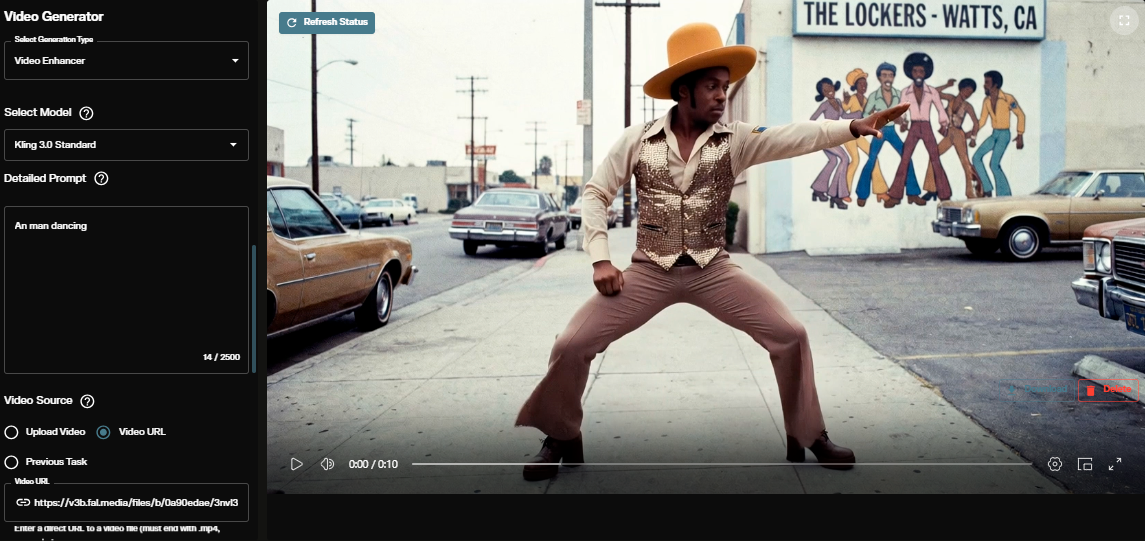
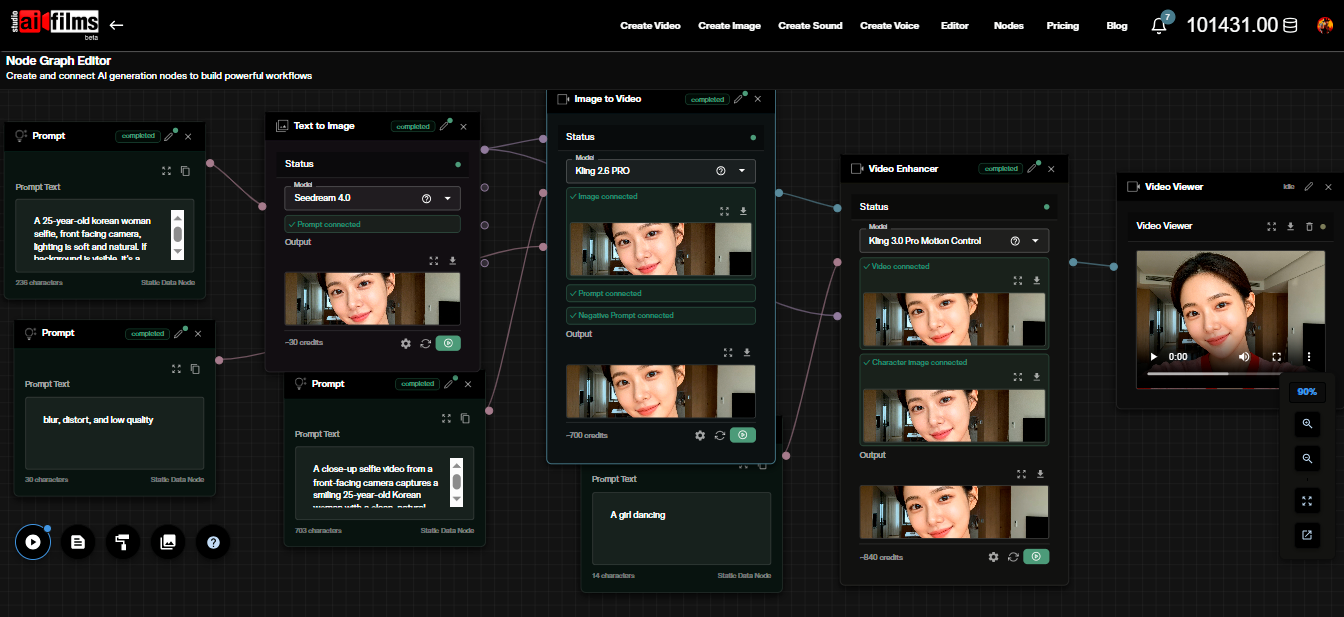
Filmmakers who want to test the same class of tools can access the latest AI video models through AI FILMS Studio.
Sources
The Hollywood Reporter | IndieWire | The Wrap | Variety
Continue Reading
.jpg?w=3840)


Video & LipSync
- Video Generator
- Text to Video
- Image to Video
- Start-End Frame to Video
- Draw to Video
- Motion Control
- Video Enhancer
- Video Upscaler
- Video Extend
- Video to Video LipSync
- Audio to Video LipSync
- Image to Video LipSync
- Video FaceSwap
- Seedance 2.5
- WAN 3.0
- Seedance 2
- FLUX 3
- Minimax H3
- Vidu Q3 Pro
- Grok Imagine Video 1.5
- Gemini Omni
- Google Veo 3.1
- Kling 3.0 Pro
- Luma Ray 3.2
- LTX 2.3
- Happy Horse 1.1
- Kling 3.0 Motion
- ByteDance Upscaler
- InfiniteTalk
- InsightFace
Image & Edit
- AI Character
- AI Actor
- Art Generator
- Text to Image
- Image to Image
- LoRA Image to Image
- Draw to Edit
- Image LoRA Training
- Remove Background
- Image Enhancer
- MidJourney 8.0
- Krea 2
- OpenAI GPT Image 2.0
- Nano Banana Pro Ultra
- Nano Banana 2 Lite
- Nano Banana Pro
- Minimax Image
- Clarity Pro
- Z-Image Turbo LoRA
- Krea 2 Turbo LoRA
- Z-Image LoRA Trainer
- Qwen Image LoRA Trainer
- Background Erase Network 2 (BEN2)