
Martin Scorsese Joins Black Forest Labs as an AI Advisor

Share this post:
Martin Scorsese Joins Black Forest Labs as an AI Advisor
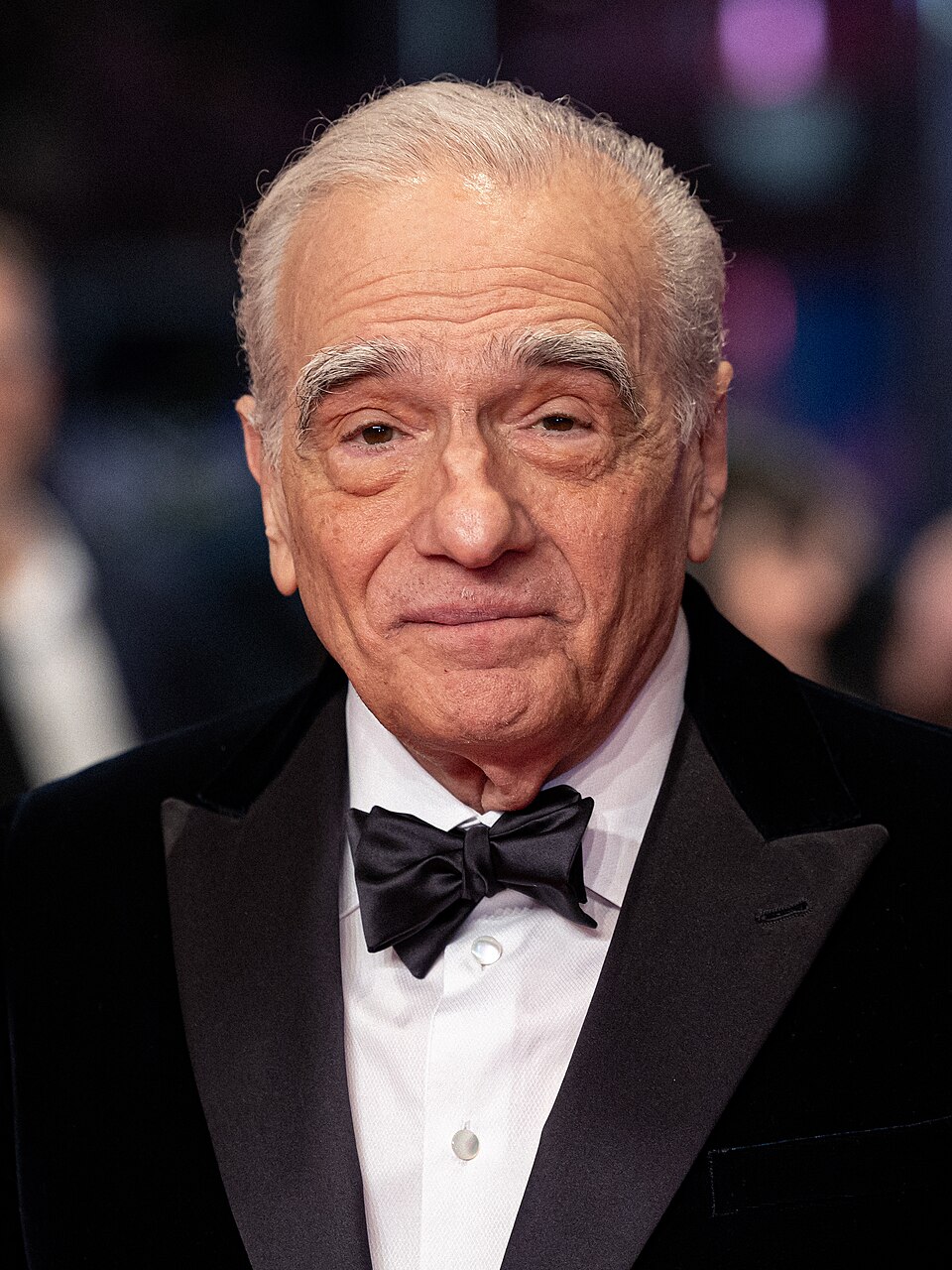
Martin Scorsese is now an advisor to Black Forest Labs, the AI imaging company behind the FLUX model. The Academy Award winning director announced the role on June 2, 2026, saying he has already used the technology to generate storyboards during pre production on a current project.
"How Do You Communicate What You See in Your Head"
Scorsese has been drawing his own storyboards for 70 years. He describes the persistent problem that drew him to the technology: "There's always been this problem of how do you communicate what you see in your head to your cast and crew. There are some things you have to see and feel".
Scorsese cited his use of 3D in Hugo and de aging technology in The Irishman as precedents for adopting tools that change the production process. "Now, with this tool, I can share what I'm visualizing more clearly and efficiently to my creative team, the production designer, art designer, and cinematographer, for them to build on to enrich cinematic intelligence", he said in a statement released by Black Forest Labs.
His case for remaining open rested on cinema's age. "Remember, cinema is a young medium, only around 125 years old, so we have to be open to how it can evolve". Black Forest Labs also released a video of Scorsese in a working session with FLUX. "If you have a tool like this, you could figure it out much much quicker and you could save production time, and also less wear and tear on the crew", he says in the footage.
Seven Decades of Drawing, Changed
Scorsese has been drawing storyboards by hand since the 1950s. His preparation for Mean Streets, Taxi Driver, and Goodfellas involved dense visual notebooks, sketched frame by frame before production began. His storyboards have been collected by cinematheques and are considered part of his artistic legacy, not just production documents.
The shift to AI generated storyboards is therefore not a casual adoption of a convenient tool. It is a change in the workflow of a director who spent seven decades using drawing as a primary language for communicating visual ideas. His statement makes the reason clear: the problem he is solving is the gap between what he sees internally and what he can communicate to his team, and drawing never fully closed that gap.
Cinema technology has provided Scorsese with a comparable upgrade before. His use of 3D on Hugo in 2011 involved months of preparation with technology that was new to him at 69 years old. His use of digital reverse aging technology on The Irishman in 2019 required working with VFX teams on a process that had never been done at that scale before. Each time, the motivation was the same: a specific visual problem that existing tools did not solve.
What the Technology Actually Changes
A storyboard drawn by hand requires the director to either draw personally, which limits visual complexity to what the director can render, or hire a storyboard artist, which introduces a translation layer between the director's vision and the result. Either path involves a gap.
FLUX.2, the current generation of the model Scorsese is using, accepts text descriptions and reference images and generates imagery within seconds. For a director who knows exactly what a scene should look like and can describe it in words, the tool removes the translation layer entirely. The director communicates directly with the model rather than through an intermediary artist.
The advisory role at Black Forest Labs goes beyond using the tool. Scorsese's involvement means his feedback on what the technology does and does not do for his specific workflow informs the model's ongoing development. The practical needs of a director who has made 25 feature films over six decades carry different weight in a product development cycle than feedback from a casual creative user.
About Black Forest Labs
Black Forest Labs was founded by researchers who built the original Stable Diffusion model and latent diffusion architecture, departing from Stability AI to start the lab. It operates from offices in Freiburg, Germany and San Francisco.
The company raised a $300 million Series B at a $3.25 billion post money valuation in December 2025. Investors include Andreessen Horowitz, NVIDIA, Salesforce Ventures, Temasek, Bain Capital Ventures, and General Catalyst. Adobe, Canva, Meta, and Microsoft have all built products on the FLUX API. The open weights FLUX models are the most downloaded image models on Hugging Face.
FLUX.2, the current flagship, supports up to 10 reference images simultaneously, enabling consistent character generation across scenes. Technical details on the model's production capabilities are covered in the FLUX.2 production features overview.
Storyboard Artists Push Back
The announcement prompted immediate pushback from directors Boots Riley and Kane Parsons, exposing a generational divide on AI endorsements in Hollywood. The response escalated to institutional level on June 9, when the Art Directors Guild issued a formal statement saying Scorsese's endorsement circumvents the work of art directors, production designers, and illustrators who have collaborated with directors for decades.
The backlash from working artists was immediate. Concept artist and illustrator Karla Ortiz posted on X within hours of the announcement:
He throws every single storyboard artist he's ever worked with under the bus, as he demolishes their livelihoods with models that are likely trained on those story board artist's same works. To use his legacy and power for this is just so disgusting.
— Karla Ortiz (@kortizart) June 2, 2026
The post drew 255,400 views. Director and animator Sam Deats posted a sharper objection the same evening:
It takes literally seconds for me to storyboard a shot, there is absolutely no reason to need AI built on the stolen work of millions of artists to storyboard your vision, have some damn pride and respect your peers
— Samuel Deats (@SamuelDeats) June 2, 2026
That post drew 91,800 views. Both arguments center on the same concern: that models like FLUX were trained on the work of the same artists whose livelihoods they now threaten.
Where Scorsese Stands Among Directors
Scorsese frames the technology as a communication tool rather than a creative replacement. His statement describes using FLUX to share what he already sees in his head, bridging the gap between his internal vision and his production team, not generating ideas from nothing.
The advisory role deepens his position beyond that of a celebrity endorser. His involvement with Black Forest Labs puts him inside the product development process, able to direct what the technology should do better for filmmakers. That role is structurally different from a director who uses a product and publicly praises it.
The distinction also matters for the backlash. Karla Ortiz and Sam Deats were criticizing Scorsese for using a tool trained on artists' work. They were not criticizing the fact that he joined the company's board. The advisory role raises a separate question: a director who helps shape an AI image model's capabilities is not just a user of the technology. He is a participant in its development, with a stake in its direction.
-.jpg)
James Cameron made a comparable move last September when he joined the board of Stability AI, becoming a stakeholder in model development rather than a passive user. Paul Schrader, who wrote Taxi Driver and Raging Bull for Scorsese, has argued publicly for more than seven months that AI will produce the first box office protagonist built entirely from generated imagery.
The opposite position comes with equal force. Guillermo del Toro told The Hollywood Reporter: "I don't think anyone wants this". At Cannes last month, asked how he would feel if a team member suggested using AI to generate something from the outset, he said it would be "like spitting on God". The more than 500 signatories of the Creators Coalition formed by Oscar winners Daniel Kwan and Sian Heder, which counts del Toro, Cate Blanchett, and Aaron Sorkin among its members, represent the organized version of that resistance.
The broader picture of how Hollywood's director class has split over AI tools, with studios adopting them quietly while talent remained vocal in opposition, is mapped in the 2026 AI filmmaking in Hollywood overview.
Lucas, speaking at the opening of his museum in July 2026, called AI the next inevitable step in a pattern of technology adoption spanning 50 years that also produced ILM, THX, and digital cinema. Where Scorsese positions AI as a communication tool that bridges the gap between his vision and his team, Lucas argues there is no point of resistance worth making. Both directors arrive at endorsement through the same logic: they have been through this transition before, with other tools, and the technology won every time.
The same week Scorsese's partnership was announced, the youngest director to break A24's domestic box office record took the opposite position: Kane Parsons said he would erase generative AI entirely if he could, calling it a symptom of cultural rot on the day Backrooms crossed $100 million domestically.
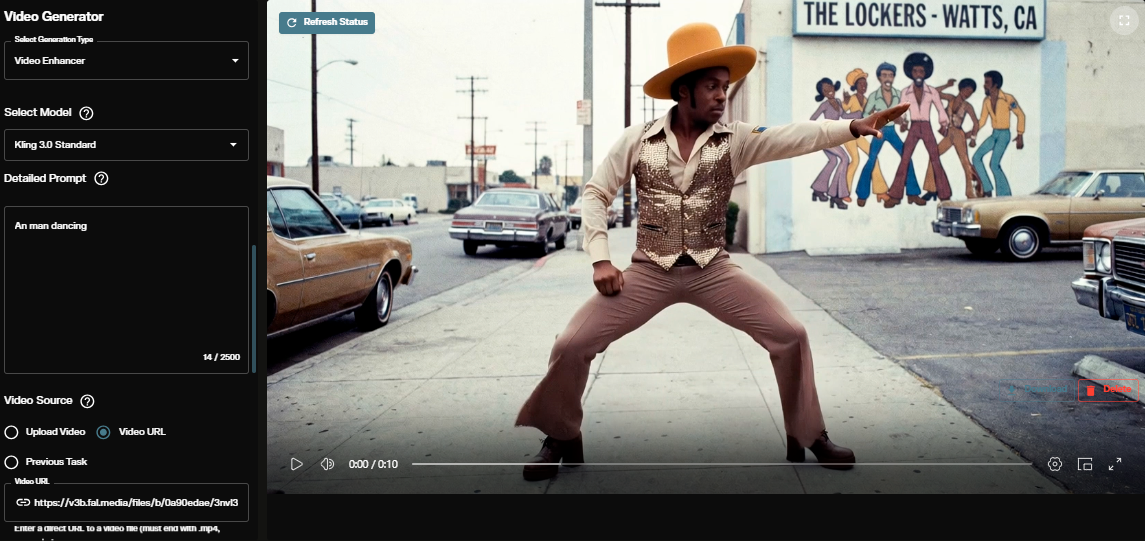
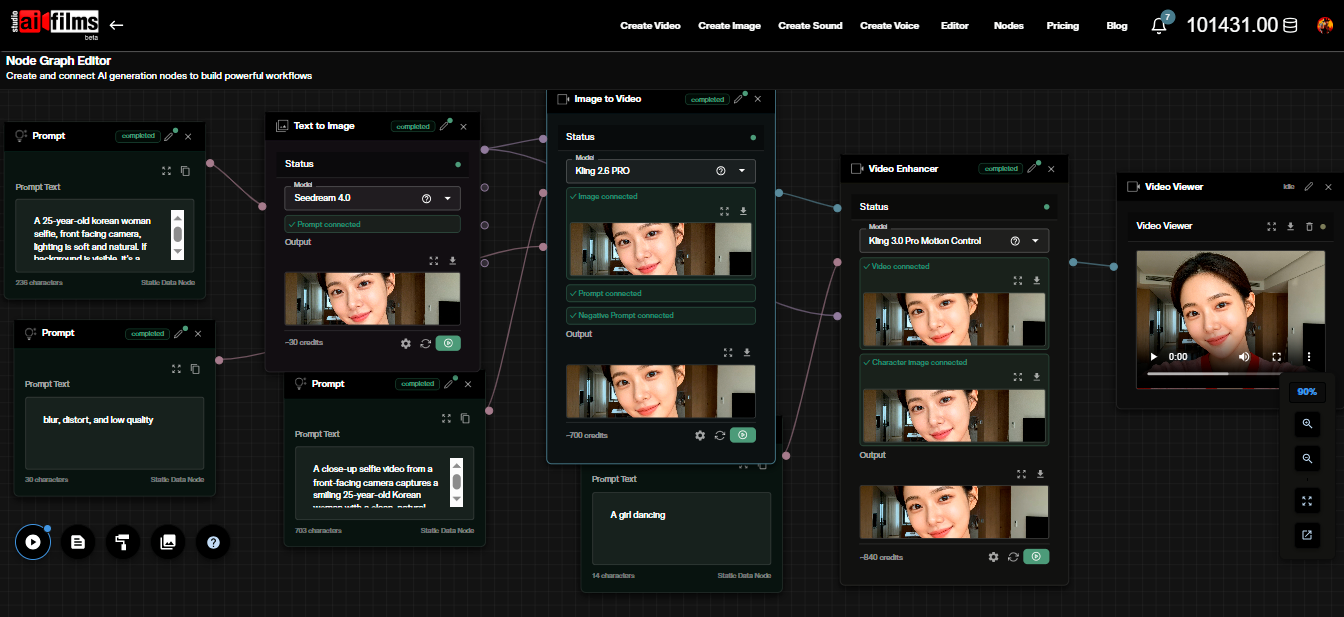
Filmmakers looking to use AI image generation for pre production and storyboarding can access Midjourney 8.0 directly in AI FILMS Studio, which produces four cinematic images per prompt with direct controls over aesthetic style and compositional variation:

Update (August 19, 2026): The first public dataset pairing screenplays with director authored storyboards arrived in August 2026, released under CC BY 4.0 with 68 episodes across three productions. Full story here.
Sources
The Hollywood Reporter | Black Forest Labs
Continue Reading
.jpg?w=3840)


Video & LipSync
- Video Generator
- Text to Video
- Image to Video
- Start-End Frame to Video
- Draw to Video
- Motion Control
- Video Enhancer
- Video Upscaler
- Video Extend
- Video to Video LipSync
- Audio to Video LipSync
- Image to Video LipSync
- Video FaceSwap
- Seedance 2.5
- WAN 3.0
- Seedance 2
- FLUX 3
- Minimax H3
- Vidu Q3 Pro
- Grok Imagine Video 1.5
- Gemini Omni
- Google Veo 3.1
- Kling 3.0 Pro
- Luma Ray 3.2
- LTX 2.3
- Happy Horse 1.1
- Kling 3.0 Motion
- ByteDance Upscaler
- InfiniteTalk
- InsightFace
Image & Edit
- AI Character
- AI Actor
- Art Generator
- Text to Image
- Image to Image
- LoRA Image to Image
- Draw to Edit
- Image LoRA Training
- Remove Background
- Image Enhancer
- MidJourney 8.0
- Krea 2
- OpenAI GPT Image 2.0
- Nano Banana Pro Ultra
- Nano Banana 2 Lite
- Nano Banana Pro
- Minimax Image
- Clarity Pro
- Z-Image Turbo LoRA
- Krea 2 Turbo LoRA
- Z-Image LoRA Trainer
- Qwen Image LoRA Trainer
- Background Erase Network 2 (BEN2)