
Shawn Levy Sees AI Becoming an Essential Tool for Moviemaking
.jpg?w=3840&q=90)
Gage Skidmore from Peoria, AZ, United States of America, CC BY-SA 2.0
Share this post:
Shawn Levy Sees AI Becoming an Essential Tool for Moviemaking
Star Wars: Starfighter director Shawn Levy told Variety in late April 2026 that artificial intelligence will become essential to filmmaking, even as he has not incorporated it in any meaningful way on any production to date. The remarks, made at the Breakthrough Prize Ceremony, position one of Hollywood's most commercially active directors as a close observer of AI who has not yet stepped into using it.
The Breakthrough Prize is an annual ceremony in Silicon Valley honoring advances in life sciences, physics, and mathematics. It draws an unusual mix of scientists, tech industry figures, and entertainment professionals, making it a natural setting for questions about AI in creative industries. Levy's attendance and willingness to address the topic directly reflects the growing overlap between Hollywood productions and technology industry conversations.
Levy's stated position is not a hedge. It is a timeline. He is not suggesting AI might eventually become useful to filmmakers. He is saying it will, and that the relevant question for him is how to integrate it legally and appropriately when that moment arrives for his own practice.
His comments are notable partly because of who made them. Levy is not an industry observer or a technology sector advocate. He is one of the most commercially productive directors in Hollywood, with seven theatrical releases since 2021, multiple franchise commitments, and a production track record that includes some of the most technically demanding mainstream films of the past decade.
Not Yet, But Inevitable
Levy was direct about his current position. "To date, I've not incorporated AI in any meaningful way in any phase of my storytelling process, but I have no doubt that in the course of my career we will see its integration", he told Variety.
That studied distance is deliberate. He described spending part of every day increasing his "fluency around the regulatory options surrounding AI", treating governance and compliance as prerequisites to adoption rather than obstacles.
The "regulatory options" Levy is studying refers specifically to the provisions around AI use contained in the 2023 SAG-AFTRA contract, the WGA agreement, and the ongoing AMPTP negotiations. The SAG-AFTRA contract, reached in November 2023 after a strike lasting 118 days, requires informed consent and compensation for AI generated synthetic performances of a performer's voice or likeness. A director on a major studio production would need to understand those constraints before deploying AI tools in any department touching performers.
The WGA agreement includes provisions on AI generated literary material. If a studio uses AI to generate or rewrite script material, writers must be compensated as if they had written it, and the use must be disclosed. A director who wanted to use AI during development or scripting would need to navigate those terms. Levy's regulatory fluency is a practical preparation for production, not an abstract philosophical study.
The AMPTP negotiations, which continued through 2024 and 2025, addressed subsidiary AI provisions that were left incomplete in the initial guild agreements. As those provisions continue to evolve, the regulatory environment Levy is studying is not static. Directors who build fluency with the current framework are doing groundwork that will carry into future production cycles as the agreements are refined.
Responsible Integration, Not Replacement
Levy framed future AI adoption around preserving the director's voice rather than accelerating output. "It's about integrating these technologies responsibly and with still the primacy of the creative voice and not a potential replacement for that voice", he said.
He was equally firm that avoiding AI entirely is not an option. "I think to hide our heads in the sand and pretend that it's not going to be an essential part of our lives", he told Variety, "I think that would be naive and foolish".
The primacy of the creative voice is a specific position about what AI adoption should look like in practice. The director's judgment about what a film needs should drive how AI tools are used, not what the tools are capable of generating. Levy is not describing AI as a creative partner or a collaborator. He is describing it as a production instrument, one that serves the director's decisions rather than shaping them.
The distinction matters commercially. Studios evaluating AI integration often focus on speed and cost reduction. Levy's framing is different: the tool is only valuable if the director's artistic choices remain primary. That is a position about who controls the outcome of a production, not about whether AI can generate faster or cheaper content.
Levy framed future AI adoption around preserving the director's voice rather than accelerating output. "It's about integrating these technologies responsibly and with still the primacy of the creative voice and not a potential replacement for that voice," he said.
The distinction matters commercially. Studios evaluating AI integration often focus on speed and cost reduction. Levy's framing is different: the tool is only valuable if the director's artistic choices remain primary.
.jpg)
Gage Skidmore, CC BY-SA 2.0, via Wikimedia Commons
A Career Built Alongside These Technologies
Levy has been directing VFX heavy productions for over a decade. Free Guy (2021) featured extensive AI driven crowd behavior in the digital game world sequences. Deadpool & Wolverine (2024) required large scale digital compositing and reverse aging VFX for multiple cast members across the film's multiverse sequences. Real Steel (2011) used motion capture for the robot boxing sequences that were the film's central visual offering. The Adam Project (2022) used reverse aging to depict Ryan Reynolds at different ages across the same scenes.
These productions gave Levy direct exposure to the introduction of new technology tools into a studio pipeline, even before he began formally studying AI governance. He has managed the integration of motion capture, full digital environments, and digital reverse aging on productions where those tools were being deployed at a scale and quality that had not been achieved on films before.
The practical experience changes the character of his caution. Levy is not approaching AI as someone unfamiliar with how technology tools are implemented on a major production. He is approaching it as a director who has overseen multiple technology integrations on major productions and who is applying the same deliberate approach to AI. The question he is studying is not whether AI can be useful. He has already seen enough analogous tools to know it can. The question is how to use it in a way that complies with the agreements governing his productions.
Each of those technology integrations also required a period of preparation before Levy adopted them. Motion capture for Real Steel required rehearsal space, actor preparation, and visual effects coordination that did not exist as a standard workflow before that production. Reverse aging for The Adam Project required agreements with the performers about the use of their earlier likenesses. Levy has managed the first adoption curve for tools like these before, and he is approaching AI on the same model.
His specific comment about increasing regulatory fluency "every day" is also notable given his production rate. Directors with multiple theatrical releases per year have limited capacity for intensive study of topics outside the immediate demands of active productions. That Levy is making daily time for it specifically signals how seriously he is treating the transition.
What Adoption Would Actually Look Like
For a director of Levy's production scale, AI integration would not look like replacing the script with generated text or the cast with synthetic performances. It would look like a set of discrete workflow additions, each governed by the agreements he is studying.
In pre production, AI tools can generate storyboard frames from a text description, or produce reference images for production design conversations. Martin Scorsese used AI generated images as storyboard reference while developing his current project, a workflow already documented in his collaboration with Black Forest Labs and FLUX. For a director managing the visual demands of a Star Wars production, that kind of visual reference tool would have direct utility.
In post production, AI tools are already active in the Hollywood pipeline. ILM uses AI for character relighting, background extension, and VFX element cleanup. A director does not control those tools directly, but approval of their output is part of the director's post production role. Understanding what the tools are doing is part of doing that job well.
The regulatory questions attach to specific use cases. AI generated synthetic performances of a real actor require SAG-AFTRA compliance. AI script generation or rewriting requires WGA compliance. Pre production image generation for internal storyboarding, used only as reference and never shown publicly, may fall outside those provisions entirely. Levy's "regulatory fluency" is the work of mapping these boundaries against the concrete use cases he intends to pursue.
The distinction between use cases that require guild compliance and those that do not is exactly the kind of mapping a director cannot get from a general news briefing. It requires reading the actual agreement language, which is why Levy describes doing it daily.
What he is building, in practical terms, is a decision framework: when AI use requires disclosure, when it requires consent, and when it falls outside both requirements entirely.
For a commercial director at his level, deploying a tool that the SAG-AFTRA or WGA contracts later determine was used improperly would be costly well beyond legal exposure. The talent relationships that make his productions possible depend on producers and directors being seen as trustworthy stewards of the agreements. Careful preparation before adoption is professional risk management, not caution for its own sake.
The Star Wars Context
Levy is currently directing Star Wars: Starfighter, starring Ryan Gosling, Amy Adams, and Matt Smith, with a May 28, 2027 release. His comments on AI land in the middle of one of the most technically demanding productions in the current Hollywood slate.
A director managing that scale of production has direct exposure to where AI tools are already being used, including in visual effects pipelines, post production color and lighting work, and data management on set, even before deciding to adopt them in his own creative workflow.
Star Wars: Starfighter is not a peripheral franchise entry. It is positioned as a mainline continuation of the Skywalker universe, with a cast and release date that carry major commercial expectations. The production scale and audience attention give any AI related decisions Levy makes on the film an unusual level of visibility within the industry.
Industrial Light and Magic, Lucasfilm's VFX company and one of the leading AI adopters in Hollywood post production, is likely involved in Starfighter's effects pipeline. ILM has been deploying AI tools for character relighting, background generation, and VFX cleanup on recent productions. Levy's AI governance study is therefore not just about his own creative preferences. It is also about navigating the institutional context of the production he is directing for Lucasfilm and Disney.
The specific audience expectations around a Star Wars production add another dimension to the question. Franchise audiences are particularly attentive to visual changes in how the universe looks. Any AI assisted tool that affected the look of characters, environments, or effects in the film would be evaluated against that existing visual standard, which means decisions about AI adoption carry both legal and creative consequences that do not apply to a standalone original film.
.jpg)
Stefan Krasowski, CC BY 2.0, via Wikimedia Commons
The original Star Wars trilogy built its alien world using physical locations: Tunisia for Tatooine's desert exteriors, Norway for Hoth, and Guatemala's Tikal ruins for Yavin IV. Every one of those environments required location scouts, permits, crew transport, and equipment logistics. AI generation can produce environments with comparable visual specificity from a text description in minutes.
For a director studying AI governance before using it in production, the location generation use case is one of the clearest examples of where the technology provides direct value without raising the performer consent questions that attach to AI in acting or scripting. A generated alien landscape requires no guild clearance. What it requires is a director's judgment about whether it meets the film's visual standard.
A Distinct Position Among Directors
Steven Soderbergh is already using AI extensively in post production on his current project with Wagner Moura, describing it as "just another tool". Kathleen Kennedy has drawn a sharper line, questioning whether AI can absorb the taste and lived experience that define a filmmaker's judgment. George Miller has embraced the technology outright, comparing its cultural moment to the Renaissance.
Levy holds a fourth position. He has studied AI seriously, expects to use it, and is preparing through regulatory research rather than production trial. He has directed seven theatrical releases since 2021 and counts a major Star Wars film among his current commitments. That combination of output and caution is uncommon at his level of the industry.
George Lucas made the most direct statement of this same underlying position at the opening of the Lucas Museum of Narrative Art in July 2026, calling AI the inevitable next step in a pattern of technology adoption that began with founding ILM in 1975. Where Levy is preparing cautiously for a future he considers certain, Lucas is describing that future as already arrived and the arguments against it as already settled history.
The range of positions across major directors reflects how unsettled the practical question remains even as the tools mature. Levy's position occupies a specific space in that range. He is more technologically engaged than Kennedy, less committed than Lucas, and more formally cautious than Soderbergh, who has already shipped work using AI in post production. His caution is informed by direct experience with technology integrations on major productions, not by unfamiliarity with how these tools work in a pipeline.
What the range of positions has in common is that no major director in the commercial tier is ignoring AI entirely. Kennedy is skeptical but engaged with the governance questions. Lucas has declared the debate settled. Soderbergh is already using the tools. Levy is between preparing and adopting. The director who has chosen to pretend the technology does not exist has not yet made themselves visible at the tier of the industry where these conversations are happening.
That absence is not a coincidence. The economic incentives of the commercial filmmaking tier are moving toward AI adoption. Directors who position themselves as uninvolved are, in practice, delegating AI related decisions about their productions to the studios, VFX houses, and post production facilities that are already deploying the tools.
Levy's regulatory preparation is a way of being ready to make those decisions actively rather than having them made by default.
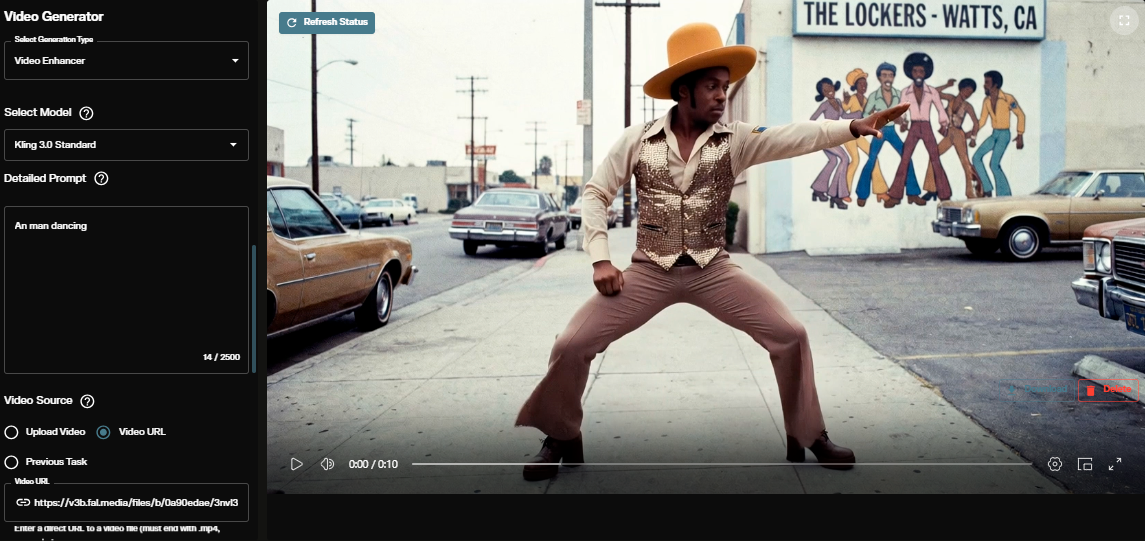
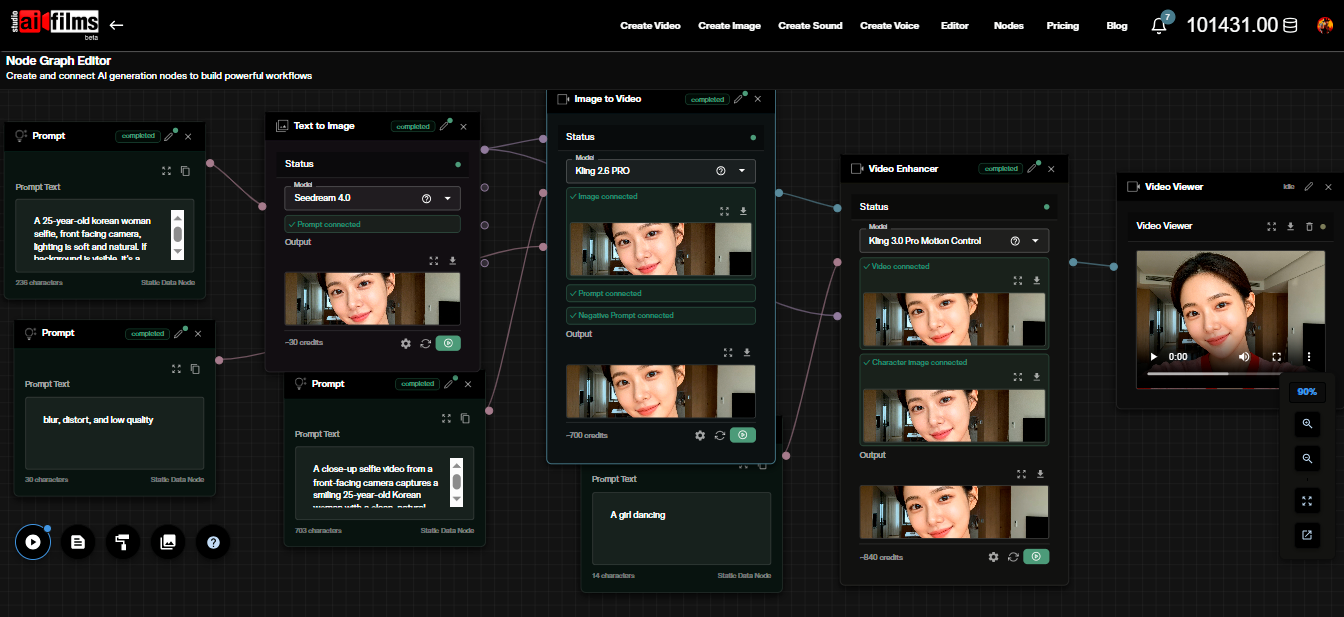
Filmmakers who want to explore the generation and enhancement tools Levy is studying can access them through the AI FILMS Studio video workspace.
Sources
Variety | The Hollywood Reporter | WDW News Today | Jedi News
Continue Reading
.jpg?w=3840)


.jpg)
.jpg)
Video & LipSync
- Video Generator
- Text to Video
- Image to Video
- Start-End Frame to Video
- Draw to Video
- Motion Control
- Video Enhancer
- Video Upscaler
- Video to Video LipSync
- Audio to Video LipSync
- Image to Video LipSync
- Video FaceSwap
- Seedance 2.5
- WAN 3.0
- Seedance 2
- FLUX 3
- Minimax H3
- Vidu Q3 Pro
- Grok Imagine Video 1.5
- Gemini Omni
- Google Veo 3.1
- Kling 3.0 Pro
- Luma Ray 3.2
- LTX 2.3
- Happy Horse 1.1
- Kling 3.0 Motion
- ByteDance Upscaler
- InfiniteTalk
- InsightFace
Image & Edit
- AI Character
- AI Actor
- Art Generator
- Text to Image
- Image to Image
- LoRA Image to Image
- Draw to Edit
- Image LoRA Training
- Remove Background
- Image Enhancer
- MidJourney 8.0
- Krea 2
- OpenAI GPT Image 2.0
- Nano Banana Pro Ultra
- Nano Banana 2 Lite
- Nano Banana Pro
- Minimax Image
- Clarity Pro
- Z-Image Turbo LoRA
- Krea 2 Turbo LoRA
- Z-Image LoRA Trainer
- Qwen Image LoRA Trainer
- Background Erase Network 2 (BEN2)