
Joseph Gordon-Levitt Named UN Advocate for AI Governance While Directing Netflix Thriller

Share this post:
Joseph Gordon-Levitt Named UN Advocate for AI Governance While Directing Netflix Thriller
Joseph Gordon-Levitt has been named a UN global advocate for human-centric digital governance, a formal international role that makes him the first major Hollywood figure with an official UN position focused on AI policy. A Deadline profile by Jake Kanter, published May 14, documented how the actor and filmmaker turned a Hollywood advocacy position into one with global institutional reach.
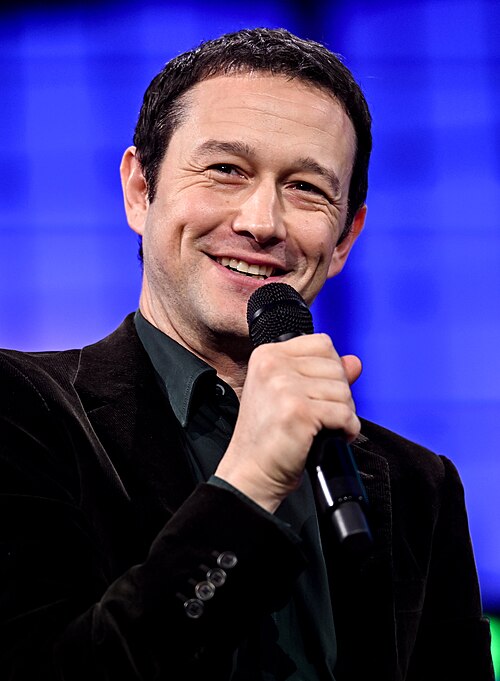
Web Summit, CC BY 4.0, via Wikimedia Commons
Gordon-Levitt's path to the UN appointment ran through years of public advocacy that moved progressively from opinion essays and interviews toward institutional engagement. He testified before state legislatures, organized coalitions, and pushed specific legislative proposals before the UN position materialized.
The appointment is not ceremonial. UN global advocates are expected to speak at international forums, engage with member governments, and contribute to the policy documents that shape how the UN frames specific issues. Gordon-Levitt brings the Hollywood AI debate into that institutional context as a named participant rather than an outside observer.
The UN Role
As a UN global advocate for human-centric digital governance, Gordon-Levitt takes a formal advisory and outreach role within the UN's AI governance framework. The appointment positions him as a bridge between Hollywood's direct experience of AI disruption and the international policy discussions where AI governance frameworks are actively being written.
No major Hollywood figure has held a comparable UN role. The appointment reflects the institutional groundwork he has built through years of AI accountability advocacy, not only the public profile.
The timing places him in the role while the UN is actively developing its AI governance framework. Several member states submitted competing proposals during 2025 on how international AI standards should be structured. An advocate with Hollywood's direct labor experience is a different kind of voice in those discussions than a corporate representative or an academic researcher, and that difference is part of why the appointment was made.
The Coalition Behind It
Gordon-Levitt is one of the founding members of the Creators Coalition on AI, launched in December 2025 alongside Daniel Kwan, Sian Heder, and Natasha Lyonne. The coalition grew from 18 founding members to more than 500 signatories within weeks, spanning SAG-AFTRA, the DGA, WGA, PGA, and IATSE.
His central argument, documented across his earlier AI advocacy work, is that AI represents collective intelligence assembled from human creativity and that contributors deserve ongoing compensation. The coalition lobbied lawmakers directly and pushed for mandatory residuals from AI training data use, work that moved his advocacy past public statements into legislative engagement.
The coalition's strategy was to present that argument simultaneously at the federal, state, and international levels rather than concentrating on a single jurisdiction. Different legislative bodies move at different speeds, and the pressure applied at one level creates conditions for movement at another. Gordon-Levitt's UN appointment is the international dimension of that strategy made formal.
The UN appointment places Gordon-Levitt inside the institutions where AI governance frameworks are being written, not only in the public conversation that surrounds them. Member governments that attend UN forums on digital governance are the same governments that will eventually draft or adopt national AI legislation.
His access to those forums gives the Hollywood labor argument a platform it would not otherwise have. Most creative industry perspectives on AI reach policymakers through lobbying and public comment periods. His role allows for direct participation in drafting discussions.

Jakub Hałun, CC BY 4.0, via Wikimedia Commons
A Film Conceived Before the Crisis
Gordon-Levitt conceived his Netflix thriller nearly a decade before AI became a central Hollywood concern. The film, which he wrote with Kieran Fitzgerald and is now directing, places an AI system's threat to human creativity at its center.
The final cast includes Rachel McAdams, Jeff Daniels, Joel Edgerton, Caleb McLaughlin, and Nnamdi Asomugha, with Rian Johnson and Ram Bergman producing through T-Street. Production begins summer 2026. The project is unusual in that its director simultaneously serves as an international policy advocate on the same subject the film dramatizes.
Working on Every Front
The Deadline headline for the May 14 profile, "How Joseph Gordon-Levitt Became Hollywood's Town Crier On AI Accountability", captures the specific quality of his position. He is making the case in Congress, in the coalition, through the film, and now within the UN framework. The three roles run in parallel.
The profile's framing of "town crier" suggests someone sounding an alarm. His actual position is more specific. He is not warning that AI is dangerous in a general sense. He is arguing that a particular transaction, the use of human creative output to train commercial AI systems, is happening without compensation and that it should not be.
Other Hollywood figures have taken public positions on AI. Gordon-Levitt has built infrastructure: a coalition with hundreds of members, a formal international appointment, and a production that dramatizes what the governance failures he is warning against would actually look like.
The combination is unlikely to produce a single outcome. The coalition's legislative push, the UN advocacy, and the Netflix film operate on different timelines and reach different audiences. What they share is the same underlying argument, made in formats that have different kinds of authority over different kinds of people. For an industry where creative workers have struggled to make the compensation case land in policy rooms, that range of formats may matter more than any single forum.
The "Residual Economy" Proposal He Made in 2023
Gordon-Levitt first used the term "residual economy" in a 2023 essay arguing that AI systems trained on human generated content should pay creators ongoing compensation modeled on Hollywood's existing residuals framework. The proposal drew on the SAG-AFTRA and WGA residual systems, where actors and writers receive payments each time a film or episode is reused or re-aired.
His core argument was that AI training constitutes a form of reuse. A model trained on a performer's likeness or a writer's style draws on that material repeatedly each time it generates similar output. He proposed that compensation should flow accordingly, at scale, through a licensing and payment infrastructure that does not yet exist but could be built on the residuals model.
The 2023 essay predates both the SAG-AFTRA AI strike provisions and the Creators Coalition. By the time he was named a UN global advocate in 2026, the proposal had moved from a published argument to a coalition platform to a subject of congressional testimony.
What Human-Centric Digital Governance Means
The UN's phrase "human-centric digital governance" describes an approach to AI policy that keeps individual rights and welfare at the center of regulatory design rather than optimizing for economic efficiency or technological capability. In practice, the phrase translates to a set of priorities: transparency in AI systems, accountability for AI decisions, protection of human labor from displacement without compensation, and democratic participation in shaping how AI is deployed.
Gordon-Levitt's specific contribution to the framework is the creative labor angle. Most human-centric AI governance discussions focus on privacy, bias, and automated decision making. He brings the training data compensation argument into those discussions, which have not historically centered creative workers.
The Coalition's Growth Rate
The Creators Coalition on AI launched in December 2025 with 18 founding members and reached more than 500 signatories within weeks. That growth rate reflects the level of anxiety already present in the Hollywood community before the formal launch. Gordon-Levitt, Daniel Kwan, Sian Heder, and Natasha Lyonne organized the founding group and brought in leadership from SAG-AFTRA, the DGA, WGA, PGA, and IATSE.
The 500 plus signatory count represents a breadth of industry participation that individual guild statements cannot match. A statement from one union represents that union's negotiating position. A coalition statement with that many names represents something closer to a professional consensus, which carries different weight when presented to legislators.
Legislative Engagement and What It Produced
Gordon-Levitt testified before state legislatures on AI training data compensation, an unusual step for an actor without a lobbying background. His testimony drew on the residual economy argument and pushed for mandatory licensing frameworks at the state level, where several bills were under consideration during 2025 and 2026.
The coalition's legislative work focused on three areas: mandatory disclosure when AI is used in production, compensation frameworks for training data use, and liability standards for AI generated content that uses a performer's likeness without consent. State level bills in California and New York moved further through the legislative process than comparable measures had in prior sessions, building a record that federal negotiations will eventually have to address.
The Film as a Third Track
The Netflix thriller represents a third track running alongside the policy advocacy and the coalition work. Gordon-Levitt has described conceiving the film nearly a decade before AI became a central industry concern, which means the dramatic project was not created to support the advocacy. The two tracks developed independently and arrived at the same moment.
He is directing a film about AI's threat to creative labor while serving as a UN advocate on the same subject and leading a coalition lobbying legislators. That convergence is unusual. Most filmmakers making a film about a social or political issue are not simultaneously operating as institutional advocates on that issue, and the question of whether the work can hold its own as cinema separate from its subject is one the film's reception will answer.
The Netflix acquisition gives the film a global distribution platform that will reach the same audiences the policy arguments are trying to persuade. A feature film dramatizing AI's consequences for creative workers, released on a major streaming service, functions differently in that debate than a congressional statement or a UN document. It reaches people who will never read policy papers, in a medium they trust for emotional truth rather than factual argument.
His Argument About Collective Intelligence
Gordon-Levitt's most distinctive conceptual move in his AI advocacy is the claim that AI represents collective intelligence. His argument holds that a language or image model is not a singular invention but an aggregation of outputs from thousands or millions of human creators, and that framing AI as individual corporate property mischaracterizes what it actually is.
The collective intelligence argument has specific legal implications. If AI models are understood as collections of human contributed material, the question of who owns the output becomes more complex than current frameworks allow. Gordon-Levitt's position is that governance should reflect that complexity, with compensation flowing back to contributors rather than accruing only to the companies that assembled the training data.
That argument is more radical than the residual economy proposal in one sense. The residual economy idea works within existing Hollywood compensation structures. The collective intelligence claim challenges the ownership model that makes those structures possible, and it is the version of the argument that his UN role gives him an international platform to make.
What Gordon-Levitt Said When Testifying
Gordon-Levitt's legislative testimony described AI training as a system built on creative labor that returns no value to the people whose work made it possible. He used the residuals comparison to give legislators a framework they already understood. Hollywood has paid residuals since 1952. The mechanism is established. The question is whether it can be extended to a new form of use.
His testimony was notable for avoiding the catastrophist framing common in Hollywood AI discussions. He did not argue that AI would eliminate human creativity. He argued that human creativity had already been used to build AI and that the people whose work contributed to that process were owed payment. The distinction shifted the legislative ask from regulation to compensation, which is a narrower and more achievable policy goal.
The compensation argument also maps onto existing labor law in a way that broad AI prohibition proposals do not. It is harder to legislate against a technology than to legislate how transactions involving that technology must be handled. Gordon-Levitt's framing positioned the ask within the second category, where there is already legal precedent to build on.
The Deadline profile noted that his testimony style drew on his experience as a performer rather than a policy specialist. He described the problem from the inside, as someone whose own creative output has theoretically contributed to training sets he did not consent to. That positioning gave the testimony an authenticity that expert witness statements from economists or technologists cannot replicate.
His UN appointment brings that same positioning to international forums. A performer turned global advocate carries a different authority than a policy researcher arguing the same case. The question policy bodies face is whether the compensation frameworks he is proposing can be made operational, not whether the underlying argument about creative labor and AI training is accurate. Most participants in those discussions have already conceded the underlying point.
At AI FILMS Studio, filmmakers working with AI generation tools operate within a platform built around legal content generation. The governance questions Gordon-Levitt is raising in policy contexts are the same ones shaping how production infrastructure is being designed for the industry.

Sources
Deadline | Hollywood Reporter | IndieWire
Continue Reading
.jpg?w=3840)


Video & LipSync
- Video Generator
- Text to Video
- Image to Video
- Start-End Frame to Video
- Draw to Video
- Motion Control
- Video Enhancer
- Video Upscaler
- Video Extend
- Video to Video LipSync
- Audio to Video LipSync
- Image to Video LipSync
- Video FaceSwap
- Seedance 2.5
- WAN 3.0
- Seedance 2
- FLUX 3
- Minimax H3
- Vidu Q3 Pro
- Grok Imagine Video 1.5
- Gemini Omni
- Google Veo 3.1
- Kling 3.0 Pro
- Luma Ray 3.2
- LTX 2.3
- Happy Horse 1.1
- Kling 3.0 Motion
- ByteDance Upscaler
- InfiniteTalk
- InsightFace
Image & Edit
- AI Character
- AI Actor
- Art Generator
- Text to Image
- Image to Image
- LoRA Image to Image
- Draw to Edit
- Image LoRA Training
- Remove Background
- Image Enhancer
- MidJourney 8.0
- Krea 2
- OpenAI GPT Image 2.0
- Nano Banana Pro Ultra
- Nano Banana 2 Lite
- Nano Banana Pro
- Minimax Image
- Clarity Pro
- Z-Image Turbo LoRA
- Krea 2 Turbo LoRA
- Z-Image LoRA Trainer
- Qwen Image LoRA Trainer
- Background Erase Network 2 (BEN2)