
'Hacks' Star Hannah Einbinder Calls AI Creators 'Losers'
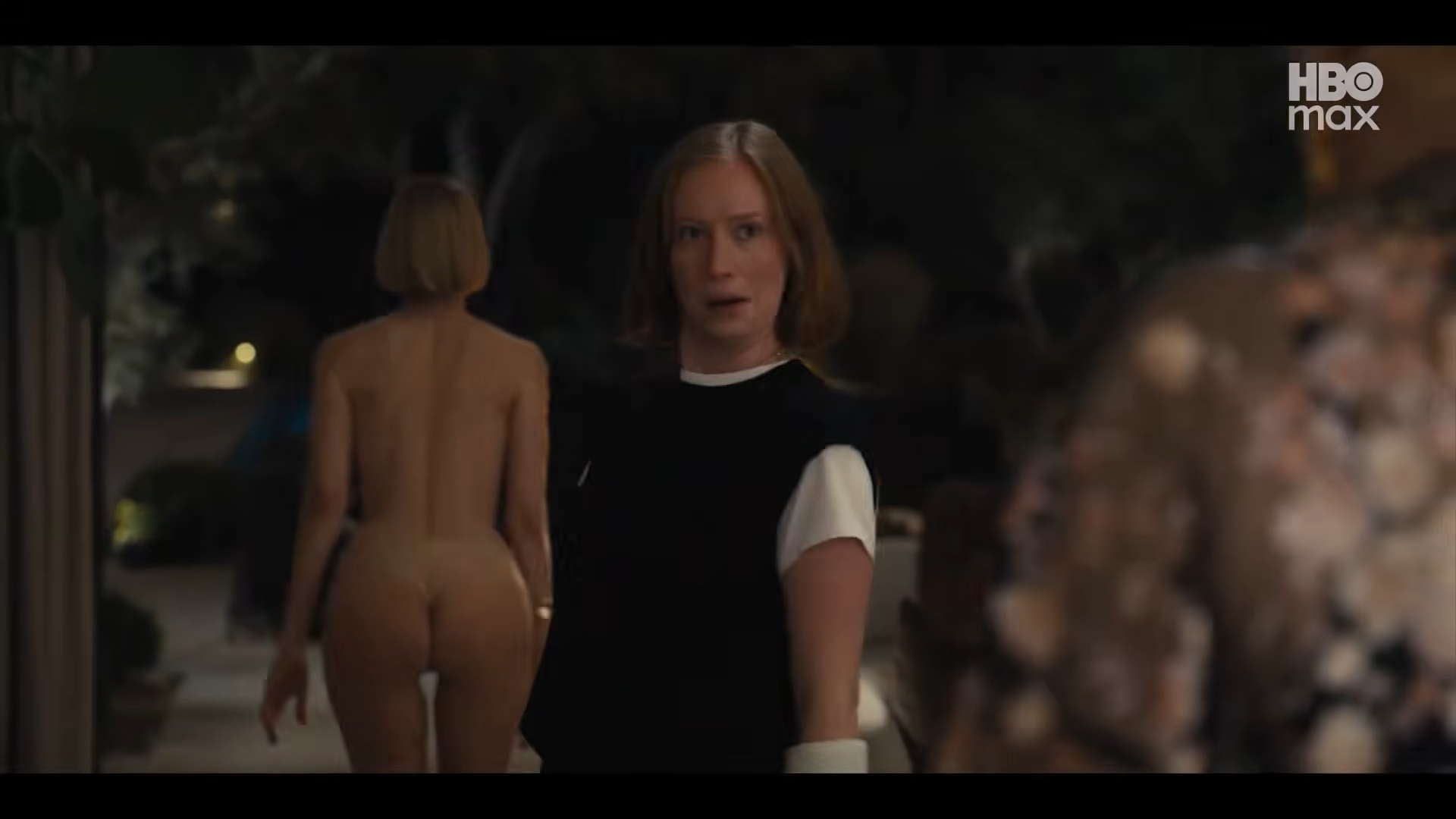
Still from 'Hacks' Season 5 Trailer (Max) via YouTube/Rotten Tomatoes TV
Share this post:
'Hacks' Star Hannah Einbinder Calls AI Creators 'Losers'
Hannah Einbinder called the people making AI content "losers" in a Slash Film interview on April 3, 2026. The "Hacks" star did not hedge.
"The people who make this stuff are losers," she said. "They're not artists. They're not creative."
What She Said
Einbinder laid out her position in direct terms. The comments were not offhand. She expanded on them.
"They're trying to rob real creative people of our gifts. And you can't."
She then addressed AI creators directly. "You guys suck. No one likes you." She added: "Anyone who's near you is because they crave power and access over any ethical standard."
Her final line was blunt. "You are a loser. You will never be cool."
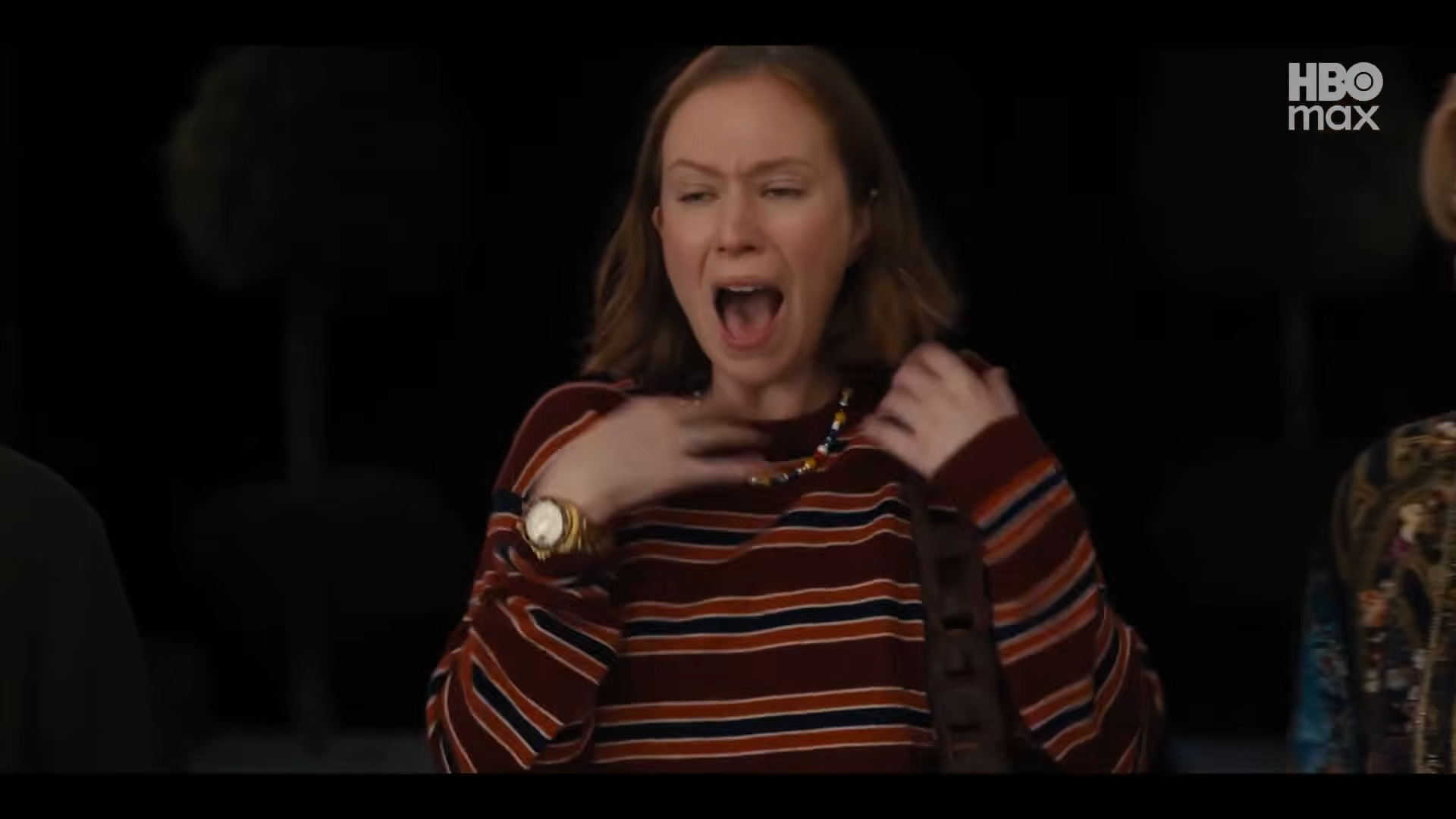
Still from "Hacks" Season 5 Trailer (Max) via YouTube/Rotten Tomatoes TV
Einbinder plays Ava Daniels in "Hacks", a comedy writer whose creative partnership with veteran stand-up Deborah Vance, played by Jean Smart, runs on tension and mutual dependency. The show is widely regarded as one of the sharpest portraits of the entertainment industry currently on television and has won multiple Emmy Awards across its run.
The Show She Was Promoting
"Hacks" Season 5 premieres April 17 on Max. It is the final season. Einbinder stars alongside Jean Smart, playing Ava Daniels, a comedy writer navigating a creative partnership built on tension and mutual dependency.
The show has won multiple Emmy Awards and is widely regarded as one of the sharpest portraits of the entertainment industry currently on television.
What "Hacks" Has to Do With the AI Debate
"Hacks" centers on a comedy writer whose value to a veteran comedian is her specific creative voice, her references, her instincts, and the particular texture of her humor. The show's entire dramatic premise rests on the idea that creative voice is individual, valuable, and not interchangeable.
For an actor on that show to be asked about AI in a press interview is to be asked a question that connects directly to the show's subject matter. Einbinder's response, that AI creators are not artists and cannot produce what working creatives produce, is consistent with the show's argument about what creativity requires. Whether or not she would have given the same answer without the "Hacks" context, the interview was shaped by it.
Why Einbinder's Framing Differs From Peers
Einbinder is not predicting extinction. She is dismissing the people behind the tools as creatively illegitimate. That is a different kind of argument.
James Woods went further in December 2025, predicting that AI would end human acting entirely and citing Moore's Law as the mechanism. Woods's framing is apocalyptic and structural. Einbinder's is contemptuous and personal. She is not saying AI will win. She is saying the people pursuing it are beneath the conversation. The two positions reflect different theories about what AI in entertainment actually represents and who is responsible for it.
A Pattern in Hollywood
Days before Einbinder's interview, Kathleen Kennedy told a summit audience in Manhattan that taste, lived experience, and accumulated creative judgment are things AI cannot absorb. Steven Spielberg told a SXSW 2026 audience he has never used AI in any of his films and is not for it if it replaces a creative individual.
The pattern across these statements is not uniform but it is directional. Major figures in the entertainment industry are finding language for what they object to in AI content generation, language that goes beyond contract provisions and addresses the creative legitimacy of the work itself. Einbinder's language is the most direct version of that position so far.
Jean Smart's Emmy winning performance in "Hacks" has been cited repeatedly as an example of what deeply specific human performance delivers that no generated performance can approximate: a history, a presence, and a relationship with the camera accumulated over decades. That critical framing of Smart's work places "Hacks" squarely in the center of the debate Einbinder is entering when she speaks about AI in press interviews.
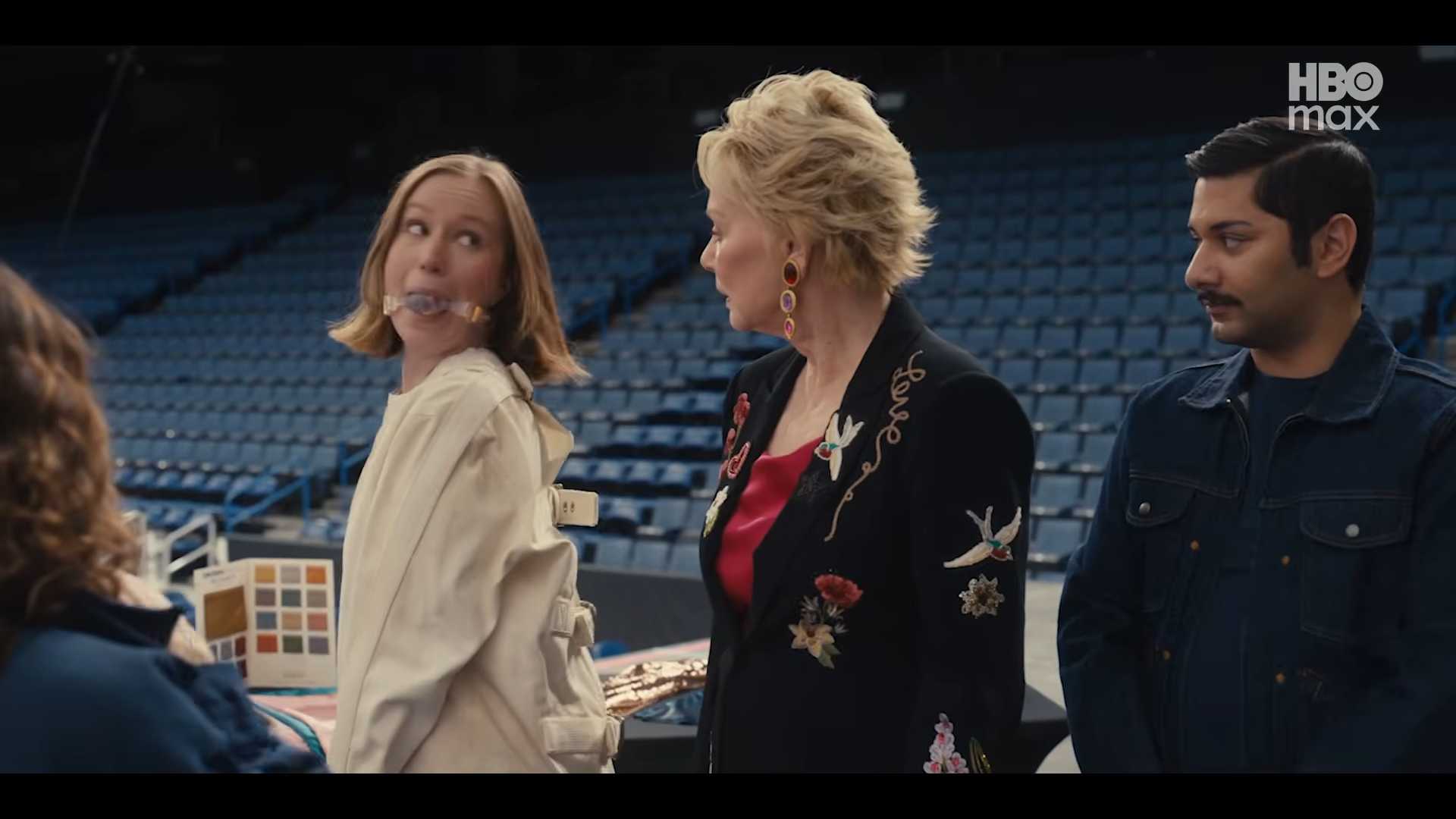
Still from "Hacks" Season 5 Trailer (Max) via YouTube/Rotten Tomatoes TV
The Context of the Slash Film Interview
The April 3 interview ran as part of "Hacks" Season 5 press coverage. Slash Film focuses on film and television coverage for dedicated genre audiences. Einbinder's comments were not buried in a lengthy profile. They were the sharpest thing she said in the interview and were immediately quoted across entertainment trade coverage.
That pickup pattern, from a specialist outlet to broad trade coverage in under 24 hours, reflects how sensitized the industry press has become to any major talent statement on AI in early 2026. A comment that might have registered as a minor quote in a press junket two years ago becomes a news item with its own headline now. The coverage context amplifies what would otherwise be a passing remark into a stated public position.
What WGA Contract Language Changed
The WGA secured contract language restricting AI use in screenwriting in 2023. Those provisions established that AI cannot receive writing credit and that human writers cannot be replaced by prompts fed to a language model.
The 2023 strike was the first time Hollywood's creative guilds forced AI limitations into contracts at scale. Before it, AI's role in production was governed by individual productions and platforms rather than agreements across the whole industry. The WGA provisions created a template that subsequent SAG-AFTRA and DGA negotiations have built on.
The most consequential WGA provision was the one barring language model output from receiving writing credit. That single clause changed how studios could deploy AI in the development phase, requiring human writers to be the authors of record for any material traceable to a model prompt.
The SAG-AFTRA Digital Likeness Debate
The unions have been building formal responses since the 2023 strikes. SAG-AFTRA proposed taxing AI performers as a budget line item, treating synthetic character usage as a taxable event that would redirect funds to pension and health plans. The goal is to make hiring a human actor the economically rational choice.
Why the Statement Got the Coverage It Did
Entertainment trade coverage of actor statements on AI in early 2026 is more sensitive than it was in 2023 or 2024. The 2023 SAG-AFTRA strike established AI as a contract issue rather than a speculative concern. The subsequent months of guild negotiations around digital likeness and AI deployment have made every named actor's public position on the subject a potential signal about where talent stands relative to management.
Einbinder's language was also unusual in its specificity. Most celebrity statements on AI describe economic threat, artistic devaluation, or union concern. Calling AI creators "losers" and "not cool" is a social dismissal rather than a structural argument. That register, borrowed from youth culture rather than labor relations, gave the quote a different kind of velocity in coverage.
Einbinder's Career and What It Represents
Einbinder is 28 years old. Her career began with "Hacks", making her part of a generation of actors who entered the industry during the period when AI was already a live concern rather than a future scenario. Her perspective is not shaped by a pre-AI industry she is defending. She has never worked in an industry without the AI conversation.
That generational difference has practical implications for how she speaks about the subject in press. Actors with long careers frame their objections in terms of what they might lose. Einbinder does not have that frame. For her, the defense of creative work is not about protecting an established position but about defining what the work is in the first place.
What the Statement Adds to the Public Record
Einbinder's April 3 interview entered the public record at a moment when the entertainment industry's formal positions on AI were being shaped in guild negotiations, Academy rule changes, and festival policies. The formal record is built from contract language, policy documents, and official statements. The cultural record, the accumulation of what working talent says publicly about the tools and people involved, shapes the social environment in which those formal decisions are made.
Statements like Einbinder's shift the terms of the conversation by establishing that a working actor on a critically acclaimed, Emmy winning show views AI content production not as a labor threat to be managed but as a character flaw to be rejected. That framing does not make it into contract language, but it shapes how the people writing that language understand what they are representing.
Where the Industry Stands in April 2026
By April 2026, the Hollywood AI debate had moved through several distinct phases. The 2023 strike established AI as a contractual issue. The subsequent guild negotiations produced specific provisions around digital likeness, synthetic performance, and AI use in writing. The Cannes AI ban and the Academy's new Oscar rules formalized institutional positions.
Einbinder's April 3 interview falls into a phase that comes after the formal positions are established: the period when working talent, in press interviews for projects that have nothing to do with AI, is asked to locate themselves in the debate. Her answer, that AI creators are "losers" and "not cool", is one of the more direct versions of where talent stands relative to the formal governance structures. The guilds negotiate. Individual artists dismiss. Both are part of the industry's response to the same moment.
What makes Einbinder's statement useful as a data point is that it was unprompted. She was not at a union rally or testifying before a legislative committee. She was doing press for the final season of a television show and, when asked, said what she thinks. That setting removes the performance context that surrounds more formal statements. What she said in that interview is probably close to what she says when not on the record. For the industry's labor relations environment, that kind of unguarded statement from a working Emmy nominated actor is more useful as a signal than a carefully worded union release.
That generational context gives her dismissal a different weight than the same statement from an actor with a 30 year career. When Einbinder calls AI creators "losers", she is not protecting a position she previously held. She is stating what she believes the work requires and what she believes the people avoiding that work are. The question of whether that view is widely shared among younger working actors is one the guilds are tracking closely in membership surveys.
What "Losers" Names That "Replacement" Does Not
The guild discussions around AI typically frame the threat in terms of displacement and replacement: human performers replaced by AI characters, human writers replaced by language models. That framing treats AI as a capability question. Einbinder's framing treats it as a character question.
Calling AI creators "not artists" and "not creative" is a claim about the people making those choices, not just the technology they are using. It refuses the premise that AI content generation is a legitimate creative alternative that happens to have economic consequences for human workers. For an actor, the difference between those framings matters because one positions human performers as economically vulnerable and the other positions AI content producers as creatively illegitimate.
The digital likeness tax proposal reflects the union's calculation that persuasion alone will not change studio behavior. If AI performers cost money in the form of union fees, the economic argument for using them narrows. For productions that would use AI characters purely to avoid talent costs, a fee structure that redirects those savings to the guild funds eliminates the incentive without banning the practice outright.
Einbinder's cultural dismissal of AI creators and the guild's economic mechanisms are complementary approaches to the same problem. Neither alone is sufficient. Both together represent what the entertainment industry's response to AI content generation looks like in 2026.
Sources
Variety | Deadline | Vulture | Slash Film
Continue Reading
.jpg?w=3840)


Video & LipSync
- Video Generator
- Text to Video
- Image to Video
- Start-End Frame to Video
- Draw to Video
- Motion Control
- Video Enhancer
- Video Upscaler
- Video Extend
- Video to Video LipSync
- Audio to Video LipSync
- Image to Video LipSync
- Video FaceSwap
- Seedance 2.5
- WAN 3.0
- Seedance 2
- FLUX 3
- Minimax H3
- Vidu Q3 Pro
- Grok Imagine Video 1.5
- Gemini Omni
- Google Veo 3.1
- Kling 3.0 Pro
- Luma Ray 3.2
- LTX 2.3
- Happy Horse 1.1
- Kling 3.0 Motion
- ByteDance Upscaler
- InfiniteTalk
- InsightFace
Image & Edit
- AI Character
- AI Actor
- Art Generator
- Text to Image
- Image to Image
- LoRA Image to Image
- Draw to Edit
- Image LoRA Training
- Remove Background
- Image Enhancer
- MidJourney 8.0
- Krea 2
- OpenAI GPT Image 2.0
- Nano Banana Pro Ultra
- Nano Banana 2 Lite
- Nano Banana Pro
- Minimax Image
- Clarity Pro
- Z-Image Turbo LoRA
- Krea 2 Turbo LoRA
- Z-Image LoRA Trainer
- Qwen Image LoRA Trainer
- Background Erase Network 2 (BEN2)