
Hollywood Assistants Are Using AI, Despite Themselves
Share this post:
Hollywood Assistants Are Using AI, Despite Themselves
The Hollywood Reporter spoke to a dozen assistants and support staff working across studios, networks, and agencies. Every one of them spoke on condition of anonymity. Every one of them is using AI.
The interviews, part of THR's dedicated AI Issue published in May 2026, reveal a gap between official company policy and daily practice that runs through the entire lower tier of the industry's workforce.
THR's Dedicated AI Issue
The Hollywood Reporter published a dedicated AI issue in May 2026, covering how AI had entered the industry at every level from the executive suite down to the assistant tier. The issue included reports on studio policy, guild agreement analysis, and the assistant interviews. A dedicated issue rather than individual articles signals the editorial judgment that AI has become the industry's defining structural subject.
The assistant interviews are the most operationally specific part of the coverage. Executive statements about AI tend toward abstraction; assistant accounts are concrete about which tasks have changed and how. The interviews form a ground level picture of where AI sits in the daily workflow of a studio or agency in 2026.
What They Are Using It For
The use cases span a wide range. At the low end, assistants described using AI to fit thank you notes to character limits. In the middle, they described AI notetakers sitting in on studio meetings with streaming series creatives. At the high end, some are using AI for script coverage and development notes, two tasks that represent core professional responsibilities in the development pipeline.
Script coverage is particularly significant. Writing coverage is how most assistants demonstrate that they can read, analyze, and advocate for material. It is a key step toward becoming a development executive. If AI can produce coverage at a serviceable level, the role that coverage is meant to demonstrate becomes harder to justify.
What Script Coverage Is and Why It Matters
Script coverage is a written analysis prepared by a reader or development assistant, typically one to two pages, covering logline, brief plot synopsis, and an evaluation of premise, structure, dialogue, and marketability, followed by a final recommendation: pass, consider, or recommend.
Coverage is both a workflow document and a professional test. How an assistant reads and advocates for material demonstrates whether they have the editorial instincts required for a development career. The standard progression in development runs from script reader to development assistant to development executive, and the quality of coverage is the first visible signal of professional judgment in that chain. If AI coverage is indistinguishable from entry level human coverage at the pass or consider stage, the gatekeeping function that the coverage task performs no longer filters as intended.
Coverage also serves an information function for studios and agencies: the pass/consider/recommend rate produced by a team of readers tells executives which material is worth their attention before they read. A system that generates AI coverage at volume without any reader's professional judgment behind it is not coverage in the meaningful sense. It is output that mimics the format but removes the human editorial signal that made the format useful. Studios that have not thought this distinction through may adopt AI coverage as an efficiency tool and discover later that they are greenlit developments based on summaries rather than informed advocacy.
The Policy Divide
Companies are not consistent about any of this. One partner at a major Hollywood management company told THR the firm does not allow AI use by support staff. Other entertainment companies described by interviewees are "more bullish about incorporating AI into day to day operations". Some ask staff to track their AI use; many have no formal guidance at all.
Warner Bailey, founder of the industry media company "Assistants vs. Agents", offered a pointed assessment of the tools themselves: "These are not tools built on the nuances of our industry".

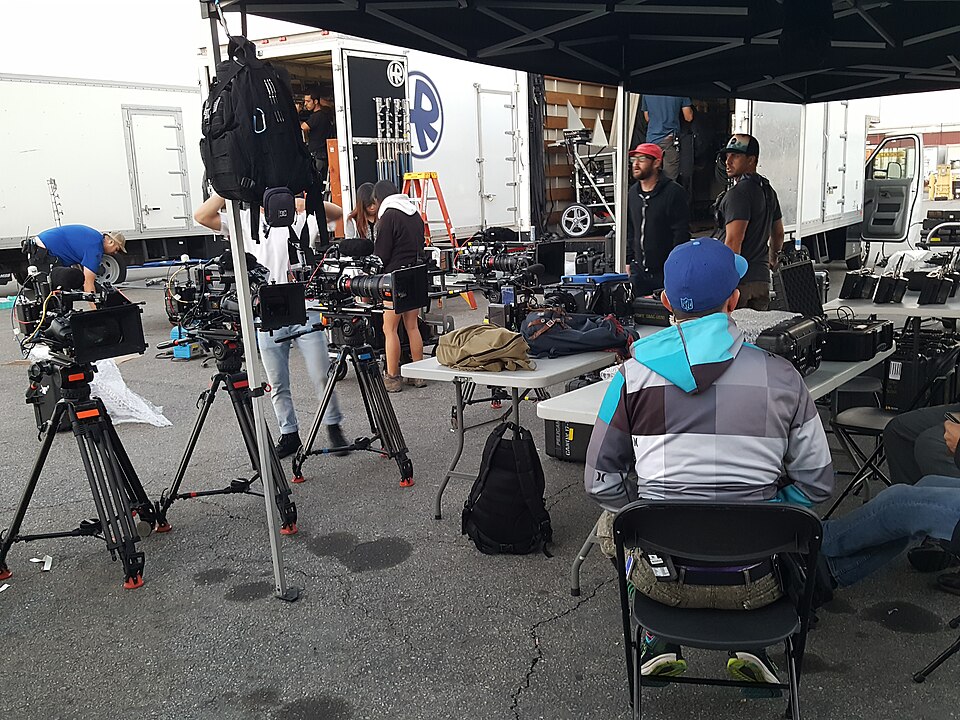
Photo by Oreos, CC BY-SA 3.0, via Wikimedia Commons
The absence of consistent policy across companies creates a coordination problem. An assistant at a company with no AI guidance who uses the tools and produces better output than one who does not is rewarded for behavior the company has neither sanctioned nor prohibited. That creates de facto encouragement in the absence of formal permission, which is how unauthorized AI use persists across large organizations.
AI Note Taking in Studio Meetings
At least one major management company interviewee described AI note takers present in meetings with series creatives. The confidentiality concern is significant. Development meetings discuss unannounced projects, talent relationships, and deal structures that studios treat as proprietary.
An AI notetaker that transcribes those conversations stores sensitive business intelligence in a system the studio does not control. The practical result is that development conversations about unannounced projects may be sitting in AI company training pipelines or cloud storage under terms the studio never reviewed. The assistant who deployed the tool may not have read the terms of service carefully enough to know whether that is happening.
What They Are Worried About
Environmental concerns came up repeatedly. Multiple assistants cited the energy consumption of AI systems as something that sits uncomfortably alongside their professional use of the tools.
The deeper concern is more direct: using AI to do your job faster is also evidence that your job can be done by AI. Assistants are in the position of proving their own replaceability every time they use the tool to speed up a task. This is the "despite their better judgment" quality the THR piece identifies, an entirely rational awareness of the situation that does not stop the behavior.
The Variety script reader experiment provides a useful data point. Readers who ran AI coverage against their own coverage on the same scripts found the gap was small enough to be worth measuring. They did not conclude AI was better. What they confirmed is that the gap at the entry level is small enough to be commercially concerning, which has the same implication for hiring regardless of which is better.

Photograph by D Ramey Logan, CC BY-SA 4.0, via Wikimedia Commons
The Development Career Pipeline
The standard development career progression runs from mailroom or assistant to script reader to development assistant to development executive to VP of Development to Head of Development or president of production. Script coverage is the first rung where professional judgment is demonstrated publicly.
If AI can perform that task at a pass/consider level indistinguishable from entry level human coverage, the pipeline loses its first qualification stage. The executives who rose through this pipeline built institutional knowledge about taste, packaging, and deal dynamics by reading thousands of scripts manually. That immersive learning is what the early career tasks were designed to produce. A pipeline that skips those tasks with AI assistance does not deliver the same development executive five years later.
The career pipeline concern maps onto an organization structure concern. Development assistants who are not reading scripts are not building relationships with agents and managers who submit material to their company. Those relationships are how development executives know which agencies are packaging which projects at what stage, and who is attaching themselves to what before anything reaches the public. That relationship capital is worth more than the script coverage itself and is not produced by an AI tool. The studios that eliminate entry level coverage in favor of AI output are trading a cheap data point for an expensive relationship network that currently grows through entry level roles.
The Variety Script Reader Experiment
Variety documented script readers who ran an informal experiment comparing AI generated coverage to their own coverage on the same scripts. They did not reach a verdict that AI was better. What they confirmed is that the gap between AI coverage and entry level human coverage is small enough to be commercially concerning.
That framing is precise. The claim is not that AI is as good as a senior development executive. The claim is that AI is close enough to an entry level reader to make the labor cost of the entry level reader harder to justify. The management company partner who told THR "these are not tools built on the nuances of our industry" is responding to the threat at the level where it is currently real.
The Policy Gap the Guilds Have Not Filled
The WGA's new deal requires studios to notify the union when licensing writers' work for AI training. That provision applies to WGA members. Development assistants, who read the scripts and write the notes that move material through the system, typically operate below the WGA membership threshold.
The coverage gap creates a structural vulnerability. Guild protections cover the named talent whose work appears on screen and the writers whose work is formally credited. The lower tier of the development pipeline, the readers and assistants who filter what reaches those writers and that talent, is largely outside any formal AI protection framework. Their labor is the first stage of the development process to be demonstrably replicable by current AI tools.
A guild that negotiates AI protections for its members does not protect the pipeline that feeds those members. The WGA deals with studios over how AI may be used in the writing room; no equivalent deal governs how AI may be used to decide what reaches the writing room. If AI coverage systematically deprioritizes certain kinds of material, the result is not visible as a decision at the greenlight stage. It accumulates as a pattern over time, as the range of material that gets developed narrows without anyone having explicitly chosen to narrow it.
Energy Consumption as a Signal
Assistants raising AI energy consumption as an ethical concern is unusual reflexivity in a workforce segment focused primarily on career advancement. The environmental concern signals that some portion of the assistant workforce is tracking the full cost of the technology even while using it.
That awareness does not change their behavior, but it does distinguish them from users who have not thought about the question. An assistant who knows they are contributing to data center energy demand while using AI note taking in a studio meeting has internalized the tension at the center of the industry's AI debate in a more specific form than most executive public statements have acknowledged.
The environmental reflexivity also suggests that entry level workers are thinking about the tools in terms that extend beyond their immediate job application. Assistants who track energy consumption are also the population that is most aware of what their own labor is worth and what it costs. When that same population describes the tools as potentially replacing their jobs, they are not speaking from uninformed fear. They are making an assessment from inside the workflow.
Warner Bailey's Industry Knowledge Argument
Bailey's claim that AI tools are "not built on the nuances of our industry" is testable. Industry nuances include executive taste (a CAA packaged script reads differently from a WME packaged one to a development assistant who knows the territory), talent relationships, budget expectations by genre, and the gap between what a greenlight requires and what a script says it requires.
General purpose AI tools trained on publicly available scripts have no access to those contextual layers, which are transmitted through relationships and experience rather than documents. Bailey's argument is that the tool gap is at the nuance layer, not the mechanical layer. The mechanical layer, reading a script and identifying structure, characters, and tone, is where the gap has already closed. Hollywood's executives are aware that AI use runs through their companies, even when they do not have policies governing it.
What a general purpose model cannot tell you is whether a script with a strong first act and a weak third act is fixable given the talent attached, whether the agency that submitted it has the relationships to package a director who could solve the problem, or whether the studio's current production slate has a gap that this material could fill. Those are the judgments that make development coverage useful to a greenlight process rather than decorative. Bailey's point is not that AI coverage is wrong on the facts; it is that it is incomplete on the context, and context is what makes the recommendation actionable.
The Wider Context
THR's coverage of the industry's broader AI posture describes studio executives sitting "on a strange fault line, thrilled by money saved, yet terrified of consumer generated content". The assistant picture fits that same fault line, just lower on the org chart.
The assistant population is a leading indicator for where AI adoption will go in the broader industry workforce. The executives who currently set policy were entry level workers fifteen years ago who did not have these tools. They have limited direct experience with how the tools change the work at the ground level. The assistants who spoke to THR have that direct experience and are, largely, choosing to use the tools anyway while being publicly unable to say so. That gap between individual adoption and institutional silence is how major structural changes have entered Hollywood before.
How Hollywood's internal AI conversations compare to its public statements is a recurring gap the industry has not resolved. Assistants operating without formal policy guidance are one more example of that gap playing out in practice.
THR's AI Issue places that assistant gap inside a broader picture of a studio system where AI adoption is proceeding faster than any of the institutions meant to govern it, from guilds to legal departments to HR policy.
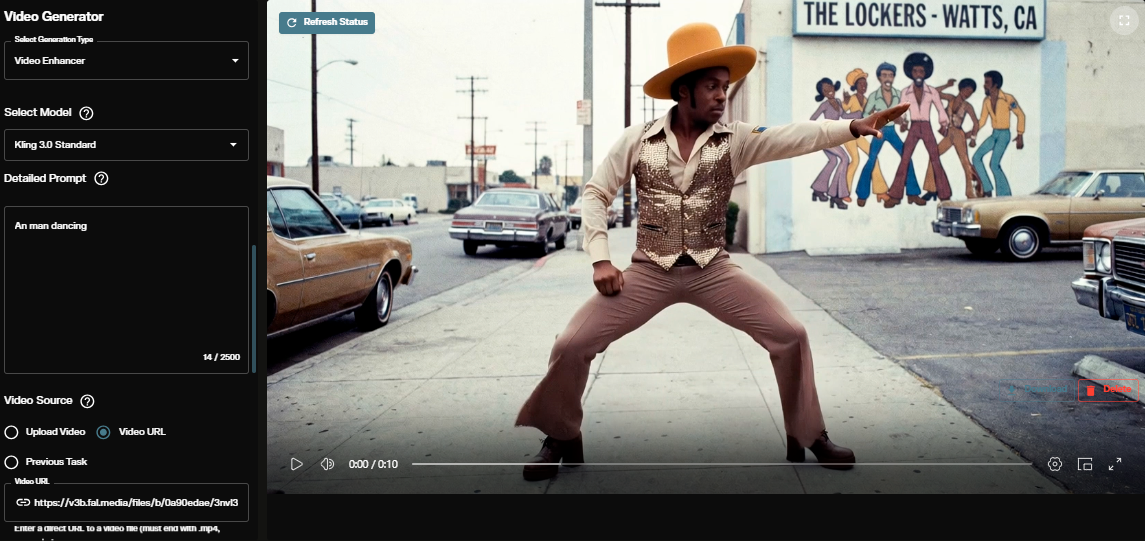
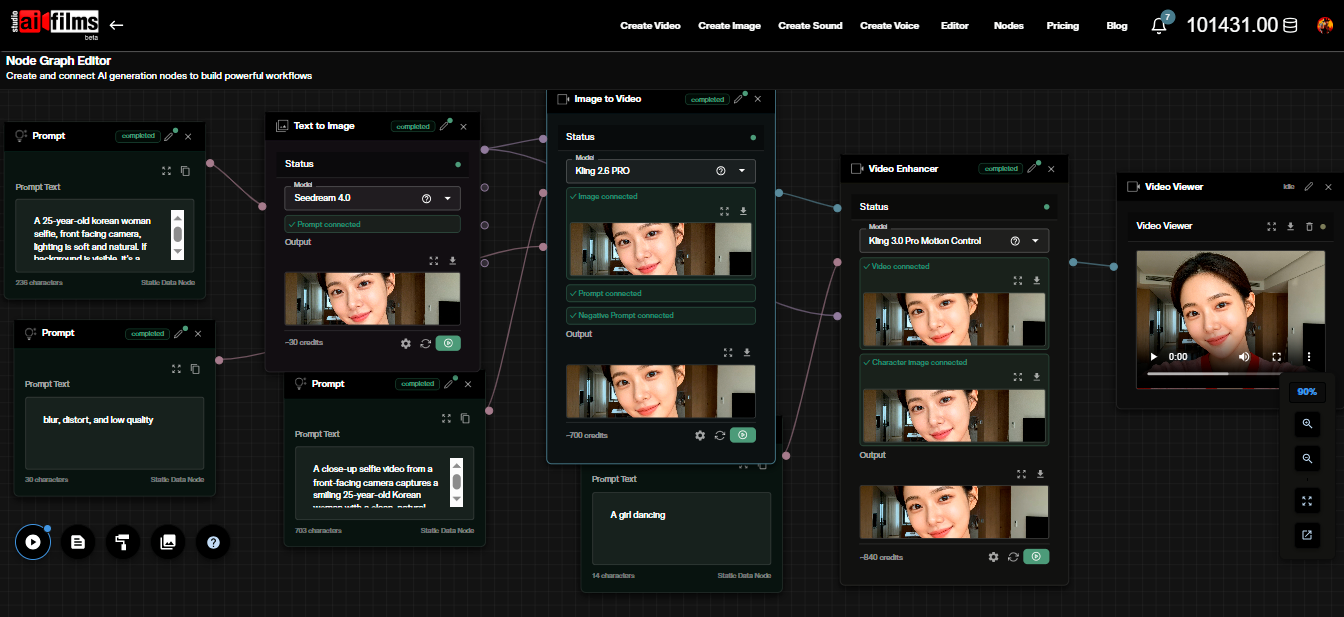
Filmmakers who want to develop their own work independently of studio pipelines can access AI generation tools directly through the AI FILMS Studio video workspace.
Sources
The Hollywood Reporter | Variety | THR AI Issue, May 2026
Continue Reading
.jpg?w=3840)


Video & LipSync
- Video Generator
- Text to Video
- Image to Video
- Start-End Frame to Video
- Draw to Video
- Motion Control
- Video Enhancer
- Video Upscaler
- Video Extend
- Video to Video LipSync
- Audio to Video LipSync
- Image to Video LipSync
- Video FaceSwap
- Seedance 2.5
- WAN 3.0
- Seedance 2
- FLUX 3
- Minimax H3
- Vidu Q3 Pro
- Grok Imagine Video 1.5
- Gemini Omni
- Google Veo 3.1
- Kling 3.0 Pro
- Luma Ray 3.2
- LTX 2.3
- Happy Horse 1.1
- Kling 3.0 Motion
- ByteDance Upscaler
- InfiniteTalk
- InsightFace
Image & Edit
- AI Character
- AI Actor
- Art Generator
- Text to Image
- Image to Image
- LoRA Image to Image
- Draw to Edit
- Image LoRA Training
- Remove Background
- Image Enhancer
- MidJourney 8.0
- Krea 2
- OpenAI GPT Image 2.0
- Nano Banana Pro Ultra
- Nano Banana 2 Lite
- Nano Banana Pro
- Minimax Image
- Clarity Pro
- Z-Image Turbo LoRA
- Krea 2 Turbo LoRA
- Z-Image LoRA Trainer
- Qwen Image LoRA Trainer
- Background Erase Network 2 (BEN2)