

Photo by Jakob Owens on Unsplash
Share this post:
What Hollywood Really Says About AI in Private
Three major trade publications ran converging stories in 72 hours. The Hollywood Reporter, IndieWire, and Forbes each came to the same conclusion from different angles: what the entertainment industry says about AI publicly and what it does privately are two different things. The gap is not narrowing.
The Assistants Using AI They Won't Talk About
The Hollywood Reporter's April 4 investigation found that Hollywood assistants are integrating AI into script development work despite serious reservations about what that means for their own careers. Entry level workers are using tools like ChatGPT and Claude to write coverage, research comparable titles, and draft development notes. They are doing it quietly.
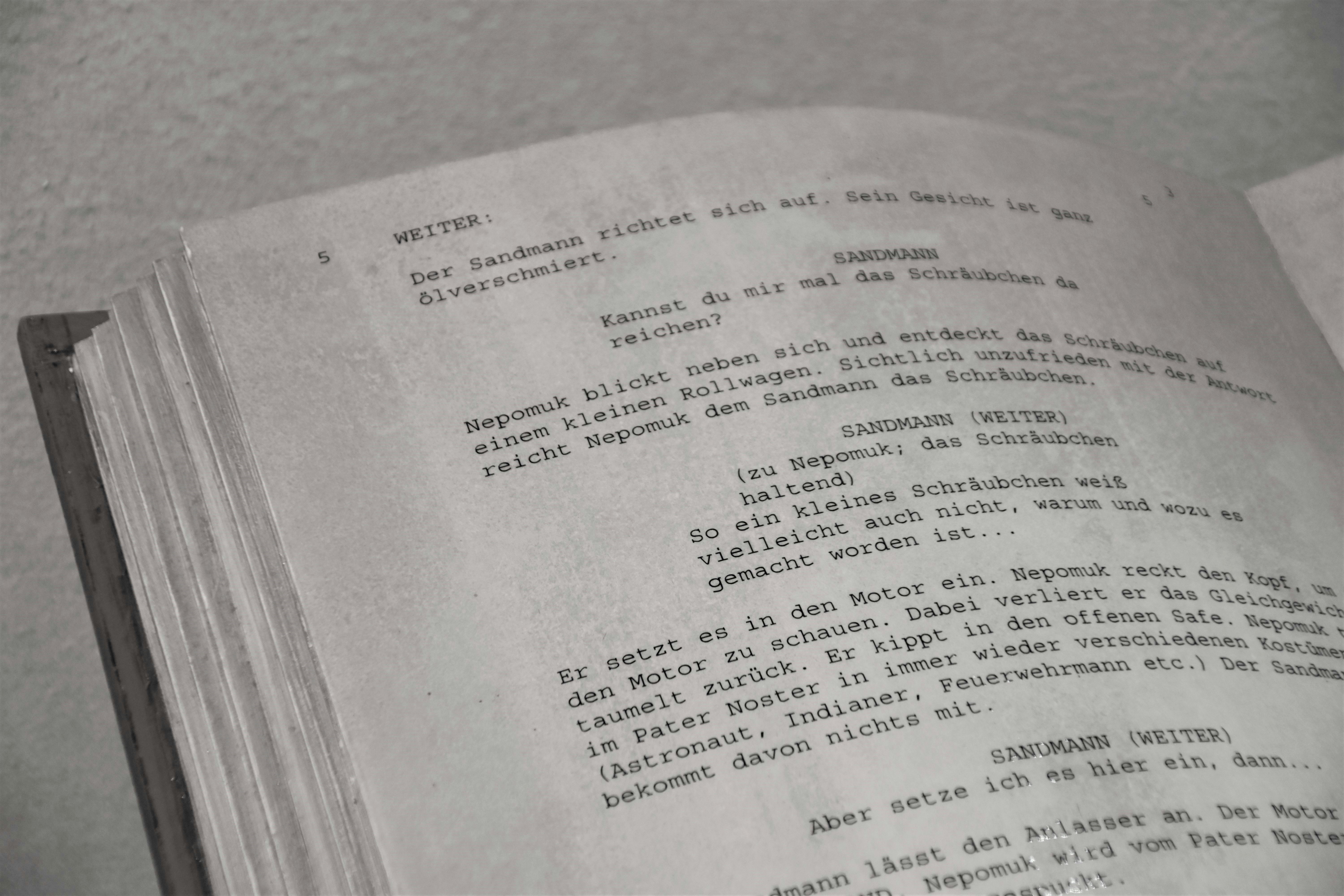
The irony is stark. The assistant track has historically functioned as the industry's main entry point, a pipeline through which readers become development executives, coordinators become producers, and assistants become agents. It is also the job category most exposed to AI automation. The people with the most reason to resist AI tools are among the most active daily users.
Their hesitation is not ideological. It is practical. Assistants who use AI to speed up their output know the same technology is the argument studios will eventually make for eliminating their positions. Using it anyway reflects less a change of heart than a recognition that opting out is not a viable career strategy when everyone else is using it too.
What the Off the Record Conversations Sound Like
IndieWire published a reported piece on April 2 documenting the candid, private conversations happening across the industry. The verdict: what people say off the record is substantially different from what appears in trade coverage or studio communications.
Writers, producers, and executives acknowledge using AI regularly in private settings they would not reproduce in interviews. Creativity concerns coexist with job anxieties in the same conversation. Many describe a split consciousness: they understand the threat, they use the tools anyway, and they genuinely do not know how to resolve the contradiction. IndieWire's reporting reflects a broader pattern that IndieWire's Sundance coverage captured months earlier: honest AI conversations in Hollywood happen at the margins, not in the official panels.
The public silence is not simply caution. It reflects a real institutional incentive to stay ambiguous. Studios want contract flexibility. Guilds want documented violations to negotiate against. Individuals want plausible deniability. As earlier reporting has shown, Hollywood has been hiding how much AI it uses for years, maintaining an informal "don't ask, don't tell" arrangement that the industry has found convenient from every side.
Outsiders Already Have the Advantage
Forbes contributor Luis Romero reported on April 3 that while studios have been navigating AI cautiously, a separate class of creators has moved past deliberation into mastery. Tech native filmmakers, independent creators with no legacy infrastructure to protect, and AI native storytellers have spent the past two years learning these tools at a depth most studio development teams have not yet reached.
Romero's conclusion: collaboration between traditional Hollywood and AI fluent outsiders is not just likely, it is inevitable. Studios have the IP, the distribution infrastructure, and the talent relationships. Outsiders have the technical literacy and the willingness to experiment without institutional constraints. Neither group can win the next phase of production alone. The question is what the terms of that collaboration look like, and who negotiates them from a position of strength.
This dynamic maps directly onto what Lionsgate articulated at CES 2026 when the studio declared that AI native filmmakers represent the next generation of auteur directors. The studios know the outsiders are coming. Some are recruiting them directly.
The Gap That Keeps Widening
The three April reports describe the same structural problem from three vantage points. Assistants use AI and hide it. Executives use AI and deny it. Studios adapt to AI while publicly projecting caution. And meanwhile, the outsiders who are not hiding anything are building a technical lead that traditional Hollywood will eventually have to either acquire or compete against.
A proactive AI strategy requires first closing the gap between private behavior and public position. As long as studios use AI more than they admit and individuals fear acknowledging their own tools, the industry cannot build coherent governance, meaningful guild agreements, or credible public standards. The same creative community that uses AI daily to survive is the one most exposed when those tools make their current roles redundant.
The Forbes framing, that collaboration is inevitable, may be the most optimistic read available. But inevitable collaboration does not mean equitable collaboration. The side that arrives at the table having already mastered the tools will set the terms.
What It Means for Careers and Rights
The THR reporting is notable precisely because it focuses on the bottom of the career ladder. The debate about AI in Hollywood has centered on established talent: the writers whose credits will train models, the actors whose likenesses are at risk, the directors whose creative authority is being redefined in contract negotiations. The assistants are a different story.
They have no union protection for the work they are already doing with AI. No contract governs what happens when an executive discovers their script coverage was written with ChatGPT. No guild has negotiated terms for the role of AI in entry level development work. They are operating in a legal and professional gray zone that the industry's formal institutions have not yet addressed.
Joseph Gordon-Levitt's push for creator compensation and consent in AI governance focuses on the rights of established creators, the same issue his Netflix thriller "2034" explores fictionally. The assistants represent a different population: workers who are not yet established enough to have rights to protect, but who are already deeply entangled with the tools that may eventually replace them. Their situation does not fit neatly into any of the frameworks currently under negotiation.
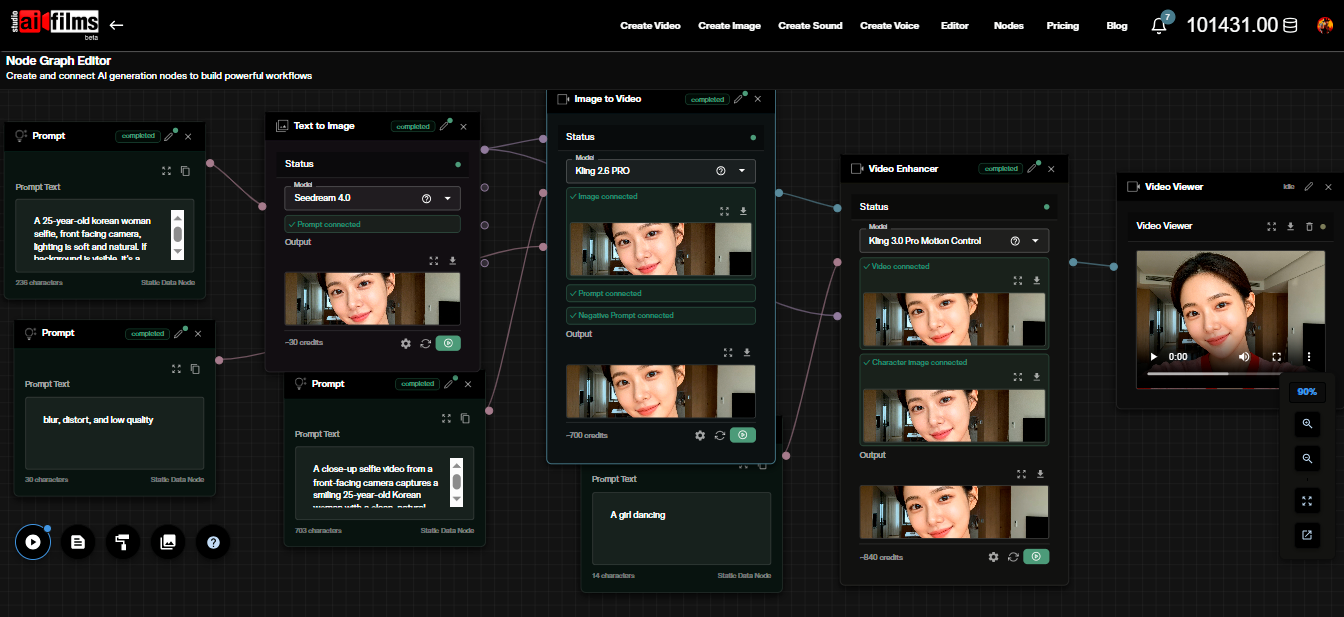
Generate and test your own AI video production workflow at AI FILMS Studio.
Sources
The Hollywood Reporter | IndieWire | Forbes
Continue Reading
.jpg?w=3840)


Video & LipSync
- Video Generator
- Text to Video
- Image to Video
- Start-End Frame to Video
- Draw to Video
- Motion Control
- Video Enhancer
- Video Upscaler
- Video Extend
- Video to Video LipSync
- Audio to Video LipSync
- Image to Video LipSync
- Video FaceSwap
- Seedance 2.5
- WAN 3.0
- Seedance 2
- FLUX 3
- Minimax H3
- Vidu Q3 Pro
- Grok Imagine Video 1.5
- Gemini Omni
- Google Veo 3.1
- Kling 3.0 Pro
- Luma Ray 3.2
- LTX 2.3
- Happy Horse 1.1
- Kling 3.0 Motion
- ByteDance Upscaler
- InfiniteTalk
- InsightFace
Image & Edit
- AI Character
- AI Actor
- Art Generator
- Text to Image
- Image to Image
- LoRA Image to Image
- Draw to Edit
- Image LoRA Training
- Remove Background
- Image Enhancer
- MidJourney 8.0
- Krea 2
- OpenAI GPT Image 2.0
- Nano Banana Pro Ultra
- Nano Banana 2 Lite
- Nano Banana Pro
- Minimax Image
- Clarity Pro
- Z-Image Turbo LoRA
- Krea 2 Turbo LoRA
- Z-Image LoRA Trainer
- Qwen Image LoRA Trainer
- Background Erase Network 2 (BEN2)