
Casting Directors Launch First AI Guidelines at Cannes 2026

Photo by Rendy Novantino on Unsplash
Share this post:
Casting Directors Launch First AI Guidelines at Cannes 2026
The International Casting Directors Association officially launched AI guidelines for casting platforms at the Cannes Film Festival, establishing the first formal AI governance framework from an international casting industry body. The document, published during the festival's Marché du Film, addresses transparency, consent, data protection, bias, and discrimination in how AI is deployed across the casting workflow.
What the Guidelines Say
The ICDA's position is not a ban on technology. The guidelines draw a precise line: AI can assist casting professionals, but may not replace human insight, intuition, or creative judgment. The association specifically opposes AI systems designed to bypass professional casting expertise or automate creative decision making.
ICDA President Lana Veenker described the framework's intent: "These guidelines are not anti-technology. They are about ensuring that innovation develops responsibly and in partnership with the people whose creativity, expertise, and livelihoods are directly affected by these technologies. AI can be a valuable tool, but it must never replace human insight, intuition, and artistic judgement".
The guidelines are a living document, publicly available on the ICDA's website and intended to evolve alongside developments in AI and industry practice.
The specific opposition to systems that "bypass professional expertise or automate creative decision making" gives platform developers clear functional parameters. A submission sorting tool is different from a selection tool. A database search with AI assisted filters is different from an algorithm that scores performers and routes their submissions without a human reviewing them first. The framework draws that line in functional terms rather than in technical ones, which makes it more durable as the technology changes.
The Cannes Marché du Film is where the ICDA chose to launch the framework because it draws the highest concentration of international film industry professionals of any week in the calendar year. Producers, distributors, sales agents, directors, and platform executives from every major market converge at the same time, making it the most efficient venue for communicating an industry governance position.
The 2026 edition's AI For Talent Summit on May 15 and 16 provided an additional reason. An invitation only gathering focused on AI integration in creative and business processes was already in place. The ICDA guidelines arrived with a ready made audience of the specific professionals who needed to hear them.

Why Cannes and Why Now
The casting space has been under particular pressure from AI automation. AI systems now exist that can match performers to roles using voice, facial recognition, and prior performance data without a human casting director reviewing the submission. The guidelines oppose precisely this category of tool, where the AI functions as a decision maker rather than an assistant.
The timing of the launch also reflects the legislative and contractual context of 2026. SAG-AFTRA's agreements with studios established protections for performers after they are cast. The ICDA guidelines address the earlier stage, where the decision about who gets considered for a role is made. Together they provide governance across the full arc from initial submission to final selection.
Support From the Industry
Two major organizations endorsed the guidelines upon launch. Spotlight, the UK's primary casting platform, had its Managing Director Matt Hood on record immediately: "Spotlight welcomes the ICDA's work on AI and these new guidelines, which represent a vital step in safeguarding the creative and ethical integrity of the casting process".
Filmmakers Europe also endorsed the framework. The organization's CEO Dr. David Zitzlsperger confirmed alignment with the ICDA's position on responsible AI in casting and stated that the association actively shaped responsible AI use in casting rather than reacting to it after the fact.
The combination of a casting platform endorsement and a filmmaker organization endorsement on the same day signals that the guidelines had been consulted across constituencies before the public launch. A document that arrives with endorsements already in place has had time to be negotiated into a form that multiple parties can support. The ICDA's preparation reflects a deliberate strategy for maximizing the reach of the framework from its first day of availability.
A Body Already Familiar With AI
The guidelines carry credibility because the ICDA is not approaching AI from outside the technology. In 2025, the association partnered with IMDbPro to accelerate casting workflows globally, integrating professional tools into the casting pipeline. That partnership gave ICDA direct experience with where technology helps and where it creates risk, before any formal governance work began.
The framing Veenker used, "in partnership with the people whose creativity, expertise, and livelihoods are directly affected," reflects that experience. These guidelines come from an organization that had been working with casting platforms on AI integration for at least a year before writing them.
That chronology distinguishes the ICDA's guidelines from governance documents written by bodies reacting to technology they have not used. The ICDA had a working relationship with a major casting platform, had observed how AI tools affected the day-to-day work of its members, and then wrote a framework. The sequence matters because it produces specificity. An organization that has seen the actual failure modes writes different rules than one imagining hypothetical risks.
What Filmmakers Europe's Endorsement Adds
Filmmakers Europe, whose CEO Dr. David Zitzlsperger confirmed alignment with the ICDA's framework, represents a constituency that interacts with casting differently than performers or casting directors. Producers and directors make final casting decisions. Their endorsement of a framework that constrains automated casting systems means they are accepting that the final human creative judgment in casting belongs to casting professionals, not to AI platforms operating before those professionals are involved.
That cross-sector endorsement is how governance frameworks gain operational reach. The guidelines cannot be enforced through a collective bargaining process in the way that guild agreements can. Their authority comes from the professional organizations in multiple roles committing to them as standards. Filmmakers Europe's support extends the framework beyond casting directors to the production community that commissions casting work.
The endorsement structure also creates a feedback mechanism. When Filmmakers Europe's members encounter AI casting tools that violate the guidelines, they have a framework to reference when raising the issue with the ICDA. That reporting pathway turns the living document commitment from a phrase into a process.
The Bigger Picture
The ICDA guidelines sit alongside a broader governance wave launched during Cannes 2026. The SAG-AFTRA four year deal finalized in May 2026 codified AI protections for performers at the union level. The Academy's new rules for the 99th Oscars ban AI generated performances and screenplays from award eligibility.
The ICDA guidelines extend that governance into the casting workflow, the stage in production where human talent is selected. They establish what casting platforms may not do with AI, just as the SAG-AFTRA contract establishes what studios may not do with performer likenesses once they are cast.
The Five Areas the Framework Addresses
The ICDA guidelines cover five specific domains: transparency, consent, data protection, bias, and discrimination. Each addresses a distinct way AI systems can affect performers and casting professionals when deployed without appropriate constraints.
Transparency requires that performers know when AI is being used to evaluate their submissions. Consent establishes that biometric data used in casting analysis requires explicit permission from the performer. Data protection governs how submission materials, which may include video, audio, and physical measurements, are stored and used after a casting decision has been made. Bias and discrimination address the risk that AI models trained on historical casting data replicate the demographic patterns of past selections rather than evaluating performers on current merit.
What Platforms Are and Are Not Permitted to Do
The guidelines create a clear category of prohibited function. An AI system that scores a performer's submission and determines whether it advances to a human reader is operating as a decision maker. The ICDA opposes that use. An AI system that organizes, transcribes, or helps a casting director locate specific types of submissions within a large pool is operating as an assistant. That use is acceptable under the framework.
The distinction matters because both uses are technically possible with the same underlying tools. A facial recognition system can be deployed to flag submissions that match a stated character brief for human review, which is assisting. The same system can be deployed to automatically filter out submissions that do not meet a facial geometry threshold, which is deciding. The guidelines require that platforms deploying AI in casting make the functional distinction clear and design their systems accordingly.
ICDA's IMDbPro Partnership as Foundation
The ICDA's 2025 partnership with IMDbPro gave the association direct operational experience with AI adjacent tools in the casting pipeline before the guidelines were written. IMDbPro integrates performer data, credits, and professional contact information into a platform that casting directors use for research and outreach. That is a different category of tool from automated matching systems, but working with it gave ICDA firsthand understanding of where platform level technology helps and where it creates dependency.
That experience is visible in the framework's operational specificity. The guidelines do not argue against technology in general terms. They identify specific functions, automated matching, biometric scoring, unaccompanied algorithmic selection, and state clearly that those functions cannot replace what a casting professional brings to the process. An organization without direct platform experience would have produced a vaguer document.
What Spotlight's Endorsement Means
Spotlight is the primary casting platform for the UK film and television industry, used by the vast majority of British performers and casting directors as their working database. Its Managing Director Matt Hood's immediate public endorsement of the ICDA guidelines is significant because it commits the UK's central casting infrastructure to the framework from the day it was published.
For the guidelines to have operational effect rather than remaining a statement of principle, the platforms through which casting work actually happens need to adopt them. Spotlight's endorsement signals that the UK's largest casting platform will apply the framework to its AI feature development. That is the first concrete step from principle to implementation, and it came from the most important platform for the UK market.
The Governance Wave Across Cannes 2026
The ICDA launch was one of several governance frameworks that arrived at or around Cannes 2026. The festival itself saw the DGA, SAG-AFTRA, and WGA all present at panel discussions on AI, with each guild describing the specific contractual protections they had negotiated. The Academy's rules for the 99th Oscars banning AI generated performances and screenplays from award eligibility were also in effect during the festival period.
The concentration of governance activity at a single festival reflects where the industry's attention was focused. Cannes 2026 became the venue where the post negotiation, post rulemaking community took stock of what it had built. The ICDA guidelines added the casting workflow to the governance map, filling a gap that the performer facing guild agreements and Academy rules had not directly addressed.
How Bias Provisions Address Historical Casting Patterns
The bias and discrimination section of the guidelines addresses a structural risk in AI systems trained on historical casting data. If past casting decisions reflected demographic patterns that disadvantaged certain groups, an AI system trained to predict "castable" based on prior outcomes would replicate those patterns and present them as neutral algorithmic output.
Casting directors make subjective judgments that are influenced by the director, the script, the production context, and the specific moment in a performer's career. An AI system cannot replicate that context. It can only predict based on what has been selected before. The ICDA guidelines treat the displacement of that contextual judgment by pattern matching as a category of discrimination risk, not merely an efficiency tradeoff.
What "Living Document" Signals
The ICDA described the guidelines as a living document that will evolve alongside developments in AI and industry practice. That framing is specific and important. A static rulebook published once and amended only through formal process cannot keep pace with AI capability development. A framework that expects to revise itself signals that the ICDA has thought about what happens when the AI landscape changes again.
The living document commitment also addresses a concern that governance frameworks become outdated and create obstacles for tools that did not exist when the rules were written. By stating upfront that the guidelines will evolve, the ICDA retains the ability to add protections for new risks and remove restrictions that become obsolete as the technology matures and the industry develops better verification tools.
The public availability on the ICDA website means the guidelines are accessible to casting platforms, performers, producers, and technology developers simultaneously. A framework that only circulates within the membership of the organization that wrote it has limited effect on the technology vendors building the tools. Public availability creates accountability by making the standard visible to the parties subject to it as well as those enforcing it.
The International ICDA Membership Context
The ICDA represents casting directors across multiple countries and production markets. A governance framework from an international body has different reach than a national union agreement. The SAG-AFTRA deal protects performers in productions covered by that union's jurisdiction. The ICDA guidelines, as a professional association framework rather than a collective bargaining agreement, apply to the professional practices of casting directors regardless of which country's production they are working on.
That distinction matters for international coproductions, which constitute a significant and growing share of the content produced for global streaming platforms. A casting director working on a US European coproduction is operating across multiple regulatory jurisdictions. The ICDA guidelines provide a professional standard that applies independent of which jurisdiction's labor law governs the specific contract.
For casting directors working across borders, a single professional framework from their own international association is more useful than consulting the labor law of each country in which they work. That practical utility is one reason why international professional associations produce governance frameworks that national union agreements cannot fully replace.
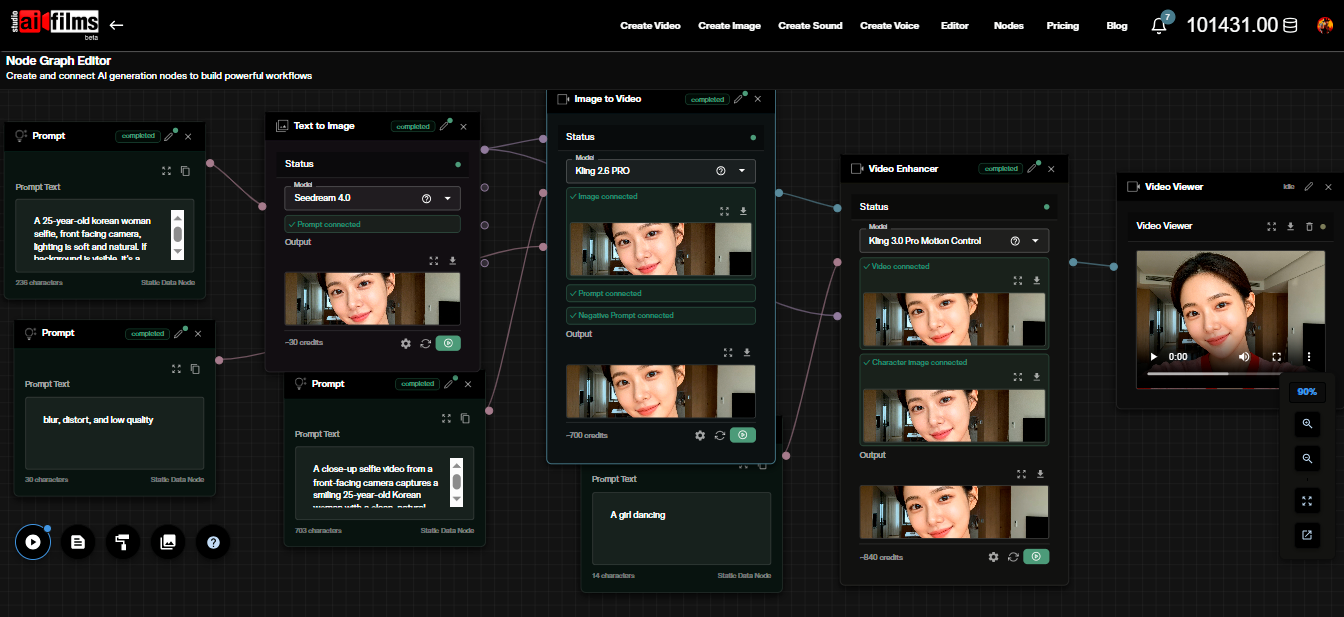
Producers and filmmakers using AI FILMS Studio to generate video concepts and visual development work collaborate with casting professionals who now have a formal framework for where AI may and may not be used in their side of the process.
Sources
Variety | Screen Daily | Spotlight | Filmmakers Europe
Continue Reading
.jpg?w=3840)


Video & LipSync
- Video Generator
- Text to Video
- Image to Video
- Start-End Frame to Video
- Draw to Video
- Motion Control
- Video Enhancer
- Video Upscaler
- Video Extend
- Video to Video LipSync
- Audio to Video LipSync
- Image to Video LipSync
- Video FaceSwap
- Seedance 2.5
- WAN 3.0
- Seedance 2
- FLUX 3
- Minimax H3
- Vidu Q3 Pro
- Grok Imagine Video 1.5
- Gemini Omni
- Google Veo 3.1
- Kling 3.0 Pro
- Luma Ray 3.2
- LTX 2.3
- Happy Horse 1.1
- Kling 3.0 Motion
- ByteDance Upscaler
- InfiniteTalk
- InsightFace
Image & Edit
- AI Character
- AI Actor
- Art Generator
- Text to Image
- Image to Image
- LoRA Image to Image
- Draw to Edit
- Image LoRA Training
- Remove Background
- Image Enhancer
- MidJourney 8.0
- Krea 2
- OpenAI GPT Image 2.0
- Nano Banana Pro Ultra
- Nano Banana 2 Lite
- Nano Banana Pro
- Minimax Image
- Clarity Pro
- Z-Image Turbo LoRA
- Krea 2 Turbo LoRA
- Z-Image LoRA Trainer
- Qwen Image LoRA Trainer
- Background Erase Network 2 (BEN2)