
Cannes 2026 Festival Opens as AI Debate Defines Day One
.jpg?w=3840&q=90)
Photo by Yuan Hsien-Chieh / WikiPortraits
Share this post:
Cannes 2026 Festival Opens as AI Debate Defines Day One
The 79th Festival de Cannes opened May 12, 2026, with 22 films competing for the Palme d'Or and artificial intelligence dominating the conversation at every press conference. Hollywood's major studios were absent from the main competition, but the questions reshaping their industry were present on every stage.
Frémaux Proposes Certification for Films Made Without AI
Festival General Delegate Thierry Frémaux opened by taking a clear position on the off screen debate. "What is certain is that here in Cannes, we stand with the artists, we stand with the screenwriters and we stand with everyone in these professions, with actors and voice actors alike", he said.
He then proposed an idea that had not been floated publicly before: a certification label for films produced without AI, modeled on organic food and wine labeling. "We will say, 'This film has been made without artificial intelligence'", Frémaux told reporters. The concept would give audiences a way to identify films made entirely by human hands, much as food labels identify produce grown without synthetic inputs.
When asked about the Academy's new rules barring AI generated performances and scripts from Oscar eligibility, Frémaux called the guidelines "obvious". He also addressed concerns about Hollywood's broader direction: "When people say that America is turning inward, it's not true. In any case, Hollywood is opening up to the international scene, opening up to universality; that's what Cannes is all about".
.jpg)
Mike is Michi, CC BY-SA 4.0, via Wikimedia Commons
Frémaux's certification proposal came from one of the positions in the festival with the most direct power to shape what audiences know. As General Delegate, he selects the films for the Official Competition and sets the tone for each edition.
His willingness to raise the certification idea publicly rather than through private channels with distributors or studios signals that Cannes is prepared to take a position beyond simply barring AI films from competition.
Hollywood Studios Step Back, Independent Films Fill the Gap
Major Hollywood studios were not represented in the competition this year, a shift that has been building as the industry navigates its own internal disputes over streaming, budgets, and labor. Independent distributors carried the American presence instead.
James Gray's crime drama "Paper Tiger", acquired by Neon, brings Adam Driver and Scarlett Johansson together for the first time since "Marriage Story". The film follows two brothers pulled into a violent scheme involving Russian organized crime, with Miles Teller also starring. Gray returns for his seventh Cannes competition, having first appeared here with "The Yards" in 2000. Ira Sachs brings "The Man I Love", starring Rami Malek, as the other American entry in the main competition.
Park Chan-wook Leads a Jury Rooted in Global Cinema
Park Chan-wook chairs the competition jury, becoming the first South Korean filmmaker to hold that role at the festival. The director of "Oldboy", "The Handmaiden", and "Decision to Leave" won Best Director at Cannes in 2022 and now presides over a jury that spans multiple disciplines and continents.
Park Chan-wook won Best Director at Cannes in 2022 for "Decision to Leave." Before that win, he had competed twice and taken home prizes both times: the Grand Prix for "Oldboy" in 2003 and the Jury Prize for "Thirst" in 2009. He returns to the competition not as a newcomer but as a three-time prize winner taking the chair.
His Cannes record gives him a credibility with the filmmakers competing in 2026 that a jury president from outside the competition's history would not have. The directors in the field have competed in the same context where he has won.
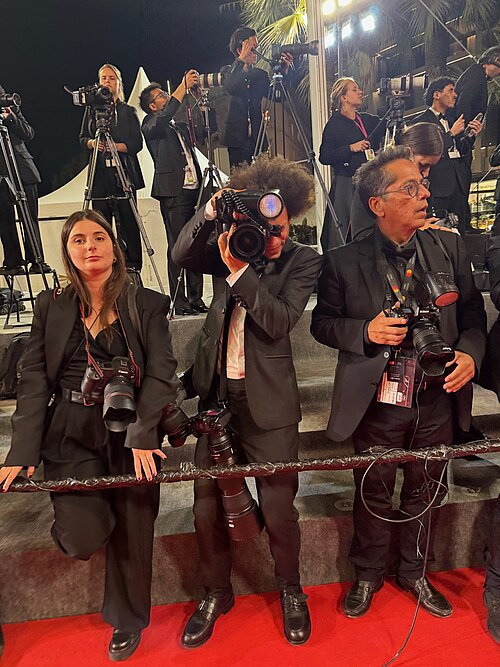
Photo by Jennifer 8. Lee / WikiPortraits
Serving alongside Park: Oscar winner Demi Moore, "Nomadland" director Chloé Zhao, actor Stellan Skarsgård, actress Ruth Negga, director Laura Wandel, actor Isaach De Bankolé, director Diego Céspedes, and screenwriter Paul Laverty. The opening day also featured a reunion screening for the 25th anniversary of "The Fast and the Furious", with Vin Diesel, Michelle Rodriguez, and Jordana Brewster in attendance.
What the "Organic Film" Label Would Do
A certification label for human made films would function as a producer disclosure standard visible at the point of audience contact. It would appear on the poster, the streaming platform listing, and the festival program. Unlike a rating system, the label would be opt-in, with productions choosing to apply rather than being assessed by a central authority.
The food and wine parallel Frémaux chose is precise. Organic certification in those industries emerged from consumer demand rather than producer initiative. Buyers wanted to know what they were purchasing, and the label was created to answer that question.
Whether a certification body for film would carry enforcement authority or function as an honor system is a question the proposal did not answer on opening day. What it did do is frame the issue as a consumer information problem rather than a regulatory one, which changes the political terrain for any organization that tries to build it.
The Hollywood Studios' Calculated Absence
Major studio films were not present in the main competition at the 79th Cannes Film Festival. The industry's internal disputes over streaming economics, AI labor contracts, and residual frameworks consumed the energy that would otherwise have gone toward festival submissions.
The studios' absence was not complete silence. Their problems were the subject of every AI discussion on opening day. The questions that kept the major studios occupied at home were the same questions Frémaux, the jury, and the competition films were addressing from the Palais.
Independent distributors carried the American competition presence. That shift is not a crisis for Cannes. The festival has always selected on film quality rather than production scale, but it describes a moment in which the American industry is fighting battles at home that it has not finished.
James Gray Returns for a Seventh Competition
James Gray's "Paper Tiger" is his seventh film in Cannes competition. His first appearance was with "The Yards" in 2000. That record places him alongside directors whose Cannes careers stretch across generations, even though he has not won the Palme d'Or.
"Paper Tiger" stars Adam Driver and Scarlett Johansson, who appeared together in Noah Baumbach's "Marriage Story" in 2019. Their return as a pairing in a new genre context gives the film a built in reference point for audiences who followed their prior collaboration. Miles Teller rounds out the central cast.
The film follows two brothers entangled in a violent scheme involving Russian organized crime. Gray's previous Cannes films have ranged from crime drama to historical epic. "Paper Tiger" returns him to the American crime genre where his career began.
Ira Sachs and the Second American Entry
Ira Sachs brought "The Man I Love", starring Rami Malek, as the second American film in main competition. Sachs has built a consistent international festival presence with work that rarely depends on studio backing or major commercial infrastructure.
Malek won an Academy Award for Best Actor for "Bohemian Rhapsody" in 2019 and has continued to take on projects that prioritize character over franchise structure. His collaboration with Sachs places a major awards name inside the independent production context where Sachs has always worked.
Both American competition entries in 2026 were distributed by companies outside the major studio system. That structure reflects how American independent cinema reaches Cannes when the studios are focused elsewhere.
Park Chan-wook on Political Cinema
Park Chan-wook addressed the question of politics in film directly at the opening press conference. "I don't believe that films only with political statements are great films", he said, "but just because a film is political, it doesn't mean it's an enemy of art." He described his approach as welcoming political content without prejudice.
The statement carried weight because of his own filmmaking record. "Oldboy" and "The Handmaiden" contain political dimensions that are inseparable from their dramatic structure. His rejection of a false opposition between politics and art draws on that direct experience.
His becoming the first South Korean filmmaker to chair the main competition jury at Cannes arrived four years after South Korean cinema demonstrated its international reach through "Parasite" and other productions that reached global audiences at theatrical scale.
The Jury's Range of Experience
The 2026 jury assembled directors, actors, and writers with experience across multiple national industries. Chloé Zhao won the Academy Award for Best Director for "Nomadland" in 2021. Laura Wandel received international attention for her Belgian debut feature "Playground" in 2021. Diego Céspedes is Chilean. Stellan Skarsgård has worked in European and American productions across five decades.
Isaach De Bankolé has appeared in films from directors including Claire Denis, Jim Jarmusch, and Francis Ford Coppola. The range of working experience on the jury means no single market or aesthetic tradition will dominate the deliberations.
Paul Laverty has written the screenplays for Ken Loach's major films for more than two decades, including "The Wind That Shakes the Barley" and "I, Daniel Blake." His presence on the jury reflects a tradition of politically engaged cinema that connects directly to the political questions the festival was wrestling with on opening day.
The Opening Ceremony and Its Contrasts
The opening day included a reunion screening for the 25th anniversary of "The Fast and the Furious", with Vin Diesel, Michelle Rodriguez, and Jordana Brewster in attendance. The franchise became one of the highest grossing series in cinema history. That category of commercial cinema is almost entirely absent from the Cannes competition.
The anniversary screening placed one of the defining franchise properties of the 2000s inside a festival context that was simultaneously debating what human made cinema means. The contrast was not planned as a statement, but it was visible to anyone in the room.
The opening ceremony featured honorary tributes and recognition of the festival's history alongside the AI debate that defined the press conferences. Cannes as a celebration of cinema and Cannes as a space where the industry's hardest current argument was being made ran as parallel events throughout the day.
What Opening Day Established
The questions Frémaux raised on opening day did not resolve over the following 12 days. They deepened. Peter Jackson's "just a tool" argument, del Toro's "f---ing app" rejection at Cannes Classics, and the Dogma 25 movement that launched on May 16 all built on the terms set in the opening press conference.
The certification proposal remains an idea rather than a policy. No organization had announced plans to build the infrastructure as of opening day. But Frémaux's willingness to name it publicly in front of the international press gave it a platform that comparable proposals had not received.
The 2026 festival will be remembered for the films that competed for the Palme d'Or and for the AI conversation that ran alongside every screening. Opening day established that the conversation was not a sidebar.
Every major AI statement made at Cannes between May 12 and May 24 referenced a position that was already on the table from the first press conference. Frémaux set the frame, and the festival's participants spent the rest of the edition responding to it.
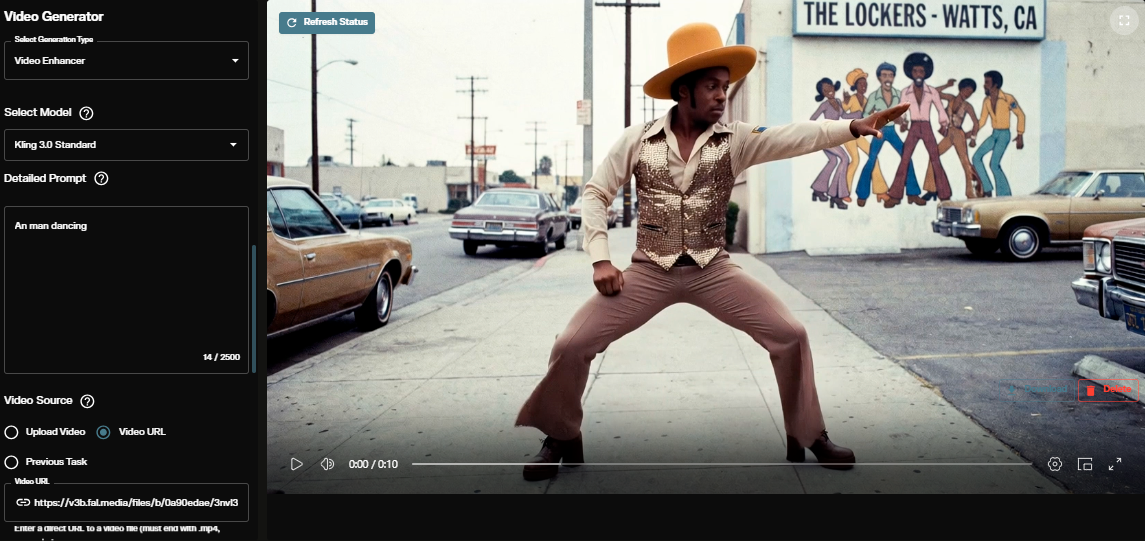
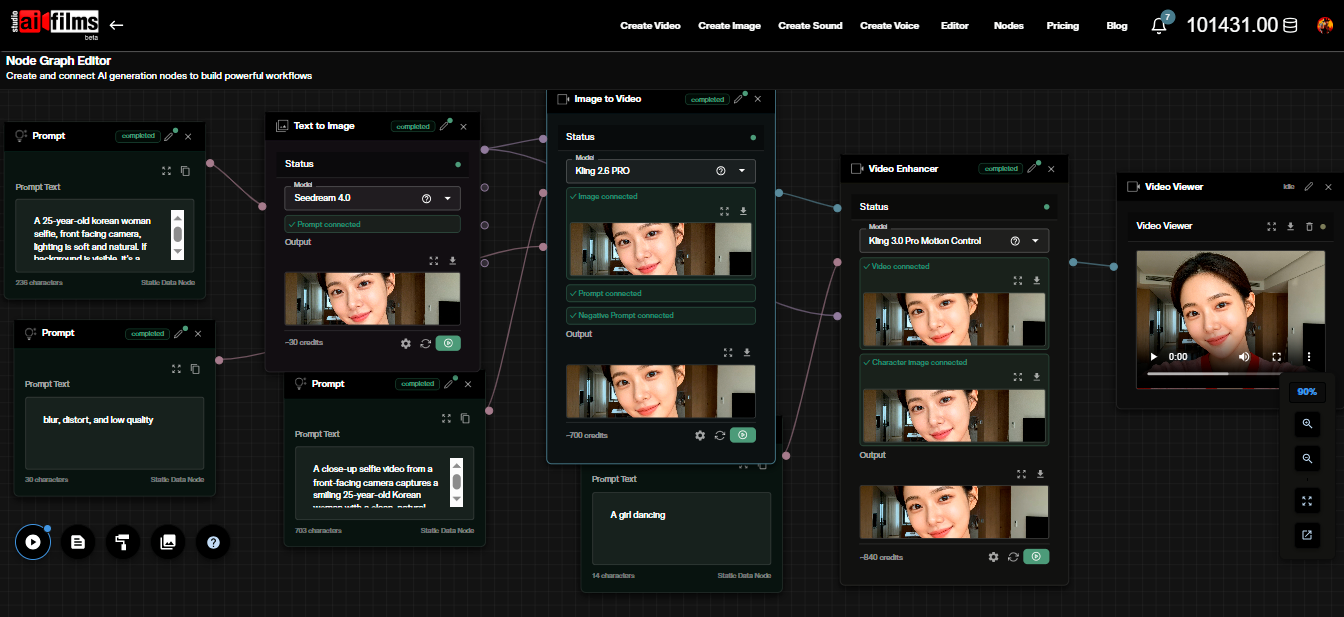
Frémaux's certification proposal arrives as the festival's position on AI takes shape on multiple fronts. The April decision to bar AI generated films from the Official Competition set the policy. The Marché du Film's expanded AI programming set the market agenda. The "organic film" label idea takes the conversation one step further: from what festivals will screen to what audiences will one day demand to know. Honorary Palme d'Or recipient Peter Jackson offered a contrasting position the following day, arguing at his masterclass that AI is "just a special effect" and no different from any other tool in cinema's history. At Cannes Classics on the same day, Guillermo del Toro presented the 4K restoration of Pan's Labyrinth and delivered what Frémaux would call "the first political statement of the festival": that art cannot be done with "a f---ing app". That debate hardened further by May 16, when five German directors launched Dogma 25 at Cannes, a formal movement with ten rules that bars internet access during all creative processes, effectively removing AI tools without naming them. Explore AI FILMS Studio's video workspace to generate your own projects with the latest models.
Sources
France24 | Reuters | Variety | Deadline | Screen Daily
Continue Reading
.jpg?w=3840)


Video & LipSync
- Video Generator
- Text to Video
- Image to Video
- Start-End Frame to Video
- Draw to Video
- Motion Control
- Video Enhancer
- Video Upscaler
- Video Extend
- Video to Video LipSync
- Audio to Video LipSync
- Image to Video LipSync
- Video FaceSwap
- Seedance 2.5
- WAN 3.0
- Seedance 2
- FLUX 3
- Minimax H3
- Vidu Q3 Pro
- Grok Imagine Video 1.5
- Gemini Omni
- Google Veo 3.1
- Kling 3.0 Pro
- Luma Ray 3.2
- LTX 2.3
- Happy Horse 1.1
- Kling 3.0 Motion
- ByteDance Upscaler
- InfiniteTalk
- InsightFace
Image & Edit
- AI Character
- AI Actor
- Art Generator
- Text to Image
- Image to Image
- LoRA Image to Image
- Draw to Edit
- Image LoRA Training
- Remove Background
- Image Enhancer
- MidJourney 8.0
- Krea 2
- OpenAI GPT Image 2.0
- Nano Banana Pro Ultra
- Nano Banana 2 Lite
- Nano Banana Pro
- Minimax Image
- Clarity Pro
- Z-Image Turbo LoRA
- Krea 2 Turbo LoRA
- Z-Image LoRA Trainer
- Qwen Image LoRA Trainer
- Background Erase Network 2 (BEN2)