
India: The World's Most Consequential AI Filmmaking Lab
Share this post:
India: The World's Most Consequential AI Filmmaking Lab
Approximately 80 percent of Indian films are already using AI extensively in production planning and visualization, according to The Hollywood Reporter's April 2026 investigation into the Indian film industry's adoption of generative tools. Production costs in mythology and fantasy genres have fallen to one fifth of traditional budgets. Production timelines in AI intensive projects have shrunk to a quarter.
The Scale of Adoption
EY analysis projects that AI could boost revenue for Indian media firms by 10 percent while cutting costs by 15 percent. The Hollywood Reporter described an industry with "no unions to slow the collision and scant regulation to cushion the aftermath." That phrase captures the structural difference between what is happening in India and what Hollywood's guilds spent years negotiating to prevent.
.jpeg)
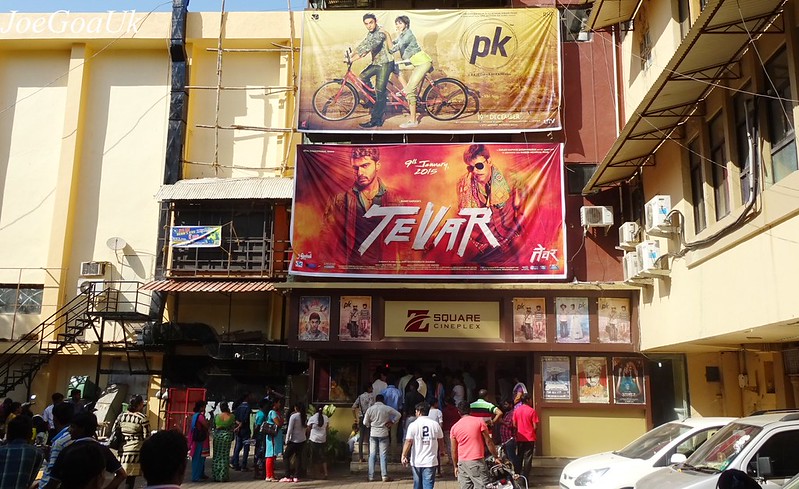
Ravi Kumar, CC BY 3.0, via Wikimedia Commons
India produces more films annually than any other country. It operates across multiple languages, production cultures, and budget levels simultaneously. The absence of a centralized guild structure equivalent to SAG-AFTRA or the WGA means adoption decisions are made individually by each studio, production company, and director without a collective framework governing the terms.
The result is rapid, uneven, and structurally unconstrained adoption. Some studios are integrating AI at every level of production. Others are using it selectively. None are bound by disclosure requirements, consent frameworks, or compensation structures comparable to those the US guilds negotiated in 2023 and 2026.
Why Hindu Mythology Is the Ideal AI Genre
The concentration of AI projects in Hindu mythology and fantasy genres is not incidental. Deity stories require cosmological scale visuals: celestial palaces, divine warfare, supernatural beings at epic scale. These visuals were prohibitively expensive to produce through practical effects or traditional VFX. AI generation produces exactly this category of visual at a fraction of the cost.
The genre where AI provides the most direct cost to quality advantage is the one where Indian cinema has the deepest audience demand. Mythology adaptations have been among the highest grossing Indian productions across multiple decades. The combination of proven audience demand and AI enabled cost reduction makes mythology the category where Indian studios are moving fastest.
Abundantia Entertainment and InVideo
The largest structured commitment to AI filmmaking in India came from Abundantia Entertainment and video platform InVideo, which announced a $10 to $11 million partnership. The joint venture established an AI focused creative division called aiON, with five AI driven films planned over three years.
The first aiON production is "Chiranjeevi Hanuman: The Eternal", timed for Hanuman Jayanti and directed by National Award winner Rajesh Mapuskar. The film's soundtrack is attributed to Trilok, announced as the world's first AI powered band. A second title, "Jai Santoshi Mata: Sukh Sampatti Daata," is also in development under the same division.
InVideo's aiON Platform
InVideo's aiON is a script to video production pipeline. It accepts scripts and generates corresponding visuals, character representations, and environments, with voiceover and soundtrack integrated at the generation stage. In India's market context, the platform allows mythology productions to move from script to visual prototype without the traditional visualization phase requiring human artists.
The practical impact is that aiON removes the visualization bottleneck. In conventional production, a mythology film's visual development phase, where artists design deity forms, celestial environments, and divine weaponry, takes months and requires large illustration teams. An AI platform that generates these visuals from text descriptions compresses that phase significantly, freeing the budget for performance, direction, and distribution.
Mythology as the Test Case
Collective Media Network, the Bengaluru studio operating under the Galleri5 brand, is developing eight AI generated titles based on figures including Hanuman, Krishna, Durga, and Kali. Studio Head Rahul Regulapati has stated that "AI is slashing production costs to one fifth of what they used to be." That figure applies specifically to visual effects heavy genres. Dialogue driven drama productions remain closer to traditional costs.
The test case mythology provides is not only cost. It is audience acceptance at scale. When JioStar released its Mahabharat adaptation, the 26.5 million view count answered the question every AI production needs answered before committing to the approach: will audiences watch it?
The First Fully AI Generated Indian Feature
Director Vivek Anchalia spent 1,500 hours producing "Naisha," described as India's first fully AI generated feature film. Set design, costume design, and characters are entirely AI generated. The film was originally scheduled for May 2025 but Anchalia delayed it repeatedly to incorporate advances in AI tools, pushing the release to June 2026.
The delay reflects a dynamic common in early AI production: the tools improved fast enough that completed scenes looked dated by the time the film would have shipped. Anchalia made the decision to rebuild sections of the film rather than release work that no longer represented the available standard.
The 1,500 hours and the repeated delays give "Naisha" a specific claim: it is not a production that reached for the minimum viable AI feature. It is a production that kept revising until the director considered the tools adequate to the story he was trying to tell. Whether audiences agree is what the June 2026 release determines.
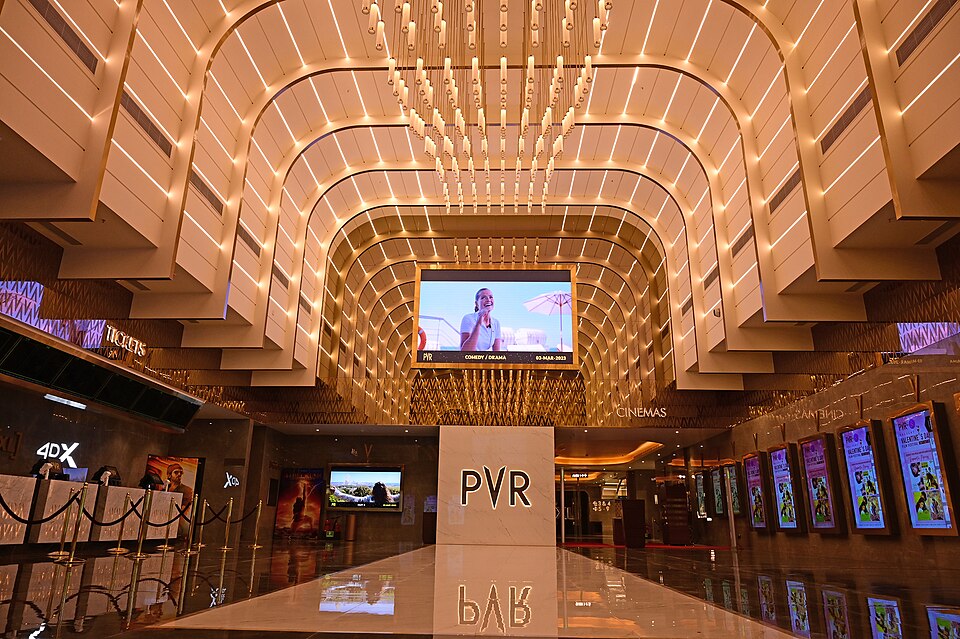
Pooja.sirsat26, CC BY-SA 4.0, via Wikimedia Commons
JioStar and Streaming Scale
The streaming platform JioStar released an AI generated adaptation of the Mahabharat that recorded 26.5 million views since its October debut. The viewership figure demonstrates audience willingness to watch AI generated content at scale, not just as a production experiment.
JioStar operates across Hotstar and Star channels, reaching over 500 million users across India and the diaspora. A 26.5 million view count for a single AI generated series is, in Indian streaming terms, mainstream viewership rather than niche adoption. The Mahabharat selection is not a random test. It is the genre where AI was always most likely to find acceptance: a story the audience already knows, in a visual register they associate with spectacle rather than naturalism.
An Industry Without the Guardrails
The SAG-AFTRA four year agreement reached in May 2026 established consent and compensation requirements for digital replicas and imposed restrictions on synthetic performers in union productions. India has no equivalent structure.
India's February 2026 IT Amendment reduced the required takedown time for AI deepfakes from 36 hours to three hours. That is an intervention at the distribution end, targeting harmful content after it reaches audiences. It is not a production framework regulating how performers are replicated or whether AI generated characters require consent.
India's Deepfake Takedown Rule and What It Does Not Cover
The three hour takedown rule is a response to political deepfakes, revenge content, and unauthorized celebrity simulations that circulate on social platforms. It addresses harms that have already occurred.
It does not address the production side: whether a studio can generate an AI version of a performer without consent, whether estates can be replicated without agreement, or whether AI generated characters built from real performers' physical features require any authorization. Those questions remain unresolved in Indian law. The productions moving fastest in India are the ones that do not need to resolve them, because they are using AI for environments and mythological characters rather than simulations of specific real people.
The International Compliance Problem
Indian AI productions that use performer AI replicas without consent agreements can distribute internationally. The US (through AB 2602, AB 1836, and the SAG-AFTRA agreement), the EU, and union covered platforms all require consent for AI generated likenesses of real performers. A production that does not comply with those frameworks faces distribution barriers in the most commercially valuable markets.
China's AI production sector has followed a similar pattern of rapid adoption with a different regulatory architecture. Japan's anime industry built AI workflows over a decade with guild consent. India is the largest example of a third model: fast adoption, minimal regulation, and a production volume that outpaces the legal framework.
The 2026 Cannes presentation of Chinese AI films and drama projections showed how AI native production traditions are entering international markets on their own terms. India's mythology productions represent the same phenomenon from a different cultural starting point.
What "Most Consequential" Actually Means
India's claim to being the most consequential AI filmmaking lab is not based on the quality of the productions currently releasing. It is based on scale, speed, and the absence of the institutional friction that slows adoption in markets with guild frameworks.
India produces roughly 1,500 theatrical films annually across its multiple language industries. If 80 percent of those productions are integrating AI into planning and visualization, the volume of AI influenced creative decisions happening in Indian film production each year already exceeds what any other single country produces. The experiments that fail are discarded without public controversy. The experiments that succeed set a precedent that the rest of the industry can observe.
Hollywood's guilds provide workers with protection. They also produce industry wide standards that, once negotiated, create a consistent framework every production operates within. India's absence of that framework means there is no consistent standard. There is also no floor below which adoption cannot go. What India demonstrates over the next 24 months will show the rest of the world what unguarded AI adoption produces in the most active film producing market on earth.
That adoption is now visible in India's competition circuit. BISFF, India's largest Oscar-qualifying short film festival, launched its first dedicated AI film category at its 16th edition in August 2026. The new Machine Made Movies section drew 118 entries in its first year, confirming that AI filmmaking has reached the institutional competition layer alongside the commercial production pipeline.
What the 80 Percent Adoption Figure Actually Means
The 80 percent figure covers AI use in production planning and visualization, not in final production output. A director using AI to visualize locations, test costume concepts, or prototype shot sequences is counted in that figure alongside a director using AI to generate the film's backgrounds or characters. The figure describes how broadly AI tools have entered Indian production workflows, not how deeply generative content has entered finished films.
The distinction matters for understanding what Indian cinema's AI adoption means in practice. Most of the 80 percent are using AI the same way that US productions use it in visual development: to make faster decisions before committing to expensive practical production. The 20 percent who are generating final content for release are the leading edge, not the median.
That leading edge is moving faster in India than anywhere else, precisely because there is no institutional framework governing its pace. The mythology and fantasy genres are the clearest example: productions where AI content is visible in the final film, where costs are one fifth of traditional budgets, and where audiences have already demonstrated they will watch the result at scale.
The Naisha Model vs. The Mahabharat Model
Vivek Anchalia's 1,500-hour production of "Naisha" and JioStar's Mahabharat adaptation represent two different approaches to AI filmmaking in India. Anchalia's approach is auteur driven: one director, one vision, extended production time to achieve a specific quality threshold. JioStar's approach is platform driven: production organized around streaming demand, mythology content with known audience, AI tools used to generate the visual scale the genre requires.
Both models are operating simultaneously in the Indian market. The Naisha model produces films that may not find a commercial audience but establish what an individual creator can do. The Mahabharat model produces content that finds a 26.5 million view audience but is organized around distribution first and artistic vision second. India's AI filmmaking lab runs both experiments at the same time, which is what makes it the most consequential test case in 2026.
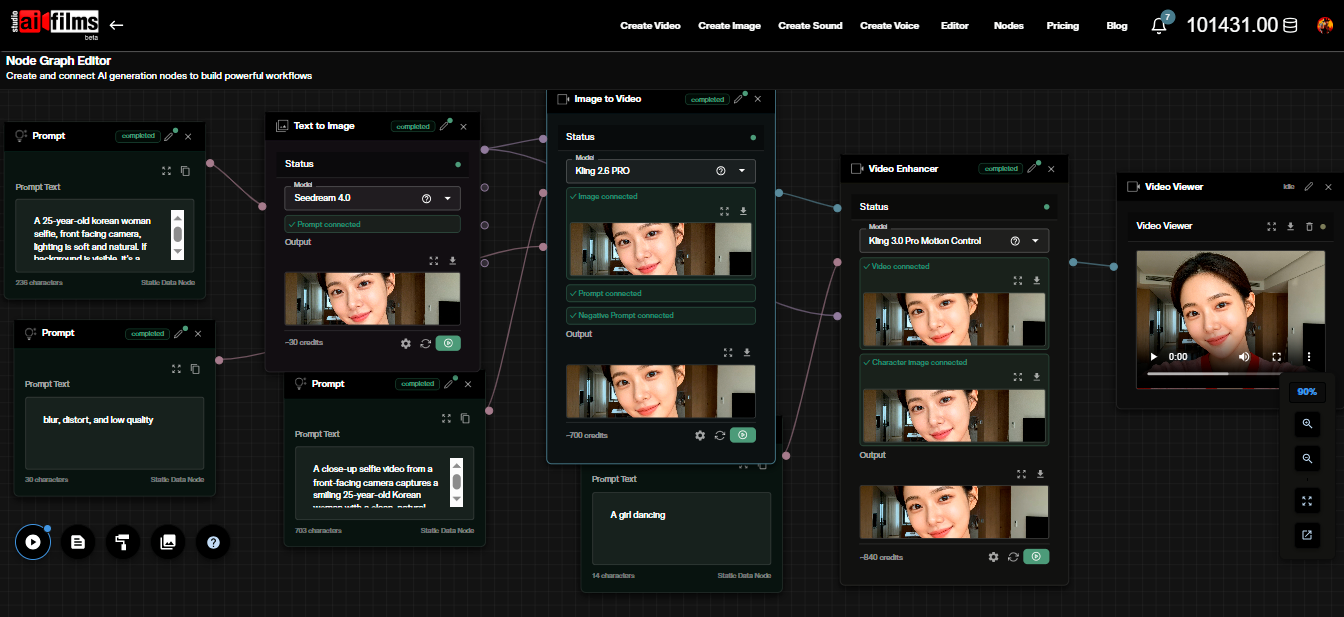
Times of India noted that "acting, emotion, life experience, and cultural nuance remain the domain of human artists." India's AI production boom does not directly contradict that observation. What it demonstrates is that the parts of cinema not requiring those qualities are now fully addressable by AI tools at one fifth of traditional production costs. Filmmakers working with AI FILMS Studio can test those tools directly, with full visibility over what is generated and what is human.
India's film industry in 2026 is the place where the question of what AI era filmmaking looks like at full scale is being answered. The answer is forming faster than any regulatory framework is forming to shape it.
The result, visible in the mythology genre's cost data and JioStar's viewership figures, is already part of the record.
Sources
The Hollywood Reporter | Variety | Gulf Business | Japan Times | The Business Standard
Continue Reading
.jpg?w=3840)


Video & LipSync
- Video Generator
- Text to Video
- Image to Video
- Start-End Frame to Video
- Draw to Video
- Motion Control
- Video Enhancer
- Video Upscaler
- Video Extend
- Video to Video LipSync
- Audio to Video LipSync
- Image to Video LipSync
- Video FaceSwap
- Seedance 2.5
- WAN 3.0
- Seedance 2
- FLUX 3
- Minimax H3
- Vidu Q3 Pro
- Grok Imagine Video 1.5
- Gemini Omni
- Google Veo 3.1
- Kling 3.0 Pro
- Luma Ray 3.2
- LTX 2.3
- Happy Horse 1.1
- Kling 3.0 Motion
- ByteDance Upscaler
- InfiniteTalk
- InsightFace
Image & Edit
- AI Character
- AI Actor
- Art Generator
- Text to Image
- Image to Image
- LoRA Image to Image
- Draw to Edit
- Image LoRA Training
- Remove Background
- Image Enhancer
- MidJourney 8.0
- Krea 2
- OpenAI GPT Image 2.0
- Nano Banana Pro Ultra
- Nano Banana 2 Lite
- Nano Banana Pro
- Minimax Image
- Clarity Pro
- Z-Image Turbo LoRA
- Krea 2 Turbo LoRA
- Z-Image LoRA Trainer
- Qwen Image LoRA Trainer
- Background Erase Network 2 (BEN2)