
InSpatio-World: Open Source 4D World Model From Video
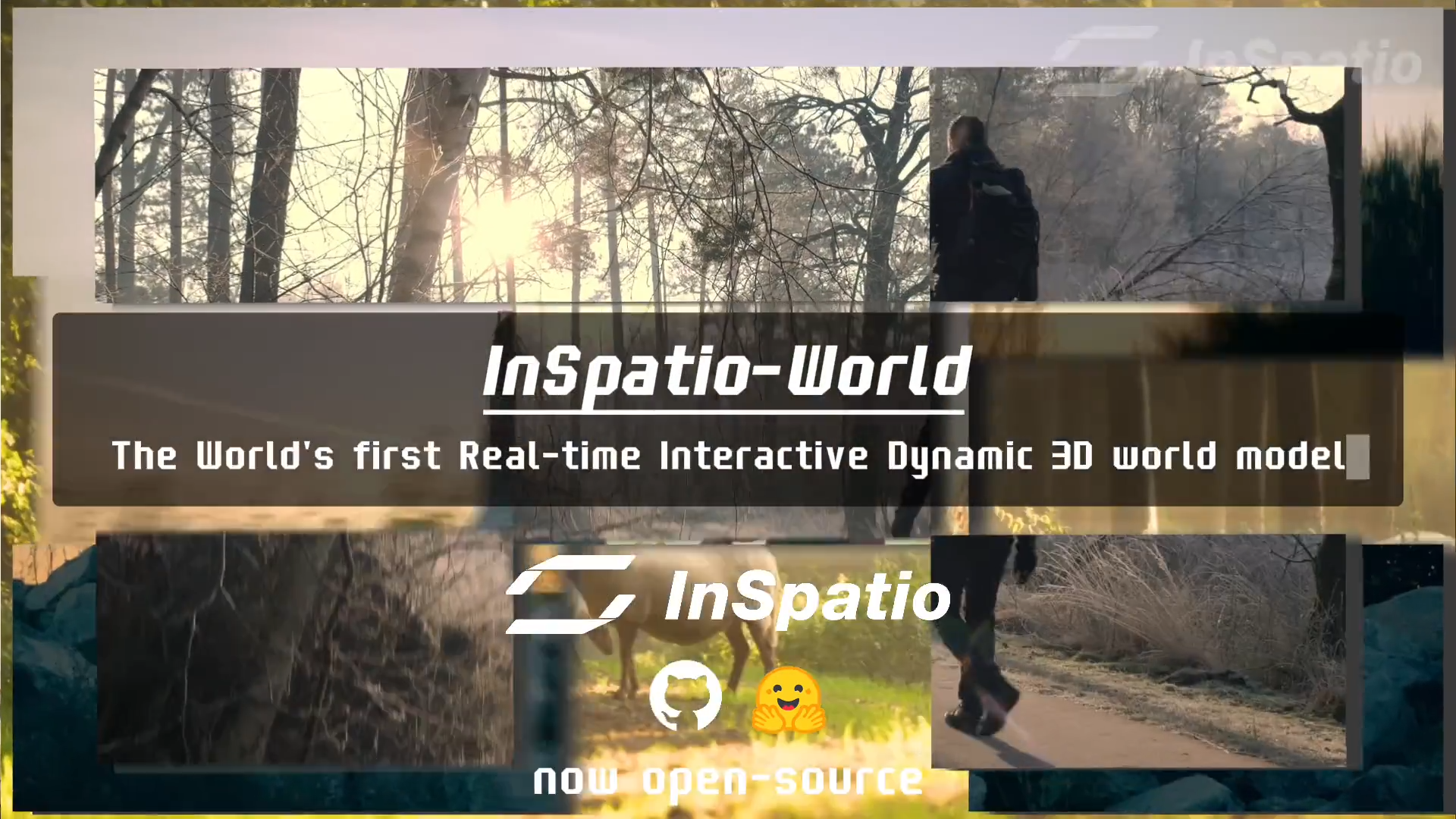
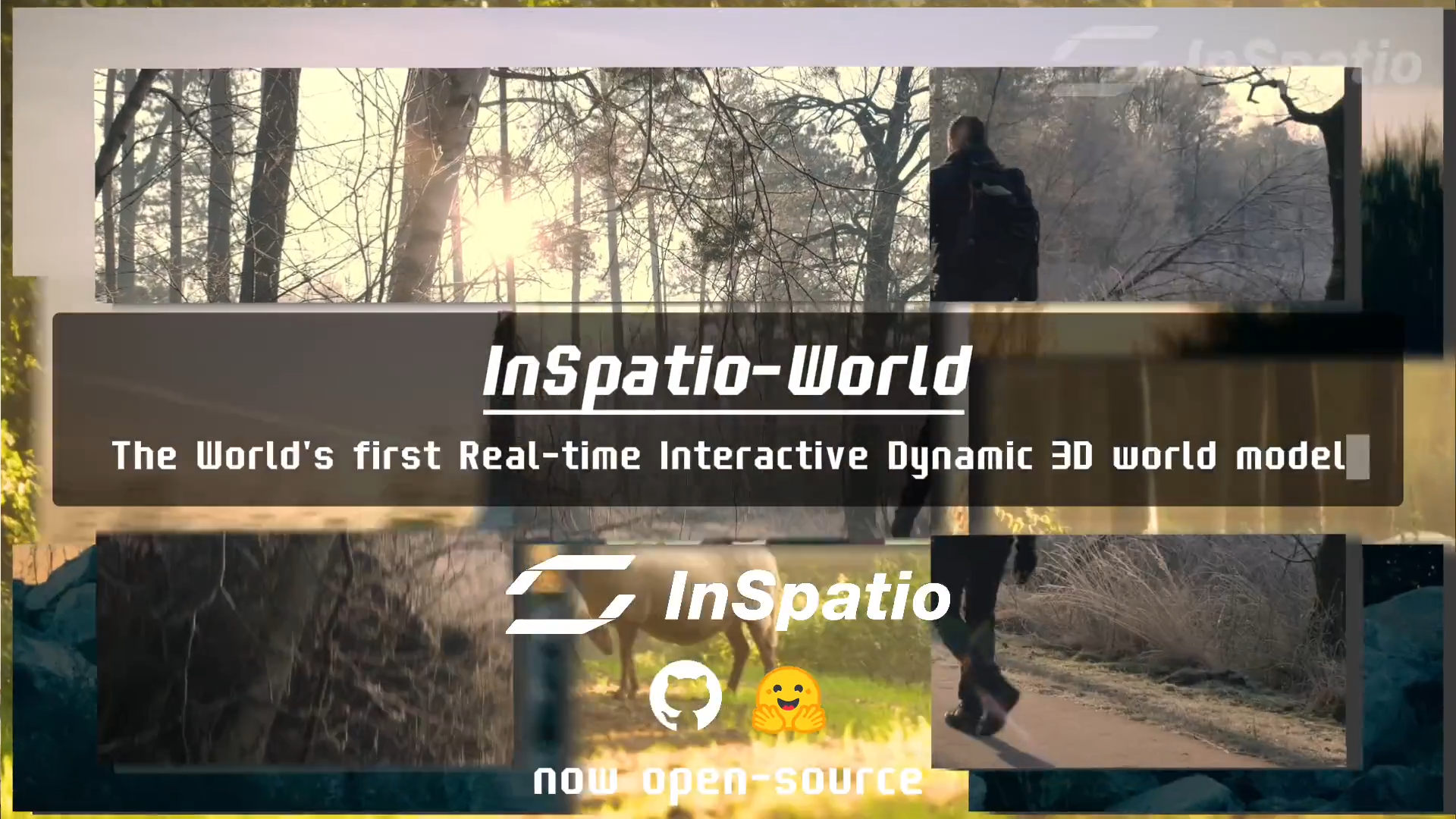
Still from demo video by InSpatio-World
Share this post:
InSpatio-World: Open Source 4D World Model From Video
InSpatio-World is the first open source real time 4D world model that takes a video as input and turns it into a dynamic, navigable world. You can roam freely across viewpoints, control time forward and backward, and build on top of it.
Studio availability. InSpatio-World is not available in AI FILMS Studio. This article covers a public research release. To generate video in the Studio, see the models listed on the text to video page.
What It Does
Existing 2D and static models capture a single perspective of a scene. The physical world has three spatial dimensions and one time dimension. InSpatio-World models all four, conditioning the output on a reference video and letting you explore the resulting world interactively.
The 1.3 billion parameter model runs at 24 FPS on a single GPU. It ranks first among all real time methods on the WorldScore-Dynamic leaderboard, a benchmark that evaluates 3D, 4D, and video generation systems on controllability, visual quality, and dynamic consistency.
Four Core Capabilities
Free Spatial Roaming
Immerse yourself in the scene and experience the same event from diverse vantage points.
Free spatial roaming across different vantage points of the same scene
Temporal Control
Pause, slow down, or even reverse time to re-experience captured moments.
Temporal control: pause, reverse, or slow down time within the world
Physical Realism
Drawing from the natural dynamics of the reference video, the model preserves physically consistent and realistic dynamics.
Physical realism: consistent dynamics derived from the reference video
Long-Horizon Stability
Even under extended exploration, the world remains anchored to the reference video, preventing drift and preserving consistency with the source scene.
Long horizon stability: the generated world stays consistent over extended exploration
The Technical Problem It Solves
Generative video models simulate pixels rather than persistent worlds. That leads to three failures: physical inconsistency (objects interpenetrate or float), spatial fragility (objects outside the frame become unstable), and temporal drift (world state degrades over long sequences).
InSpatio-World addresses all three with State-Anchored World Modeling. The reference video is anchored as a viewpoint-independent Local World State. All generated observations are sampled from this state rather than from frame history alone. Three components implement this:
- World State Anchoring: builds a persistent world state ensuring spatial and physical constancy
- Spatiotemporal Autoregression: performs precise sampling conditioned on the reference video, enabling free navigation across viewpoints and time
- Joint Distribution Matching Distillation: balances real world fidelity with synthetic controllability, enabling stable generalization under user interaction
The result is spatiotemporally consistent sampling that mitigates long term drift. The model knows where it is in space and time at every step.
For Filmmakers
The combination of spatial roaming and temporal control has direct applications in previsualization and shot planning. A director can feed existing reference footage, explore the resulting world from any angle, and then scrub backward and forward in time to identify the best moment and framing for a shot.
This is a fundamentally different workflow from standard video generation. Instead of generating a clip and evaluating it, you inhabit the scene and direct from inside it. The model keeps the world stable so creative decisions made at one timestamp or viewpoint remain valid across the exploration.
Teams working with world simulators for virtual production can compare InSpatio-World against other open source approaches. Lingbot World from Ant Group focuses on camera pose control for cinematographic applications. MIND benchmark documents the six specific challenges current systems face. InSpatio-World takes a different angle: it starts from a reference video rather than generating from scratch, which anchors the world to real captured dynamics rather than purely synthesized ones. For production teams that need precise camera trajectories over long sequences without a reference video anchor, MosaicMem introduces a hybrid spatial memory design that lifts patches to 3D and reprojects them at target viewpoints, sustaining consistent scenes across 2 minute rollouts.
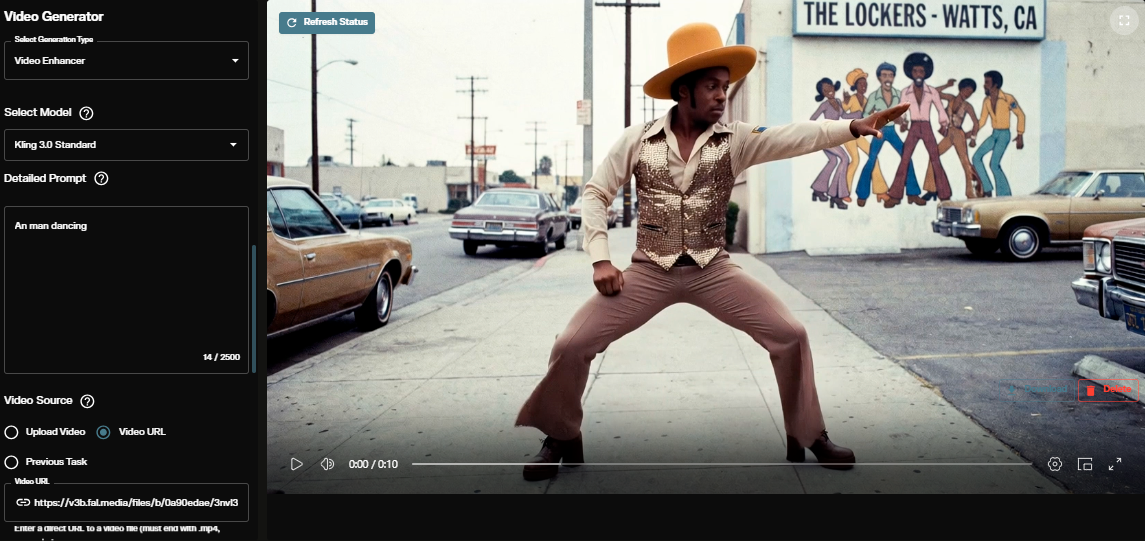
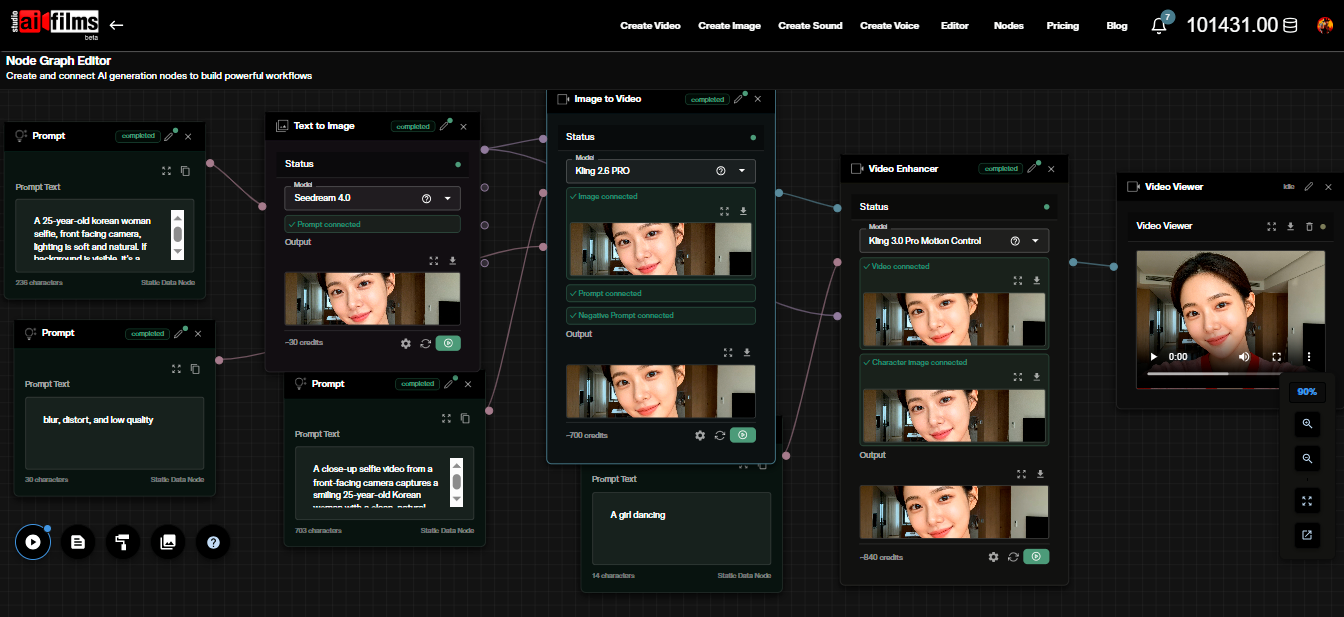
For reference video generation, AI FILMS Studio's video workspace lets you generate the source footage that InSpatio-World can then transform into a navigable 4D world.
Sources
InSpatio-World Project Page https://inspatio.github.io/inspatio-world/
InSpatio-World GitHub Repository https://github.com/inspatio/inspatio-world
Continue Reading
.jpg?w=3840)


Video & LipSync
- Video Generator
- Text to Video
- Image to Video
- Start-End Frame to Video
- Draw to Video
- Motion Control
- Video Enhancer
- Video Upscaler
- Video Extend
- Video to Video LipSync
- Audio to Video LipSync
- Image to Video LipSync
- Video FaceSwap
- Seedance 2.5
- WAN 3.0
- Seedance 2
- FLUX 3
- Minimax H3
- Vidu Q3 Pro
- Grok Imagine Video 1.5
- Gemini Omni
- Google Veo 3.1
- Kling 3.0 Pro
- Luma Ray 3.2
- LTX 2.3
- Happy Horse 1.1
- Kling 3.0 Motion
- ByteDance Upscaler
- InfiniteTalk
- InsightFace
Image & Edit
- AI Character
- AI Actor
- Art Generator
- Text to Image
- Image to Image
- LoRA Image to Image
- Draw to Edit
- Image LoRA Training
- Remove Background
- Image Enhancer
- MidJourney 8.0
- Krea 2
- OpenAI GPT Image 2.0
- Nano Banana Pro Ultra
- Nano Banana 2 Lite
- Nano Banana Pro
- Minimax Image
- Clarity Pro
- Z-Image Turbo LoRA
- Krea 2 Turbo LoRA
- Z-Image LoRA Trainer
- Qwen Image LoRA Trainer
- Background Erase Network 2 (BEN2)