
Madonna Says AI Is the Opposite of Making Art
_(53270846889)_(cropped)_(cropped).jpg?w=3840&q=90)
Share this post:
Madonna Says AI Is the Opposite of Making Art
_(53270846889)_(cropped)_(cropped).jpg)
Madonna called using AI "the opposite of making art" in a Vogue Italia interview published June 28, 2026. Her critique targets the structural logic of algorithmic systems rather than any specific labor consequence, making it one of the most direct philosophical statements on AI from a major artist this year.
The interview was published during the promotional cycle for her 2026 film Confessions II. The argument she makes applies across media: the conditions she describes as necessary for art, physical collaboration and deliberate disconnection from digital mediation, apply equally to music, film, and visual work.
The Optimization Argument
"Algorithms and artificial intelligence are the opposite of taking risks," Madonna told Vogue Italia. The quote is specific in a way most celebrity AI commentary is not: it addresses the structural function of algorithmic systems rather than their labor consequences or legal status.
An algorithm trained on existing work optimizes toward outputs that resemble what has succeeded before. Her argument is that this function is incompatible with what art requires, which is the willingness to commit to something before knowing whether it will succeed. A model generates the most statistically probable next step. An artist, by her account, has to be capable of taking the improbable one.
That position separates her critique from the contract disputes and disclosure debates dominating the 2026 conversation. Those debates are about rights, attribution, and transparency. Her argument is about the logic of creation itself, and that argument cannot be settled by a licensing agreement or a label on a poster.
The Vogue Italia interview was conducted as part of the promotional campaign for Confessions II, her first feature film as director. The choice to discuss AI in that context, rather than confining the interview to the film's subject matter, reflects how central the question has become to how she frames her broader creative philosophy in 2026. The magazine, known for placing major artists in extended conversation about culture and process, gave the statement space to develop across several questions rather than a single pull quote.
A Career Built on Deliberate Risk
Madonna has sold more than 300 million records over a career spanning four decades, beginning with her debut album in 1983. What makes that record notable is how many times she departed from what was working commercially to pursue something with no guaranteed return.
In 1989, the Like a Prayer music video generated formal protests from the Vatican and prompted Pepsi to cancel a $5 million sponsorship deal days after it launched. In 1992, she released the Erotica album and the Sex photography book simultaneously, a combination that divided her audience and drew sustained critical hostility before being reassessed years later. Both moves were deliberate gambles against prevailing commercial logic.
Truth or Dare, her 1991 backstage documentary, became the highest grossing documentary of its time by disclosing material that most artists would have withheld. Confessions on a Dance Floor, released in 2005 after a period of commercial uncertainty, was a full return to electronic club music that many regarded as a career risk. Her Vogue Italia statement draws from that track record: this is a philosophy she has practiced at commercial cost, not an abstract position.
The 2026 Celebration Tour, which ran through 2025 before closing in London, was documented specifically as a collaboration between her and a live audience. The O2 Arena run, filmed and released as a concert document, was structured as a record of an unrepeatable event. That framing is consistent with her Vogue Italia argument: the value of the thing is inseparable from the conditions under which it was made.
Collaboration as the Condition for Art
Madonna described the creative environment she values as something that cannot be reproduced outside the specific dynamic it requires. "Once you were around painters and musicians and dancers and artists in one place and working from a very pure place for each other," she told the magazine. "I value that experience a lot."
The process she describes depends on mutual exposure: artists influencing one another in real time, in the same physical space, producing outcomes that no individual input could have predicted. That irreproducibility is, by her account, what makes the result art rather than competent output.
Her phrase "working from a very pure place for each other" implies something more precise than simple collaboration. It describes people taking risks in front of one another in a shared creative context. An algorithm processing training data has no such dynamic and no exposure to the unpredictability of another agent making choices in real time.
The specific example of painters, musicians, dancers, and artists gathered in one space describes a working environment she has described in relation to her early career in New York. The creative communities she moved through in the early 1980s are referenced throughout her career as formative in a way she has consistently attributed to physical proximity and the particular social risks involved in that setting.
.jpg)
Deliberate Disconnection
Her creative practice requires pulling back from digital input as a precondition for work. "You have to have stillness and you have to have days where you're just connecting to nature, my children, my horses," she said in the Vogue Italia interview.
At the Confessions II premiere, she encouraged audiences to put their phones away and be present without a screen between themselves and the experience. The instruction extended the same argument she made to the magazine: undivided attention is a condition for both making and receiving creative work.
The position is consistent across both roles she occupies as creator and audience. Creating requires disconnection from optimization and mediation. Receiving the result requires the same quality of attention. Both are undermined by the logic of a device designed to maximize engagement through prediction.
Confessions II is her first directorial feature. She shot it as a studio project rather than a documentary, using a formal film production with a crew. The instruction to put phones away at the premiere was noted by journalists who covered the event as an instruction she gave without preamble, as if the precondition needed no explanation.
What the Argument Does Not Concede
Her statement offers no exception for AI used as a reference tool, a workflow aid, or a background process. The critique is that algorithmic optimization is structurally opposed to the condition that makes art possible: risk taken without knowing the outcome in advance.
That argument cannot be addressed by policy. Transparency requirements, consent mechanisms, and licensing agreements all manage AI's presence in creative industries by regulating how and when it is used. They do not change the fact that a system optimizing toward probability will avoid the moves that have no precedent, which is precisely the space her Vogue Italia statement identifies as where art happens.
The implication is that no amount of careful governance changes what algorithmic systems are built to do. A model trained on approved data with full consent and proper attribution is still a model optimizing toward the probable. That is the function, not a flaw.
The critique also does not engage with the question of what AI tools are good for, which is the primary framing used by studios and developers to introduce them. Madonna is not arguing that AI produces bad outcomes across all domains, or that efficiency has no value. She is arguing that efficiency is the wrong value to optimize art around, and that AI is specifically built to optimize for it. Those are not the same critique, and the second is harder to refute.
How the Statement Fits the 2026 Conversation
The celebrity AI statement has become a distinct genre in entertainment journalism. Since early 2025, publications have run hundreds of items documenting actors, directors, and musicians expressing views on AI, ranging from cautious support to categorical rejection. Most operate within a narrow band of positions: concerns about labor replacement, questions about training data consent, or interest in tools that assist rather than replace.
Vogue Italia chose to run the AI section of the interview prominently rather than burying it in a lifestyle profile. The editorial framing signals that the magazine understood the statement as news, not as a parenthetical remark about technology in a profile focused on fashion or film promotion. That decision amplified the statement's reach beyond the profile's typical readership into entertainment and technology press.
The statement was picked up by Variety, Deadline, and multiple technology publications within hours of the Italian edition's publication. Each translated the core quotes and added context from her career. The reach confirms that the AI question now attaches to any major artist interview where it appears, regardless of the interview's original focus. Confessions II became the secondary story; AI became the lead.
Madonna's Vogue Italia position is structurally different. She is not objecting to a specific contract provision or lobbying for a disclosure requirement. She is arguing that the goal AI serves, optimization toward the statistically probable, is incompatible with the goal she understands art to serve. That is a philosophical position, not a policy position, and it does not have a negotiated resolution.
The practical implication is that her statement sits outside the framework of most industry AI debates. Studios, guilds, and technology companies are negotiating over use terms, compensation, and attribution. Madonna's argument is that the negotiation misidentifies what is at stake. The terms you negotiate determine how AI is used and who benefits, not whether the thing being used is compatible with art making. Those are two separate questions.
The Broader Stakes in 2026
Tom Holland made a parallel argument on Spain's El Hormiguero in June 2026, saying creativity "has to do with the human experience" and that AI "doesn't have a soul." Where Holland framed creativity as something AI cannot access, Madonna frames AI as something that eliminates the conditions creativity requires.
Both statements landed in the same period as the fan backlash over A24's Google DeepMind deal. Justine Bateman, speaking specifically about that deal, called it "disappointing," noting the timing came immediately after the record box office success of a film whose director had publicly described AI as "cultural and economic rot." The audience responding to A24 was making a structurally similar argument to Madonna's: that a certain kind of creative work depends on a certain kind of process.
The wider debate over what celebrity AI statements mean for industry has mostly operated on economic and ethical grounds. Madonna's Vogue Italia statement moves the question to a different register: whether AI is compatible with art at all, independent of who deploys it or under what contractual terms. That is a harder position to negotiate around, because no policy change addresses it.
The interview also arrives as studios are actively pursuing AI partnerships across preproduction, postproduction, and distribution. A24's $75 million Google DeepMind deal, announced the same week, prompted similar questions about what it means for a studio built on a particular creative philosophy to enter a formal AI partnership. Madonna's statement is not a response to A24 specifically, but it frames the question both statements are circling: whether the conditions under which work is made are part of what the work means.
Her position has a practical dimension that her critics on the other side rarely address directly. The AI tools available to filmmakers in 2026 are faster, cheaper, and capable enough that a single person with access to them can produce volume that previously required a team. That efficiency is real. Her argument is that efficiency is not the variable that makes the work valuable, and that optimizing for it crowds out the variable that does.
The counterargument she does not engage with is the access argument: that AI tools let people make work who otherwise could not afford the teams, equipment, and time that professional production requires. She has not publicly addressed that version of the case for AI. Her argument assumes an environment in which physical collaboration is possible, which is not equally available to all artists in all contexts.
Her position is consistent with how she has spoken about creative process throughout her career. She has consistently emphasized physical presence, direct collaboration, and the role of environment in shaping what she makes. The Vogue Italia statement is not a departure from that framework applied to a new technology. It is the same framework applied to AI, arriving at the same conclusion about anything that removes the conditions she associates with making real work.
What distinguishes the 2026 context from previous technological debates is the speed of AI's arrival in creative industries. Each previous wave, recording technology, digital production, streaming distribution, gave the industry years to adapt. The current AI cycle is moving faster, and the philosophical questions it raises are arriving before most institutions have frameworks for addressing them. Madonna's statement is one data point in a public conversation that is moving too quickly for any individual position to settle it.
The Vogue Italia interview will be cited alongside similar statements from this period as evidence of how artists with major careers and commercial stakes in the entertainment industry understood AI at this specific moment. Whether that understanding proves to have been accurate, or whether AI tools evolve in ways that address the structural objections she raises, will be clearer in retrospect than it is now.
Her 300 million records sold are the product of the exact process she is describing: decades of physical collaboration, deliberate risk, and creative community. That track record is what gives the statement its weight. It is not an abstraction about art from someone outside the industry. It is a description of how she built one of the most documented careers in popular music.
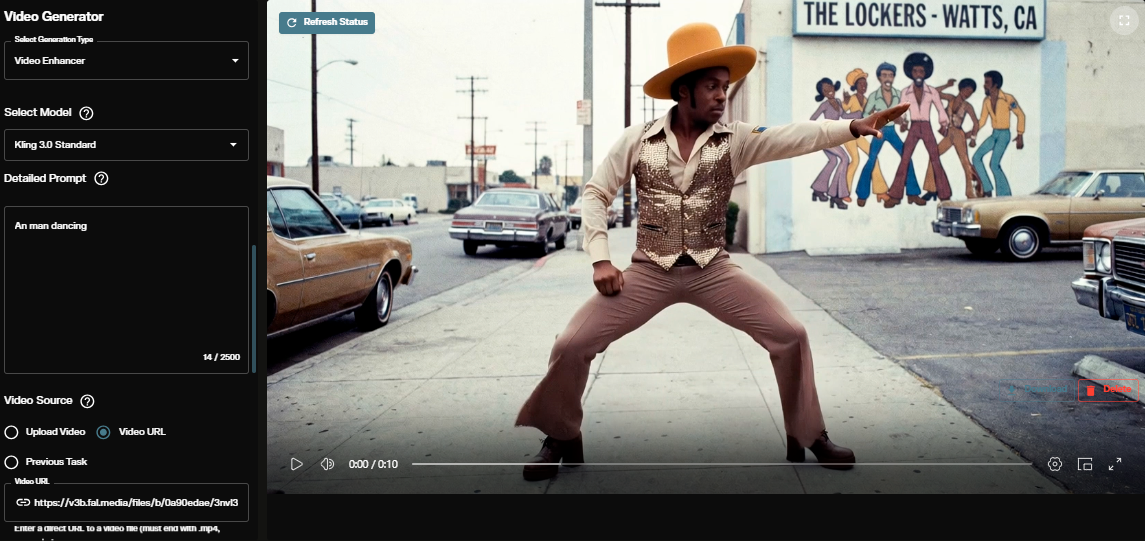
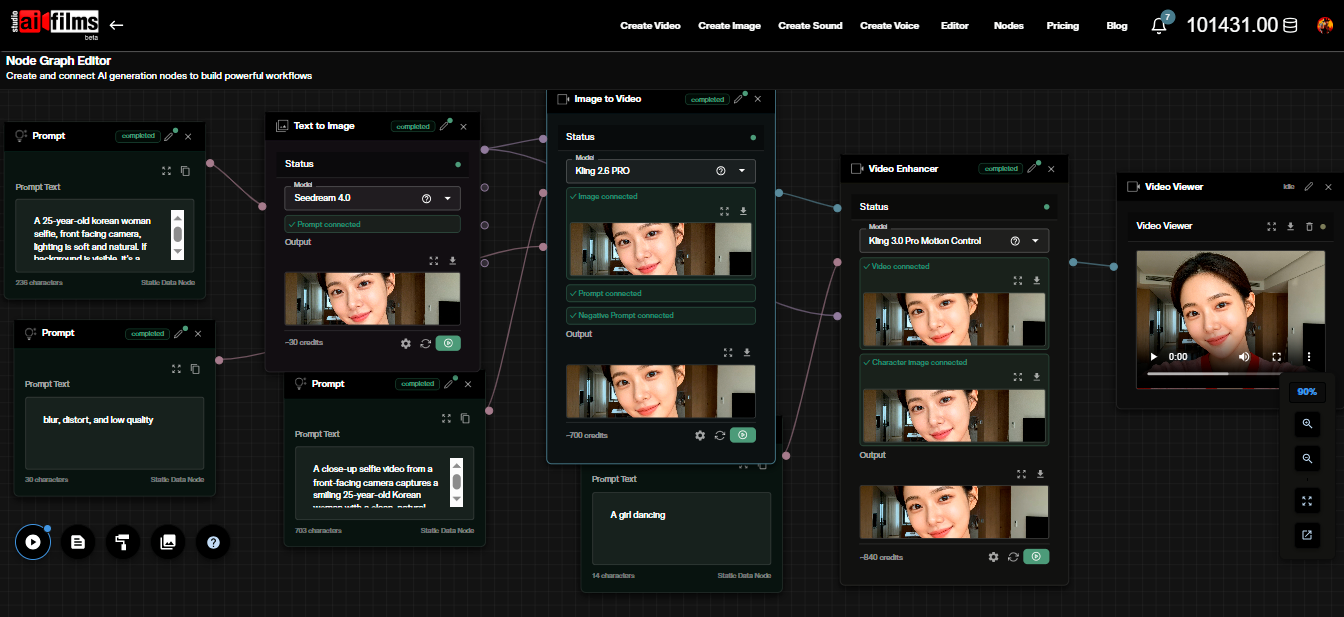
Filmmakers working with AI video tools can generate content through the AI FILMS Studio video workspace.
Sources
Variety | Deadline | Vogue Italia | Interview Magazine
Continue Reading
.jpg?w=3840)


.jpg)
Video & LipSync
- Video Generator
- Text to Video
- Image to Video
- Start-End Frame to Video
- Draw to Video
- Motion Control
- Video Enhancer
- Video Upscaler
- Video Extend
- Video to Video LipSync
- Audio to Video LipSync
- Image to Video LipSync
- Video FaceSwap
- Seedance 2.5
- WAN 3.0
- Seedance 2
- FLUX 3
- Minimax H3
- Vidu Q3 Pro
- Grok Imagine Video 1.5
- Gemini Omni
- Google Veo 3.1
- Kling 3.0 Pro
- Luma Ray 3.2
- LTX 2.3
- Happy Horse 1.1
- Kling 3.0 Motion
- ByteDance Upscaler
- InfiniteTalk
- InsightFace
Image & Edit
- AI Character
- AI Actor
- Art Generator
- Text to Image
- Image to Image
- LoRA Image to Image
- Draw to Edit
- Image LoRA Training
- Remove Background
- Image Enhancer
- MidJourney 8.0
- Krea 2
- OpenAI GPT Image 2.0
- Nano Banana Pro Ultra
- Nano Banana 2 Lite
- Nano Banana Pro
- Minimax Image
- Clarity Pro
- Z-Image Turbo LoRA
- Krea 2 Turbo LoRA
- Z-Image LoRA Trainer
- Qwen Image LoRA Trainer
- Background Erase Network 2 (BEN2)