
Where Hollywood Stands on AI Endorsements: Boots Riley and Kane Parsons Push Back on Scorsese

Share this post:
Where Hollywood Stands on AI Endorsements: Boots Riley and Kane Parsons Push Back on Scorsese
On June 3, 2026, Sorry to Bother You director Boots Riley publicly criticized Martin Scorsese's decision to join AI firm Black Forest Labs as an adviser. Within hours, Backrooms director Kane Parsons told Variety in a separate interview that using AI "defeats the purpose" of filmmaking entirely. The two responses landed on the same day and from opposite ends of a career spectrum.
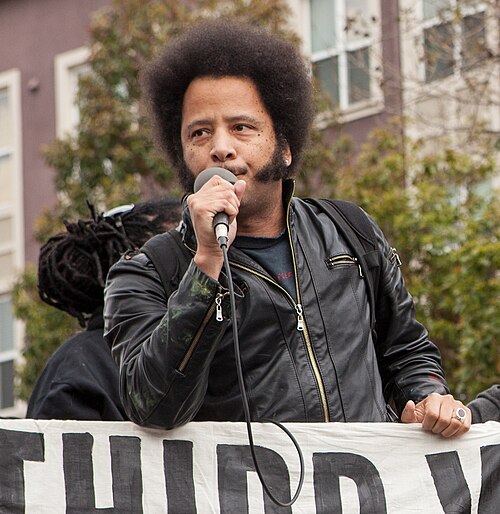
The two reactions followed Scorsese's announcement that he had joined Black Forest Labs as an adviser to help shape the company's visual intelligence work. Scorsese said he uses the company's FLUX model to communicate his visual intentions to his cinematographer, production designer, and art director. Riley and Parsons responded not to that workflow claim but to the act of lending a name to the AI industry at this moment.
What Riley Said
Riley, who released I Love Boosters via Neon on May 22, 2026 without using AI tools, drew a precise line between private use and public advocacy. "To b clear, my vitriol is not about him using it, I'd likely simply sneer at that in private," he posted on social media. "It's about him using his cache 2 promote this and attempt to push the industry toward it."
Riley also questioned the technology's record against its funding. "They need him," he wrote. "1 Trillion spent on generative AI & it's not saving anyone or changing film yet." On Scorsese's situation specifically, he added: "at 83, they gave his family a gang of money (they throw tens of millions left&right) he wanted the income stream 4 them & feels like 'AI' will fall on its face anyway, so he doesnt give a fuck."
What Parsons Said
Parsons, director of the Backrooms YouTube horror series that grew into a feature, took an unambiguous position. "If I could snap my fingers and make generative AI disappear forever, I probably would," he told Variety. "Creatively, I get no enjoyment from using those tools. It defeats the purpose entirely."
Parsons did leave one door open. He said he is interested in examining AI as artistic subject matter in future work, studying what its iconography represents culturally. What he rejected was using AI as a production tool. At 20 years old, Parsons is among the youngest directors in Hollywood with a major festival profile.
The A24 debut broke the studio's domestic box office record, crossing $100 million in six days on an approximately $10 million budget.
The Generational Pattern That Isn't
The standard framing of Hollywood and new technology positions older directors as skeptics and younger ones as adopters. The Scorsese case fits one side of that picture. At 83, he has embraced AI as a communication tool, just as he previously adopted 3D filmmaking and digital age reversal effects.
But the resistance is running younger, not older. Riley (54) and Parsons (20) are pushing back, while directors like Gareth Edwards and Steven Soderbergh have been among the more vocal advocates for AI as a production tool. The divide is not generational. It is philosophical, and it cuts across ages and career stages in both directions.
Madonna made that philosophical divide explicit in June 2026, telling Vogue Italia that "algorithms and artificial intelligence are the opposite of taking risks." Her argument frames the issue as categorical incompatibility between AI's logic and artistic creation, going further than either Riley or Parsons in its scope.
The Celebrity Endorsement Question
Riley's core argument was not about what AI does to filmmaking. It was about what a director's name does for AI companies at a moment when the industry is still negotiating rules around the technology.
His framing treats celebrity advisory roles as a form of market legitimization, distinct from how directors actually work. Whether attaching a famous name to an AI firm is an endorsement of the technology or simply a paid workflow relationship is the question Riley and Parsons forced into the open on June 3. The individual filmmaker criticism was followed five days later by a formal guild response. The Art Directors Guild issued a statement on June 9 naming the specific crafts it says Scorsese's FLUX use circumvents, and opening with a pun on the model's name. Other directors at AI FILMS Studio are navigating the same question on their own terms, deciding how openly to discuss the tools they use and what role public advocacy should play in their work.
What Black Forest Labs Actually Makes
Black Forest Labs is the German AI company behind FLUX, a family of image generation models that produce high quality outputs from text prompts. FLUX.1 Pro and its variants became the dominant open weight and API models for commercial image generation in late 2024 and through 2025. The FLUX architecture is widely used across the industry for storyboarding, concept art, and visual reference generation.
Scorsese's stated use is specific: generating images that communicate his visual intentions to his cinematographer, production designer, and art director. He is using FLUX as a reference image tool, not as a replacement for any crew role. That is the use Riley's statement declined to criticize directly. His objection was to the advisory role, not the production workflow.
Black Forest Labs hired Scorsese as an adviser rather than as a brand ambassador or spokesperson. Advisory roles in AI companies typically involve periodic consultation on product direction and access to networks and credibility in specific industries. For Black Forest Labs, a Scorsese advisory role carries weight in conversations with film studios and production houses evaluating FLUX for professional use.
The $1 Trillion Claim and What It Means
Riley's statement that $1 trillion has been spent on generative AI without it "saving anyone or changing film yet" is a compressed version of a real criticism of AI investment returns. The venture capital and enterprise spending on generative AI since 2022 runs to hundreds of billions of dollars globally, and the commercial revenue generated by AI companies relative to that investment remains far below what the valuations imply.
The filmmaking specific part of Riley's claim is more contestable. AI tools have reduced costs in visual effects, previsualisation, and certain post production workflows. The credit gap that production workers report in Hollywood, where AI assisted work is delivered without disclosure or compensation negotiation, suggests the technology is in use far more broadly than its public defenders acknowledge.
Riley's framing is a political argument, not a financial analysis. He is describing a gap between AI industry claims and demonstrated social value, using that gap to question whether a filmmaker of Scorsese's stature should be lending credibility to the companies making those claims. That is a different argument than claiming the technology does not work.
The Backrooms Precedent
Kane Parsons is the youngest major studio director to weigh in on AI in cinema this year. His debut feature, adapted from the Backrooms YouTube horror series he created as a teenager, opened to $100 million in domestic box office in six days on an estimated $10 million budget for A24. That commercial performance gives his opinions on film production tools a different weight than the same statement from a director without a produced feature.
Parsons is 20. He came up making YouTube content on consumer equipment. He has no financial stake in the production model that expensive human crews represent. His opposition to generative AI as a production tool is not a defense of an industry status quo he benefits from. It is a statement about creative preference from someone who built an audience without AI and chose to make a film the same way.
The comparison to Riley is instructive. Riley is 54, with a single feature (Sorry to Bother You) and a career built in independent cinema and music. Parsons is 20, with a debut that broke A24 box office records. Their shared position on June 3 crossed every obvious demographic line that the generational technology debate usually maps onto.
The Art Directors Guild Weighs In
The Art Directors Guild issued its statement on June 9, 2026, six days after Riley and Parsons spoke. The statement named the specific crafts it said Scorsese's FLUX use circumvents: production design, art direction, and set decoration. It opened with a pun on the model name, describing the situation as a FLUX in working conditions for production designers.
The guild statement moved the debate from individual filmmaker opinions to organized labor response. Riley's June 3 criticism was personal. The ADG's June 9 statement was institutional. It identified specific job categories, explained how AI generated visual references reduce the work those categories perform, and called on directors to be transparent about AI tool use with their crews.
Scorsese has not issued a public response to either Riley's criticism or the ADG statement. Black Forest Labs has not commented on the controversy. The advisory role and Scorsese's stated workflow remain as initially described.
What the Debate Actually Settled
The June 3 exchange produced no policy change and no direct confrontation between Scorsese and his critics. What it produced was a public record of positions.
Riley's $1 trillion argument placed AI investment returns as a legitimate topic for filmmaker criticism, not just labor economists. Parsons' generational counterpoint removed the assumption that young directors would naturally embrace AI tools. The ADG statement formalized the craft perspective that had been expressed informally by production designers in trade publications for the prior 18 months.
The three positions together map the range of filmmaker responses to AI tool adoption that is now on record. The debate will not resolve through individual statements. It will resolve through the collective bargaining agreements and production practice norms that develop over the next few years. June 3 was one day in that longer process.
What Riley and Parsons accomplished on June 3 was to make dissent from AI adoption visible at a moment when industry coverage had skewed heavily toward AI as inevitable progress. Both statements were picked up by Variety, Deadline, and The Wrap and treated as significant precisely because they came from working filmmakers with active projects, not from labor advocates speaking in the abstract. The critical voices now have a record to build on. Whether that record produces policy change depends on how the next round of guild negotiations unfolds, not on any individual filmmaker's public position.
The Black Forest Labs advisory role also points to a pattern likely to continue. AI companies building products for creative professionals have strong incentives to attach established creative names to their advisory boards, regardless of how the advisers actually use the products. The scrutiny those arrangements now receive, following the Riley and ADG responses to the Scorsese case, may affect how future advisory deals are structured and disclosed, but it is unlikely to stop them. The economics of the advisory role are unchanged by the controversy.
For the creative community, the more durable outcome of June 3 is the questions Riley forced into the open. Should directors publicly endorse AI companies? How should advisory roles be disclosed to crews? What does a famous name attached to an AI product signal about the technology's creative legitimacy? Those questions are now part of the industry's ongoing conversation in a way they were not before June 3, regardless of how any individual director answers them.
The Disclosure Gap in Advisory Agreements
The Scorsese case revealed a structural gap in how AI advisory agreements are disclosed to production crews. Scorsese uses FLUX to generate reference images for his cinematographer, production designer, and art director. None of those crew members appear to have known about the advisory relationship when they received those images. The ADG's June 9 statement named that gap directly: crew members who receive AI generated visual references from a director who holds an advisory role with the company that made the tool are in an undisclosed relationship.
No existing guild agreement requires directors to disclose AI advisory roles to their crews. SAG-AFTRA's 2026 agreements address AI replicas and digital likenesses of performers. The DGA's current contracts address AI tools in postproduction workflow disclosure. Neither covers what a director is required to tell a production designer about the origins of a reference image. The ADG statement was institutional acknowledgment that existing disclosure frameworks do not reach this situation.
The practical consequence is that production designers, art directors, and set decorators are the craft workers most directly affected by AI generated visual references, and they currently have no mechanism to know whether a director's visual communication was AI generated or drawn from personal research and visual experience. That information affects how crews interpret the director's aesthetic intentions and what creative latitude they believe they have in response. Closing that gap requires either new contract language or voluntary disclosure practices that no current agreement mandates.
The ADG statement's specific framing, that FLUX use "circumvents" the craft of production design, is contestable but precise. A reference image generated from a text prompt does not replace a production designer's work. It does compress the early concept phase where production designers bring their own visual knowledge and sourcing to a director's initial brief. That compression may reduce the scope of billable work in a phase where production designers typically spend weeks developing visual languages. The ADG identified the specific economic impact rather than making a general claim about AI replacing jobs.
What the ADG did not say is that FLUX generated images are equivalent to a production designer's output. The guild's concern is not that the technology can replicate the craft. It is that reference images bypassing the craft create a precedent where the concept phase is treated as optional for productions with access to image generation tools. Directors who use AI image generation privately and then bring final visual directions to their production designers create a different working relationship than the iterative development process that concept phase collaboration typically involves. That change in working method is what the ADG is describing as a circumvention, not a replacement.
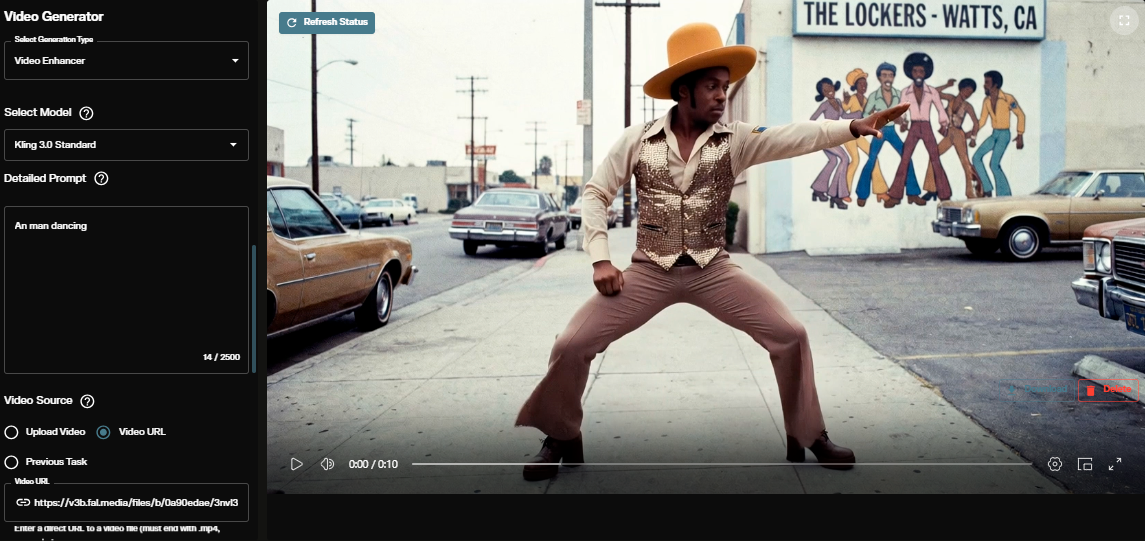
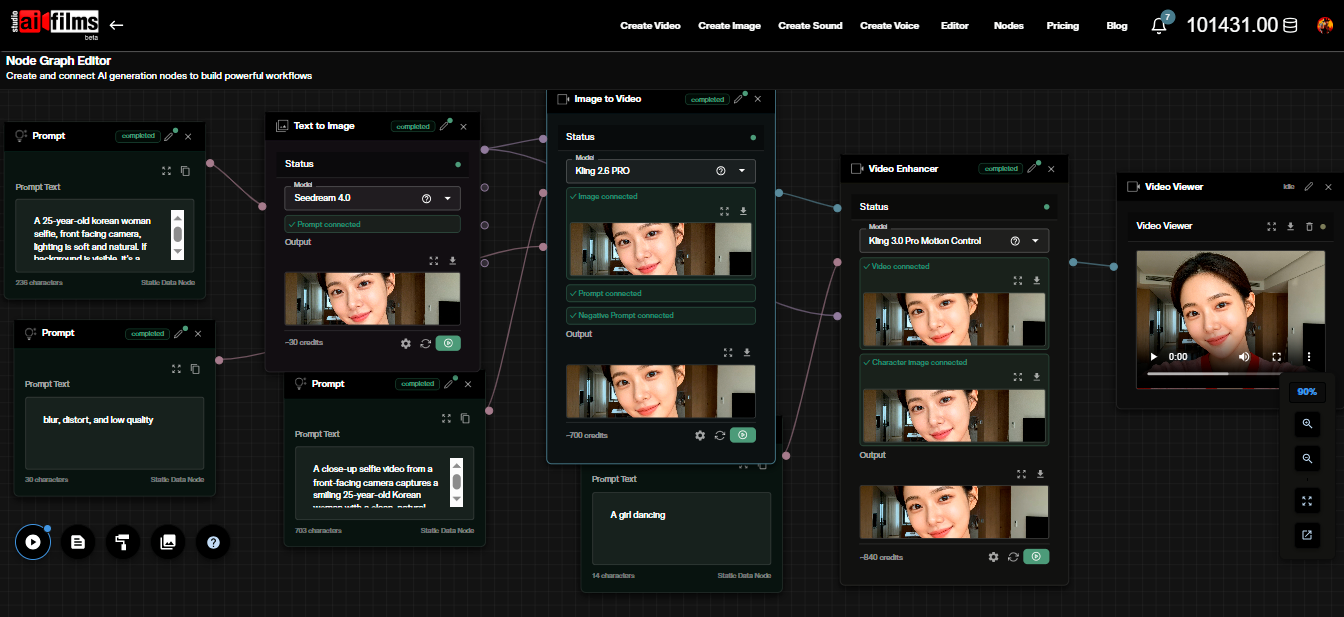
Filmmakers working with AI image tools and managing the craft disclosure questions those tools raise can access the same FLUX architecture image generation models at AI FILMS Studio. The Nodes Graph Editor supports building structured AI workflows where the role of each AI generated asset is documented at the workflow level rather than left to post production discovery.
For directors who want to use AI image generation as a visual communication tool while being transparent with their crews about the process, the technology is accessible. The disclosure practice it requires is not yet formalized anywhere. The ADG is the first guild body to define what transparency would look like. Whether that definition becomes a contract term is a question for the next round of collective bargaining.
Filmmakers navigating these questions can explore what AI visual tools produce and how to integrate them transparently through AI FILMS Studio, where the image generation workspace gives direct access to the same category of models at the center of the Scorsese debate.
Sources
Variety | Deadline | The Wrap
Continue Reading


Video & LipSync
- Video Generator
- Text to Video
- Image to Video
- Start-End Frame to Video
- Draw to Video
- Motion Control
- Video Enhancer
- Video Upscaler
- Video Extend
- Video to Video LipSync
- Audio to Video LipSync
- Image to Video LipSync
- Video FaceSwap
- Seedance 2.5
- WAN 3.0
- Seedance 2
- FLUX 3
- Minimax H3
- Vidu Q3 Pro
- Grok Imagine Video 1.5
- Gemini Omni
- Google Veo 3.1
- Kling 3.0 Pro
- Luma Ray 3.2
- LTX 2.3
- Happy Horse 1.1
- Kling 3.0 Motion
- ByteDance Upscaler
- InfiniteTalk
- InsightFace
Image & Edit
- AI Character
- AI Actor
- Art Generator
- Text to Image
- Image to Image
- LoRA Image to Image
- Draw to Edit
- Image LoRA Training
- Remove Background
- Image Enhancer
- MidJourney 8.0
- Krea 2
- OpenAI GPT Image 2.0
- Nano Banana Pro Ultra
- Nano Banana 2 Lite
- Nano Banana Pro
- Minimax Image
- Clarity Pro
- Z-Image Turbo LoRA
- Krea 2 Turbo LoRA
- Z-Image LoRA Trainer
- Qwen Image LoRA Trainer
- Background Erase Network 2 (BEN2)