
Tom Holland on AI and Why Artists Are Safe: 'Creativity Has to Do With the Human Experience'

Share this post:
Tom Holland on AI and Why Artists Are Safe: 'Creativity Has to Do With the Human Experience'
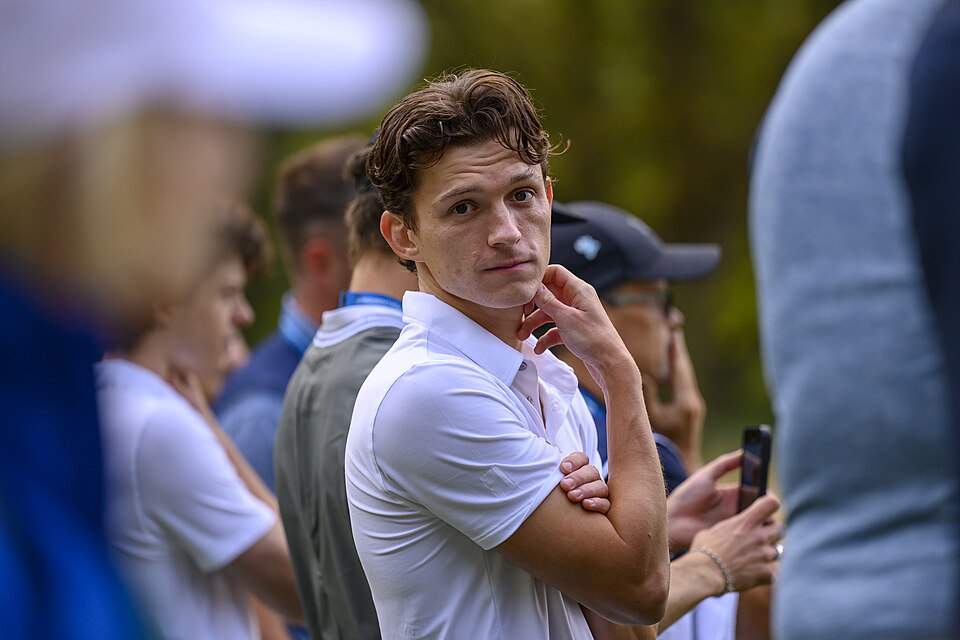
Tom Holland appeared on Spain's El Hormiguero on June 15, 2026, and said the one thing most of his peers had been careful to avoid stating directly: artists are safe. Appearing alongside Zendaya on a press tour for two summer blockbusters, Holland told the Spanish talk show that "creativity is safe from AI because creativity has to do with the human experience".
The appearance came during a dense week of AI commentary from major filmmakers. Guillermo del Toro had called out "cinema illiteracy" at a BFI dinner in Hollywood two days earlier. Andy Serkis, calling in from the New Zealand set of The Hunt for Gollum, had described AI as the most exciting opportunity for young creators in a generation at the APOS summit in Bali. Holland's statement added the actor perspective to a week dominated by directors and producers.
El Hormiguero is Spain's most popular late night talk show, regularly drawing audiences of three to four million viewers. The program's reach means Holland's remarks on AI landed to a general audience, not a film industry conference room. By the following morning, Variety, Deadline, and The Wrap had all filed coverage.
The appearance carried practical weight beyond celebrity commentary. Holland and Zendaya were there to promote two major summer releases, and an AI position taken during a major press tour becomes part of the promotional record. Studios, guilds, and talent agencies track these statements as signals of where A list talent stands on technology policy.
AI Does Not Have a Soul
Holland gave three distinct reasons for his confidence. The first was philosophical: AI "doesn't have a soul". The second was cognitive: "AI can sift through data, but it can't understand people's emotions. It doesn't understand the difference between being happy and being sad". The third was about the nature of artistic expression itself.
"The way artists paint, it's not about what they're copying, it's about expressing themselves, so I feel protected", Holland said.
The three arguments move from intuition to cognition to craft. Holland builds a case across registers: AI lacks spiritual substance, lacks emotional comprehension, and ultimately misunderstands what art is for. Each claim addresses a different possible counterargument, forming a complete position rather than a single rhetorical gesture.
The "soul" framing is the most distinctive element. Most industry commentary on AI and creativity focuses on economic displacement or copyright. Holland bypasses both and goes to ontology: the reason AI cannot replace an artist is not that it is too expensive or legally complicated to use one, but that the thing AI produces is categorically different from what a person produces.
The cognitive claim is equally specific. Holland does not argue that AI cannot mimic emotional expression. He argues that it cannot understand the difference between emotional states, which is the foundation of how an artist chooses to represent them. That is a narrower and harder claim to refute than the more common "AI lacks authenticity" framing.
The craft argument connects most directly to acting. Holland's professional work depends on his ability to transmit an internal emotional state to an external audience through physical performance. His argument that AI cannot grasp what an artist expresses maps directly onto his own daily practice. He is describing the gap between what he does as an actor and what AI produces as output.
A Personal Stake in the Debate
Holland and Zendaya's position on AI is not abstract. In March 2026, Zendaya told Deadline that "many" people were fooled by AI generated fake photos purporting to show her and Holland at a wedding ceremony. The synthetic images circulated widely enough that Zendaya felt compelled to address them publicly.
That context reframes Holland's philosophical arguments. For him and Zendaya, AI misinformation is a lived experience. The "soul" and "emotion" framings carry biographical weight: these are the qualities AI failed to recognize when it fabricated images of two of the most photographed people on earth.
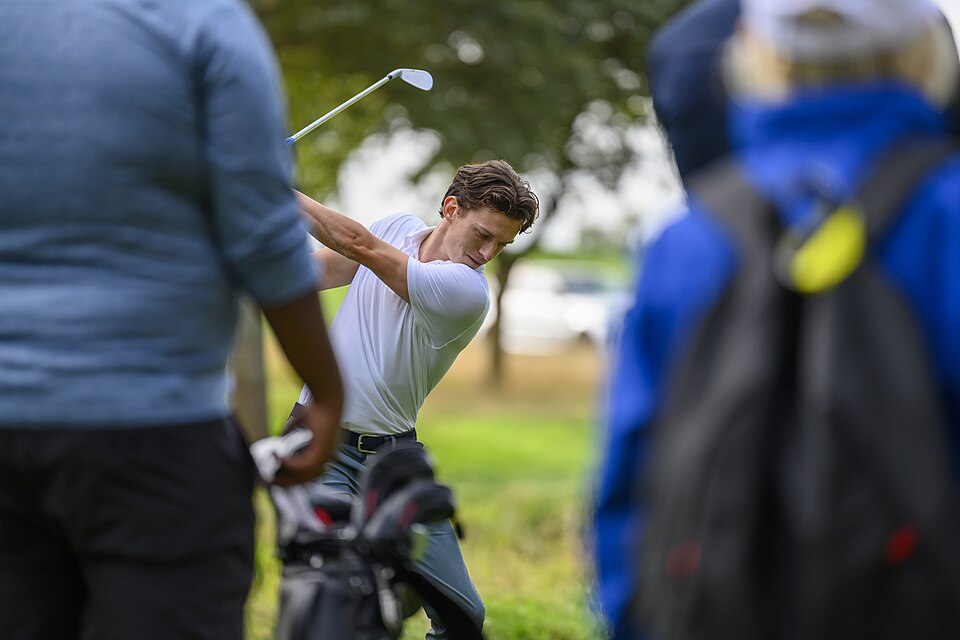
The press tour itself adds a layer. Both films, The Odyssey (releasing July 24) and Spider-Man: Brand New Day (July 31), will reach audiences who have likely encountered AI generated images of their leads. The question of what AI can and cannot reproduce is not hypothetical during a major summer rollout.
Spain is also a specific context. The country's film industry formally adopted AI production guidelines in March 2026, becoming one of the first European markets to codify rules around AI disclosure in theatrical releases. Holland making his AI case on a Spanish platform was not accidental framing.
The AI conversation in European entertainment markets has moved faster than in the United States on certain regulatory questions, particularly around synthetic images of public figures. Zendaya's direct experience with fake wedding photos circulating in March 2026 put both her and Holland in the middle of that specific debate before either had made a public statement about it.
A Measured Optimism
Holland's position lands between the two poles that dominated the same week's conversation. Del Toro framed AI as a cultural emergency, warning in his BFI dinner remarks that the industry is "on the verge of cinema illiteracy". Andy Serkis, at APOS in Bali, called AI the most exciting opportunity for young creators in a generation, specifically those without "means, social class or access to equipment and money".
Holland's formulation sits closer to Serkis than del Toro. He does not argue that AI poses a creative threat. He argues that creativity operates on terrain AI cannot access. The framing treats human emotional experience as an asset rather than something at risk.
Gareth Edwards reached a similar conclusion after nine months of direct experimentation with AI diffusion models. His position, stated at the premiere of Jurassic World Rebirth in London, was that the technology functions as an amplifier of directorial intent rather than a substitute for it. Holland's emotional argument and Edwards's directorial one arrive at the same place from different starting points.
Variety notes that Holland joins Reese Witherspoon and Sandra Bullock among performers who have weighed in on AI's relationship to their craft in 2026. The actor voices align more consistently on the optimism side of the debate than the director voices have.
The pattern across performer statements in 2026 clusters around a shared claim: that the instrument of an actor's work, the body, voice, and emotional memory, is what no model can reproduce. Witherspoon, Bullock, and Holland all arrive at the same conclusion through different routes. None of them deny that AI can produce convincing visual content. They argue that the source of the content's meaning is the gap between what AI produces and what a performer brings.
Two Films and a Press Tour
The Odyssey, Holland's July 24 release, was shot across locations including Morocco, Malta, and the Mediterranean with a budget reportedly above $200 million. Spider-Man: Brand New Day, arriving one week later on July 31, is a continuation of Holland's longest franchise role, now spanning four standalone films and six total appearances in the Marvel Cinematic Universe.
Both films are physical productions built around performance. Both involve extended work on set in demanding conditions with large casts. That context is not incidental to Holland's argument about AI. He is defending the value of exactly the kind of expensive, painstaking creative process his own recent work represents.
The press tour that brought Holland and Zendaya to El Hormiguero was one of the most logistically complex in Marvel history, covering eight European countries in eleven days. Spain was the third stop. The AI comments, captured there, will reach a global audience through trade coverage and social media well beyond the three to four million Spanish viewers who saw the segment live.
Marvel Studios and Universal Pictures, the distributor for The Odyssey, both track talent AI statements closely as the industry negotiates the next cycle of performer agreements. A position taken during a press tour of this scale becomes part of the public record that studios, talent agencies, and guilds reference in those negotiations. Holland's argument on El Hormiguero is now part of that record.
The Director of His Next Film Is the DGA President
The Odyssey, Holland's July 24 release, is directed by Christopher Nolan. Nolan has been serving as president of the Directors Guild of America since late 2025, and his leadership produced the DGA's new contract with the AMPTP, which the guild's National Board unanimously approved on June 12, 2026.
The deal includes specific AI protections. AI generated footage is now defined as falling under the director's creative control, treated identically to footage captured by a camera. An employer funded skills enhancement program will train guild members to integrate AI into production work.
Holland's artistic optimism and his director's institutional framework point to the same outcome: human creative authority over the final work. The actor's argument that human creativity is irreplaceable and the director's negotiated guarantee that directors control any AI material in their films address the same question from different professional positions.
The DGA contract's AI disclosure provisions also govern how AI generated materials can be used in Nolan productions going forward. Any AI generated footage used in The Odyssey would, under the new deal, fall under Nolan's creative authority as director. Holland's philosophical claim and his director's contractual protection reinforce each other in the same production.
The Odyssey is one of the most anticipated films of 2026. Nolan directing, Holland and Zendaya in lead roles, and the source material being Homer's epic all place it at the center of the industry's attention during the summer. The press tour's AI comments will travel further because of the film they accompany.
Nolan's simultaneous roles as DGA president and director of a major summer release give the production an unusual institutional dimension. The contract terms he negotiated as guild president now govern the production he is making as a filmmaker. Holland working under that contract, as an actor on the film, is inside the specific protections the debate is about.
Where the Debate Stands in June 2026
Del Toro's June 15 speech and Holland's June 15 appearance at El Hormiguero happened on the same day, in different time zones and registers. One was a formal address to a room of industry decision-makers. The other was a segment on a Spanish talk show with a mainstream audience. Both entered the trade press within 48 hours and circulated together as representative positions.
The week added Serkis, Edwards, and Holland to the list of working filmmakers and actors who have moved from commenting on AI in general terms to staking out specific positions. The pattern across all of them is consistent: human creative judgment is the irreplaceable variable. The disagreement runs on the severity of the threat and the urgency of the response.
| Voice | Position | Context |
|---|---|---|
| Tom Holland | Creativity is safe. AI lacks a soul and emotional comprehension | El Hormiguero, June 15 |
| Andy Serkis | AI is the most exciting opportunity for young creators | APOS 2026 Bali, June 17 |
| Guillermo del Toro | Industry is on the verge of cinema illiteracy | BFI Hollywood dinner, June 15 |
| Gareth Edwards | AI amplifies directorial intent, does not replace it | Jurassic World Rebirth premiere, June 17 |
| Gore Verbinski | AI needs a formal rating system and full transparency | Taormina Film Festival, June 13 |
| Madonna | Using AI is the opposite of making art; algorithms eliminate the conditions creativity requires | Vogue Italia, June 28 |
The five voices cover the range from alarm to enthusiasm. Holland's "feel protected" is the calmest formulation in that range, and he gave it to three million Spanish television viewers the same evening del Toro gave his warning to Hollywood's most powerful room.
Madonna extended the debate further in June 2026, telling Vogue Italia that "algorithms and artificial intelligence are the opposite of taking risks." Where Holland frames creativity as something AI cannot access, Madonna frames AI as something that eliminates the conditions creativity requires.
What the week's coverage produced, taken together, is a mapping of where the industry's most visible creative voices stand in mid-2026. No consensus exists. The positions remain far apart on risk level and appropriate response. What does hold across all five is a shared premise: the human creative act is worth protecting. The argument is about how, not whether.
The June 15 date is worth noting. Del Toro addressed an industry room and Holland addressed a mass television audience on the same evening, in different hemispheres. The simultaneity was coincidence. The coverage that followed treated the two statements as companion pieces: one from a director warning of cultural collapse, one from an actor expressing calm confidence that artists are safe. Together they represent the full emotional register of the industry's current position.
Coverage of the two statements ran in parallel across Variety, Deadline, and The Wrap for most of June 16 and 17. Readers who followed both got a version of the same debate conducted simultaneously, from the same generation of working professionals, on the same day. That convergence is part of why the week registered as a turning point in public AI commentary from major filmmakers.
No single week in 2026 produced this concentration of senior creative voices addressing AI from live production contexts. The month of June will be the reference point for how the industry understood its position on AI as it entered the second half of the year.
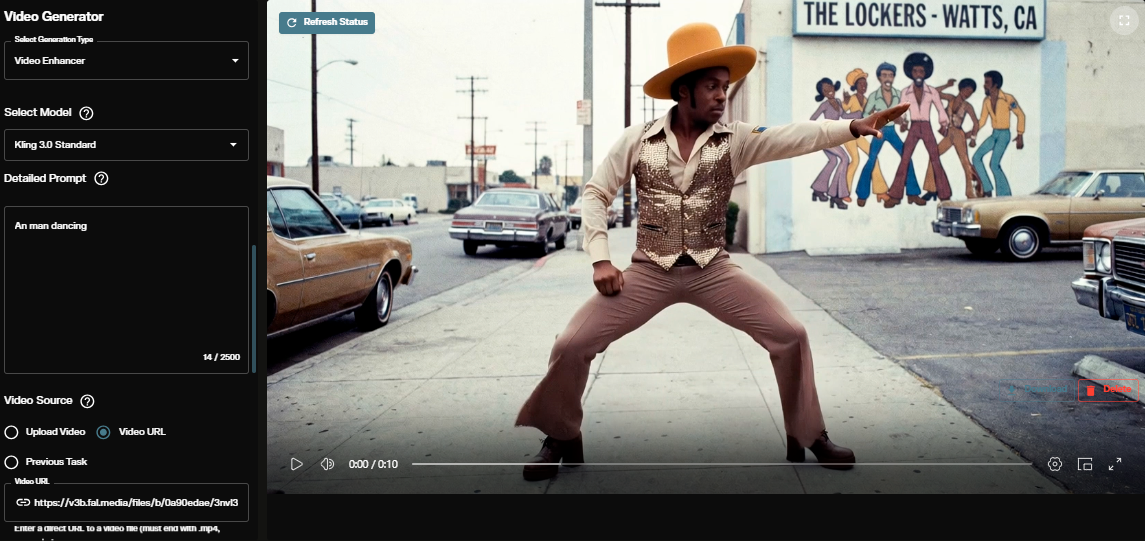
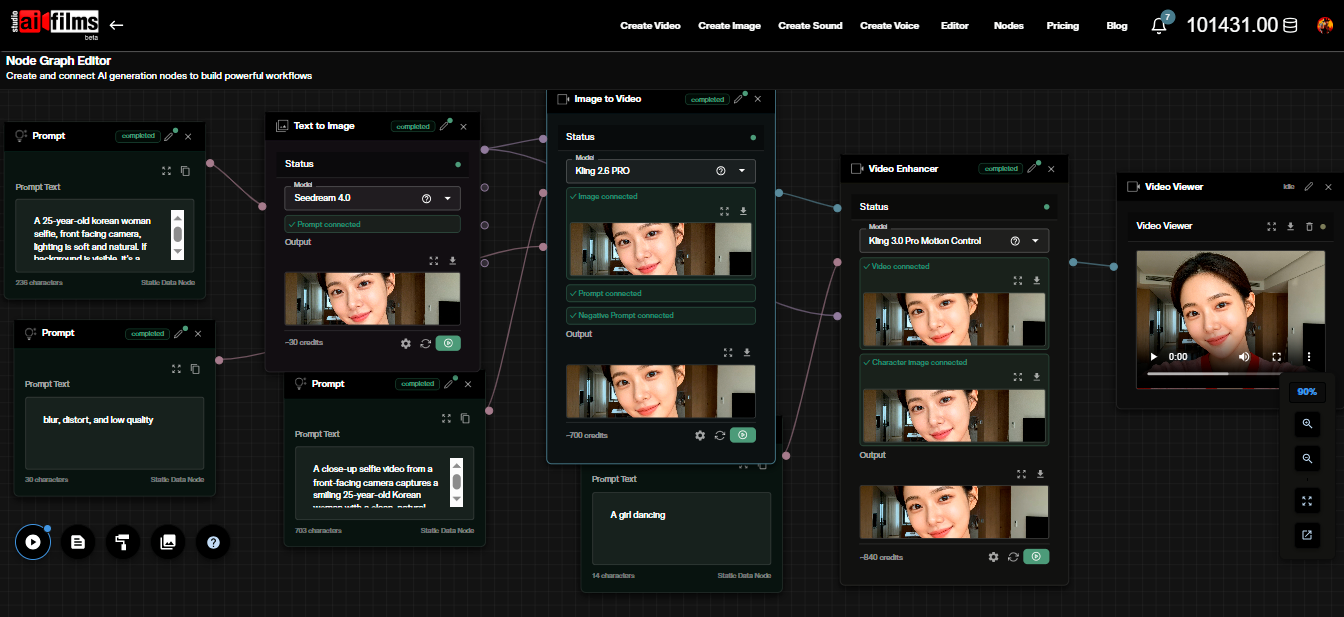
AI video generation tools are available in AI FILMS Studio for filmmakers and creators who want to work with the same category of models the industry is debating.
Entertainment lawyer Ken Ziffren, who represented the DGA for over five decades, offered a structural frame for the debate Holland is describing. In a June 2026 Variety interview, Ziffren called the current moment Phase 1 of Hollywood's AI adoption, defined by cost control, with Phase 2 focused on the harder question of how workers share in what AI saves. Holland's confidence that creative roles are safe speaks directly to the Phase 2 question: what remains distinctly human in a production, and therefore what commands compensation that AI cannot substitute.
Sources
Variety | Deadline | The Wrap
Continue Reading
.jpg?w=3840)


Video & LipSync
- Video Generator
- Text to Video
- Image to Video
- Start-End Frame to Video
- Draw to Video
- Motion Control
- Video Enhancer
- Video Upscaler
- Video to Video LipSync
- Audio to Video LipSync
- Image to Video LipSync
- Video FaceSwap
- Seedance 2.5
- WAN 3.0
- Seedance 2
- FLUX 3
- Minimax H3
- Vidu Q3 Pro
- Grok Imagine Video 1.5
- Gemini Omni
- Google Veo 3.1
- Kling 3.0 Pro
- Luma Ray 3.2
- LTX 2.3
- Happy Horse 1.1
- Kling 3.0 Motion
- ByteDance Upscaler
- InfiniteTalk
- InsightFace
Image & Edit
- AI Character
- AI Actor
- Art Generator
- Text to Image
- Image to Image
- LoRA Image to Image
- Draw to Edit
- Image LoRA Training
- Remove Background
- Image Enhancer
- MidJourney 8.0
- Krea 2
- OpenAI GPT Image 2.0
- Nano Banana Pro Ultra
- Nano Banana 2 Lite
- Nano Banana Pro
- Minimax Image
- Clarity Pro
- Z-Image Turbo LoRA
- Krea 2 Turbo LoRA
- Z-Image LoRA Trainer
- Qwen Image LoRA Trainer
- Background Erase Network 2 (BEN2)