
Share this post:
Fable Rebuilds Orson Welles' Lost Magnificent Ambersons
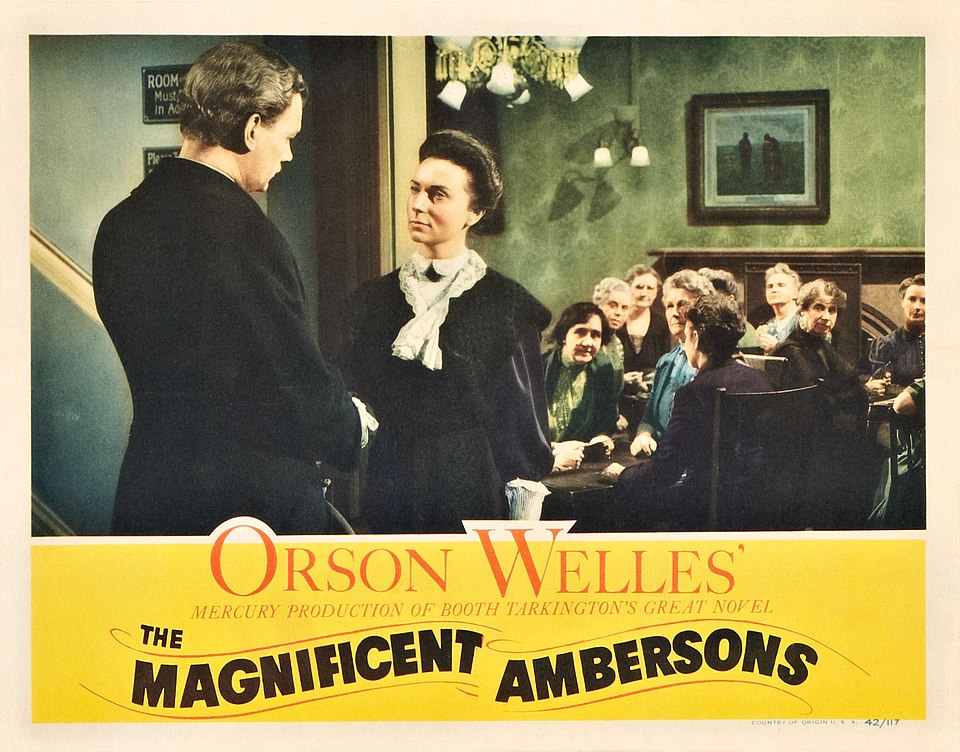
On March 27, Fable, the AI studio formerly known as Showrunner, shared updates on its project to reconstruct the 44 minutes of footage cut from Orson Welles' 1942 film The Magnificent Ambersons. The company is using live actors on physical sets as a performance blueprint, with AI generating the digital likenesses and synthesized voices of the original 1942 cast. The team plans to premiere the completed cut later this year.
Cinema's Most Famous Mutilated Masterpiece
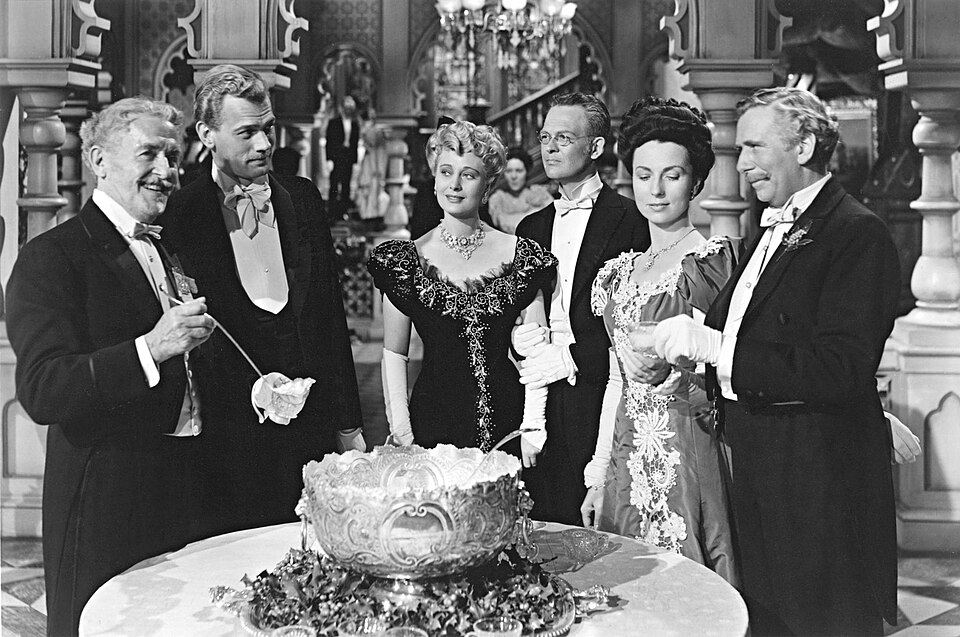
Orson Welles finished shooting The Magnificent Ambersons in early 1942 while he was in Brazil directing a documentary for the wartime Good Neighbor Policy. RKO Pictures, facing financial losses from Citizen Kane and under new leadership unsympathetic to Welles, edited the film without his participation. Editor Robert Wise, working under studio orders, reduced Welles' original assembly cut from 131 minutes and added a new ending.
The excised footage was reportedly melted to reclaim silver from the nitrate stock, along with other RKO materials. What remained still earned four Academy Award nominations, including Best Picture and Best Supporting Actress for Agnes Moorehead. Welles considered The Magnificent Ambersons his finest work and spent years afterward seeking to recover or reconstruct the missing material. He never succeeded.
The project is considered one of cinema's most significant losses. Film scholars have debated for decades what the full version would have revealed about the Amberson family's decline, and whether Welles' original ending would have altered the film's place in the canon.
What the Scripts Reveal
The original cutting continuity scripts survived the destruction of the footage. These documents list every shot, angle, dialogue line, and editorial timing in Welles' intended assembly, providing a precise blueprint for what the film was supposed to be.
Fable is working from those scripts directly. Each scene in the missing 44 minutes has a documented structure. The challenge is not guessing what was there, but generating performances, likenesses, and audio that meet the level of a theatrical release. The scripts tell you the shot; the AI is responsible for making the shot credible.
.jpg)
Fable: From Interactive AI to Film Restoration
Fable, founded by Edward Saatchi, was previously known as Showrunner and built its reputation on AI driven interactive storytelling. The company announced its Ambersons project in September 2025, initially through The Hollywood Reporter, framing it as a test case for how generative AI can address cinema's irreversible losses.
The February 2026 coverage in The New Yorker and TechCrunch gave the project its widest audience yet. TechCrunch's coverage, headlined with the admission that they were "slightly less mad" about the project after learning more about its methodology, signaled that the human in the loop approach was doing work in changing critical reception. The March 27 update moves the project closer to a concrete premiere timeline.
How Fable Is Rebuilding the Missing Scenes
Fable describes the method as a "human in the loop" process. Modern actors perform the missing scenes on physical sets, providing the movement, timing, and emotional performance that serves as the structural skeleton for each reconstructed shot. This distinguishes the approach from pure AI generation, which would produce footage with no performance anchor.
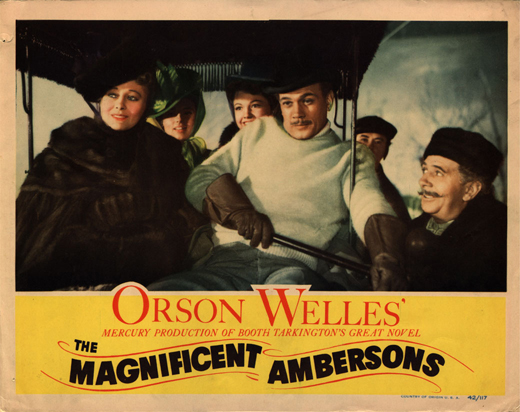
Once the live action performance exists, AI maps the digital likenesses of the 1942 cast onto those performances. The system also synthesizes the voices of original performers including Joseph Cotten, Agnes Moorehead, Tim Holt, Anne Baxter, and Dolores Costello, drawing on the extensive audio record of their work in the released cut and in other films. Synthesis quality for mid century American film actors varies depending on how much source material is available.
The cutting continuity scripts serve as the editorial backbone. They prevent the reconstruction from drifting into interpretation. The scenes are not being invented; they are being rebuilt to match a documented intent.
The Estate Objects
The Welles estate was not consulted before the project was announced. Variety reported the estate issued a statement objecting to the approach. The criticism focused on the use of Welles' artistic legacy and the likenesses of the original cast without prior consent from their representatives.
California's AB 1836, which took effect on January 1, 2026, requires estate consent before creating AI generated likenesses of deceased performers. The law was designed to address exactly this type of commercial use of a deceased person's performance identity. Whether Fable has since sought consent from the relevant estates, or whether the production falls under any exemption, has not been publicly confirmed.
The Welles case also involves multiple estates: the Welles estate itself, and the estates or representatives of each cast member whose voice and likeness the reconstruction uses. That is a more complex consent landscape than the estate of a single performer.
A Different Kind of Precedent Than Val Kilmer
A week before the March 27 update, First Line Films confirmed that Val Kilmer will appear posthumously in As Deep as the Grave using generative AI. That production worked with Kilmer's daughter, developed the AI process with estate participation, and had Kilmer's direct involvement before his death in 2025. It is the first publicly confirmed posthumous AI theatrical performance.
The Ambersons reconstruction differs in scope and consent. Kilmer had accepted the role and was personally invested in the project. The 1942 cast of The Magnificent Ambersons has been dead for decades, and the scenes being reconstructed are ones they never filmed. This is not completing something an actor began; it is building performances those actors were never given the chance to give.
That distinction matters for how audiences and critics are likely to receive the finished film. The debate over AI in classic Hollywood properties continued after Guillermo del Toro's Frankenstein won Best Visual Effects at the 98th Academy Awards. The Oscar win reignited industry discussion about AI's place in the production pipeline, but the Ambersons project represents a different frontier: AI not as a pipeline tool, but as the instrument of historical reconstruction.
Premiere Planned for 2026
Fable has said it plans to premiere the completed lost cut later this year. No distributor, festival selection, or venue has been announced. If the project reaches a theatrical or streaming release, it will be the first time audiences have seen what Orson Welles originally assembled for this film.
Filmmakers experimenting with AI tools in their own work can access text-to-video and image-to-video generation through AI FILMS Studio.

Sources
NBC News | Variety | The Guardian | The Hollywood Reporter | The New Yorker | TechCrunch | PYMNTS
Continue Reading
.jpg?w=3840)


Video & LipSync
- Video Generator
- Text to Video
- Image to Video
- Start-End Frame to Video
- Draw to Video
- Motion Control
- Video Enhancer
- Video Upscaler
- Video Extend
- Video to Video LipSync
- Audio to Video LipSync
- Image to Video LipSync
- Video FaceSwap
- Seedance 2.5
- WAN 3.0
- Seedance 2
- FLUX 3
- Minimax H3
- Vidu Q3 Pro
- Grok Imagine Video 1.5
- Gemini Omni
- Google Veo 3.1
- Kling 3.0 Pro
- Luma Ray 3.2
- LTX 2.3
- Happy Horse 1.1
- Kling 3.0 Motion
- ByteDance Upscaler
- InfiniteTalk
- InsightFace
Image & Edit
- AI Character
- AI Actor
- Art Generator
- Text to Image
- Image to Image
- LoRA Image to Image
- Draw to Edit
- Image LoRA Training
- Remove Background
- Image Enhancer
- MidJourney 8.0
- Krea 2
- OpenAI GPT Image 2.0
- Nano Banana Pro Ultra
- Nano Banana 2 Lite
- Nano Banana Pro
- Minimax Image
- Clarity Pro
- Z-Image Turbo LoRA
- Krea 2 Turbo LoRA
- Z-Image LoRA Trainer
- Qwen Image LoRA Trainer
- Background Erase Network 2 (BEN2)