
Share this post:
Frankenstein's Oscar Wins Reignite Hollywood AI Pipeline Debate
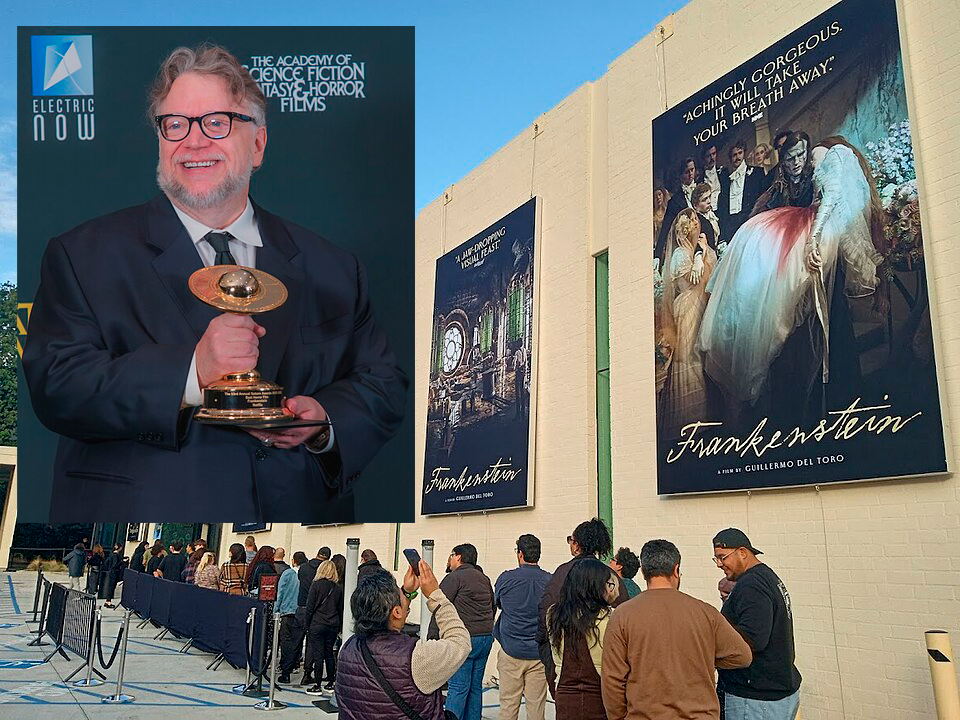
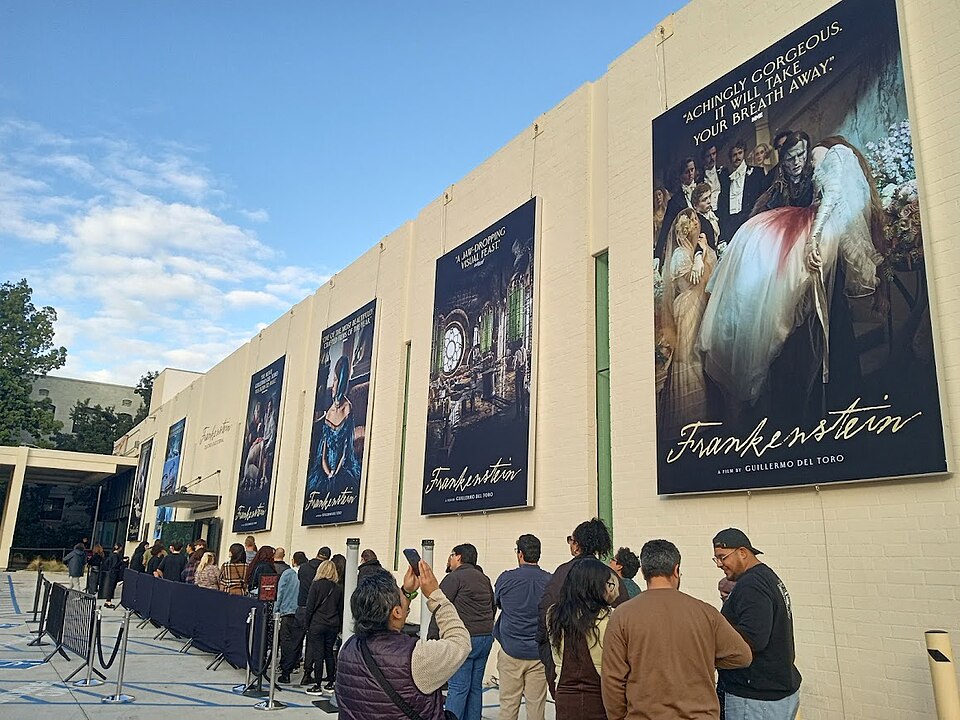
Guillermo del Toro's Frankenstein walked away from the 98th Academy Awards on March 15 with three craft Oscars, including Best Visual Effects. Days later, the question circulating through VFX houses was not about del Toro's vision. It was about what tools his pipeline actually used.
A Monster Built by Hand. Or Was It?
The film took home three craft Oscars at the ceremony, including Best Visual Effects. VFX studio MR.X handled over 930 shots across 146 sequences and more than 147,000 frames. The work covered creature design, environment building, and compositing at scale.
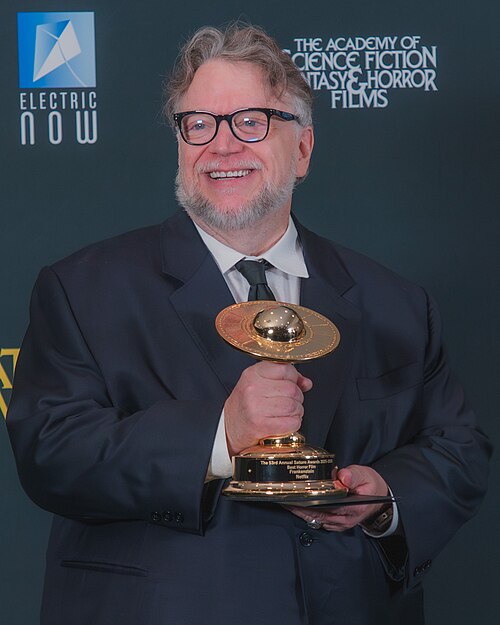
Del Toro had been unambiguous about his position throughout production. "AI, particularly generative AI, I am not interested, nor will I ever be interested. I'd rather die," he told NPR's Terry Gross. He intentionally shaped the Victor Frankenstein character to mirror what he called the arrogance of tech industry leaders.
Del Toro's Position on AI
Del Toro has been among the most vocal directors in Hollywood on this issue. "Ones and zeros don't get the alchemy that you get with emotion and experience," he has said. He frames the debate not as a technical question but as a moral one: "Art makes no sense after losing the human touch."
His opposition is targeted specifically at generative AI. He does not object to digital tools in general. The distinction matters because the controversy now circling his Oscar win turns on exactly that difference.
The Pipeline Question
No studio press release from MR.X or Netflix has confirmed the use of generative AI in Frankenstein's production. What industry observers are pointing to is different. Modern VFX pipelines at that scale, over 900 shots across extensive environment extension and creature compositing, routinely use machine learning tools for roto work, denoising, color matching, and motion estimation. These tools are not generative AI. They are AI augmented production software.
The distinction is precise but often collapsed in public discussion. When a VFX house runs neural denoising on a render pass, that is AI. When it uses a diffusion model to generate a character's digital face, that is generative AI. Del Toro's rejection applies to the latter. Whether the former was part of the MR.X workflow has not been publicly addressed.
What VFX Houses Are Saying
Several VFX studios have begun citing the Frankenstein win in internal discussions as evidence that AI assisted compositing and production tools are now part of award winning workflows. The framing positions these tools not as shortcuts but as infrastructure, comparable to how CGI was treated after its adoption in the 1990s.
Investment in proprietary AI tools for compositing, environment extension, and procedural generation has accelerated since the awards. Studios are not publicizing the specific AI components of their pipelines, partly because the debate around del Toro's win has made the question politically sensitive. But the money is moving.
A Debate the Industry Has Been Deferring
The Academy CEO Bill Kramer addressed AI and the Oscars three days before the ceremony, stating that AI is a tool, not a creator, and that human authorship remains the standard. His statement came before anyone had reason to apply it to the evening's biggest craft winner.
Two days before the ceremony, at SXSW, Steven Spielberg told audiences he had never used AI in any of his films and that he was not for it when it replaced human creativity. Del Toro and Spielberg are not outliers in their positions. But their films run through pipelines that increasingly include tools built on machine learning whether directors sign off on that level of the stack or not.
Meanwhile, on March 27, Fable shared updates on its AI reconstruction of 44 missing minutes from Orson Welles' The Magnificent Ambersons. That project places generative AI not as a layer within a conventional pipeline, but as the primary tool for recreating footage that no longer exists.
Christopher Nolan, now DGA President, has framed the question carefully as he positions the guild for contract negotiations opening in June 2026. His stance: AI as a tool under director authority, not as a replacement for it. The Frankenstein situation is exactly the grey area that framing has to account for.
Where the Debate Goes Next
The real question the Frankenstein win surfaces is not whether del Toro personally used AI. He says he did not, and there is no public evidence to the contrary. The question is whether directors can be said to "use AI" or "avoid AI" when the decision exists several layers below them in the production stack.
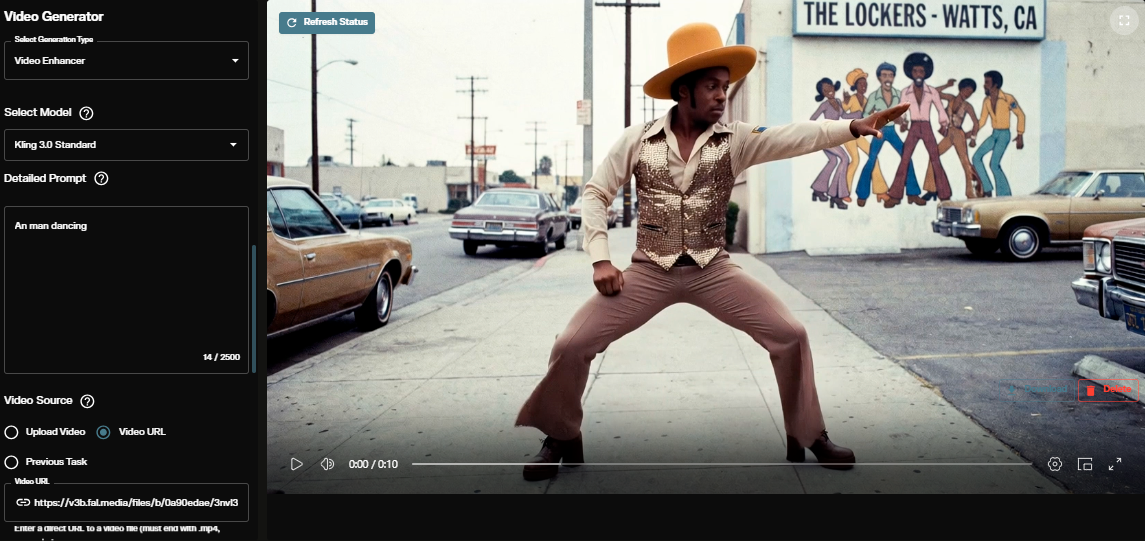
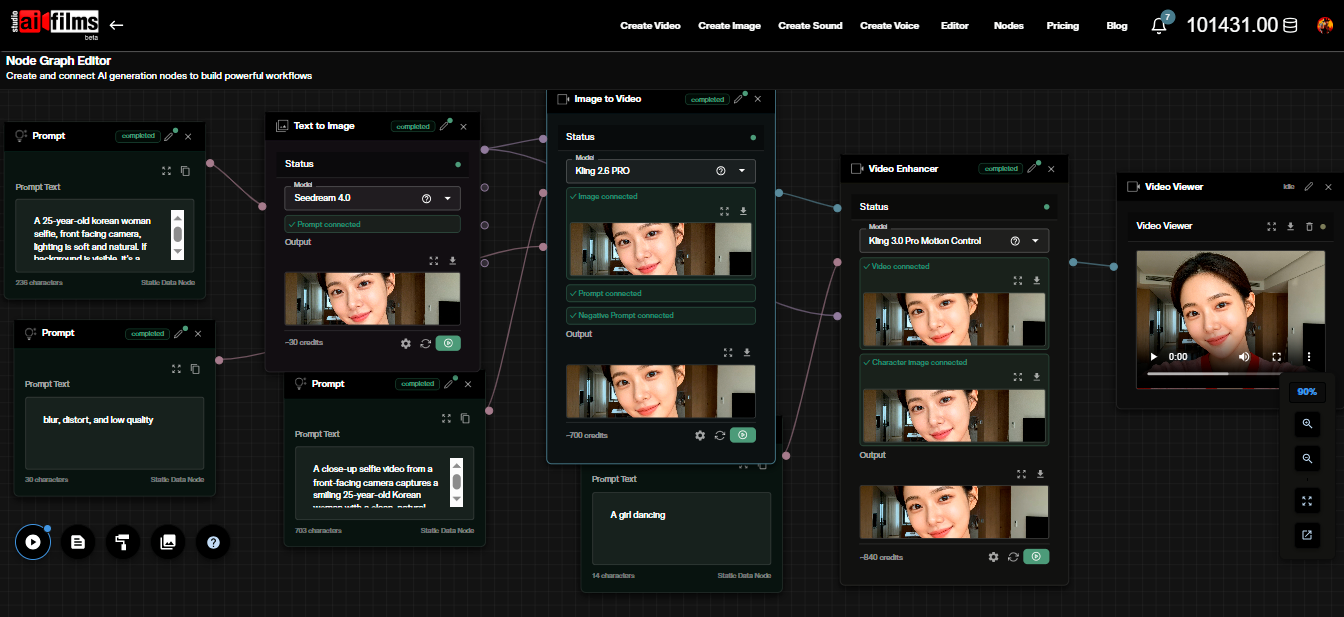
For filmmakers who want direct creative control over what tools touch their work, AI FILMS Studio makes the pipeline explicit. Every model, every generation step, every tool is chosen by the filmmaker, not delegated to a VFX house.
Sources
La Biennale di Venezia | amnewscurtainraiser | Yahoo News | Evrim Agaci | Forbes
Continue Reading
.jpg?w=3840)


Video & LipSync
- Video Generator
- Text to Video
- Image to Video
- Start-End Frame to Video
- Draw to Video
- Motion Control
- Video Enhancer
- Video Upscaler
- Video Extend
- Video to Video LipSync
- Audio to Video LipSync
- Image to Video LipSync
- Video FaceSwap
- Seedance 2.5
- WAN 3.0
- Seedance 2
- FLUX 3
- Minimax H3
- Vidu Q3 Pro
- Grok Imagine Video 1.5
- Gemini Omni
- Google Veo 3.1
- Kling 3.0 Pro
- Luma Ray 3.2
- LTX 2.3
- Happy Horse 1.1
- Kling 3.0 Motion
- ByteDance Upscaler
- InfiniteTalk
- InsightFace
Image & Edit
- AI Character
- AI Actor
- Art Generator
- Text to Image
- Image to Image
- LoRA Image to Image
- Draw to Edit
- Image LoRA Training
- Remove Background
- Image Enhancer
- MidJourney 8.0
- Krea 2
- OpenAI GPT Image 2.0
- Nano Banana Pro Ultra
- Nano Banana 2 Lite
- Nano Banana Pro
- Minimax Image
- Clarity Pro
- Z-Image Turbo LoRA
- Krea 2 Turbo LoRA
- Z-Image LoRA Trainer
- Qwen Image LoRA Trainer
- Background Erase Network 2 (BEN2)