Red Rocks AI Film Festival: Attend In Person or Livestream (Oct 9, 2025)

Share this post:
Red Rocks AI Film Festival | what matters
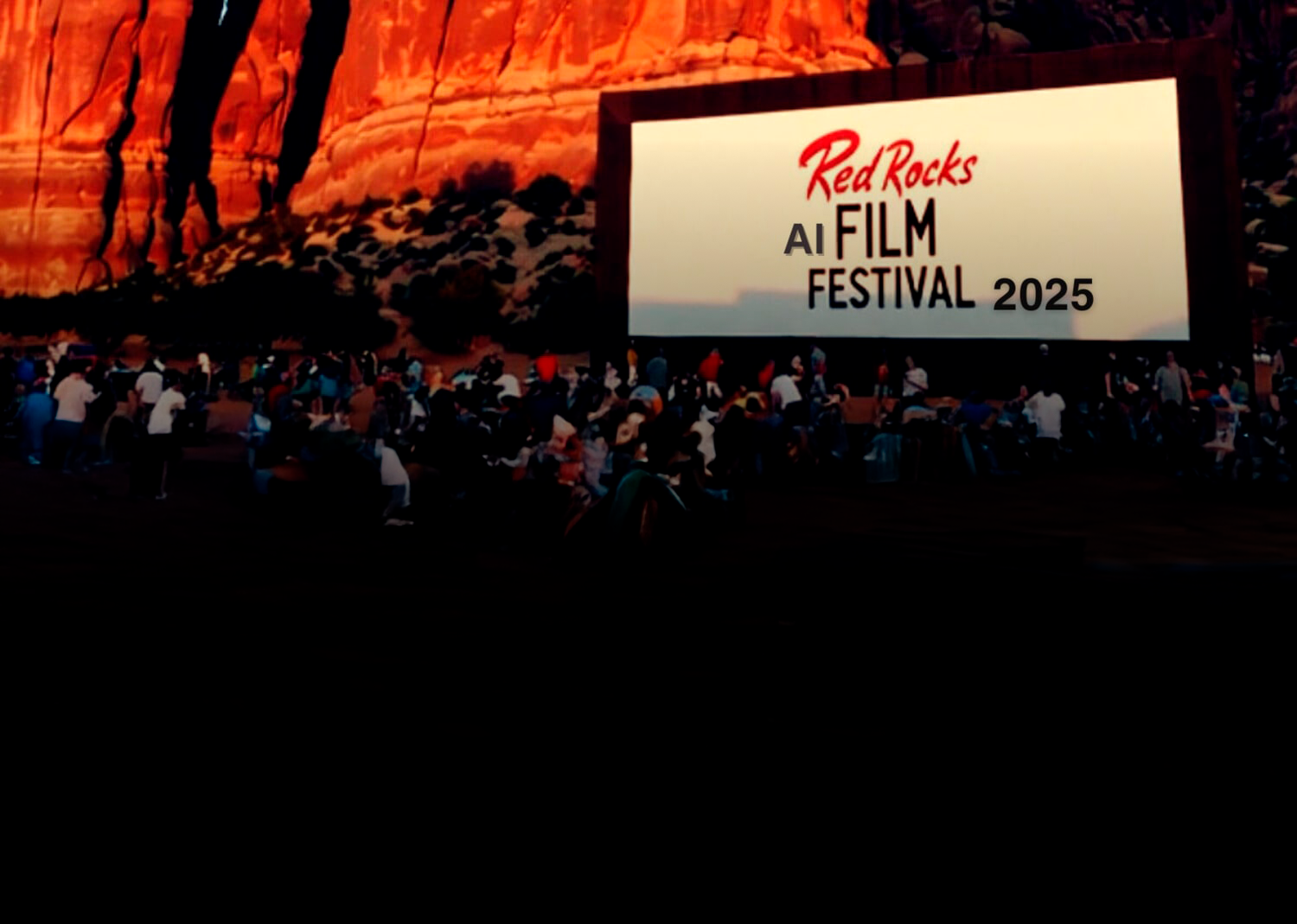
The Red Rocks AI Film Festival ran October 9, 2025 at the Electric Theater Center in St. George, Utah. A two hour evening program combining AI short film screenings with a live awards segment, it drew a general audience that skewed families and regional creative professionals rather than the research and industry crowd that attends conference aligned events.
The format was straightforward and that was its strength. The theme "Illuminate and Uplift" guided curatorial selection toward work with an accessible emotional register, and the combination of a physical venue with a simultaneous livestream option gave the event reach beyond the Utah region.
Event Details
The festival ran from 6:30 PM to 8:30 PM on October 9, 2025, at the Electric Theater Center at 68 E Tabernacle Street, St. George, UT 84770. Doors opened at 6:00 PM for the in person audience. The remote livestream ran simultaneously through the event's official channels.
The Electric Theater Center is a dedicated arts and performance venue in downtown St. George that regularly hosts film screenings, live performances, and community events. It seats several hundred attendees in a single screen configuration, which is the right scale for a regional AI film event: large enough to feel like a premiere, small enough that filmmakers and audience members can interact directly after the screening.
St. George is roughly five hours by road from Los Angeles and four hours from Salt Lake City, which positioned the Red Rocks festival as the primary AI film event accessible to regional creative communities across southern Utah and northern Nevada without the cost and logistics of traveling to a major market event.
The venue choice reflects this regional orientation. The Electric Theater Center is a downtown arts anchor in a city of roughly 100,000 people, not a boutique arthouse cinema catering to a film industry crowd. Events at this venue are part of the city's cultural life in a way that is different from a festival held in a rented screening room at a tech conference hotel.
That local integration matters for the festival's longevity. A festival that is embedded in its community has a stakeholder base that a pop-up or one-off event does not. The Electric Theater Center's ongoing programming and the Prestwick Productions team's regional roots provide the organizational infrastructure that allows a festival like this to return year after year, which is what the AI filmmaking community needs for a regional distribution circuit to develop.
The "Illuminate and Uplift" Theme
The festival theme shaped the submission pool and the audience experience more directly than neutral calls-for-entry typically do. A theme with a clear emotional direction attracts filmmakers who want to make that kind of work, filters out films that depend on irony or ambiguity, and gives attendees a consistent emotional throughline across a two hour program.
For the general and family friendly audience that the Red Rocks festival targeted, this was the right editorial choice. Films that aim to move, uplift, or illuminate something tend to work across a wider age range and require less context about AI tools or aesthetics to appreciate. A parent and a twelve-year-old can watch an uplifting AI short together in a way that they might not be able to with work designed for a film industry jury.
The thematic constraint also produced a more coherent program than open call festivals typically do. When all the films are working toward a similar emotional goal, a two hour screening has a cumulative effect that a mixed-theme program does not. The audience exits having experienced something more unified than a random set of strong short films.
What the Screening Program Included
The evening program ran selected AI shorts aligned with the theme across two screening blocks, with the awards presentation separating them. The curated program gave filmmakers in each block a defined context for how their work would land, rather than placing stylistically incompatible films side by side.
A two hour program format is the right length for an AI short film screening at a community venue. It is long enough to show meaningful range across a curated selection, short enough to keep a general audience engaged without losing the room in the second half. Festivals that run longer than two hours without an intermission tend to lose audience energy in ways that damage the films shown late in the program regardless of their quality.
Community time followed the close of the program, with photo opportunities and networking between filmmakers, organizers, and audience members. For local creatives who had not attended an AI film event before, this was often the most valuable part of the evening. Direct access to people who had made the films and a chance to ask specific questions about how the work was made is a resource that online film communities cannot replicate.
The awards categories recognized standout work across multiple dimensions, not only the strongest film overall. Category-based awards at events this size matter because they give the judging panel a way to recognize films with different strengths rather than forcing a single-winner comparison across films with genuinely different ambitions. A film with outstanding sound design and a film with outstanding narrative structure are not in direct competition with each other, and a category system makes room for both.
For filmmakers who submitted but did not attend in person, the awards announcement and any post-event footage published by the organizers provided the same essential information as attendance. The awards list is also a useful research tool for discovering strong work in the AI short film circuit, because the films recognized at regional events often appear later at national ones.
Why Regional Festivals Matter
Most AI film festival coverage focuses on major market events in San Francisco, Los Angeles, and New York, or on international events in Paris, Dubai, and London. Regional festivals in mid-tier and smaller markets serve a different function and deserve more attention than they receive.
For creators in Salt Lake City, Las Vegas, Phoenix, or Boise, a festival like Red Rocks is the most accessible in person AI film event within a reasonable travel radius. The cost of attending is a tank of gas and two hours of driving rather than a flight, a hotel, and three days away from work. That accessibility matters for who participates in the AI filmmaking community and who does not.
The geographic concentration of major AI film events in coastal tech and entertainment hubs creates a selection effect. The AI filmmakers who attend and network at those events are the ones who can afford the travel, which skews the visible community toward a subset of practitioners who are already professionally connected. Regional events like Red Rocks counteract that skew by making participation accessible to people who are producing serious work from anywhere in the western United States.
That distribution of talent and perspective across geography produces a more varied creative ecosystem than a festival circuit concentrated in three cities. The aesthetic and thematic concerns of a filmmaker in southern Utah are different from those of a filmmaker in Los Angeles, and both sets of concerns deserve a platform that reaches their natural audience.
Regional festivals also capture work from filmmakers who are not yet plugged into the national AI film circuit. A creator in St. George who would not submit to a curated online festival because they do not know the submission culture will submit to a local event and learn the process through that experience. That pipeline of new voices entering the community at the regional level produces the filmmakers who show up at national events two or three years later.
For industry professionals from coastal markets, regional festivals provide a reading on how general audiences respond to AI film work outside the creative professional bubble. An audience in St. George does not have the same frame of reference as a Sundance audience, and what holds their attention is a genuine test of whether the work communicates to people who are not already invested in the genre.
The Audience as a Tool for Filmmakers
Screening in front of a live general audience produces information that test screenings and online feedback cannot replicate. An audience that does not know what AI filmmaking is, does not follow the community, and has no particular investment in the genre's success is exactly the audience that most commercial film work eventually has to earn.
The filmmakers who enter themed regional events tend to be earlier in their AI filmmaking careers than those who submit to competitive juried festivals with significant prizes. That is not a criticism of the work. Early-career AI filmmakers are often producing the most experimental and unexpected work in the medium, because they have not yet calibrated their output to what a jury is likely to reward.
For the Red Rocks audience, this meant encountering a wider range of approaches and aesthetics than a more selective festival would have screened. Some of the films were technically accomplished. Some were more interesting for what they attempted than for what they achieved. Both kinds of films serve the purpose of a community screening.
The presence of a general audience at the screening also gave filmmakers direct feedback that most online AI film contexts do not provide. How a non-specialist audience responds to their work, what moments generate attention, where attention drifts, and what the overall emotional impact felt like when experienced in a room with people rather than alone at a screen. These are the questions that determine whether a film has a life beyond the AI filmmaking community.
Filmmakers who watched their own films in the room during the Red Rocks screening had the opportunity to observe where the audience engaged and where they disconnected. That direct observation is the fastest feedback loop available for improving craft, faster than any number of written notes or online ratings.
For filmmakers who are still in development on their next project, attending a regional screening event like this without submitting has its own value. Watching how a general audience responds to a curated set of AI short films provides a working model of what connects and what does not that no amount of online research can replicate. You cannot read your way to an understanding of how audiences experience AI films. You have to be in the room.
The Q&A sessions after screenings, when the format includes them, are where the most specific information comes out. Filmmakers answering direct questions from an audience that just watched their work tend to be more concrete and specific than filmmakers speaking on panels without a just-screened work as context. Those conversations are the most transferable learning available at events of this type.
The Livestream Option
The simultaneous livestream was one of the features that distinguished Red Rocks from many regional film events, which typically do not offer remote viewing. For the AI film community, where a significant portion of practitioners and enthusiasts live and work entirely outside major metro areas and cannot travel for a regional event in southern Utah, the livestream expanded the reach of the program substantially.
The logistics of a simultaneous in-person and online event require more coordination than either format alone. Audio levels that work for the room may not work for the stream. Q&A sessions with the audience in the venue are harder for remote viewers to follow. These are solvable problems, and the Red Rocks team built a format that prioritized the in-person experience while making the stream accessible.
Real-time livestream viewing produces a different experience than video on demand. Watching simultaneously with a room of people creates a shared context that watching an archived recording does not replicate. For viewers who care about the community dimension of the event, not just the content, the livestream offered something closer to attendance than an archived upload would.
The archived recordings from the event, if made available by the organizers, serve a different purpose than the livestream. They allow filmmakers to review how their own work played, to watch films they might have missed during the live program, and to share specific works with collaborators or industry contacts who want to see what was screened. The archival function is often where the event's value compounds beyond the one evening.
Organizers documented post-event access options on the official channels. Check the Prestwick Productions and FilmFreeway pages for any recordings or program information released after the event.
What Filmmakers Could Take Away
The Red Rocks festival was one of several AI film events that ran in the fall 2025 season, alongside the MIT AI Film Festival in Boston and the competitive international track that led to the UAE's $1 million AI Film Award. Each event served a different audience and rewarded different kinds of work.
Red Rocks was the most accessible in terms of attendance requirements and audience expectations. It was also the most useful for filmmakers who wanted to test their work in front of a general audience rather than a specialist one. That audience is ultimately the audience for almost all commercial film work, and the response of a family friendly crowd in St. George is a more meaningful data point for some projects than the response of a curated industry panel.
For filmmakers who missed the 2025 submission window, the event provides a template for what the 2026 cycle will look like. Themed submissions, community-oriented programming, regional focus, and accessible attendance are the stable features of this festival format. Building work around the "Illuminate and Uplift" sensibility, or whatever theme the 2026 edition announces, is the most direct preparation for a competitive submission.
Planning for the 2026 Cycle
Submission windows for the 2025 cycle closed before the event date. For filmmakers interested in entering the 2026 edition, the FilmFreeway listing is where submission opening dates and requirements will be posted. Prestwick Productions, the organizer behind the festival, has established a consistent regional programming model that is likely to continue in subsequent years.
The practical preparation for a 2026 submission is building work that fits the festival's stated purpose. Films with broad emotional appeal, accessible narratives, and production quality suited to a large screen in a public venue have the best fit with what the Red Rocks curatorial team selects. Technical showpieces and work aimed at specialist audiences are better suited to other festivals on the circuit.
For the broader AI filmmaking community, the emergence of stable regional festivals like Red Rocks alongside established national and international events represents a maturing distribution structure for AI short film work. A film can now have a regional premiere, move to national festival circuit events, and reach a global audience through a competitive international event, all within a single release cycle. That structure did not exist two years ago.
The regional tier of that circuit matters because it creates an entry point for filmmakers who are not yet connected to the national AI film community. A strong showing at Red Rocks or a comparable regional event is the kind of visible result that leads to submissions at larger festivals and to connections with the practitioners who program them. The AI film distribution circuit is still early enough that entry at the regional level can lead directly to national visibility within a single year.
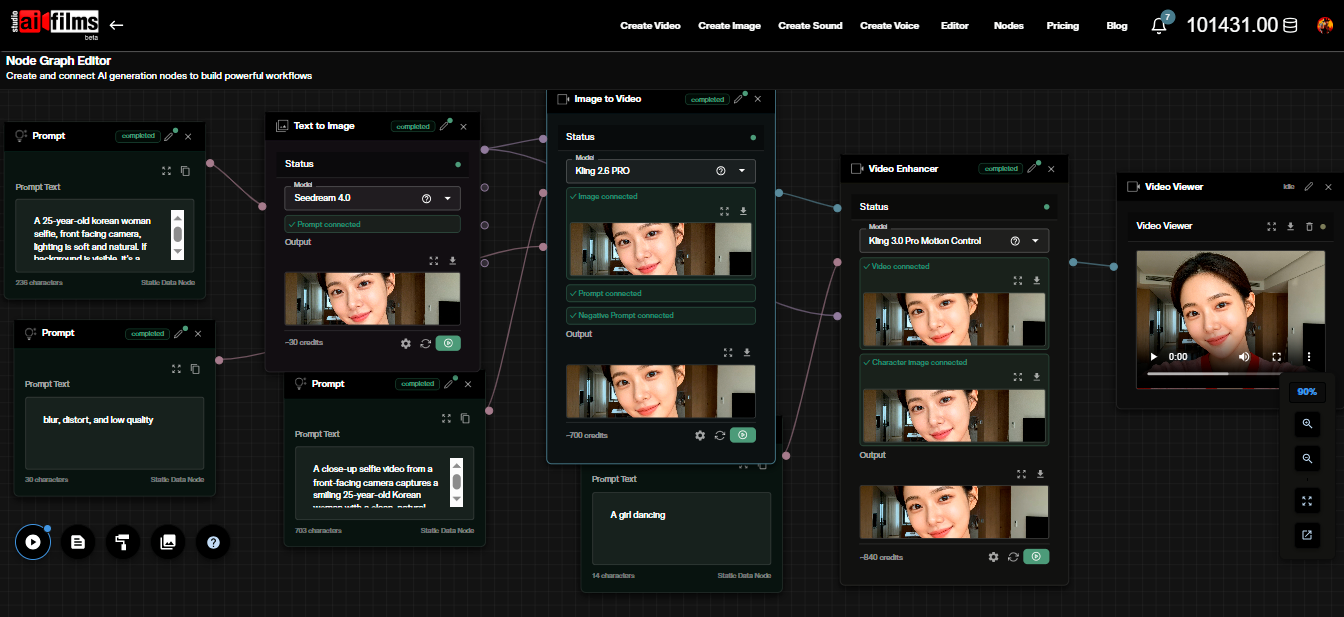
The AI FILMS Studio video workspace is where filmmakers building work for circuits like this can access text-to-video and image-to-video generation with the latest AI models, without the overhead of managing local infrastructure. Regional festival timelines are short and the ability to generate quickly is a practical advantage when a submission deadline is six weeks out.
Follow the FilmFreeway listing and the Prestwick Productions site to track when 2026 submissions open.
Sources
FilmFreeway: filmfreeway.com/RedRocksAIFilmFestival Organizer site: prestwickproductions.com Electric Theater Center: electrictheater.org Venue address: Electric Theater Center, 68 E Tabernacle St, St. George, UT 84770
Continue Reading
Video & LipSync
- Video Generator
- Text to Video
- Image to Video
- Start-End Frame to Video
- Draw to Video
- Motion Control
- Video Enhancer
- Video Upscaler
- Video to Video LipSync
- Audio to Video LipSync
- Image to Video LipSync
- Video FaceSwap
- Seedance 2
- Vidu Q3 Pro
- Google Veo 3.1
- Kling 3.0 Pro
- LTX 2.3
- Happy Horse 1.1
- Kling 3.0 Motion
- ByteDance Upscaler
- InfiniteTalk
- InsightFace