
MPA Chief: AI Can 'Bolster the Art of Storytelling'
Share this post:
MPA Chief: AI Can 'Bolster the Art of Storytelling'
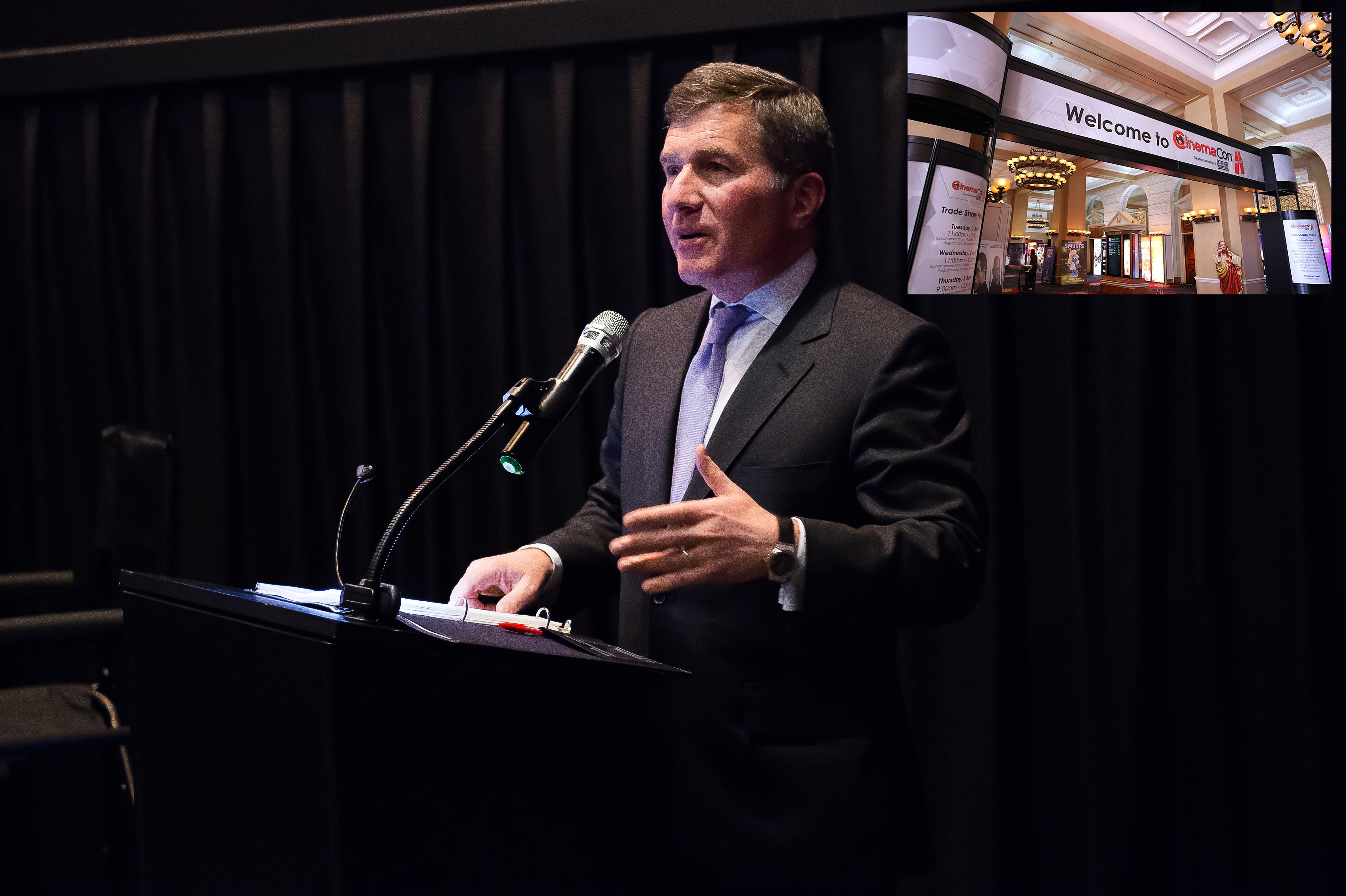
Charles Rivkin, Chairman and CEO of the Motion Picture Association, addressed the theater industry at CinemaCon in Las Vegas on April 14, 2026. His central argument: AI can "bolster the art of storytelling" and improve the fan experience, but only within a framework of enforced copyright law.
CinemaCon and the Audience That Matters
CinemaCon is the annual gathering of theatrical exhibitors held at Caesars Palace in Las Vegas. It is the event where major studios screen upcoming films for the theater operators who control which titles get premiere screens in major markets. When an MPA chairman addresses that room, he is speaking to the people whose investment in theatrical distribution determines how films reach audiences. The 2026 edition drew approximately 4,000 attendees from every major theater chain in North America as well as significant international exhibition representation. The MPA's formal address slot at the conference is the most direct channel the association has to communicate with the theatrical exhibition industry as a whole.
.jpg)
Gage Skidmore from Surprise, AZ, United States of America, CC BY-SA 2.0, via Wikimedia Commons
Exhibitors have a specific set of concerns about AI in film production that differ from directors' and writers' concerns. A guild member worries about job displacement. An exhibitor worries about whether audiences will be able to distinguish AI generated content from human-made content, and whether the distinction will affect their willingness to pay for theatrical tickets.
Rivkin's remarks at CinemaCon were calibrated for that audience. His argument was not about creative process but about commercial product: AI, properly constrained by copyright enforcement, produces better stories that give exhibitors better product to sell. The frame was commercial, not aesthetic.
A Tool, Not a Replacement
"We should view it as we do its predecessors: as a tool that can enhance human creativity, not replace it", Rivkin said. The position puts the MPA firmly in the camp that sees AI as an extension of filmmaking craft rather than a threat to it.
The "predecessors" framing has specific rhetorical intent. Sound, color, digital intermediate, digital projection, and streaming distribution were each described by critics as threatening the creative fundamentals of cinema at the time of their introduction. In every case, the technology was integrated into production and distribution without ending the industry it was said to threaten. Rivkin is invoking that historical pattern to argue that AI is a continuation, not an exception. Whether the analogy holds depends on whether AI displaces creative labor differently from earlier technical tools, a question the MPA's framing leaves open.
The remarks arrived one day after Cannes 2026 formally banned generative AI from its Official Competition, underscoring how sharply the industry is split. Where Cannes framed generative AI as incompatible with auteur cinema, the MPA's position is that the technology can serve it.
Rivkin's framing positions the MPA alongside the studios and producers who have been the most vocal about AI as an efficiency tool. It is the institutional version of the argument that senior producers like Brian Grazer have made individually: AI handles the tasks that do not require human creative judgment, freeing humans to focus on the work only they can do.
U.S. Department of State, Public domain, via Wikimedia Commons
How the MPA Applies Pressure on Copyright
The MPA's copyright enforcement capabilities are meaningful because they operate through multiple channels simultaneously. The association can pursue litigation directly, work with international trade partners to apply pressure on foreign AI companies, engage with domestic platforms to enforce takedown requirements, and lobby for legislation that adds criminal penalties to civil liability. The combination of legal, diplomatic, and legislative levers is what makes the MPA's copyright enforcement different from an individual studio suing a single infringer.
In the AI context, that pressure was demonstrated with ByteDance. The cease and desist letters that halted Seedance 2.0's global rollout came from five major studios, coordinated through their legal teams and almost certainly with MPA institutional support. A single studio cannot compel a Chinese technology company to suspend a product. Five studios acting together, with the implicit backing of an organization that has trade agreement relationships and Congressional contacts, created a different kind of pressure.
The Copyright Foundation
Rivkin grounded his AI optimism in enforcement. The MPA had condemned ByteDance's Seedance 2.0 model in February 2026, accusing it of enabling "unauthorized use of U.S. copyrighted works on a massive scale". By March, ByteDance had suspended the model's planned global rollout after cease and desist letters from five major studios arrived.
"You cannot steal copyrighted material and get away with it", Rivkin said at CinemaCon. The MPA also worked to make sure the White House's March 2026 AI policy framework "reaffirmed what's always been true: Copyright protections and innovation are twin pillars of our nation's strength".
The copyright industries Rivkin represents contribute over $2 trillion to U.S. GDP and support 11.6 million American jobs.
The Seedance 2.0 Enforcement Action in Detail
The MPA's copyright enforcement against ByteDance's Seedance 2.0 ran through five major studios issuing cease and desist letters in early 2026 after the MPA identified the model as enabling large scale unauthorized use of copyrighted works. ByteDance suspended the global launch within weeks.
The speed of ByteDance's response reflects the practical situation for a Chinese company with significant US market exposure: continued availability of Seedance 2.0 under active legal challenge from five major studios would have created liability that extended beyond the AI video product to ByteDance's broader US business, including TikTok's ongoing regulatory situation. The MPA did not need to litigate the case to its conclusion. The threat of sustained litigation was sufficient to produce the outcome Rivkin cited at CinemaCon as evidence that "you cannot steal copyrighted material and get away with it."
Rivkin's Background and What It Brings to the Role
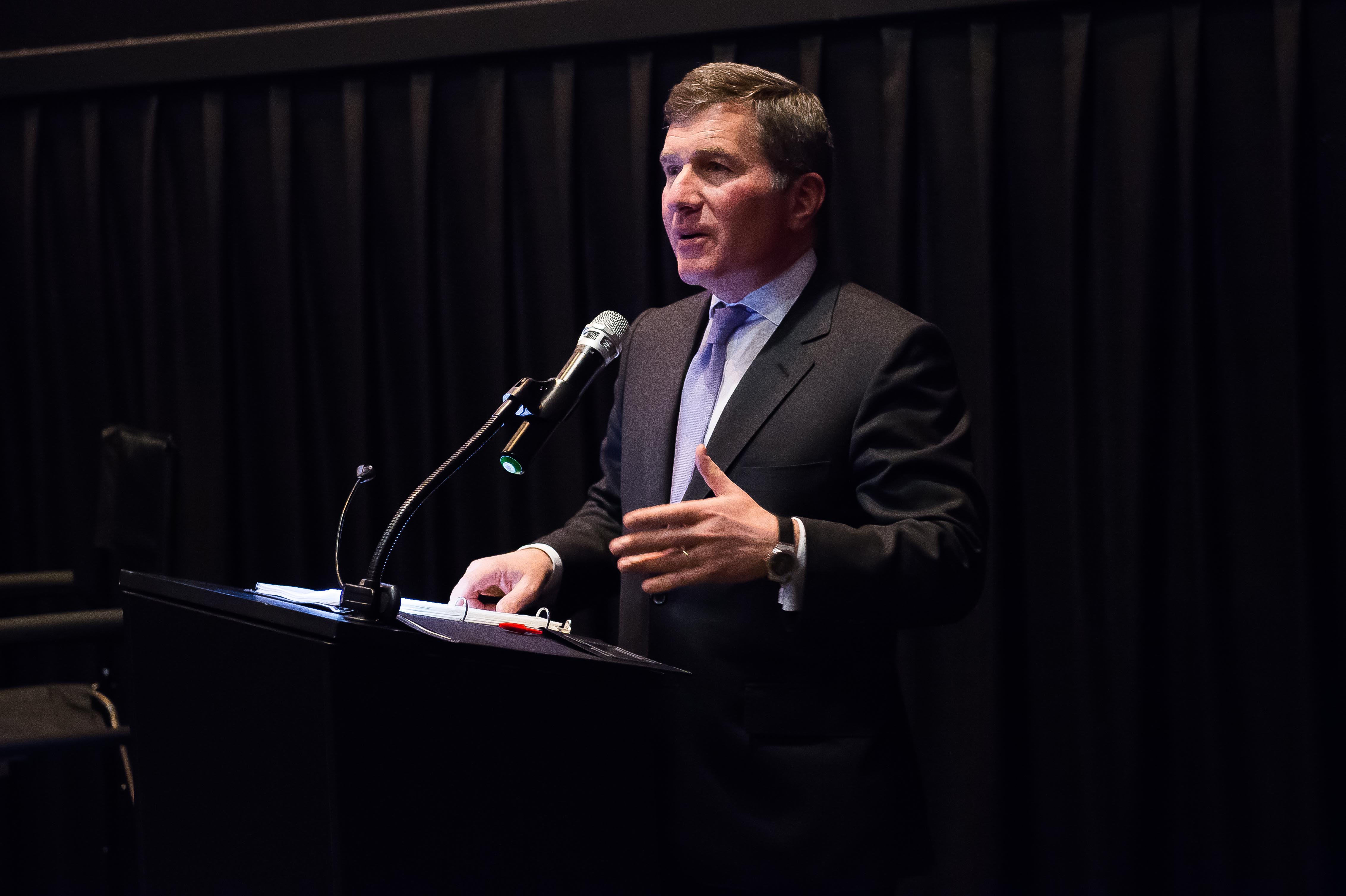
Image courtesy of MPAA Admin
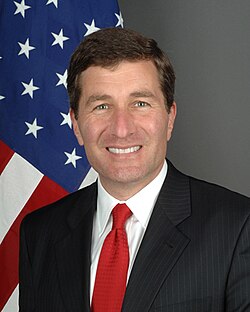
Rivkin served as U.S. Ambassador to France from 2009 to 2013 and as Assistant Secretary of State for Economic and Business Affairs from 2014 to 2017. His State Department background means he understands how trade agreements, diplomatic relationships, and regulatory frameworks interact with commercial interests.
That background shapes how he approaches the AI and copyright question. He does not frame it as a culture war between technology companies and creative industries. He frames it as a matter of trade law enforcement: the rules exist, they protect American economic interests, and enforcement is the obligation of government working alongside industry.
What "Bolster Storytelling" Means for Exhibitors
Rivkin's specific phrase "bolster the art of storytelling" carries commercial implications for the theater owners in the room. A tool that bolsters storytelling produces better stories. Better stories drive higher theatrical attendance, longer runs, and stronger ancillary revenue. For an exhibitor whose business depends entirely on people choosing to leave their homes and pay for a theatrical experience, a technology that makes the stories worth paying for is a positive development regardless of how it is used in production.
That commercial argument is what separates Rivkin's position from a pure craft argument about AI. A craftsperson defending AI as a creative tool is making an aesthetic argument. Rivkin is making a supply argument: AI assisted production increases the quality and volume of content available for theatrical distribution. Both arguments reach the same conclusion but through different logic, and only the supply argument is persuasive to theater chain operators who are primarily concerned with product availability.
Taking On Instagram
Rivkin detailed an enforcement win against Meta. Instagram had adopted the PG-13 label for its teen accounts without MPA authorization. The association challenged what Rivkin described as a 1.6 trillion dollar company. Meta agreed to substantially reduce PG-13 references and add disclaimers distinguishing Instagram's system from the MPA's.
"On my watch, no one will confuse movies shown in your theaters with user generated content people watch on their phones", Rivkin said. The MPA's ratings system, in operation for nearly 60 years, carries a 91 percent approval rating among families.
The Instagram enforcement win is relevant to the AI context because it demonstrates what happens when a major technology platform appropriates film industry intellectual property without authorization. Meta complied because the MPA had the legal standing and the industry backing to make non compliance more expensive than compliance. The same logic applies to AI training datasets.
A Federal Film Tax Incentive
Rivkin named a federal film tax incentive as a current MPA priority, with the association engaging "the White House and Republicans and Democrats in Congress" alongside studios, unions, guilds, and producers. No timeline or legislative vehicle was specified.
The context for this effort is the production location incentive competition between states and countries. Georgia, New Mexico, and the United Kingdom have drawn productions away from California with aggressive tax incentive programs. A federal incentive would create a national floor rather than a state-by-state competition. Whether a bipartisan coalition can be assembled around it depends partly on framing it as a jobs measure rather than an entertainment subsidy.

Image courtesy of MPAA Admin
Theatrical Attendance and Why Exhibitors Need Better Stories
Domestic theatrical attendance in 2025 remained at roughly 70 percent of 2019 levels, the last baseline before the pandemic. Exhibitors have spent three years watching films that should have performed strongly underperform, while a small number of franchise titles carry the entire market. The structural argument for a federal film tax incentive is that domestic production volume, which correlates directly with new titles available for theatrical release, dropped significantly when productions moved to Georgia, the UK, and Canada.
Rivkin's AI framing is not incidental to the theatrical recovery argument. If AI reduces the cost of a production without reducing its quality, more productions become financially viable at the budget levels where theatrical exhibition makes sense. The exhibitors at CinemaCon are the audience most directly served by a version of the AI argument where the tool enables more product rather than replacing the craftspeople who make it.
The MPAA vs. MPA Branding History
The organization Rivkin leads was known as the Motion Picture Association of America until 2019, when it rebranded to the Motion Picture Association to reflect its increasingly global membership and advocacy work. The rebrand recognized that the MPA's interest in copyright enforcement and trade policy extends well beyond US borders: the same intellectual property protection arguments apply in every market where US studio content is distributed.
The international framing matters for AI enforcement. AI training datasets and AI generated content cross borders without requiring the physical distribution agreements that traditional film distribution uses. Copyright enforcement for AI training data requires the same international coordination as copyright enforcement for piracy, and the MPA has the diplomatic relationships and trade agreement expertise to operate at that level in ways that individual studios cannot.
Congress and the State of AI Legislation in 2026
No federal AI legislation covering the whole field has passed as of Rivkin's CinemaCon remarks. Seventeen states had introduced or passed AI specific legislation by early 2026, ranging from performer likeness protections (California AB 2602, AB 1836) to transparency requirements. The White House framework Rivkin cited is executive action rather than law, which means it can be modified by a subsequent administration.
The MPA's engagement with the White House and with both parties reflects the difficulty of passing entertainment specific legislation in a Congress where AI policy has not consolidated around a single legislative vehicle. Rivkin is not describing a legislative win. He is describing the MPA's positioning: aligned with copyright enforcement, supportive of innovation within rights respecting boundaries, and present in policy conversations before the legislation takes shape.
Explore the latest AI video models on AI FILMS Studio.
Update (August 19, 2026): The framework Rivkin described at CinemaCon now has a signature behind it. On August 17, 2026 the MPA and ByteDance signed a memorandum of understanding on intellectual property in generative video and image models. Full story here.
Sources
Variety | Deadline | Motion Picture Association
Continue Reading
.jpg?w=3840)


.jpg)
Video & LipSync
- Video Generator
- Text to Video
- Image to Video
- Start-End Frame to Video
- Draw to Video
- Motion Control
- Video Enhancer
- Video Upscaler
- Video Extend
- Video to Video LipSync
- Audio to Video LipSync
- Image to Video LipSync
- Video FaceSwap
- Seedance 2.5
- WAN 3.0
- Seedance 2
- FLUX 3
- Minimax H3
- Vidu Q3 Pro
- Grok Imagine Video 1.5
- Gemini Omni
- Google Veo 3.1
- Kling 3.0 Pro
- Luma Ray 3.2
- LTX 2.3
- Happy Horse 1.1
- Kling 3.0 Motion
- ByteDance Upscaler
- InfiniteTalk
- InsightFace
Image & Edit
- AI Character
- AI Actor
- Art Generator
- Text to Image
- Image to Image
- LoRA Image to Image
- Draw to Edit
- Image LoRA Training
- Remove Background
- Image Enhancer
- MidJourney 8.0
- Krea 2
- OpenAI GPT Image 2.0
- Nano Banana Pro Ultra
- Nano Banana 2 Lite
- Nano Banana Pro
- Minimax Image
- Clarity Pro
- Z-Image Turbo LoRA
- Krea 2 Turbo LoRA
- Z-Image LoRA Trainer
- Qwen Image LoRA Trainer
- Background Erase Network 2 (BEN2)