
Sandra Bullock Tells Hollywood: 'There's a Place' for AI
Share this post:
Sandra Bullock Tells Hollywood: "There's a Place" for AI
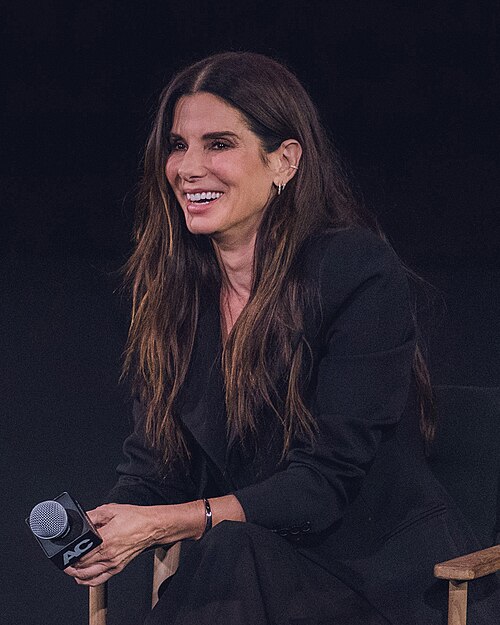
Sandra Bullock told Hollywood to stop resisting AI. Speaking at the CNBC Changemakers Summit alongside Warner Bros. Pictures co-chair and CEO Pam Abdy, the Oscar winning actress called on the industry to lean into the technology rather than treat it as a threat.
"We have to use it in a really constructive and creative way, make it our friend", Bullock said. "There's a place for it".
The CNBC Changemakers Summit
The CNBC Changemakers Summit is an annual gathering of executives, entrepreneurs, and prominent public figures. It is not a film industry event, a guild forum, or a creative conference. The audience is primarily investors, business leaders, and media executives.
Bullock and Pam Abdy appearing together on that stage directed their remarks at a different audience than the one Rogen addressed on the Croisette. At Cannes, AI statements reached directors, writers, performers, and critics. At CNBC, they reached the people who fund studios, evaluate acquisition targets, and track the commercial implications of technology adoption in entertainment.
The venue choice matters for interpreting the statement. "We have to use it in a really constructive and creative way" is framed for an audience that is already deciding whether and how to invest in AI tools, not for one that is deciding whether to use them.
Pam Abdy and Warner Bros.' Institutional Position
Pam Abdy has run Warner Bros. Pictures since 2022. She was in the room for the SAG-AFTRA negotiations in 2023 and 2026. Warner Bros. signed onto the consent and compensation provisions that the guild established for AI generated digital replicas.
Abdy's presence on stage with Bullock is not incidental. It places a major studio's institutional direction in the same frame as Bullock's personal statement. When a studio chief sits next to an A-list actress at a business summit and neither of them distances themselves from the other's AI position, the implication is alignment.
Warner Bros. is not a neutral party on AI in film production. As one of the studios that negotiated and signed the SAG-AFTRA framework, it has made institutional commitments about how AI is used with its performers. Abdy's presence alongside Bullock's statement signals that the studio and at least one of its prominent creative relationships are moving in the same direction.
The Catalyst
The question was prompted by fan created AI trailers for "Practical Magic 2", her upcoming film with Nicole Kidman. Audiences had already used AI tools to imagine what the sequel might look like, placing Bullock and Kidman in scenes that do not yet exist.
Bullock's response acknowledged that reality directly. Rather than treating fan AI work as a violation, she framed it as evidence that audiences are already integrating AI into how they engage with films.
The fan trailers are generated using the same tools available in consumer AI platforms. They typically pull from training data that includes the actors' prior appearances, synthesizing new performances in the style of their existing work. The legal status of that kind of fan generation is unresolved. Bullock chose not to address it as a rights issue. She addressed it as evidence of creative engagement, which is a different framing with different implications.
Practical Magic 2 is in active development at Warner Bros. with Nicole Kidman attached. Bullock's public AI statement comes while she is in development on a sequel to one of her defining films. The timing positions her AI remarks as part of her active career thinking, not a retrospective opinion from a performer in between projects. It also means the tools she is discussing are tools that could, in principle, be used in a production she is currently planning.
The Pattern
Bullock's comments landed within days of Reese Witherspoon making a nearly identical call. Witherspoon had told her audience it was time for women to embrace AI, asking them to "learn with me". Both are A-list women with producing credits and independent production companies. Both chose the same position: curiosity over resistance.
.jpg)
The Conmunity - Pop Culture Geek, CC BY 2.0, via Wikimedia Commons
Bullock and Witherspoon are both producers as well as performers. Their production companies, Fortis Films and Hello Sunshine respectively, are active in development. The pattern of both women choosing engagement over resistance reflects a calculation that applies to their producer roles as much as their acting careers: producers who understand the tools their collaborators are using are better positioned to evaluate projects and negotiate deals.
Both women made their statements within a week of each other without apparent coordination. That clustering is a signal about where a specific tier of the industry is arriving simultaneously.
The Backlash Factor
Witherspoon's statement drew immediate backlash online. Critics accused her of promoting AI on behalf of tech companies. Witherspoon issued a clarification saying "no one is paying me" and that her interest was personal.
Bullock's phrasing appears to anticipate that reception. She did not endorse any specific tool or company, did not announce an AI project, and framed her position around craft rather than commerce. "In a really constructive and creative way" is harder to weaponize than a simpler "use AI" declaration.
The backlash dynamics around AI statements from A-list celebrities in 2026 follow a recognizable pattern. A positive statement generates accusations of paid promotion. A clarification is required. The original statement gets reframed as naive or corporate. Bullock's more cautious phrasing is designed to step around that pattern at the statement stage, not at the clarification stage.
The week gap between Witherspoon and Bullock also allowed Bullock to see how the reception played out. Witherspoon's experience is the most visible recent example of what an unguarded positive AI statement costs in public relations terms. Bullock's qualified version reflects that information.
Craft vs. Commerce as a Framing Choice
"Constructive and creative" positions AI as an instrument in service of storytelling, not an instrument in service of cost reduction. That distinction is loaded in the current guild environment.
Studios discussing AI with union negotiators use language of efficiency: faster workflows, lower costs, more content at scale. Performers and writers discussing AI in public use language of craft: what it does to the work, what it preserves or eliminates in the creative process. Bullock is using the second vocabulary, not the first, even though she is speaking at a business summit.
That choice is not accidental. It positions her as a creative voice engaging with AI rather than as a commercial interest endorsing it. The distinction is semantic, but it is the semantic distinction that determines how the statement is received by the performers and writers who are watching.
The statement Bullock made at a business summit will not be the last word on how she engages with AI in production. It is a public positioning statement. What it commits her to is a posture of engagement, not a specific set of tools or a specific production decision. The commitment becomes concrete when Practical Magic 2 enters production and decisions are made about which tools are used, on what terms, and with what disclosures.
That is where the "constructive and creative" framing will be tested against actual choices.
Other A-List Performers Who Have Spoken Positively
Bullock joins a pattern of prominent performers publicly positioning themselves in favor of AI engagement. Demi Moore at Cannes said resistance is a battle the industry will lose. Casey Affleck not only endorsed AI but starred in a film built around it, Bitcoin: Killing Satoshi, where every location was AI generated.
Val Kilmer pursued AI production as a strategic choice before his death, creating a voice model to extend his ability to work after throat cancer affected his speech. His case is the most concrete example of AI as an accessibility and longevity tool for performers, not just a cost reduction measure for studios.
The performers who have spoken positively about AI share a common position: engagement and oversight are preferable to refusal. None of them are arguing that AI use should be unconstrained or undisclosed. They are arguing that a performer who understands the tools is in a better position than one who refuses to engage with them at all.
That pattern among A-list performers reflects a calculation about agency. Performers who understand how AI tools work, what they can and cannot do, and what the guild agreements require are in a stronger position when studios bring AI proposals to the negotiating table or to the production planning stage. Bullock's "make it our friend" framing is a way of saying that performers who treat AI as an adversary are ceding the knowledge advantage to the studios that are already deploying it.
Neelix, Public domain, via Wikimedia Commons
The Practical Magic 2 AI Trailers and What They Demonstrated
Before any official footage for Practical Magic 2 existed, fans used text-to-video and image-to-video tools to create their own promotional trailers. These trailers circulated on social media using Bullock and Nicole Kidman's existing footage and likenesses to imagine the sequel.
The legal status of this kind of fan generation remains unresolved. SAG-AFTRA's 2026 agreement covers AI digital replicas created by studios for production purposes. Fan-generated content using performers' likenesses sits in a different legal category, one that existing agreements do not fully address.
Bullock's choice to frame the fan trailers as audience engagement rather than a rights concern is a specific editorial decision. It is also consistent with how studios generally approach fan creativity: tolerated when it generates positive attention, actionable when it does damage. The AI fan trailers for Practical Magic 2 generated positive coverage. Bullock's response reflects that outcome.
The SAG-AFTRA Framework and What "Constructive" Requires
Bullock's call for "constructive and creative" AI use lands inside a specific regulatory context. The SAG-AFTRA agreement ratified in November 2023 and extended in 2026 requires informed consent and compensation for AI generated digital replicas of performers' voices or likenesses.
Constructive AI use, in the guild's framework, means consent was obtained and the performer was compensated. Studios that want to use AI tools for synthetic performances cannot simply deploy them. They must obtain the performer's agreement, specify what the likeness will be used for, and pay rates established in the agreement.
Bullock's statement does not address any of those specifics. She is speaking from a performer's perspective about attitude, not from a producer's perspective about compliance. The "constructive" framing aligns with the guild's language without engaging with the conditions that make AI use constructive in the contractual sense.
What She Is and Is Not Saying
Bullock is not announcing an AI production. She is not endorsing a specific platform. She is stating a philosophical position: that Hollywood's best response to AI is to engage it thoughtfully rather than refuse it.
That position, stated from a summit stage next to a major studio chief, carries institutional weight that an individual filmmaker's social media post does not. Pam Abdy's presence on stage placed the conversation inside a corporate context, even if Bullock's words were personal.
The "constructive and creative" framing is doing specific work. It positions AI as a craft instrument rather than an efficiency tool. Studios typically describe AI in terms of cost reduction and speed. Bullock describes it in terms of how it is used: constructively, creatively, as a friend to the work. That framing is designed to be heard by guild members who associate AI primarily with job displacement.
The statement also implicitly defines what unconstructive AI use looks like: using it without transparency, using it to replace roles without consent, using it to reduce costs without sharing the savings with the people displaced. Bullock's positive framing implies a negative one. The "place for it" she describes is bounded by the place where it should not be.
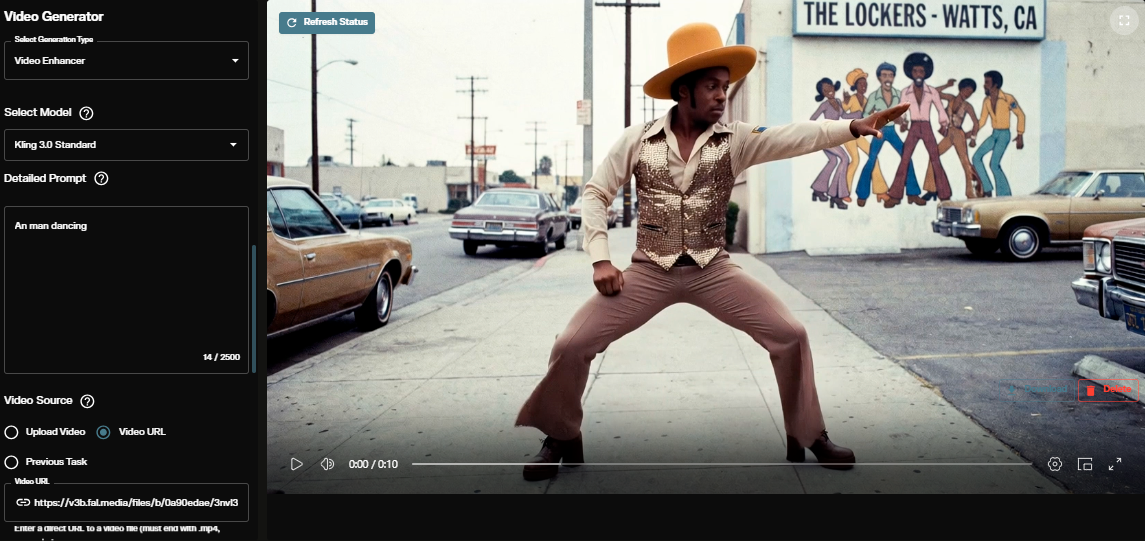
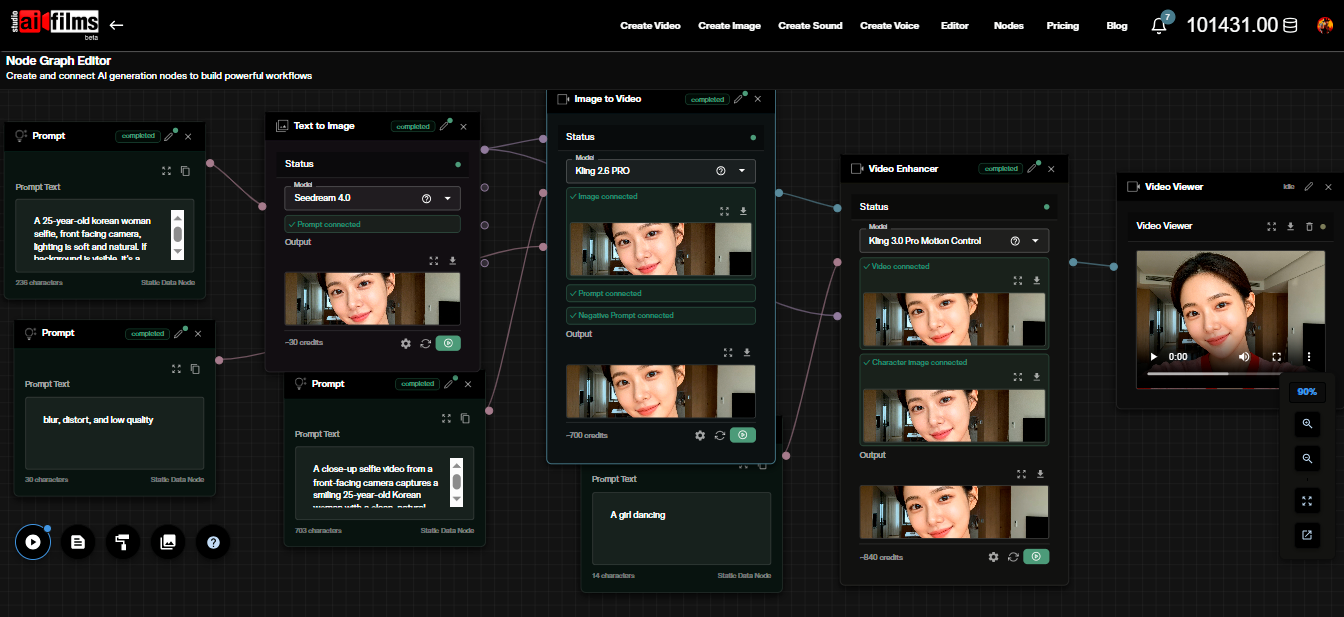
Filmmakers ready to experiment with AI tools today can access text-to-video and image-to-video generation through AI FILMS Studio without waiting for a studio mandate.
Sources
Deadline | Variety | The Hollywood Reporter | CNBC
Continue Reading
.jpg?w=3840)


Video & LipSync
- Video Generator
- Text to Video
- Image to Video
- Start-End Frame to Video
- Draw to Video
- Motion Control
- Video Enhancer
- Video Upscaler
- Video Extend
- Video to Video LipSync
- Audio to Video LipSync
- Image to Video LipSync
- Video FaceSwap
- Seedance 2.5
- WAN 3.0
- Seedance 2
- FLUX 3
- Minimax H3
- Vidu Q3 Pro
- Grok Imagine Video 1.5
- Gemini Omni
- Google Veo 3.1
- Kling 3.0 Pro
- Luma Ray 3.2
- LTX 2.3
- Happy Horse 1.1
- Kling 3.0 Motion
- ByteDance Upscaler
- InfiniteTalk
- InsightFace
Image & Edit
- AI Character
- AI Actor
- Art Generator
- Text to Image
- Image to Image
- LoRA Image to Image
- Draw to Edit
- Image LoRA Training
- Remove Background
- Image Enhancer
- MidJourney 8.0
- Krea 2
- OpenAI GPT Image 2.0
- Nano Banana Pro Ultra
- Nano Banana 2 Lite
- Nano Banana Pro
- Minimax Image
- Clarity Pro
- Z-Image Turbo LoRA
- Krea 2 Turbo LoRA
- Z-Image LoRA Trainer
- Qwen Image LoRA Trainer
- Background Erase Network 2 (BEN2)