
NO FAKES Act Clears Senate Judiciary Committee in Unanimous Vote

Share this post:
NO FAKES Act Clears Senate Judiciary Committee in Unanimous Vote
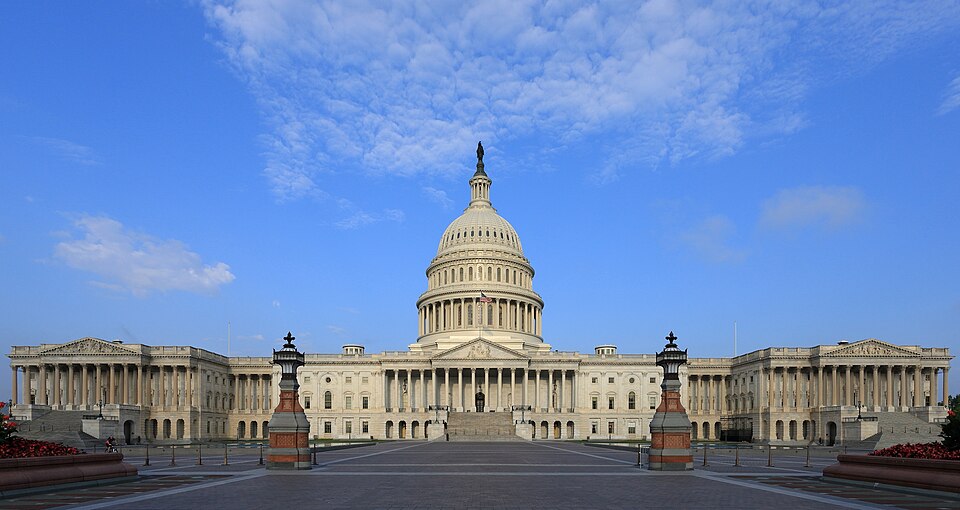
The Senate Judiciary Committee advanced the NO FAKES Act by unanimous voice vote on June 18, 2026, giving the bill its first committee clearance after it stalled in the same body in 2024. The bipartisan measure would create a federal individual right to authorize or block AI generated replicas of a person's voice and likeness.
The vote marks the furthest the bill has traveled since a coalition of entertainment unions, technology companies, and music industry groups began pushing for federal AI likeness legislation in 2023. A full Senate floor vote has not been scheduled, but Thursday's clearance removes the largest procedural obstacle the bill has faced.
The committee vote comes as AI voice cloning, deepfake video, and synthetic performer technology have become widely accessible to creators at every level. Commercial tools that produce convincing voice replicas in minutes, and image generation models that can render photorealistic likenesses of real people, have made unauthorized AI replicas a daily occurrence rather than an edge case. The NO FAKES Act is Congress's attempt to build a legal framework around that reality before it becomes harder to address.
What the Bill Does
The NO FAKES Act creates a federal property right for individuals to control how AI systems use their voice, face, and likeness in synthetic media. That right passes to heirs and executors after death, running for no more than 70 years. The duration matches the term of federal copyright protection, a deliberate alignment that positions personal likeness as intellectual property rather than a purely private matter.
The bill covers three categories of unauthorized AI replicas: voice cloning (generating audio in someone's voice without consent), digital face replicas (deepfake video or images), and synthetic performers (fully AI generated characters trained on a real person's appearance or mannerisms). Authorization under the bill requires either explicit consent from the individual or a formal compensation agreement. For performers who have died, the executor of the estate holds authorization rights.
Platforms that host unauthorized AI replicas face statutory liability of up to $750,000 per work. The bill carves out exemptions for news coverage, documentaries, sports broadcasts, biographical works, commentary, criticism, and parody. Institutional use by libraries, archives, and research facilities is also exempt.
The counter notice system, modeled on the DMCA's existing notice and takedown procedures, gives individuals a formal mechanism to challenge content removals. A platform that responds promptly to a valid counter notice retains liability protection. This two-way process was added in the revised 2026 draft to address concerns from technology companies about over-removal and chilling effects on legitimate speech.
The bill also covers training data, not just output: using someone's voice or image to train an AI model without their consent would qualify as unauthorized replication under the bill's definitions.
The bill defines "authorization" broadly enough to cover both consent-based and commercial arrangements. An actor who signs a contract allowing a studio to use their AI generated likeness in perpetuity is covered. An executor licensing a deceased performer's voice to a music company for new recordings is covered. A person who uploads a video expressly consenting to parody use is covered. What is not covered is using someone's voice or face without asking at all.
The Bill's History
The NO FAKES Act was first introduced in 2024 by Senators Blackburn and Coons, but it failed to advance out of the Judiciary Committee. The original draft lacked explicit parody and satire exemptions, and major studios argued it raised unresolved First Amendment questions. Some technology platforms opposed the platform liability structure as overly broad.
The 2026 revision incorporated those concerns directly. The current text adds explicit exemptions for parody, satire, and commentary, and revises the platform liability framework to include the counter notice system. Studios that opposed the 2024 version switched to support the current one. OpenAI and Google, both of which build tools capable of generating voice and image replicas, also joined the coalition backing the bill.
Thursday's vote is the first time the NO FAKES Act has cleared a committee in either chamber. The bipartisan support at the committee level, combined with backing from technology companies and entertainment studios, gives the 2026 version a materially different legislative profile than its predecessor.
A Bipartisan Coalition Across Industries
The bill carries sponsors from both parties in both chambers. In the Senate: Marsha Blackburn (R-TN), Chris Coons (D-DE), Thom Tillis (R-NC), and Amy Klobuchar (D-MN). In the House: Maria Salazar (R-FL), Madeleine Dean (D-PA), and Adam Schiff (D-CA).
Industry backing spans entertainment, music, and technology. The Motion Picture Association, RIAA, SAG-AFTRA, and the National Association of Voice Actors (NAVA) support the bill alongside OpenAI, Google/YouTube, and the Human Artistry Campaign, a coalition of more than 200 organizations representing musicians, actors, and creative professionals.
The alignment between AI companies and creative unions on this bill is rare. OpenAI and Google build the generation tools that are most commonly used to create the AI replicas the bill targets. Their support signals that the industry sees a federal framework as more predictable than the current patchwork of state laws and private platform policies.
The Human Artistry Campaign's coalition of more than 200 organizations spans recording academies, songwriter associations, independent music distributors, and acting unions. Their collective position is that authorization and compensation frameworks for AI use of human creativity are more workable than outright bans on the technology. The NO FAKES Act reflects that philosophy: it does not prohibit AI voice or likeness replication but requires consent and creates liability when consent is absent.
SAG-AFTRA's Campaign
SAG-AFTRA mounted a sustained public pressure campaign in the weeks before the committee vote. The union gathered more than 16,000 signatures on an open letter to Congress, drawing support from actors, voice artists, students, parents, and members of the general public. The campaign framed unauthorized AI replicas as a threat in multiple directions: scams, exploitation, false endorsements, and the replacement of working performers without consent or payment.
SAG-AFTRA president Sean Astin said, "Unchecked AI can ruin lives. Americans are demanding that the Federal Government take sensible action." National Executive Director Duncan Crabtree-Ireland said, "The NO FAKES Act represents common sense, long-overdue federal protection, and Congress now has both the opportunity and the obligation to pass it."
.jpg)
RIAA CEO Mitch Glazier said the recording industry was "encouraged by today's passage in the Senate Judiciary Committee". Moiya McTier of the Human Artistry Campaign added: "As AI evolves, everyone deserves the right to control how their voice, likeness and identity are used."
The union's push for federal legislation runs alongside its contract work with studios. SAG-AFTRA ratified a new four-year studio contract with expanded AI protections earlier this year, but that agreement covers only union members. The NO FAKES Act would extend comparable protections to every American, regardless of whether they belong to a union or have the resources to negotiate a likeness clause.
The distinction between contract protections and statutory protections matters for the vast majority of people whose voices and faces have commercial or personal value outside of Hollywood. Influencers, athletes, musicians outside major labels, and everyday people whose likenesses are used in scam deepfakes have no collective bargaining to rely on. Federal law would give them a direct legal claim for the first time.
What the Music Industry Sees
The RIAA's involvement in the NO FAKES Act reflects how AI voice cloning has hit the music sector. The 2023 viral track "Heart on My Sleeve," which used AI generated vocals resembling Drake and The Weeknd, was removed from every major streaming platform within days. Under the current legal framework, that removal depended on platform discretion and copyright claims. Under the NO FAKES Act, distributing the same track would expose the creator and any hosting platform to direct federal liability of up to $750,000 per work.
Voice cloning has outpaced deepfake video as the most common AI likeness violation because it is computationally cheaper and faster to produce. NAVA, the National Association of Voice Actors, has documented members losing commercial work to AI generated clones trained on their own recorded performances, sometimes from audiobooks or advertisements they recorded years earlier. The NO FAKES Act would make producing or distributing such a clone without authorization a federally actionable offense.
NAVA members face an unusual form of displacement: the AI models replacing them were trained, in many cases, on those same members' voices. The bill's consent requirement would directly address this by requiring that the original recording artist explicitly authorize any training data use that produces a deployable replica of their voice.
Legacy Performers and Estate Rights
The postmortem provision is one of the bill's most consequential elements for the film and music industries. Estates of deceased performers, from Marilyn Monroe and Cary Grant to more recently deceased artists, would have the legal standing to authorize or block AI generated replicas of the people they represent. That authorization window of up to 70 years covers virtually all performers from Hollywood's classic era.
The provision addresses a growing commercial market. AI generated vocal performances attributed to deceased musicians have appeared on streaming platforms without estate approval. Posthumous AI appearances in film productions have been produced and released with varying degrees of formal consent. The NO FAKES Act would standardize the consent requirement across all such use cases and give estates a clear federal cause of action when violations occur.
Studios and IP holders have mixed incentives on this provision. Legitimate estate licensing deals would remain fully lawful. But studios that have produced AI performances of deceased actors without formal estate agreements would face retroactive exposure once the bill takes effect.
First Amendment Concerns
Three Republican senators registered objections before the unanimous vote passed. Mike Lee, Ted Cruz, and Eric Schmitt stopped short of blocking the bill but argued the parody and satire exemptions need clearer statutory language before the measure goes to the full Senate.
Cruz specifically cited Spencer Pratt's AI generated mayoral campaign ads as an example of satirical political content that should remain protected without ambiguity. The bill's parody exemption is designed to cover exactly these cases, but Cruz wants the statute to state this explicitly rather than leaving interpretation to courts. Lee and Schmitt echoed the same concern about the exemption's breadth.
The objection matters for the bill's floor prospects. If the three senators who raised concerns in committee demand amendments as a condition of floor support, the sponsors will need to negotiate additional language. The sponsors have indicated a willingness to discuss clarifying text on the satire exemption specifically.
What Compliance Would Look Like
For filmmakers and content creators, the NO FAKES Act would create a documentation requirement that does not currently exist at the federal level. Before generating a synthetic voice or AI image of an identifiable person, producers would need a written authorization from that individual, or their estate, that explicitly permits the specific type of use.
Standard production contracts would need to be updated to include likeness authorization clauses for any AI generated content. Advertising agencies using AI voice cloning for campaigns, game studios using AI generated likenesses of actors, and music companies creating AI vocal performances would all need to build consent workflows into their production pipelines.
The bill does not require authorization for clearly fictional AI characters who are not trained to resemble any specific real person. If an AI model generates a face or voice with no identifiable connection to a living or recently deceased individual, the bill's authorization requirement does not apply. The line is drawn at replicas, not at AI generated content broadly.
What Comes Next
The NO FAKES Act now advances to the full Senate, where Senate leadership controls the calendar for floor votes. Passing the full Senate requires 60 votes to overcome a procedural hurdle, meaning the bill needs significant bipartisan support even beyond the committee coalition. No floor vote has been scheduled.
Federal passage would create a national standard for voice and likeness protection, operating alongside California's digital replica statutes and dozens of state right of publicity laws that vary widely in scope and duration. A federal floor would create uniform baseline protection across all 50 states, replacing the current environment where the same AI replica might be actionable in one state and legal in another.
A Senate floor vote requires 60 votes to overcome the procedural cloture threshold, which means the bill needs bipartisan support beyond the current committee coalition. The House companion bill, sponsored by Representatives Salazar, Dean, and Schiff, is moving on a separate timeline. Both chambers would need to pass their versions before a conference reconciliation could produce a final bill for the president's signature.
The bill's sponsors have not set a public timeline for the floor vote. Congressional observers have noted that AI legislation moves faster when a high-profile incident creates political urgency, as has repeatedly occurred with copyright and platform liability law. Thursday's committee vote gives the NO FAKES Act its best position in any congressional session since the effort began.
Three weeks after the committee vote, Meta launched Muse Image, an AI image generator embedded in Instagram that used public account photos as source material for AI generated likenesses without notifying account holders. SAG-AFTRA issued a formal member advisory within 72 hours, citing Muse Image as a direct example of the enforcement gap the NO FAKES Act is designed to close.
Courts are shaping the AI IP landscape on a parallel track before legislation passes. Midjourney's July 2026 discovery motion asks a federal judge to compel Disney, Universal, and Warner Bros. to disclose their internal AI training data in an ongoing copyright suit, marking the first time a major AI defendant has sought that kind of disclosure from studio plaintiffs.
The EU has already enacted AI copyright protections that address synthetic replicas, making the United States one of the last major markets without federal protections in this area. Celebrities including Matthew McConaughey have advocated for AI likeness protection at both the state and federal levels for over a year.
Content companies have been building governance frameworks on a parallel track. ARIAM, launched June 15, 2026 by Disney, BBC, and the New York Times, positioned itself as a coalition on the content company side backing attribution and licensing standards that could align with federal requirements if the NO FAKES Act becomes law.
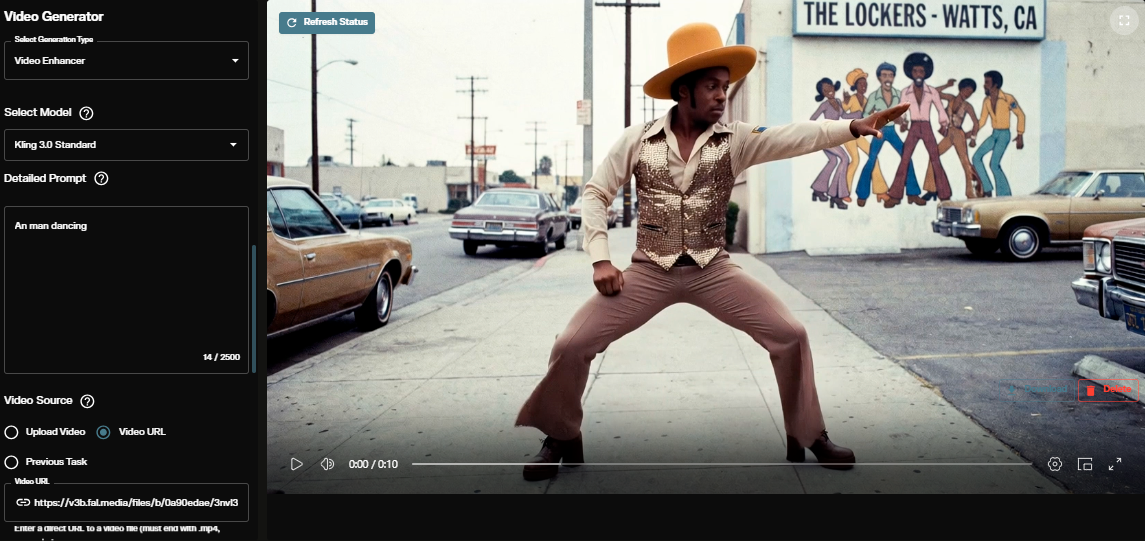
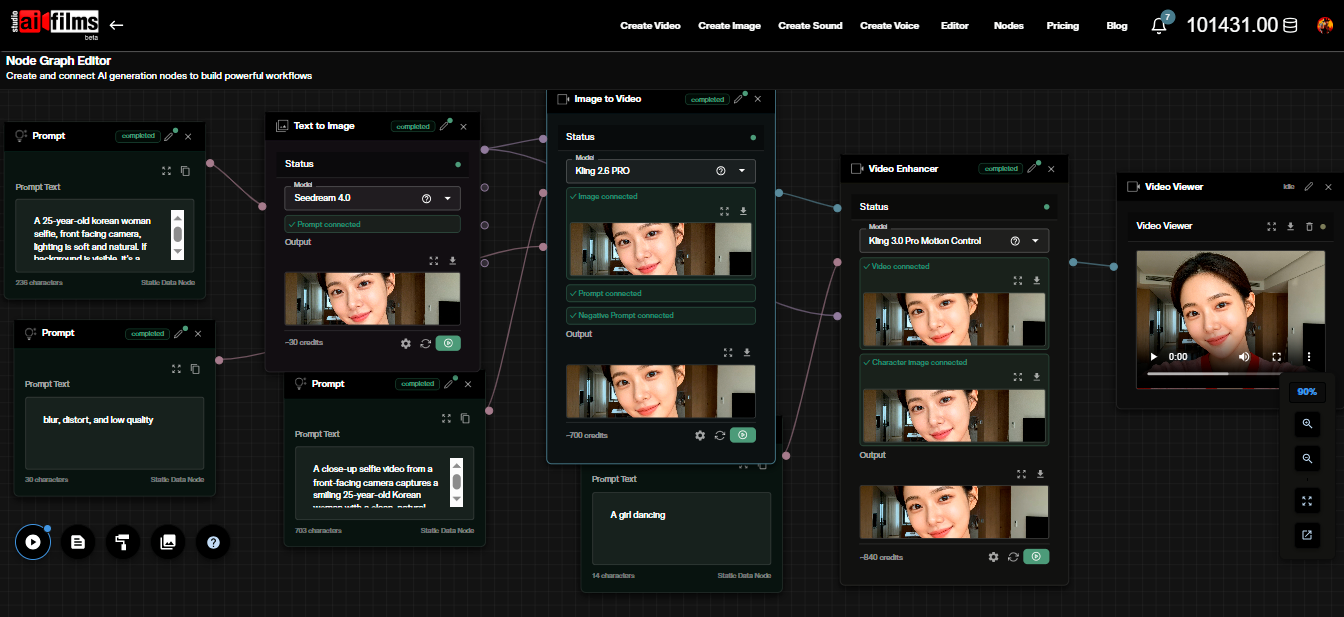
Filmmakers and creators generating AI content through tools like the AI FILMS Studio video workspace would need documented authorization for any identifiable voice or likeness in their productions if the bill becomes law. The bill's documentary, commentary, and parody exemptions are designed to preserve space for legitimate creative and journalistic use.
Sources
Deadline | Variety | The Hollywood Reporter | RIAA | Human Artistry Campaign | The Wrap
Continue Reading
.jpg?w=3840)


Video & LipSync
- Video Generator
- Text to Video
- Image to Video
- Start-End Frame to Video
- Draw to Video
- Motion Control
- Video Enhancer
- Video Upscaler
- Video to Video LipSync
- Audio to Video LipSync
- Image to Video LipSync
- Video FaceSwap
- Seedance 2.5
- WAN 3.0
- Seedance 2
- FLUX 3
- Minimax H3
- Vidu Q3 Pro
- Grok Imagine Video 1.5
- Gemini Omni
- Google Veo 3.1
- Kling 3.0 Pro
- Luma Ray 3.2
- LTX 2.3
- Happy Horse 1.1
- Kling 3.0 Motion
- ByteDance Upscaler
- InfiniteTalk
- InsightFace
Image & Edit
- AI Character
- AI Actor
- Art Generator
- Text to Image
- Image to Image
- LoRA Image to Image
- Draw to Edit
- Image LoRA Training
- Remove Background
- Image Enhancer
- MidJourney 8.0
- Krea 2
- OpenAI GPT Image 2.0
- Nano Banana Pro Ultra
- Nano Banana 2 Lite
- Nano Banana Pro
- Minimax Image
- Clarity Pro
- Z-Image Turbo LoRA
- Krea 2 Turbo LoRA
- Z-Image LoRA Trainer
- Qwen Image LoRA Trainer
- Background Erase Network 2 (BEN2)