
SSFF & ASIA 2026: AI Entries Double at Tokyo's Academy Accredited Short Film Festival

Share this post:
SSFF & ASIA 2026: AI Entries Double at Tokyo's Academy Accredited Short Film Festival
The 28th SSFF & ASIA concluded its Tokyo run on June 9, 2026, with 4,921 submissions from 114 countries and AI entries that more than doubled year over year, reaching 368 films. The festival holds Academy Awards accreditation, making its winners in the Live-Action, Non-Fiction, and Animation categories eligible for Oscar nomination.
Renée Zellweger presented her directorial debut at the festival alongside appearances by Sean Baker and Charlie Kaufman. Their attendance reflects how SSFF & ASIA has built, over 28 editions, a reputation as the largest international short film festival in Asia and a genuine stop on the global filmmaking calendar.
Cinema Engineering: The Theme Shaping 2026
The official 2026 theme, "Cinema Engineering," treated filmmaking as the intentional design of cinematic experiences. Organizers positioned AI alongside vertical video and sensory formats as active production tools, not novelties, placing them at the center of how the festival defined creative ambition this year.
SSFF & ASIA launched a dedicated "Cinematic Frontier: AI Program" in partnership with the World A.I. Film Festival (WAIFF). The program screened award winning films from WAIFF's 2026 competition, including "Rewrite" and "This is me," giving Tokyo audiences access to works recognized at a separate international AI competition.
Festival Executive Director Seigo Tono described the doubling of AI submissions as confirmation that the technology has entered mainstream short filmmaking, according to No Film School. At 368 entries, AI utilizing short films accounted for approximately 7.5 percent of the festival's total intake, up from 275 AI identified works reported in recent prior editions.

Basile Morin, CC BY-SA 4.0, via Wikimedia Commons
The WAIFF partnership is structurally notable. Two separate international festivals, one in Tokyo and one at Cannes, are now cross programming AI competition winners. That exchange creates a circuit: a film that wins at WAIFF reaches a Tokyo festival audience in the same year. Films that perform well at SSFF & ASIA could follow the same path in reverse. Cross-festival programming for AI content did not exist two years ago.
Tono's framing of AI as "mainstream" at 7.5 percent of total intake is a measured claim. It is substantial enough to require dedicated programming infrastructure, which SSFF & ASIA has now built. The growth rate from 275 to 368 entries in one year is the more significant number: it is the pace of adoption, not just the level.
The Generative Tokyo Project: A Government Backed First
The most structurally significant development at the 2026 festival was not a competition award. The Tokyo Metropolitan Government backed "So Far Away, So Close," an AI drama directed by Tekko Nogami running 21 minutes and 56 seconds. The film follows a young man given 24 hours with an AI consciousness reconstructed to resemble his deceased partner.
State support for an AI generated drama, delivered through the framework of an Academy accredited short film festival, marks a first. No comparable government commission through an established short film competition had been reported elsewhere in 2026.
The Tokyo Metropolitan Government's decision to back an AI drama specifically is not incidental. Tokyo is positioning itself as a global AI production center, and a government backed short film at an Academy accredited festival is a demonstration project. The message to international filmmakers and investors is that AI production in Tokyo carries institutional support at the city government level.
CINEMA TRAVELER 2 and the Two-Week AI Twin
A separate project, "CINEMA TRAVELER 2," generated an AI digital twin of Festival President Tetsuya Bessho in approximately two weeks following the opening ceremony. The compressed production window establishes a documented benchmark for character specific AI generation at a major public event.
The two week production timeline is the operationally relevant detail. A principal performer's AI twin produced in two weeks, at a major festival, demonstrates that the technical barrier to AI character generation has dropped below the threshold where it requires specialized infrastructure. The timeline at SSFF & ASIA 2026 sets a baseline for how fast this kind of production can move.
Awards: Grand Prix and the Governor's Choice
The George Lucas Award, SSFF & ASIA's Grand Prix, went to "SPEEDY!" by South Korean director Jiin Oh, selected from the festival's full international lineup of 245 titles. The Grand Prix went to a film from outside the AI program, consistent with festivals that maintain a traditional main competition alongside dedicated AI tracks.
The Cinematic Tokyo Competition, a separate program drawing 478 submissions from cities worldwide, awarded its Governor's Award to "TOKYO SUBMARINE." Tokyo Governor Yuriko Koike announced the winner directly, connecting the prize to the city's identity as a center of global cinema.
Additional awards included the CyberAgent Vertical Award, recognizing achievement in vertical format filmmaking, which went to Chavo's "AIDOL KACHO," and the Best Thrill Award, received by Haruki Kawanaka's "The Ghost Photo Studio."
Disney+ Japan and Academy Accreditation
Starting July 31, 2026, twenty short films selected from the SSFF & ASIA catalog will be distributed on Disney+ in Japan. The arrangement creates a direct path from an AI inclusive short film competition to a major streaming platform, a first for the festival.
The Academy Awards accreditation means SSFF & ASIA winners are eligible for Oscar nomination, a distinction held by only a handful of short film competitions globally. The new Disney+ distribution deal extends that advantage: films that screen or win at SSFF & ASIA now reach a streaming audience in the world's third largest film market, not only a festival circuit.
The festival also made its international AI conference sessions available at shortshorts.org, extending access to production panels and industry discussions past the June 9 closing date.
What the AI Surge Means for Short Filmmakers
Three major festivals have now reported consistent AI submission growth in 2026. The Venice Reply AI Film Festival received 2,181 entries, its highest intake in the competition's history, and the World A.I. Film Festival at Cannes drew approximately 5,500 films from over 80 countries. SSFF & ASIA's 368 AI entries, at a festival with Academy accreditation, add institutional weight to that pattern.
India's Bengaluru International Short Film Festival launched a dedicated AI film category in August 2026 at its 16th edition, drawing 118 entries into its new Machine Made Movies section. BISFF carries Oscar qualification for its International, Indian, and Animation sections, making it the second Oscar qualifying short film festival to establish a dedicated AI competition track alongside SSFF & ASIA.
The 2025 SSFF & ASIA international conference treated AI filmmaking as a subject for debate. The 2026 edition embedded it into the festival's theme, its programming partnerships with WAIFF, and a government backed production. That shift from conversation to institutional production is concrete and measurable.
Japan's broader short film festival sector is also building AI infrastructure. The Short Shorts Film Festival 2025 conference on AI filmmaking documented the early stages of what SSFF & ASIA 2026 has now formalized. The festival has moved from hosting a debate about AI to sponsoring government backed AI productions in a single year.
For filmmakers considering AI competition submissions: SSFF & ASIA's Academy accreditation means an AI short that wins the Grand Prix becomes Oscar eligible, the same pathway available to any conventionally produced short that wins the same award. The festival structure makes no distinction for eligibility purposes.
Renée Zellweger's Directorial Debut
Renée Zellweger presented her directorial debut at SSFF & ASIA 2026, making it the first major public presentation of her work as a director. The specific film she directed was not widely detailed in advance coverage, but its presentation at a major international short film festival with Academy accreditation placed it directly in the awards eligibility pathway.
Zellweger's presence drew international press attention to the festival that would not otherwise have reached outlets outside the specialist short film coverage area. SSFF & ASIA's strategy of attracting major film industry figures, Sean Baker and Charlie Kaufman were also present, positions the festival as relevant to the broader entertainment industry, not only to short film specialists.
The WAIFF Films That Screened in Tokyo
The "Cinematic Frontier: AI Program" screened "Rewrite" and "This is me," both award winners from the World A.I. Film Festival at Cannes 2026. Both films screened for a Tokyo audience that had not encountered them during the Cannes run, creating what SSFF & ASIA and WAIFF described as the first cross festival AI film circuit between a European and an Asian competition.
The specific films selected for the cross programming were not drawn from the WAIFF's entire competition catalog. They were award winners, which means the Tokyo screening was specifically a curated presentation of work that had already been recognized rather than a general survey. Audiences at SSFF & ASIA 2026 were watching AI films that had already passed through international competition and won.
The Vertical Video Program and CyberAgent
The CyberAgent Vertical Award at SSFF & ASIA recognizes achievement specifically in vertical format filmmaking. CyberAgent is a Japanese digital media and advertising company with extensive investment in mobile content distribution. Its sponsorship of a vertical format award at a major short film festival reflects where mobile content consumption is heading: vertical video viewing time on major platforms now exceeds horizontal viewing time in multiple age demographics.
For AI filmmakers, the vertical format award is significant because AI video generation tools increasingly support vertical aspect ratios as a primary output. A filmmaker generating content for the CyberAgent Vertical Award category does not need to adapt horizontal format work for mobile. The tools and the competition format have aligned.
What the July 31 Disney+ Launch Means
Starting July 31, 2026, twenty films from the SSFF & ASIA catalog will stream on Disney+ in Japan. The arrangement was announced during the festival but activates seven weeks later, meaning the festival created a distribution pipeline for its catalog that activates while the films are still in public discussion.
For AI filmmakers who submitted to SSFF & ASIA 2026, the Disney+ arrangement is the most significant structural development. A short film that performs well at the festival now has a potential path to streaming distribution on a major platform in the world's third largest film market, without a separate acquisition process. The pipeline from competition to streaming, compressed into weeks rather than years, is new for SSFF & ASIA and new for the short film sector as a whole.
Seigo Tono on the Mainstream Claim
Festival Executive Director Seigo Tono told No Film School that the doubled AI submission volume confirms AI has entered the mainstream of short filmmaking. The statement carries institutional weight: it comes from the director of a festival that holds Academy Awards accreditation and receives nearly 5,000 submissions annually from 114 countries.
Tono's framing is measured. He said "mainstream," not "dominant." At 7.5 percent of total intake, AI films are numerous enough for dedicated programming but not so large that they require structural isolation from the rest of the competition.
The Festival's AI Position
SSFF & ASIA does not have a formal AI eligibility restriction comparable to Cannes's competition ban. The festival programs AI works alongside conventionally produced short films across all categories. Executive Director Seigo Tono's description of doubled AI submissions as confirmation that AI filmmaking has entered the mainstream is a precise institutional statement.
At 368 entries representing 7.5 percent of total intake, AI films are numerous enough to require dedicated programming but not so dominant that they require structural isolation. SSFF & ASIA is treating them as part of the general short film landscape, not as a category requiring separate eligibility criteria.
What Academy Accreditation Means for AI Shorts
SSFF & ASIA's Academy Awards accreditation covers Live-Action, Non-Fiction, and Animation categories. Winners in each are eligible for Oscar nomination. The Academy has not introduced AI specific eligibility restrictions for short film categories equivalent to those under discussion for feature films.
An AI generated short that wins the George Lucas Award could be submitted for Oscar consideration under the same terms as any other SSFF & ASIA Grand Prix winner. The accreditation pathway is open to AI films at SSFF & ASIA in a way it is not at festivals where AI specific restrictions apply to competition eligibility.
The July 31 Disney+ Launch
Starting July 31, 2026, twenty short films from the SSFF & ASIA catalog will stream on Disney+ in Japan. The distribution deal activates seven weeks after the festival closes, while festival films are still in public discussion.
For AI filmmakers who submitted to SSFF & ASIA 2026, the Disney+ arrangement is the most significant structural development. A short film that performs well at the festival now has a potential streaming distribution pathway in the world's third largest film market, without a separate acquisition process. The pipeline from competition to streaming, compressed into weeks rather than years, is new for SSFF & ASIA and new for the short film sector.
The Festival's Global Submission Scale
4,921 submissions from 114 countries in a single edition establish SSFF & ASIA as a genuinely global competition. Venice's main short film section receives approximately 4,000 submissions annually. SSFF & ASIA's 2026 total exceeded that figure.
The global reach matters for AI filmmakers because international short film competitions have historically operated along European festival circuits that Japanese festivals were adjacent to but not central in. SSFF & ASIA's submission volume and its Academy accreditation now place it alongside the top tier of international short film competitions, not at their periphery.
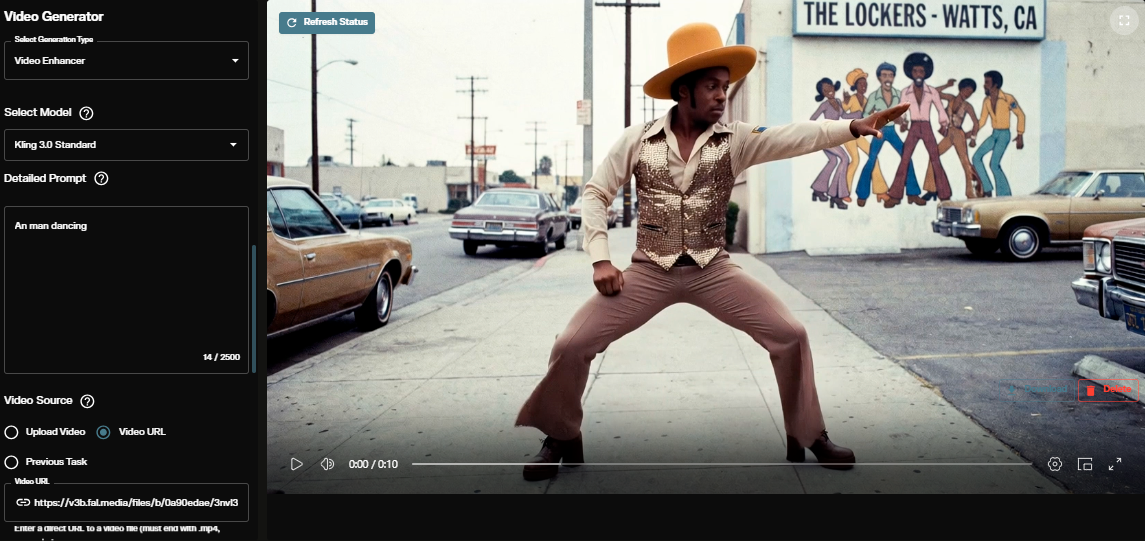
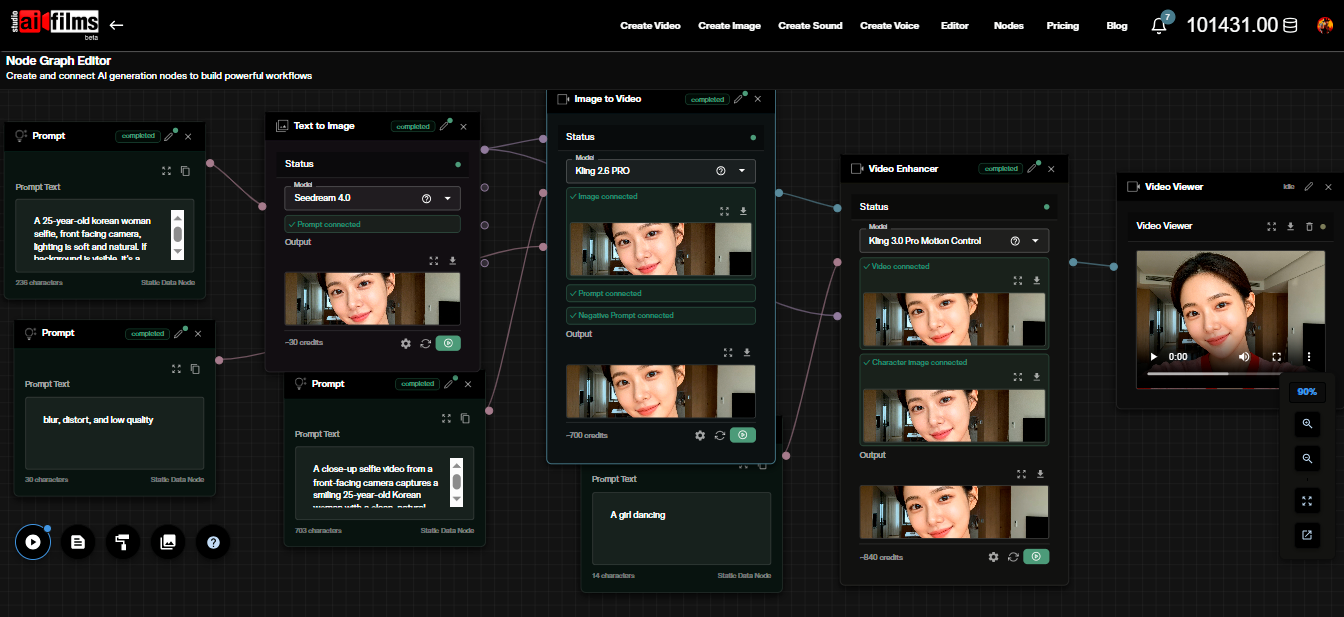
Filmmakers building work for AI film competitions can generate text-to-video and image-to-video content using the AI FILMS Studio video workspace.
Sources
Short Shorts Film Festival & Asia | No Film School | Asian Movie Pulse | PR Newswire
Continue Reading
.jpg?w=3840)


Video & LipSync
- Video Generator
- Text to Video
- Image to Video
- Start-End Frame to Video
- Draw to Video
- Motion Control
- Video Enhancer
- Video Upscaler
- Video Extend
- Video to Video LipSync
- Audio to Video LipSync
- Image to Video LipSync
- Video FaceSwap
- Seedance 2.5
- WAN 3.0
- Seedance 2
- FLUX 3
- Minimax H3
- Vidu Q3 Pro
- Grok Imagine Video 1.5
- Gemini Omni
- Google Veo 3.1
- Kling 3.0 Pro
- Luma Ray 3.2
- LTX 2.3
- Happy Horse 1.1
- Kling 3.0 Motion
- ByteDance Upscaler
- InfiniteTalk
- InsightFace
Image & Edit
- AI Character
- AI Actor
- Art Generator
- Text to Image
- Image to Image
- LoRA Image to Image
- Draw to Edit
- Image LoRA Training
- Remove Background
- Image Enhancer
- MidJourney 8.0
- Krea 2
- OpenAI GPT Image 2.0
- Nano Banana Pro Ultra
- Nano Banana 2 Lite
- Nano Banana Pro
- Minimax Image
- Clarity Pro
- Z-Image Turbo LoRA
- Krea 2 Turbo LoRA
- Z-Image LoRA Trainer
- Qwen Image LoRA Trainer
- Background Erase Network 2 (BEN2)