
Weird Al Yankovic Says He 'Can't Be the Poster Boy for AI'

Photo by slgckgc, CC BY 2.0, via Wikimedia Commons
Share this post:
Weird Al Yankovic Says He 'Can't Be the Poster Boy for AI'
Musician and satirist Weird Al Yankovic walked away from an advertising deal after learning the campaign was built on artificial intelligence software. He pulled out roughly a week before the shoot was scheduled to begin.
Yankovic described the decision in a June 2026 interview with Syracuse.com, published as he was preparing for his current tour. The story spread quickly across entertainment outlets in the days that followed, landing him alongside a small group of prominent performers who have publicly declined AI related work.
The account is short on specifics about the advertiser but long on detail about how the offer changed shape over time. That distinction, between the identity of the company and the mechanics of how the deal reached him, is what makes the story more than a one line rejection.
None of the outlets that picked up the Syracuse.com interview identified the advertiser independently either, which suggests the anonymity was either deliberate on Yankovic's part or simply never volunteered during the original conversation.
The Interview Where the Story Surfaced
Yankovic gave the interview to Syracuse.com in connection with an upcoming tour stop in the region. Local and regional outlets often get more candid, less rehearsed answers from touring performers than national press does, and this interview followed that pattern.
The AI ad story was not the headline reason for the conversation. It emerged as a detail within a broader interview about his tour and career, which is part of why the account reads as an offhand disclosure rather than a prepared statement or a publicist crafted talking point.
A Deal That Changed Once He Learned What It Was
The commercial was pitched to Yankovic before his tour began. He was told it was for business software marketed to increase workplace productivity, a category far removed from entertainment or music.
Productivity software is a broad enough label that it rarely triggers scrutiny on its own. A musician weighing an endorsement deal for that kind of product would have little reason to suspect an AI angle from the pitch alone, which is part of what made the later reveal land as a surprise rather than something he anticipated from the outset.
He initially agreed. "They offered me a nice pile of money," Yankovic said. "I said, 'Oh well, yeah, sure, I could do that.'"
About a week before filming, he learned the product was an AI tool. He withdrew immediately and never returned to the deal.
No source specifies exactly how he learned this, whether through his own team's research, a change in the pitch materials, or a direct conversation with the advertiser. What is consistent across every account is the timing. The discovery came late enough that a shoot date already existed, and early enough that he still had time to pull out before cameras rolled.
"I'm not a fan of AI," Yankovic said. Describing his reaction once he understood what the software actually was, he said he thought, "Oh no, I can't be the poster boy for AI, forget it."
The Bait and Switch Behind AI Ad Offers
Yankovic did not name the company or the product involved in the offer. That detail is missing from every source covering the story, and no outlet has independently identified the advertiser.
What makes the account notable is the sequence, not just the refusal. The deal was presented to him under a generic productivity framing, and the AI angle only surfaced close to production. That pattern, an offer pitched without its AI framing disclosed upfront, is a structural detail largely absent from the wave of celebrity AI news that leads with quotes alone.
For a performer whose career has run for five decades on close observation of media and marketing, the reveal reads as a case study in how AI adjacent deals sometimes reach talent. The software's category made it sound unremarkable. Only proximity to the shoot date exposed what it actually was.
A week is a narrow window for an artist to weigh a reversal, especially after money has already changed hands in principle. Yankovic's account suggests the decision was not a drawn out negotiation. Once he understood what he was being asked to represent, he said no and moved on.
A Disclosure Gap Bigger Than One Ad
Yankovic's experience is not an isolated data point. Reporting on AI use across Hollywood productions has documented a recurring pattern in film and television. AI tools get used in a contained, technical capacity, and the disclosure only surfaces after journalists ask direct questions, if it surfaces at all.
That pattern in scripted production and Yankovic's account in advertising share the same underlying shape. The AI use exists first. Public acknowledgment of it comes later, and only when someone outside the deal asks directly or the talent involved decides to say so.
Advertising sits outside the guild agreements and disclosure norms that now govern many studio productions. A commercial pitched to a musician carries none of the contractual AI notice requirements that a SAG-AFTRA covered film or television production would include. That gap is precisely where an offer like the one Yankovic described can reach a performer without the AI framing stated upfront.
The result is that individual judgment, rather than a standardized disclosure requirement, becomes the last checkpoint before a well known name gets attached to an AI product. Yankovic's account shows that checkpoint working as intended, even if it worked only a week before cameras were set to roll.
A standardized disclosure requirement for advertising, something closer to what streaming and studio productions have begun adopting under guild pressure, would remove that last minute discovery from the process entirely. Until that becomes standard practice across the ad industry, individual performers and their representatives remain the primary safeguard against exactly the scenario Yankovic described.
Where Yankovic Stands Among Hollywood's AI Skeptics
Coverage of the story places Yankovic alongside other performers who have taken public stances against AI use in their own work. The Wrap's reporting names Scarlett Johansson, Joseph Gordon-Levitt, and SAG-AFTRA president Sean Astin as fellow critics of AI adoption in entertainment.
Gordon-Levitt has been especially active on the issue, co-founding the Creators Coalition on AI in December 2025 to push for consent and compensation frameworks when AI systems train on creative work. His coalition now counts more than 500 supporters across the industry, including Oscar winning directors and prominent actors.
Yankovic's account is narrower in scope than a coalition or a policy platform. It is a single performer describing a single offer he turned down once he understood what it was. That specificity is part of why the story resonated. It is concrete, dated, and tied to an exact moment rather than a general position.
Astin's inclusion in that list carries particular weight given his role leading SAG-AFTRA, the union that represents film and television performers in AI related contract negotiations. A sitting guild president publicly skeptical of AI advertising work reinforces the same caution the union has built into its studio agreements, even though a solo commercial deal like the one Yankovic described falls outside any guild contract.
The Celebrities Taking the Opposite Path
Not every Hollywood figure has drawn the same line. Kotaku's coverage of the Yankovic story notes that Matthew McConaughey and Sir Michael Caine have both licensed their voices to the AI audio company ElevenLabs, a contrast the outlet draws directly against Yankovic's refusal.
Caine's arrangement produced a 13 hour AI narrated audiobook of Homer's The Odyssey, released weeks ahead of Christopher Nolan's theatrical adaptation of the same material. The project ran through ElevenLabs' Iconic Marketplace, a voice licensing system built around individual consent and per use compensation rather than blanket AI training rights.
The Wrap's coverage of the Yankovic story separately names Reese Witherspoon and Sandra Bullock as performers who have taken a more AI supportive public position. The spread across these examples, outright refusal, licensed and compensated participation, and general support, illustrates that Hollywood's response to AI is not a single unified stance but a range of individual calculations about risk, compensation, and control.
The named positions, as reported across the sources covering this story, break down as follows.
| Performer | Reported stance | Context |
|---|---|---|
| Weird Al Yankovic | Refused an AI ad | Withdrew a week before the shoot once he learned the software was AI |
| Scarlett Johansson | Publicly critical of AI | Named by The Wrap among Hollywood's AI skeptics |
| Joseph Gordon-Levitt | Publicly critical, organized response | Founded the Creators Coalition on AI |
| Sean Astin | Publicly critical, as SAG-AFTRA president | Named by The Wrap among Hollywood's AI skeptics |
| Matthew McConaughey | Licensed and compensated participation | Invested in and uses ElevenLabs for translated content |
| Michael Caine | Licensed and compensated participation | Narrated an AI audiobook via ElevenLabs' Iconic Marketplace |
| Reese Witherspoon | More AI supportive public position | Named by The Wrap in contrast to Yankovic |
| Sandra Bullock | More AI supportive public position | Named by The Wrap in contrast to Yankovic |
A Career Built on Reading the Room
Yankovic has spent five decades parodying the entertainment industry from just outside its center, a position that has made him an unusually trusted narrator when he comments on how that industry operates. AV Club's coverage of the AI ad story called him the "patron saint of integrity" for walking away from the deal once its true nature became clear.
That framing is notable because Yankovic is not typically cast as an activist. He has built a career on close, affectionate observation of pop culture rather than public campaigning. His decision to speak plainly about a private ad negotiation, rather than let the deal quietly disappear, is itself part of what made the story travel.
Parody as a craft depends on paying close attention to how media and marketing actually work, which may explain why Yankovic's account of the offer includes so much detail about its structure. He did not simply say he turned down an AI ad. He described how the offer was framed, when the framing changed, and exactly what he thought in the moment he found out.
The contrast between his usual comic persona and the directness of "I can't be the poster boy for AI, forget it" is part of why outlets across the trade press, entertainment culture sites, and international press picked up the story within the same news cycle.
What the Ad Industry Is Testing
Yankovic's account fits inside a broader shift already underway in advertising. Brands and agencies are experimenting with generative AI for everything from storyboarding to finished spots, and celebrity endorsement remains one of the fastest ways to make an unfamiliar product feel credible to a mainstream audience.
That dynamic raises the stakes of exactly the kind of framing gap Yankovic described. A commercial pitched as generic productivity software carries none of the reputational risk that an openly AI branded campaign would. Attaching a trusted, recognizable name before the AI framing is disclosed shifts that risk onto the performer rather than the advertiser, at least until the performer finds out and can still walk away.
Advertisers have an obvious incentive to lead with a familiar face rather than an unfamiliar technology. A well liked musician saying yes to a project makes the underlying product feel safer to a general audience before that audience knows what the product actually is. Yankovic's account is a rare instance where the sequence became public because the performer described it publicly, rather than staying private after the deal quietly fell apart.
Most declined endorsement deals never become public at all. Talent representatives routinely pass on offers for reasons that stay confidential between agent and client. Yankovic's willingness to describe this one on the record, in specific detail, is the exception rather than the rule.
Warner Bros.' AI dog podcast campaign for The End of Oak Street, released August 2026, is a contrasting data point. The studio disclosed its AI use openly and still faced audience backlash, suggesting that transparency alone does not resolve the underlying audience resistance.
A Pattern Worth Watching
Yankovic's decision did not require a lawsuit, a union grievance, or a public campaign. He simply declined a deal once its nature became clear, a small but visible data point in a much larger negotiation happening across the entertainment industry over how AI intersects with a performer's name and reputation.
The disclosure gap at the center of his account, a deal offered under one description and revealed as something else closer to production, is the detail worth tracking as more AI adjacent advertising and production deals reach talent. Whether other performers encounter the same kind of late reveal, and how they respond when they do, will shape how cautiously agents and managers vet offers going forward.
His reasoning was not framed as opposition to artists using AI tools directly in their own creative process. It was a refusal to lend his name and reputation to a product whose nature was not made clear to him upfront. That distinction, between direct creative use and unclear brand endorsement, is one worth keeping in view as more of these stories surface.
International pickup of the story, including coverage from the Irish Star, suggests the account resonated well beyond the US entertainment press. A performer known globally for parody and comedy declining a well paid AI deal on principle is a simple, portable story that travels across markets without needing much added context.
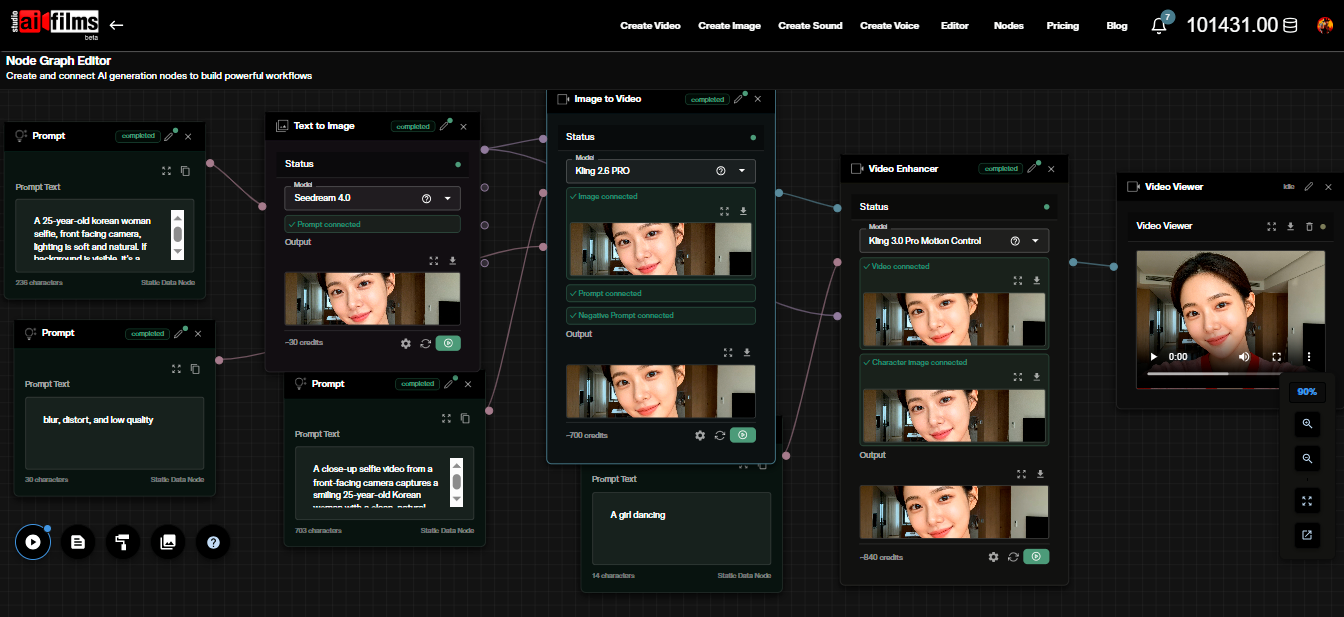
For filmmakers and creators building with AI tools directly, with full visibility into what the tools do and how output is generated, AI FILMS Studio's video workspace offers a transparent alternative to the kind of unclear ad placements Yankovic described. Every generation happens with the creator in full control of the prompt, the model, and the output, rather than through a brand deal negotiated at arm's length.
Sources
Variety | Deadline | The Wrap | Kotaku | Parade | AV Club | Irish Star
Continue Reading
.jpg?w=3840)


Video & LipSync
- Video Generator
- Text to Video
- Image to Video
- Start-End Frame to Video
- Draw to Video
- Motion Control
- Video Enhancer
- Video Upscaler
- Video Extend
- Video to Video LipSync
- Audio to Video LipSync
- Image to Video LipSync
- Video FaceSwap
- Seedance 2.5
- WAN 3.0
- Seedance 2
- FLUX 3
- Minimax H3
- Vidu Q3 Pro
- Grok Imagine Video 1.5
- Gemini Omni
- Google Veo 3.1
- Kling 3.0 Pro
- Luma Ray 3.2
- LTX 2.3
- Happy Horse 1.1
- Kling 3.0 Motion
- ByteDance Upscaler
- InfiniteTalk
- InsightFace
Image & Edit
- AI Character
- AI Actor
- Art Generator
- Text to Image
- Image to Image
- LoRA Image to Image
- Draw to Edit
- Image LoRA Training
- Remove Background
- Image Enhancer
- MidJourney 8.0
- Krea 2
- OpenAI GPT Image 2.0
- Nano Banana Pro Ultra
- Nano Banana 2 Lite
- Nano Banana Pro
- Minimax Image
- Clarity Pro
- Z-Image Turbo LoRA
- Krea 2 Turbo LoRA
- Z-Image LoRA Trainer
- Qwen Image LoRA Trainer
- Background Erase Network 2 (BEN2)