
YouTube Brings AI Deepfake Detection to Hollywood Talent Agencies
Share this post:
YouTube Brings AI Deepfake Detection to Hollywood Talent Agencies
YouTube expanded its AI likeness detection tool to the entertainment industry on April 20, 2026, opening access to clients of Creative Artists Agency, United Talent Agency, William Morris Endeavor, and Untitled Management. For the first time, celebrities can enroll in the system without owning a personal YouTube channel.
The move follows a March 2026 expansion that brought in government officials, journalists, and political candidates. The April step brings Hollywood talent directly into a system designed to surface unauthorized AI generated replicas of real people's faces in newly uploaded videos.
From Pilot to Hollywood
YouTube launched the likeness detection pilot in late 2024 for the platform's top 5,000 creators. The tool works like Content ID, the copyright enforcement system YouTube built for music, extended now to human faces.
In March 2026, YouTube opened access to civic leaders and journalists, adding protections for public figures who are frequent targets of political deepfakes. The April expansion to talent agency clients marks the first time Hollywood's professional management infrastructure, rather than individual creators, has gained direct access to the system. Clients can enroll regardless of whether they have their own presence on the platform.
The three agencies, CAA, UTA, and WME, collectively represent thousands of performers, directors, and producers. Access through the agency rather than the individual means enrollment can be coordinated at scale rather than requiring each talent to navigate the process separately. That infrastructure shift is what distinguishes the April expansion from the earlier creator and civic leader rollouts.
How the Tool Works
Enrollment requires two things: a selfie video and a government issued ID. YouTube uses these to build a biometric template the system then compares against incoming content.
Once enrolled, the tool scans newly uploaded videos for facial matches and surfaces potential violations for the rights holder to review. Eligible users can submit takedown requests directly through the platform. YouTube describes the mechanism as analogous to Content ID, now extended to protect a person's face the way the earlier system protected copyrighted audio.
The comparison is against a biometric template built from the enrollment materials, not a facial recognition search against all YouTube content going back to the platform's founding. Detection applies to newly uploaded videos from the enrollment date forward. Existing videos that predate enrollment are not scanned retrospectively under the current implementation.
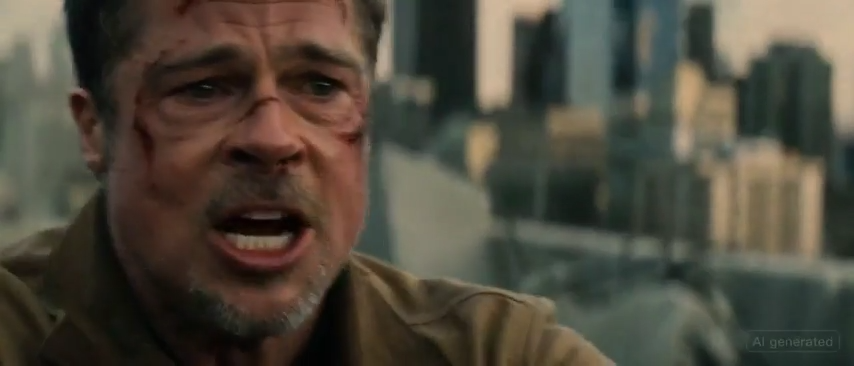
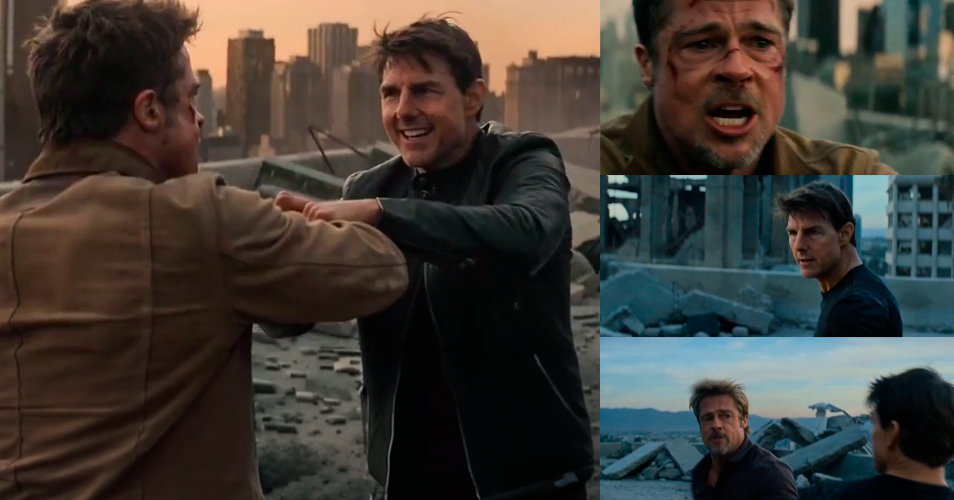
Still from the video Irish filmmaker Ruairi Robinson generated using a two line prompt during brief access to Seedance 2.0 on February 10, 2026.
The kind of AI generated footage that makes these tools necessary emerged publicly in February 2026, when Irish filmmaker Ruairi Robinson demonstrated Seedance 2.0's ability to generate hyper realistic video featuring celebrity likenesses from a two line prompt. The MPA responded with its strongest copyright condemnation to date, demanding ByteDance halt the tool immediately.
Detection Without Automatic Removal
Detection does not mean automatic takedown. YouTube evaluates each flagged video against exceptions for parody, satire, and content in the public interest before deciding whether to act.
This distinction matters in practice. A deepfake designed to defraud or defame someone falls clearly within the removal criteria. A satirical sketch that signals its AI origins or parodic intent may not. YouTube has not published a detailed rubric for how it weighs these exceptions, leaving enforcement decisions case by case.
The exception framework mirrors the approach YouTube applies to other contested content categories where context determines whether removal is appropriate. That framework creates a gap between the detection capability, which is automated and fast, and the enforcement decision, which is human and slow. For content that spreads quickly, that gap can matter more than the detection itself.
Rights holders receive the matches. YouTube retains the enforcement decision. That split means enrollment starts a process, not a guarantee of removal.
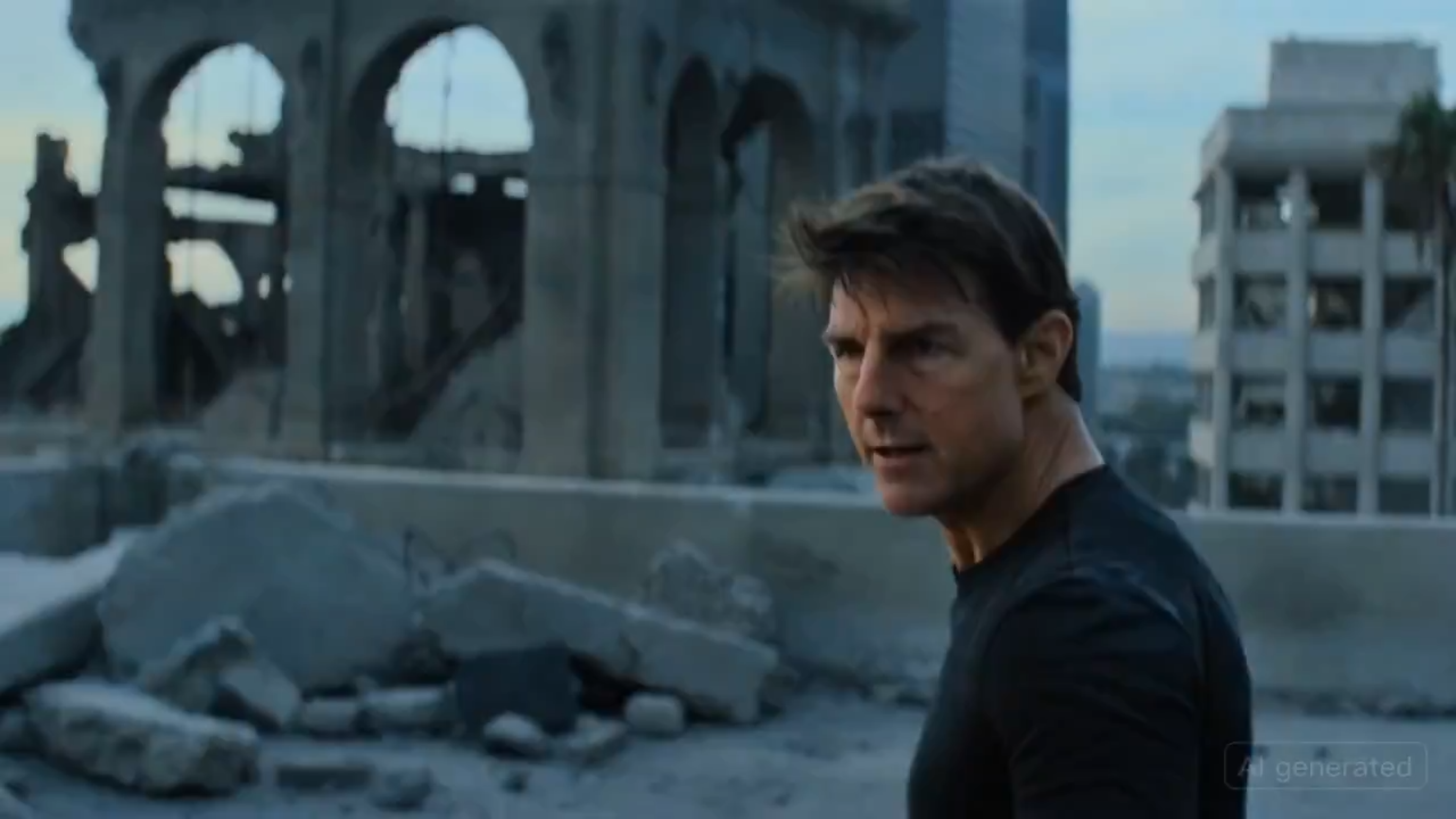
Still from Ruairi Robinson's Seedance 2.0 test, February 2026.
The NO FAKES Act Connection
YouTube's expansion is not purely defensive. The company has publicly backed the NO FAKES Act, a bipartisan U.S. Senate proposal that would establish a federal right of publicity covering all Americans, not only residents of states like California with existing protections.
For YouTube, backing the NO FAKES Act serves a dual purpose. It creates a safe harbor for the platform by demonstrating good faith enforcement, and it gives the company a legislative framework to point to when resolving disputes. YouTube is also exploring revenue models that would let talent authorize and monetize their likeness on the platform, rather than only block unauthorized uses.
The federal legislation would matter because state protections vary significantly. California's AB 1836 covers deceased performers specifically. Illinois has one of the strongest biometric privacy laws in the country. Texas and New York have their own frameworks. A NO FAKES Act would create a single national standard that platforms, labels, and studios can apply uniformly across all productions and distribution decisions.
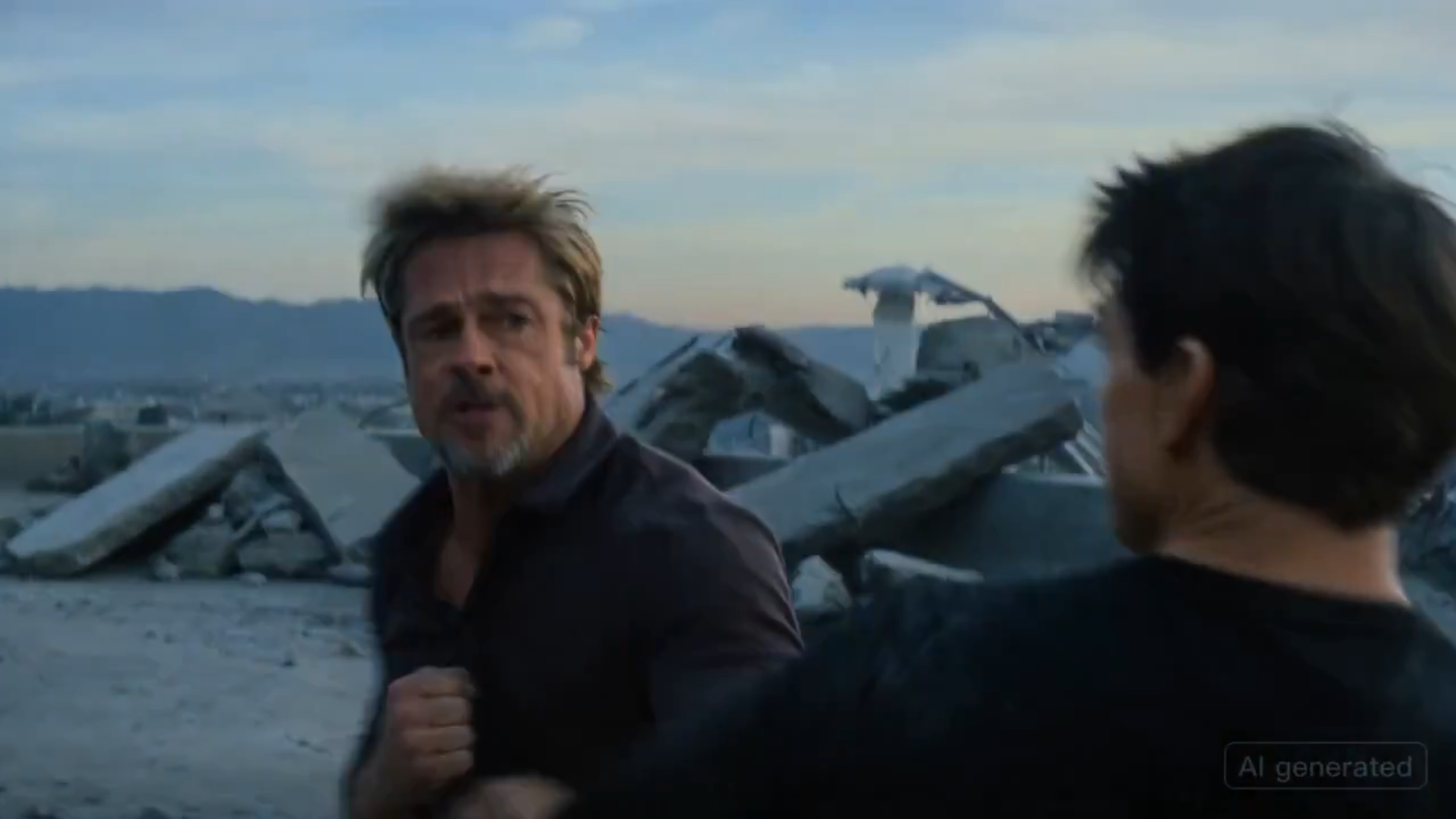
Still from Ruairi Robinson's Seedance 2.0 test, February 2026.
The legislative push connects to union battles already underway. SAG-AFTRA's proposed digital likeness tax treats AI performer use as a taxable production budget line item. YouTube's tool operates at the distribution end of the same problem. Once AI content featuring a real person's face reaches the platform, enforcement begins there.
The Biometric Question
The enrollment process raises a direct objection. Submitting a selfie video and a government ID to gain protection from biometric data misuse requires handing over biometric data.
YouTube has stated explicitly that facial data collected during enrollment is not used to train AI models. Privacy researchers have noted that YouTube's current terms of service do not preclude that use, and that enrolled users must take the company at its word. The March 2026 expansion to civic leaders and journalists drew pointed criticism on this exact point from experts who track platform biometrics policies.
The tension is not theoretical. Google confirmed in 2025 that it trained Gemini and Veo 3 on a subset of YouTube's 20 billion videos, including creator faces, without offering an opt out mechanism. That controversy and its implications for creator rights are documented in detail. Whether the likeness detection enrollment data will face a different policy future remains an open question.
Illinois's Biometric Information Privacy Act, BIPA, requires written consent before collecting or using biometric identifiers and gives individuals a private right of action if a company violates the rules. YouTube's data practices for enrolled talent will face scrutiny under BIPA for any Illinois residents who enroll. The legal exposure from BIPA violations is significant: class action suits under BIPA have resulted in billion dollar settlements for tech companies, making the consent language in YouTube's enrollment terms a point of material legal risk, not just a policy question.
The Content ID Precedent and What It Predicts
YouTube's Content ID system for music was also voluntary at launch before becoming the standard enforcement mechanism the music industry depends on. The initial rollout to top creators preceded broad availability by several years.
The April 2026 expansion to talent agency clients follows the same phased pattern. The practical question is whether likeness detection moves from an opt-in enforcement tool to a permanent feature of the platform's content review infrastructure. Content ID's history suggests it will.
Content ID now processes over 800 million rights claims per day across music and other copyrighted audio. At that volume, it operates as invisible infrastructure rather than an active enforcement decision. If YouTube's likeness detection scales to similar volume, the comparison between a deepfake and an enrolled biometric template will become an automatic step in the upload pipeline rather than a service rights holders must actively manage. The April 2026 expansion is the early phase of that trajectory.
What "Evaluation Before Removal" Actually Requires
YouTube does not specify how long its evaluation process takes or how many people review each flagged match. For a talent whose likeness was replicated in a video that went viral, the window between flagging and removal is the period of maximum distribution.
Content ID operates differently because copyrighted music triggers an immediate hold on monetization. Likeness detection does not automatically do the same, leaving rights holders to wait for a case by case decision whose timeline is undefined. The difference in default treatment reflects how far likeness rights lag copyright in platform enforcement infrastructure.
The review timeline matters most for content designed to cause immediate reputational harm, a fabricated statement attributed to an actor on the day a film opens, or a fake interview circulated before a major award ceremony. YouTube has not addressed what escalation paths, if any, apply in time-sensitive cases where the evaluation window is the critical variable.
Who Bears the Burden of Enrollment
The current system places the burden of enrollment on the person whose likeness needs protection. A performer not represented by one of the three agencies named in the April expansion, or a character actor without major management, has no path into the system. Independent creators who are not among the platform's top 5,000 are also excluded.
YouTube has not published a timeline for broadening enrollment beyond the current eligibility tiers. Until enrollment is available to all performers and public figures, the protection it offers is structurally tied to professional representation at a major agency, which tracks roughly with whether a performer already has the resources to pursue legal remedies independently.
The March 2026 Expansion and the Rollout Pattern
The March expansion to government officials, journalists, and political candidates came before the April Hollywood talent expansion. That sequence reflects where platform enforcement priorities sit in an election cycle.
The same detection infrastructure protects a senator and a studio actor, which means the technical capabilities required for political deepfake detection are the same ones Hollywood talent agencies now access. The shared infrastructure is why the April expansion could follow so quickly after March, and why further expansions to broader populations are technically straightforward even if the policy process moves more slowly.
Each expansion tier also generates data about false positive rates and dispute patterns in a specific population. Government officials face a different distribution of deepfake content than entertainers: more content designed to fabricate policy statements, fewer fabricated commercial endorsements. Hollywood talent faces the reverse. Running the tool against each population before broadening access allows YouTube to calibrate the exception framework for parody and satire against the kinds of content each group actually encounters.
What This Means for Filmmakers
For independent filmmakers working in AI video generation, the expansion signals where platform norms are heading. Talent agencies are formalizing digital rights processes, Congress is moving toward federal legislation, and platforms are building detection infrastructure around the same tools that make AI video generation possible.
Filmmakers generating original synthetic characters through AI FILMS Studio operate outside the scope of likeness detection. The legal pressure targets unauthorized replication of real, identifiable people. Creating fictional characters or using AI for effects and post production work is a separate activity that no current legislation or platform policy restricts.
For a full breakdown of what California's consent laws already require from productions that use real performer likenesses, see our guide to California's Digital Replica Law in 2026. YouTube CEO Neal Mohan was subsequently named one of the 25 most influential people shaping Hollywood's AI future, cited in part for overseeing both the generative AI tool development and this deepfake enforcement work.
The enforcement trajectory being built around likeness detection at the distribution level will also shape what AI video tools are willing to generate at the creation level. Platforms that detect unauthorized likenesses at upload create a feedback signal that tool developers, including those building generation models, will face pressure to address upstream. The April expansion is a distribution layer decision today. Its downstream effects on what AI video generation tools will permit are a separate but connected question.
Generating original fictional characters for film and video projects using AI FILMS Studio falls entirely outside the scope of these enforcement systems. The distinction between synthetic original characters and AI replicas of real people is the central line the current regulatory framework draws.
Sources
YouTube Official Blog | The Hollywood Reporter | TheWrap | Social Media Today | Tech in Asia | Entrepreneur
Continue Reading


Video & LipSync
- Video Generator
- Text to Video
- Image to Video
- Start-End Frame to Video
- Draw to Video
- Motion Control
- Video Enhancer
- Video Upscaler
- Video Extend
- Video to Video LipSync
- Audio to Video LipSync
- Image to Video LipSync
- Video FaceSwap
- Seedance 2.5
- WAN 3.0
- Seedance 2
- FLUX 3
- Minimax H3
- Vidu Q3 Pro
- Grok Imagine Video 1.5
- Gemini Omni
- Google Veo 3.1
- Kling 3.0 Pro
- Luma Ray 3.2
- LTX 2.3
- Happy Horse 1.1
- Kling 3.0 Motion
- ByteDance Upscaler
- InfiniteTalk
- InsightFace
Image & Edit
- AI Character
- AI Actor
- Art Generator
- Text to Image
- Image to Image
- LoRA Image to Image
- Draw to Edit
- Image LoRA Training
- Remove Background
- Image Enhancer
- MidJourney 8.0
- Krea 2
- OpenAI GPT Image 2.0
- Nano Banana Pro Ultra
- Nano Banana 2 Lite
- Nano Banana Pro
- Minimax Image
- Clarity Pro
- Z-Image Turbo LoRA
- Krea 2 Turbo LoRA
- Z-Image LoRA Trainer
- Qwen Image LoRA Trainer
- Background Erase Network 2 (BEN2)