
Share this post:
Adobe CEO Steps Down After 18 Years Amid AI Disruption
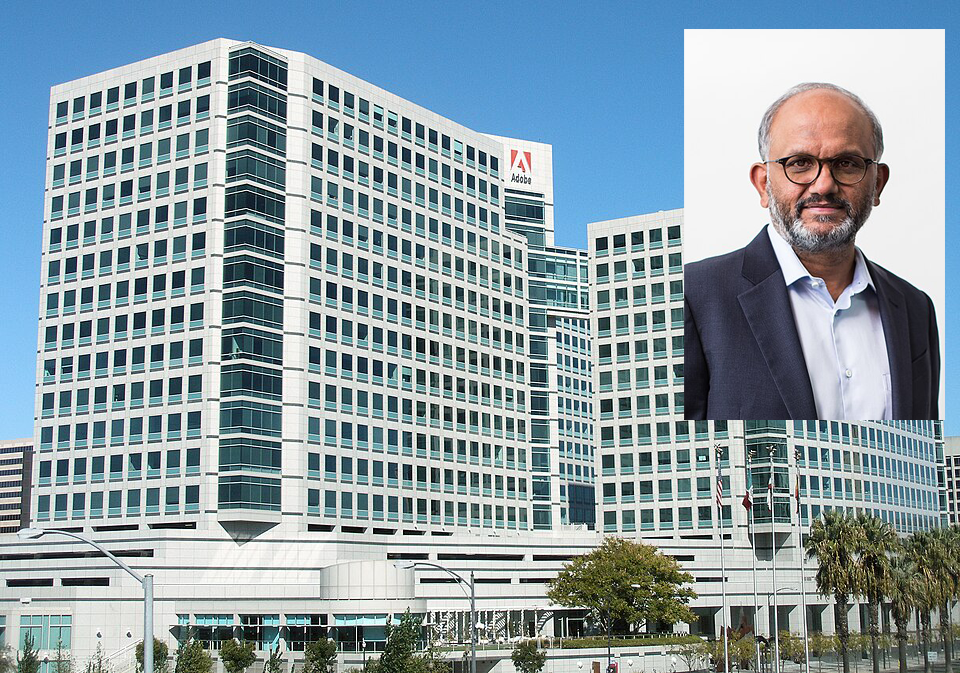
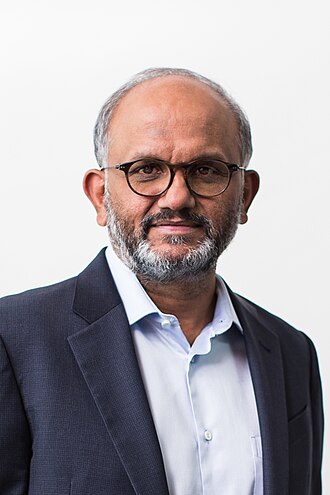
Shantanu Narayen, who has led Adobe since December 2007, announced on March 12 that he will step down as CEO once a successor is named. He joined Adobe in January 1998 and will remain as board chair during the transition. Lead director Frank Calderoni will run the search for a replacement.
The Announcement
Adobe's official statement frames the transition as a natural endpoint of an 18 year tenure. In a memo to employees, Narayen described the decision as part of positioning the company for its next chapter in an AI driven era.
The announcement arrived alongside Adobe's first quarter fiscal 2026 results for the period ending February 27. Revenue reached $6.4 billion, up 12.1% year over year and ahead of the $6.28 billion analyst forecast. Earnings per share came in at $6.06, beating the estimate of $5.87. Cash flow from operations hit a record $2.96 billion for the quarter.
What the Market Said
Adobe's stock fell roughly 1.4% in after hours trading following the announcement, closing at $269.78.
The departure landed differently in newsrooms than in Adobe's own press release. Bloomberg headlined its story "Adobe CEO to Step Down in Face of Investor Concerns Over AI." Reuters wrote "Adobe's longtime CEO to exit role amid AI disruption." The Wall Street Journal led with "Adobe CEO to Depart After 18 Years Amid AI Disruptions." Fortune called it the result of "pressure to deliver on AI."
None of these outlets claim AI disruption is the cause. All note that it is the context.
The AI Pressure on Per Seat Software
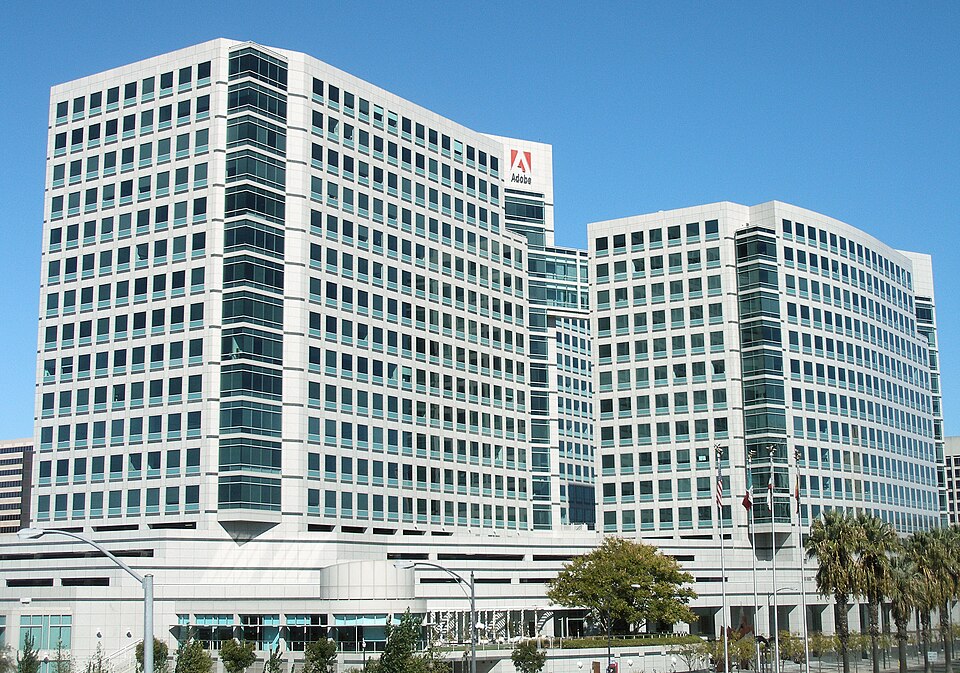
The concern centers on a specific structural threat. Bloomberg Intelligence and others point to agentic AI as a potential disruptor of per seat software pricing. The fear: if AI agents can perform Photoshop level work autonomously, demand for individual Creative Cloud subscriptions could weaken.
This fear drove a broader sell-off of SaaS stocks in February 2026. Some market observers labeled the episode "SaaS-mageddon." Adobe's stock had already been under pressure before the CEO announcement.
Adobe counters that its AI integration is advancing. The company reported that AI first product revenue tripled year over year in Q1. Firefly, Adobe's generative AI product line, now underpins several core Creative Cloud features. Second quarter guidance came in at $6.43 to $6.48 billion in revenue and $5.80 to $5.85 in adjusted EPS. Both figures edged above analyst consensus.
Eighteen Years of Change

Narayen became CEO in December 2007, when Adobe had around 3,000 employees and under $1 billion in revenue. The company now employs more than 30,000 people and reported over $25 billion in annual revenue in fiscal 2025. The defining business move under his leadership was the 2012 pivot from perpetual software licenses to Creative Cloud subscriptions, a model many software companies adopted afterward.
Adobe also co-founded the Coalition for Content Provenance and Authenticity (C2PA), the technical standard used to label and verify AI generated content across cameras, editing tools, and publishing platforms. For filmmakers navigating synthetic media, how C2PA Content Credentials work has become practical knowledge as the standard spreads across the industry.
What Comes Next
No successor has been named. Narayen's continued role as board chair means he will stay involved in Adobe's strategic direction after the transition completes.
Adobe is not the only creative industry player recalibrating strategy under AI pressure. Hollywood insiders are increasingly pushing for a proactive stance on AI rather than a defensive one. For studios and independent filmmakers alike, the question is the same one Adobe's board now faces: who sets the terms of AI adoption, and at what pace?

Sources
Bloomberg | Reuters | Wall Street Journal | Fortune | CNBC | Yahoo Finance
Continue Reading


Video & LipSync
- Video Generator
- Text to Video
- Image to Video
- Start-End Frame to Video
- Draw to Video
- Motion Control
- Video Enhancer
- Video Upscaler
- Video Extend
- Video to Video LipSync
- Audio to Video LipSync
- Image to Video LipSync
- Video FaceSwap
- Seedance 2.5
- WAN 3.0
- Seedance 2
- FLUX 3
- Minimax H3
- Vidu Q3 Pro
- Grok Imagine Video 1.5
- Gemini Omni
- Google Veo 3.1
- Kling 3.0 Pro
- Luma Ray 3.2
- LTX 2.3
- Happy Horse 1.1
- Kling 3.0 Motion
- ByteDance Upscaler
- InfiniteTalk
- InsightFace
Image & Edit
- AI Character
- AI Actor
- Art Generator
- Text to Image
- Image to Image
- LoRA Image to Image
- Draw to Edit
- Image LoRA Training
- Remove Background
- Image Enhancer
- MidJourney 8.0
- Krea 2
- OpenAI GPT Image 2.0
- Nano Banana Pro Ultra
- Nano Banana 2 Lite
- Nano Banana Pro
- Minimax Image
- Clarity Pro
- Z-Image Turbo LoRA
- Krea 2 Turbo LoRA
- Z-Image LoRA Trainer
- Qwen Image LoRA Trainer
- Background Erase Network 2 (BEN2)