
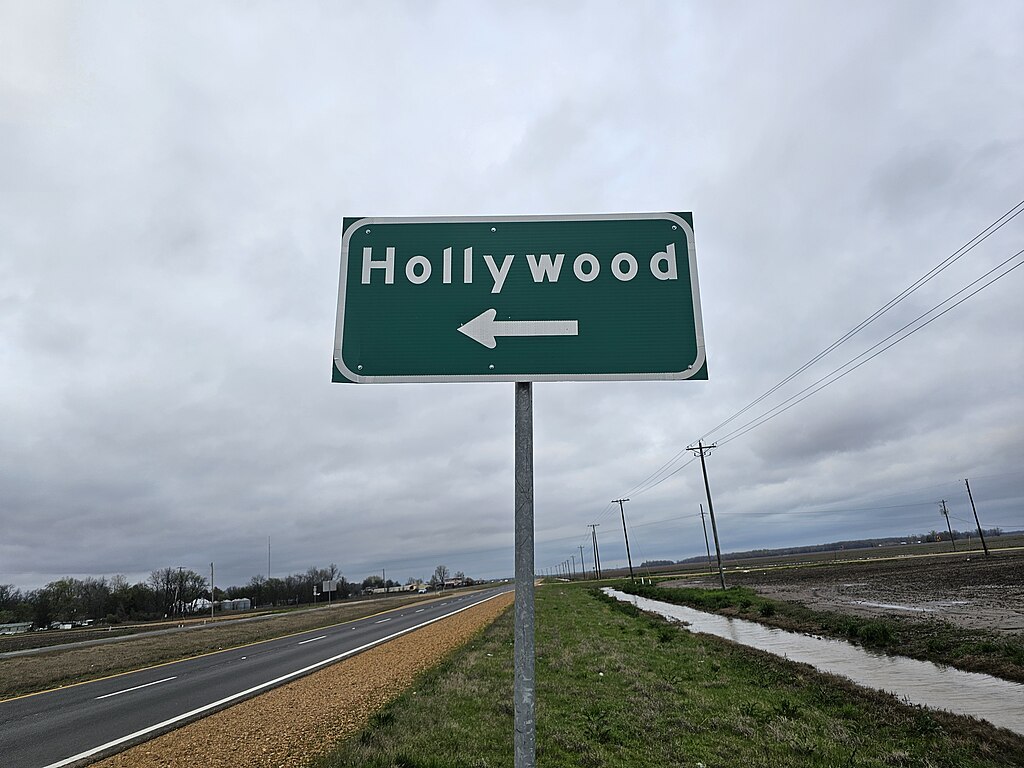
Chillin662, CC BY-SA 4.0, via Wikimedia Commons
Share this post:
Hollywood Insiders Are Calling for a Proactive AI Strategy
Hollywood is at an inflection point. While some corners of the industry treat generative AI as an existential threat, a growing chorus of producers, studio executives, and guild leaders argue the real danger is inaction. The question is no longer whether AI will reshape filmmaking. It is whether Hollywood will lead that transformation or watch from the sidelines.
From Panic to Strategy
In February 2026, ByteDance released Seedance 2.0, an AI video generator capable of producing cinema quality clips from short text prompts. Within hours, users were generating footage of recognizable Hollywood characters and A list actors in scenarios they never agreed to perform. One viral clip depicted Tom Cruise fighting Brad Pitt, created from what its author described as "a 2 line prompt." Deadpool screenwriter Rhett Reese responded bluntly: "I hate to say it. It's likely over for us."
.jpeg)
The Motion Picture Association responded with a cease and desist letter. CEO Charles Rivkin declared that Seedance had engaged in "unauthorized use of U.S. copyrighted works on a massive scale." ByteDance issued a vague commitment to "strengthen current safeguards" but offered no specifics. The full MPA response and industry fallout revealed a Hollywood establishment scrambling to respond after the fact rather than ahead of the curve.
The Seedance incident did not happen in isolation. Consumer grade face swap services have proliferated across the web, making it trivially easy to insert any likeness into any footage. These tools, combined with rapid advances in text-to-video generation, have amplified fears about unauthorized use of performers' likenesses and intellectual property. California has already moved to legislate protections, passing digital replica laws that require performer consent before AI generated likenesses can be used commercially.
But legislation alone cannot set creative direction. The panic, while understandable, risks becoming Hollywood's default posture toward a technology that is already embedded in its own workflows.
What AI Is Actually Doing on Sets and in Post
The uncomfortable truth is that AI is not arriving in Hollywood. It is already here, operating quietly behind the scenes in ways the industry rarely acknowledges publicly. As multiple investigations have revealed, Hollywood has been hiding how much AI it really uses for years, maintaining a "don't ask, don't tell" approach that serves neither transparency nor creative progress.
Netflix has been among the most open about its AI adoption. The streaming giant used generative AI to create final VFX footage in the Argentine series El Eternauta, where AI tools generated a building collapse sequence in Buenos Aires that would have required months of traditional effects work. The AI powered approach reportedly completed the sequence ten times faster than conventional methods. For Happy Gilmore 2, filmmakers used generative AI to de age characters in the opening scene.
.jpg)
Beyond Netflix, AI tools are being used across the industry for pre visualization, shot planning, style frame generation, automatic cleanup passes, and parameter driven variations that let creative teams test visual approaches before committing to expensive VFX pipelines. Lionsgate appointed its first Chief AI Officer to formalize this transition, while other studios have been quieter about similar moves. The broader trend of studios partnering with AI companies shows that VC investment in AI video generation reached $3.08 billion in 2025 alone, with Runway raising $315 million and Luma AI securing $900 million in funding.
The gap between private adoption and public messaging creates a credibility problem. Studios that publicly downplay AI while privately deploying it undermine the trust needed for meaningful industry wide standards. New reporting from April 2026 confirms the pattern reaches the lowest rungs of the industry: off-the-record conversations across Hollywood reveal candid daily AI use that almost never surfaces in official statements.
Insiders Calling for a Proactive Plan
Producer Michael Shamberg, an Academy member known for championing distinctive directors throughout his career, published a guest column in The Wrap arguing that Hollywood should actively champion generative AI as a filmmaking tool rather than treating it exclusively as a threat. His thesis is direct: if Hollywood does not lead, tech companies will.
Shamberg points to audience appetite for original content. A poll he cites shows 72% of respondents wanting more original films. AI shorts already garner billions of daily views online. He argues that a scene comparable to the folding city sequence in Inception, which originally cost millions and took months, could now be generated for roughly ten dollars. The technology is not theoretical. It is ready to deploy.
His proposed pathway echoes how animation evolved in Hollywood: studios should fund AI short films, host competitions to surface new voices, and test original IP theatrically at low cost. The analogy to cinema's early transitions is deliberate. When The Jazz Singer introduced synchronized dialogue, the industry had a choice between embracing or resisting the new medium. Those who adapted thrived.
.jpg)
Shamberg is not alone in calling for leadership over reaction. Academy president Janet Yang has framed her advocacy as "a grassroots movement" to help Hollywood navigate AI's uncertainties. At Sundance 2026, Yang sat down with filmmaker Noah Segan at a panel organized by The Hollywood Reporter and Autodesk, where she called for "basic principles" to guide how the industry engages with AI. Her position acknowledges real risks. She has stressed that AI threatens working creators and that training data transparency is essential. But she also recognizes that blanket opposition will not slow the technology's development. Yang's full framework and the Creators Coalition on AI represent one of the most structured attempts to define responsible use from within the industry.
Joining Yang in the Creators Coalition are Oscar winning director Daniel Kwan, actor Joseph Gordon-Levitt, producer Jonathan Wang, CODA director Sian Heder, and Natasha Lyonne. Gordon-Levitt has been particularly vocal about building consent, compensation, and control into AI governance, a three pillar approach that SAG-AFTRA has also endorsed.
The Stakes for Guilds and Performers
The guild dimension of this debate cannot be separated from the creative one. SAG-AFTRA has proposed a digital likeness tax on AI performers as a mechanism to ensure economic fairness when synthetic actors are used in productions. The Directors Guild is preparing for its own AI negotiations with Christopher Nolan now leading the DGA as the June 2026 contract expiration approaches. Nolan has pushed for mandatory disclosure, consent, and compensation guardrails for any AI use that touches directorial craft.
.jpg)
These negotiations are happening against a backdrop of directors who have already begun integrating AI into their work. Darren Aronofsky launched Primordial Soup, a studio built around AI generated visuals created in partnership with Google DeepMind and using SAG-AFTRA voice actors. David Cronenberg has compared AI to "digital Photoshop", calling it an inevitable tool for post production rather than a replacement for directorial vision. Their willingness to experiment while maintaining union labor standards offers a template that other filmmakers could follow. The maker of Photoshop, Adobe, is navigating its own AI crossroads. On March 12, CEO Shantanu Narayen announced he will step down after 18 years, with Bloomberg and Reuters both noting the departure comes amid investor concerns over Adobe's pace of AI adoption.
The proactive camp is not dismissing legitimate concerns about job displacement, unauthorized likeness use, or training data practices. Instead, they are arguing that defensive postures alone leave the industry vulnerable. When studios hide their AI use, when guilds negotiate without technical literacy, and when policymakers write rules without consulting working filmmakers, the result is a patchwork response that serves no one well.
What Comes Next
The next twelve months will determine whether Hollywood's relationship with AI becomes strategic or reactive. 2026 is already shaping up as the pivotal year with SAG-AFTRA, DGA, and WGA contracts all entering negotiation windows that will define AI governance for years to come. The Disney and OpenAI partnership is testing whether user generated AI content can coexist with studio IP. And independent filmmakers are proving that AI tools can lower barriers to entry without eliminating the need for human craft.
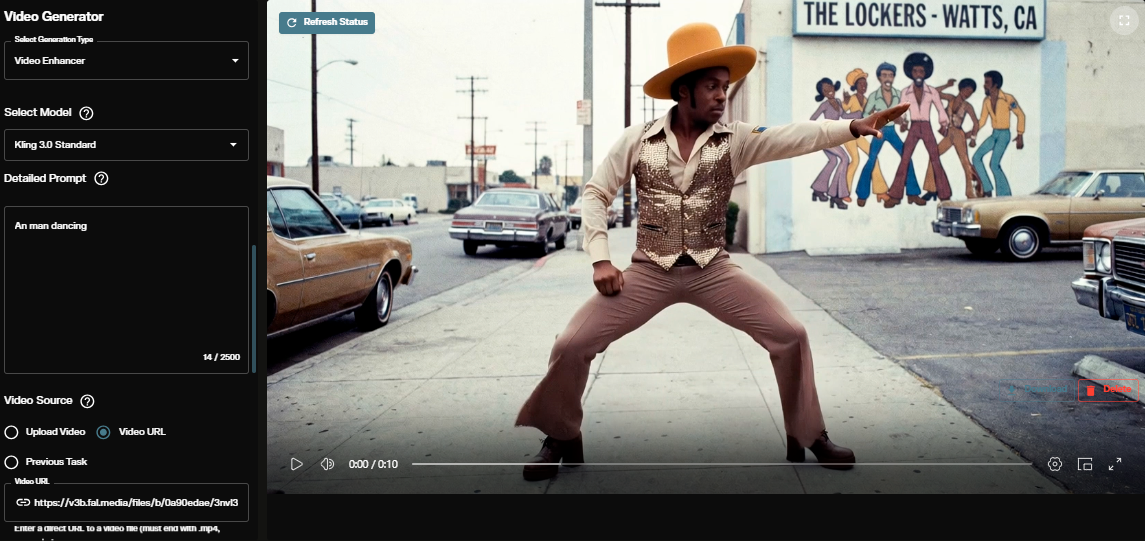
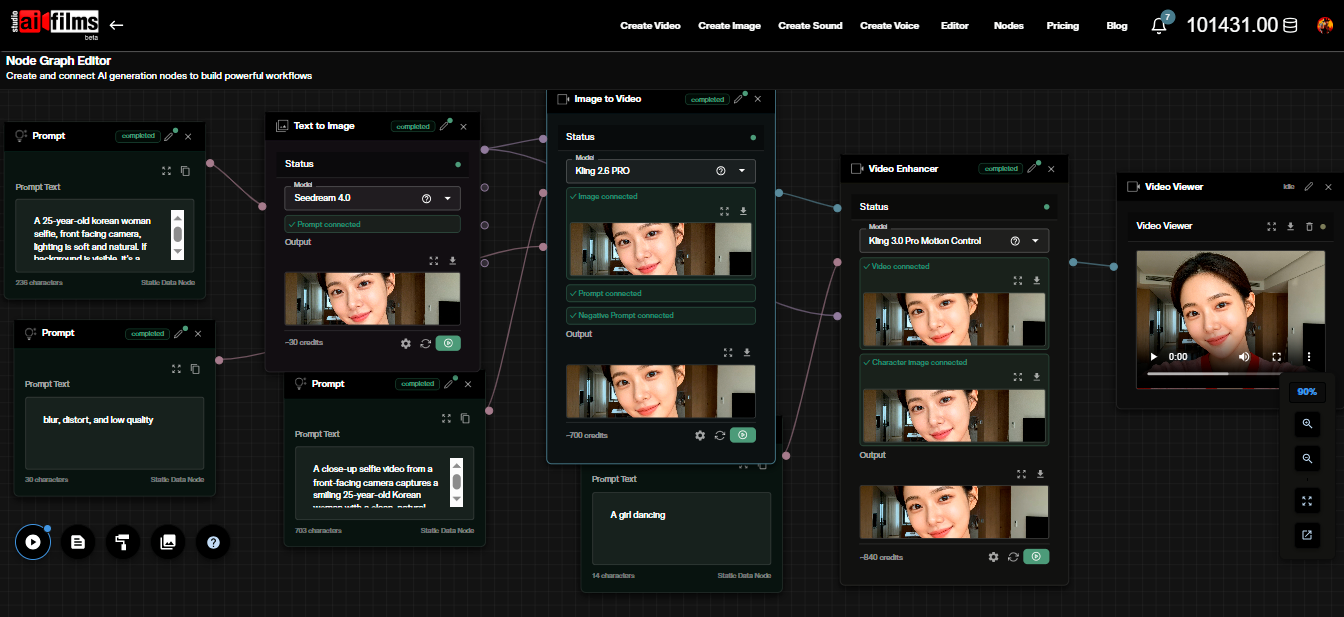
The tools available to filmmakers today, from text-to-video generation to AI assisted pre visualization, are accessible through platforms like AI FILMS Studio. Whether those tools are deployed thoughtfully or recklessly depends on the frameworks the industry builds now.
Hollywood has reinvented itself before. Sound replaced silence. Color replaced black and white. Digital replaced celluloid. Each transition produced fear, displacement, and ultimately, better cinema. The difference this time is speed. AI is not giving the industry decades to adapt. The insiders calling for a proactive strategy understand that waiting is itself a choice, and not a safe one.
Sources
The Wrap | The New York Times | Wired | BBC News | The Hollywood Reporter | Variety | TechCrunch
Continue Reading


.jpeg)
.jpg)
.jpg)
.jpg)
Video & LipSync
- Video Generator
- Text to Video
- Image to Video
- Start-End Frame to Video
- Draw to Video
- Motion Control
- Video Enhancer
- Video Upscaler
- Video Extend
- Video to Video LipSync
- Audio to Video LipSync
- Image to Video LipSync
- Video FaceSwap
- Seedance 2.5
- WAN 3.0
- Seedance 2
- FLUX 3
- Minimax H3
- Vidu Q3 Pro
- Grok Imagine Video 1.5
- Gemini Omni
- Google Veo 3.1
- Kling 3.0 Pro
- Luma Ray 3.2
- LTX 2.3
- Happy Horse 1.1
- Kling 3.0 Motion
- ByteDance Upscaler
- InfiniteTalk
- InsightFace
Image & Edit
- AI Character
- AI Actor
- Art Generator
- Text to Image
- Image to Image
- LoRA Image to Image
- Draw to Edit
- Image LoRA Training
- Remove Background
- Image Enhancer
- MidJourney 8.0
- Krea 2
- OpenAI GPT Image 2.0
- Nano Banana Pro Ultra
- Nano Banana 2 Lite
- Nano Banana Pro
- Minimax Image
- Clarity Pro
- Z-Image Turbo LoRA
- Krea 2 Turbo LoRA
- Z-Image LoRA Trainer
- Qwen Image LoRA Trainer
- Background Erase Network 2 (BEN2)