
ARIAM: Disney, BBC, and the New York Times Form AI Content Coalition

Share this post:
ARIAM: Disney, BBC, and the New York Times Form AI Content Coalition
Disney, BBC, the New York Times, ITV, the Financial Times, Condé Nast, Cambridge University Press, Wiley, Advance, and Reach launched the Alliance for Responsible Innovation in the Arts & Media on June 15, 2026. The organization, known as ARIAM, is led by Victoria Furniss, CEO of The Birdella Group and a former executive at Netflix and Warner Bros.
A Cross Sector Coalition With a Clear Position
ARIAM spans entertainment, publishing, and news organizations. Its founding membership brings together studios, broadcasters, consumer magazine groups, academic publishers, and newspaper companies into a single governance body with representation across the full content supply chain.
The coalition's stated purpose is direct: it is "not to slow AI down" but to build frameworks that allow content companies to use AI while protecting creator rights and institutional standards. That framing sets ARIAM apart from advocacy groups that have taken a more adversarial position toward AI adoption in content production.
The mix of members is significant. Disney and BBC represent the broadcast entertainment sector. The New York Times and Financial Times represent journalism. Cambridge University Press and Wiley represent academic publishing. Condé Nast represents consumer magazines. The breadth means ARIAM's governance frameworks must address AI use cases across every type of professional content creation, not just film and television.
Victoria Furniss and The Birdella Group
Furniss founded The Birdella Group after senior roles at Netflix and Warner Bros., where her work centered on content strategy and IP management. The Birdella Group entered AI consulting in July 2025 under the name AiPhelion, working with studios and publishers on licensing frameworks and AI governance structures.
What became ARIAM began as AiPhelion. The same group of companies that engaged Furniss through the AiPhelion consulting relationship formed the core membership when the coalition formalized under the ARIAM name in June 2026. The 12 month period between the consulting firm's launch and the coalition's public announcement represents foundational work no other outlet has traced: a private consulting engagement that produced the governance templates ARIAM is now promoting to the wider industry.
Furniss's dual background in entertainment and streaming strategy is relevant to how ARIAM has been positioned. Her Netflix years gave her firsthand knowledge of how a platform company approaches content licensing at scale. Her Warner Bros. work involved IP management across a major studio portfolio. ARIAM is run by someone who has operated on both the production and platform sides of the content industry's relationship with AI.

Cory Doctorow, CC BY-SA 4.0, via Wikimedia Commons
Twelve Months of Groundwork
AiPhelion launched in July 2025, before any of the major guild AI contracts were ratified. At that point, the entertainment industry's AI governance debate was centered on labor protections: what studios could and could not do with generative tools under WGA and SAG-AFTRA agreements.
Furniss positioned AiPhelion on the content company side of that debate, advising on how studios and publishers could adopt AI tools while building licensing and attribution frameworks that reduced legal exposure. By early 2026, with the WGA's four year deal in place and guild contracts covering AI use cases in detail, the question facing content companies shifted from labor compliance to broader governance: what standards should apply to AI use across the entire content supply chain?
The transition from AiPhelion to ARIAM reflects that shift. The consulting work built the frameworks privately across a year of studio and publisher engagement. The coalition is the vehicle for advancing them publicly.
Where ARIAM Fits in the Industry's AI Governance Push
The industry's governance response to AI has moved along three tracks in 2026. Guilds negotiated contracts covering AI use in specific labor categories. Legislators advanced federal protections, most recently the NO FAKES Act clearing the Senate Judiciary Committee in a unanimous vote. Content company coalitions have been the third track, slower to organize and more varied in their internal priorities.
The Creators Coalition on AI organized from the talent side, with Oscar winners and guild members building norms around training data rights and authorship standards. ARIAM is the institutional counterpart: content companies and publishers defining what responsible AI use looks like from the production and distribution side.
The two tracks are not identical in their priorities, but the governance questions they address overlap. Training data consent, authorship attribution, and synthetic replica rights appear in both the guild contracts and in ARIAM's stated focus areas. Having a talent side coalition and a content company coalition both advocating for governance frameworks strengthens the case for federal and industry wide standards that go beyond what any single contract negotiation can establish.
The EU AI Act Context
ARIAM's launch in June 2026 coincides with the EU AI Act's full implementation timeline reaching its most significant enforcement phase. The Act categorizes AI systems by risk level and imposes specific requirements on providers and deployers of systems in content creation contexts.
For a coalition with BBC, ITV, the Financial Times, and the Guardian-connected Reach among its members, EU compliance is not an abstract concern. These are organizations with European operations, European audiences, and European regulatory obligations. ARIAM's governance frameworks need to function across EU regulatory requirements as well as US guild contract standards.
That transatlantic dimension is part of what makes ARIAM structurally different from coalitions organized entirely within the US entertainment industry. A framework that works only in Hollywood does not address the operational reality of content companies that produce and distribute across both regulatory environments.
The Animation Sector's Parallel Track
From the animation sector, Annecy's CITIA launched the AI4Animation Think Tank on June 22, 2026, a separate governance initiative distinct from both guild contracts and content company coalitions. The process targets a white paper on AI governance in animation by 2029.
The Think Tank's format, closed door practitioner sessions with studio executives, directors, and union representatives, runs across multiple MIFA editions. ARIAM operates across a broader content category than animation alone, but its governance frameworks will need to accommodate the specific concerns of animation studios, illustrators, and voice performers that are already organized under separate industry bodies.
The question of whether ARIAM's frameworks and the animation sector's white paper process produce compatible standards will be answered over the next three years. Both initiatives are building governance documents simultaneously, covering overlapping territory, with different membership bases.
What the ARIAM Framework Covers
ARIAM's stated focus areas include training data consent, authorship attribution, synthetic replica rights, and disclosure standards for AI-assisted content. These are the same four areas that appear in the WGA's four year deal, in SAG-AFTRA's 2026 agreement, and in the EU AI Act's content-related provisions.
The overlap is not accidental. ARIAM's founding members engaged the AiPhelion consulting relationship specifically during the period when those guild contracts and regulations were being finalized. The governance work was built with knowledge of what the labor side and the regulatory side were producing. The ARIAM frameworks are designed to complement those structures, not work around them.
Why This Coalition Includes Publishers
Including Cambridge University Press, Wiley, Advance, and Reach alongside Disney and BBC is the structural feature that makes ARIAM different from entertainment-only coalitions. Academic publishers have the most specific and most litigated AI training data disputes in the content sector. Cambridge and Wiley are parties to or observers of ongoing copyright litigation involving their catalogs and AI training datasets.
Their presence means ARIAM's governance frameworks must address training data use in academic publishing alongside film and television, which requires a more precise consent and licensing framework than any single sector coalition would need. The result is a framework broad enough to cover the content industry's full range of AI use cases, from documentary footage to academic text.
The Timeline for Framework Publication
ARIAM has not announced a public release date for its governance frameworks. The coalition's public launch in June 2026 described the organization's mission and membership without committing to a specific deliverable timeline.
The AiPhelion consulting work produced private frameworks for each member company across the year before the public launch. Those internal documents exist and have been applied within member organizations. The public versions of the frameworks, standardized for industry-wide adoption, are presumably in a later stage of the same process: they will be released when the coalition believes they are ready for external scrutiny and adoption.
How Members Are Expected to Implement Standards
ARIAM is a voluntary coalition. Its frameworks will not carry legal force beyond whatever each member organization's internal policies and contractual commitments incorporate. The strength of the coalition's governance work depends on adoption depth: whether members build the frameworks into their standard contracts, their production agreements, and their licensing terms.
Disney and BBC have production pipelines that span hundreds of individual productions per year. If ARIAM frameworks are incorporated into standard production contracts at either organization, they reach thousands of individual production contexts. The scale of the founding membership is what makes voluntary adoption consequential rather than symbolic.
Why Publishing Members Expand the Framework
Cambridge University Press, Wiley, and the publishing members bring AI training data disputes into the ARIAM framework that the entertainment members alone would not require addressing. Academic publishers have been involved in or monitoring litigation over whether academic texts can be used to train AI models without licensing agreements.
Academic text is typically protected by a more specific rights framework than screen content, and judicial guidance from academic publisher cases is further advanced than in entertainment copyright cases. ARIAM frameworks that address academic publishing will need to meet a higher specificity standard than frameworks designed only for screen content, which raises the floor for how precise the entertainment sector standards must also be.
How Member Companies Will Implement Standards
ARIAM is a voluntary coalition. Its frameworks will not carry legal force beyond whatever each member organization's internal policies and contracts incorporate. The practical strength of the coalition's work depends on adoption depth.
Disney and BBC each have production pipelines spanning hundreds of projects per year. If ARIAM frameworks enter standard production agreements at either organization, they reach thousands of individual production contexts annually. The scale of the founding membership is what makes voluntary adoption consequential. A governance document adopted by Disney carries more practical weight than a document adopted by a boutique studio.
The EU AI Act Connection
ARIAM launched as the EU AI Act's most significant enforcement provisions came into force. For BBC, ITV, the Financial Times, and Reach, EU compliance is not an abstract concern. These organizations have European operations, European audiences, and European regulatory obligations that apply to their AI content use regardless of where the content is produced.
ARIAM's frameworks need to function under EU regulatory requirements alongside US guild contract standards. A framework designed only for Hollywood does not address the operational reality of content companies that produce and distribute across both regulatory environments simultaneously. The transatlantic scope of the founding membership is the reason the framework needs to be broader than any single national regulatory environment.
What Comes Next
ARIAM has not announced a public release date for its governance frameworks. The coalition's June 2026 launch described its mission and membership without committing to a specific publication timeline. The internal frameworks built during the AiPhelion consulting period exist and have been applied within member organizations.
The public versions are presumably in a later stage of the same process, standardized for industry adoption beyond the founding membership. They will be released when the coalition believes they are ready for external scrutiny and adoption by non-member companies across the broader content industry.
What "Not to Slow AI Down" Actually Means
ARIAM's stated purpose is "not to slow AI down," a deliberate framing that distinguishes the coalition from advocacy groups that have taken adversarial positions toward AI adoption in content production. The framing is also a commercial signal to member companies: the frameworks are designed to make AI adoption more defensible, not to discourage it.
The distinction matters for how the frameworks are written. Governance designed to protect creator rights within an adoption framework produces different documents than governance designed to prevent adoption. ARIAM's member companies are all using AI tools already. The frameworks address how they use them, not whether.
AiPhelion's Role in Building the Framework
The internal governance frameworks that ARIAM's founding members will publish were developed through AiPhelion, a consulting firm Furniss led specifically for AI governance in media companies. AiPhelion built the framework architecture during the coalition's formation period, before the public launch in June 2026.
The use of a specialist consulting firm rather than an internal working group reflects how quickly the founding members needed operational governance standards. ARIAM needed working frameworks in place at its members before it could announce its existence credibly, and AiPhelion provided the technical and legal expertise to build those standards in the time available.
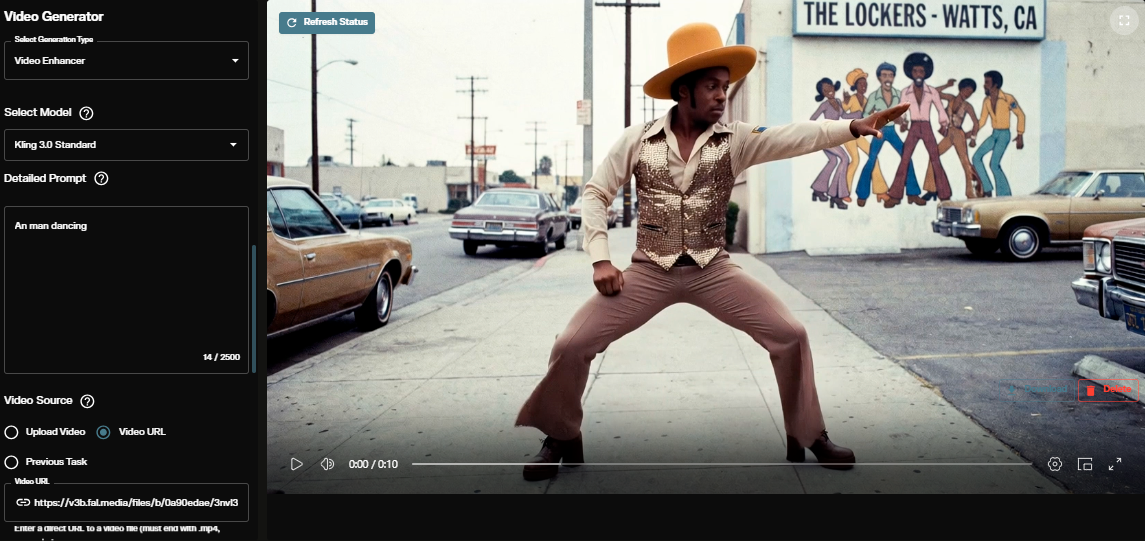
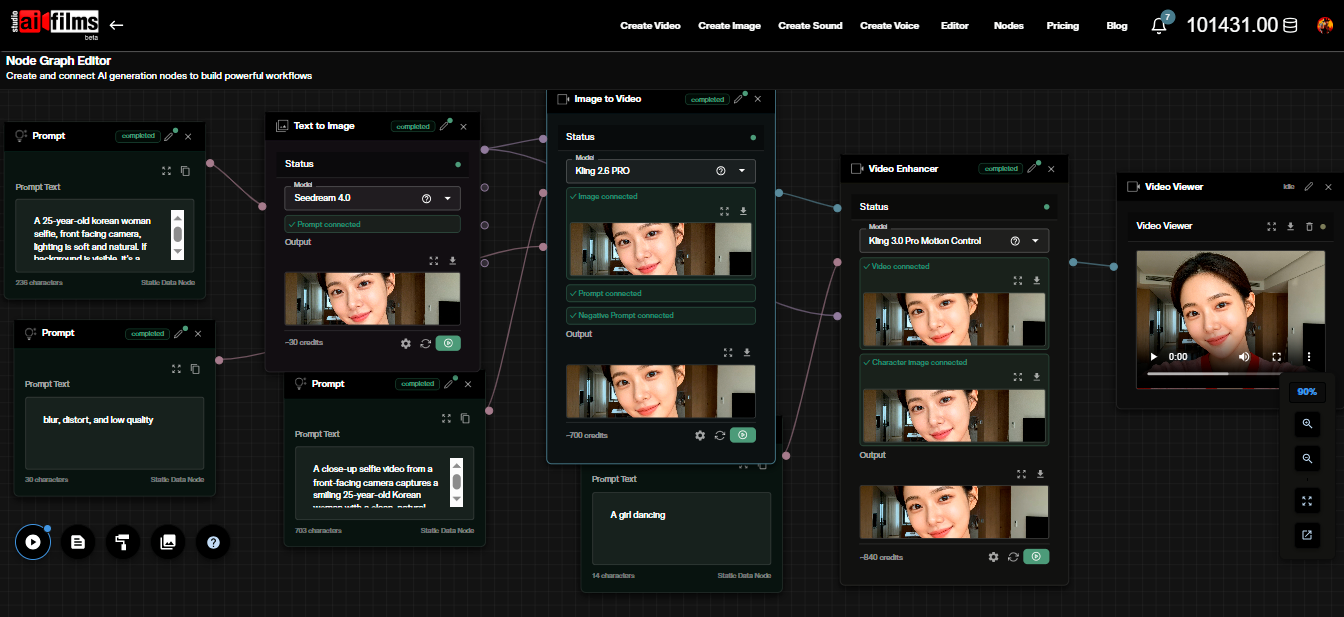
Content companies and creators using AI tools can build production workflows in the AI FILMS Studio video workspace.
Sources
The Hollywood Reporter | Variety | Deadline | The Guardian
Continue Reading
.jpg?w=3840)


Video & LipSync
- Video Generator
- Text to Video
- Image to Video
- Start-End Frame to Video
- Draw to Video
- Motion Control
- Video Enhancer
- Video Upscaler
- Video to Video LipSync
- Audio to Video LipSync
- Image to Video LipSync
- Video FaceSwap
- Seedance 2.5
- WAN 3.0
- Seedance 2
- FLUX 3
- Minimax H3
- Vidu Q3 Pro
- Grok Imagine Video 1.5
- Gemini Omni
- Google Veo 3.1
- Kling 3.0 Pro
- Luma Ray 3.2
- LTX 2.3
- Happy Horse 1.1
- Kling 3.0 Motion
- ByteDance Upscaler
- InfiniteTalk
- InsightFace
Image & Edit
- AI Character
- AI Actor
- Art Generator
- Text to Image
- Image to Image
- LoRA Image to Image
- Draw to Edit
- Image LoRA Training
- Remove Background
- Image Enhancer
- MidJourney 8.0
- Krea 2
- OpenAI GPT Image 2.0
- Nano Banana Pro Ultra
- Nano Banana 2 Lite
- Nano Banana Pro
- Minimax Image
- Clarity Pro
- Z-Image Turbo LoRA
- Krea 2 Turbo LoRA
- Z-Image LoRA Trainer
- Qwen Image LoRA Trainer
- Background Erase Network 2 (BEN2)