
Born of the Tide: AI Cuts a Third Off Chinese Animation

Photo by Yiran Ding on Unsplash
Share this post:
Born of the Tide: AI Cuts a Third Off Chinese Animation
Chinese animation director Wei Li told a Cannes Marché du Film panel on May 20 that his AI assisted feature Born of the Tide cut roughly one third off both production time and budget compared to his prior animated works. The film is a hybrid pipeline, not a fully AI generated project. Wei Li hand drew approximately 80 percent of its storyboards while AI handled the remainder.
Wei Li spoke on the same Palais des Festivals main stage panel as Korean director Eekjun Yang and U.S. director Jon Erwin. The session, titled "From Creative Possibility to Production Reality: Kling AI in Cinematic Workflows", ran across May 18 to 20 and was organized by Kling AI parent Kuaishou.
The Hybrid Pipeline Argument
Wei Li's position cut against the framing of AI animation as a pure replacement of traditional craft. "It's not just an AI created film. It's not following the AI workflow only. We're still using some traditional animation creation. But in using AI, we've shortened the production schedule to two thirds of the time, and similarly with the budget", he told Deadline.
In Screen Daily he made the creative case for the same workflow: "You can use the AI to free your hands, express your mind and utilise your imagination more". The argument is that AI absorbs the repetitive labor that drains animation budgets, while keeping the parts that define visual identity in human hands.
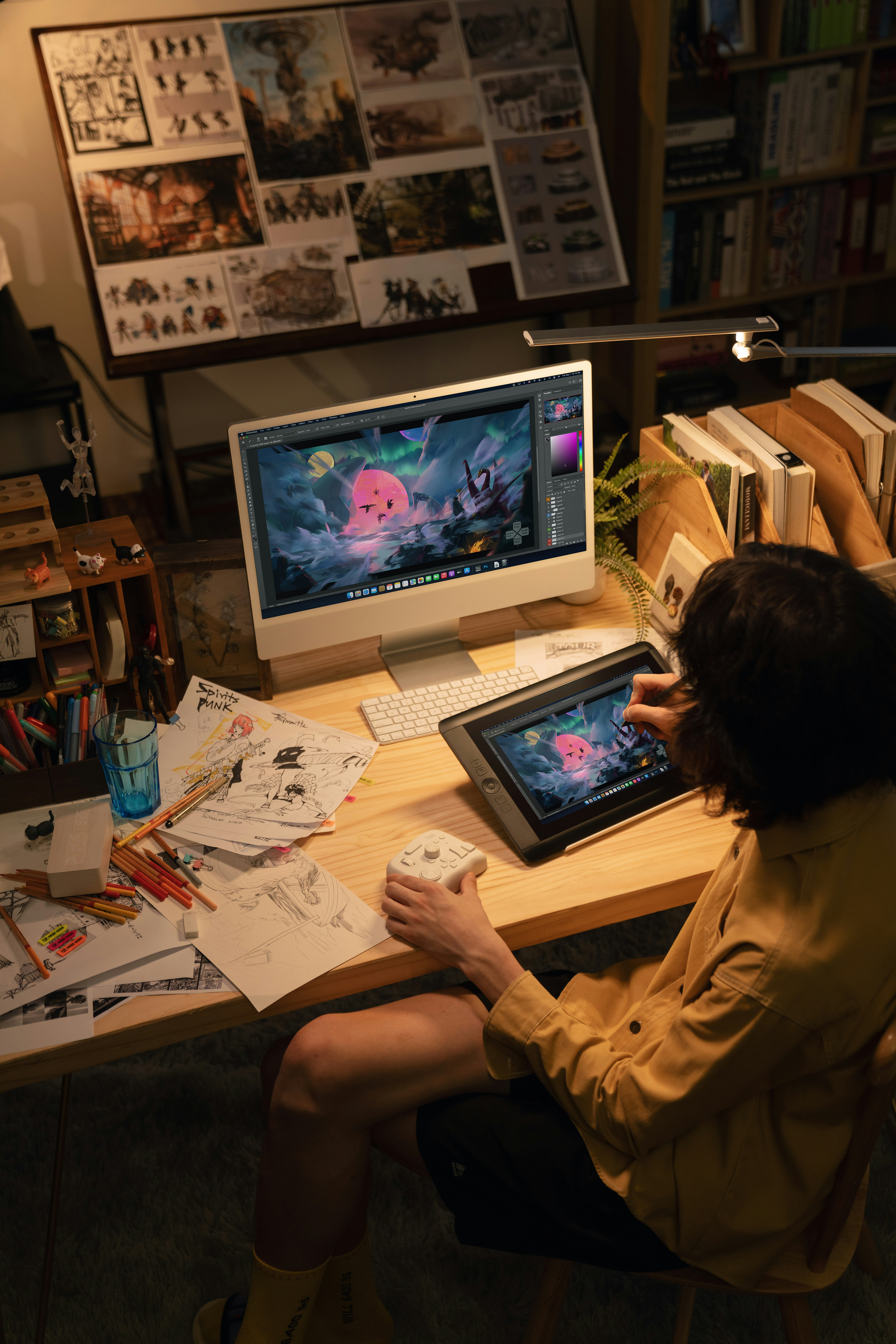
Traditional Chinese ink animation is a labor intensive discipline. Each frame of hand drawn ink work requires skilled artists trained in brush technique, tonal gradation, and the compositional principles of classical scroll painting. The production cost per minute of finished animation is high relative to other visual styles.
Wei Li's decision to apply AI to large scale sequences while keeping hand drawn ink for character work is a cost allocation choice as much as a creative one. Dragon boat races and mountain battles require many figures in motion across complex environments. AI handles that visual complexity at a fraction of the per frame labor cost.
The Film
Born of the Tide centers on the Tanka people, a Chinese coastal community often described as sea nomads because of their traditional floating way of life. The visual style is traditional Chinese ink painting, the technique that defines centuries of Chinese scroll work.
Kling AI's native 4K output handles the film's large scale sequences: dragon boat races, fish market scenes, and mountain battles. The choice of AI for those moments lets Wei Li keep the slower hand drawn ink work for the character animation that carries the story's emotional weight.
Who Wei Li Is
Wei Li directed Jiang Ziya: Legend of Deification, a 2020 animated release that grossed over $228 million and ranked among China's biggest animated openings of that year, per Asian Movie Pulse. Jiang Ziya received an Annecy 2021 official selection. He is also associated with Big Fish and Begonia, the 2016 ink influenced fantasy that became a touchstone for the modern Chinese animation revival.
That commercial track record matters to the AI case. Wei Li is not a first time director looking for a cheaper entry path. He is a director with a $228 million credit who chose AI specifically because the hybrid pipeline preserves the traditional ink work his films are known for.
Inside the Cannes Kling Panel
Wei Li was one of three directors who presented production data from active projects on the Kling AI panel. Eekjun Yang spoke about Raphael, the Korean theatrical AI feature, and Jon Erwin discussed the House of David hybrid workflow. The full overview of the panel and Kling AI's broader Cannes announcements is in our Kling AI Filmmaker Initiative coverage.
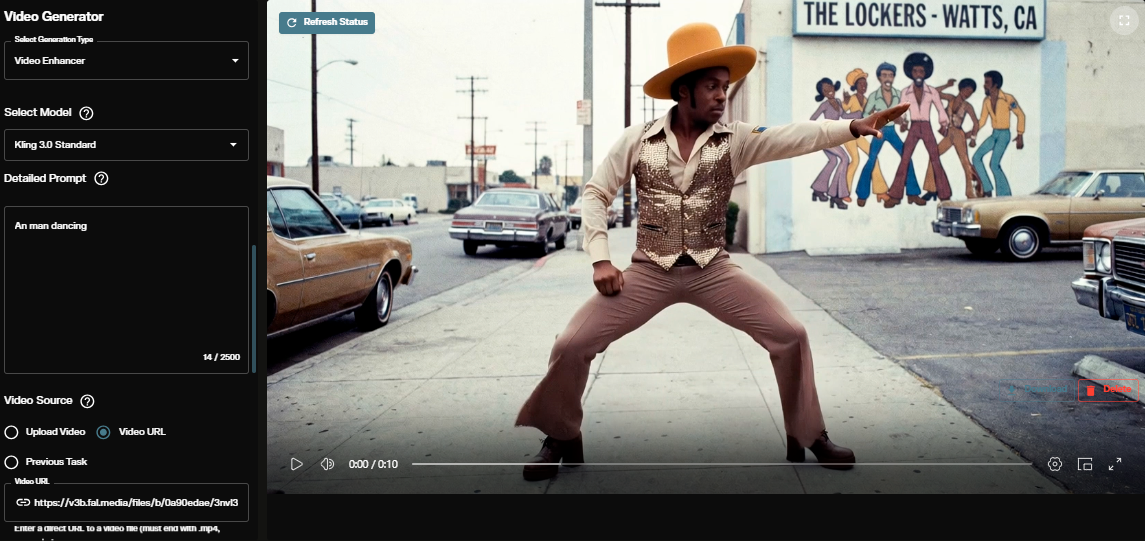
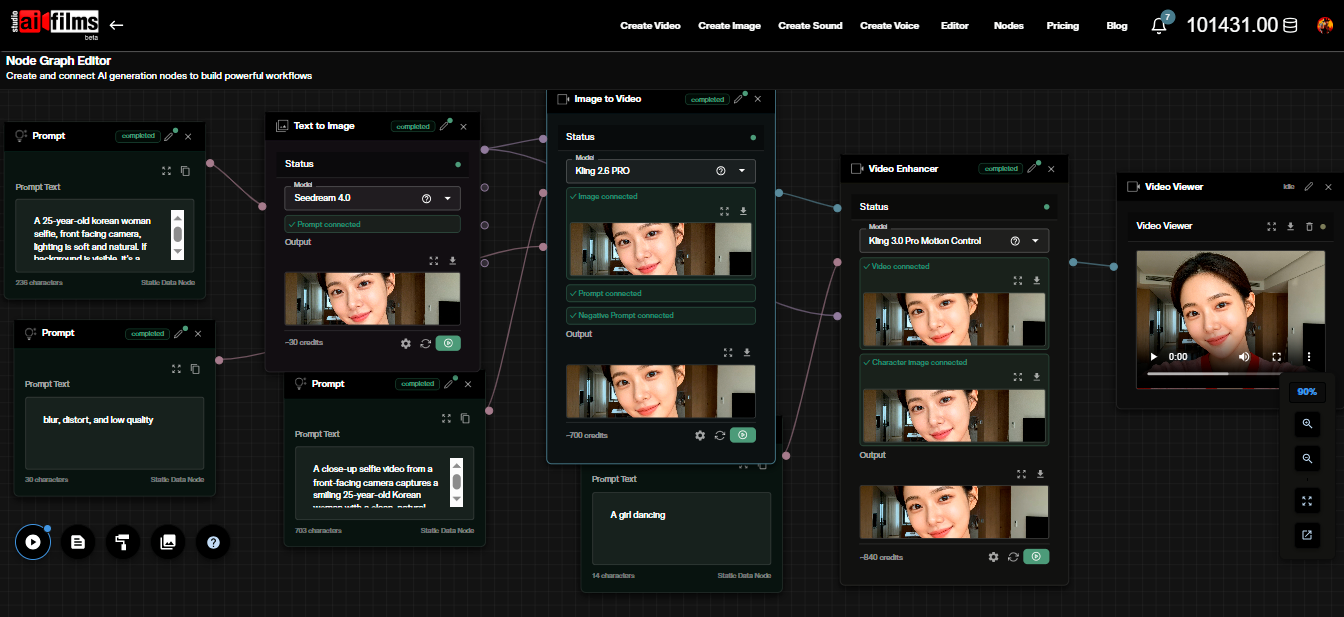
Kling AI's tools, used across all three projects, are available in the AI FILMS Studio video workspace. For filmmakers studying the underlying generation techniques, the Kling 3 motion control tutorial walks through the production parameters.
The Tanka People and Their Cultural Significance
The Tanka are a Chinese coastal community with a documented history stretching back over a thousand years. Their traditional way of life, built around wooden fishing boats used as permanent homes, gave rise to the "sea nomad" description that has shaped outside perceptions of the community.
The Tanka have been a subject of Chinese literature and visual art for centuries. Depicting them through traditional ink painting brings the film's visual style into direct dialogue with that history. Wei Li is not using ink animation as a decorative choice. He is placing a specific community inside the visual tradition they have historically inhabited.
That cultural specificity is what separates Born of the Tide from AI animation projects that use Chinese aesthetic elements as stylistic references. Wei Li is working from within the tradition, not borrowing its surface features.
What Wei Li's Commercial Track Record Establishes
Wei Li directed Jiang Ziya: Legend of Deification, which grossed over $228 million domestically in 2020 and received an Annecy 2021 official selection. That credit is the most important single fact in understanding why his Cannes statements carry weight.
A first time director making the same argument about AI and traditional craft would be describing an untested proposition. Wei Li is describing a production decision made by someone who has already delivered a $228 million animated film using conventional methods. He chose AI because it served the specific project, not because it was the only tool available to him.
That distinction matters to buyers, distributors, and festival programmers evaluating whether Born of the Tide has the production quality its source material and director's track record suggest.
Big Fish and Begonia as Context
Wei Li is also associated with Big Fish and Begonia, the 2016 ink influenced fantasy that grossed over 565 million yuan domestically and became a reference point for the modern Chinese animation revival. That film's visual identity is built on the same ink painting tradition that Born of the Tide extends.
The connection matters because Big Fish and Begonia demonstrated that Chinese ink animation aesthetics can support a commercially successful feature for contemporary audiences. Wei Li is not testing whether the visual style can work theatrically. He is applying it to a new story with an AI assisted production pipeline.
The One-Third Reduction in Concrete Terms
Wei Li told Deadline that AI shortened the production schedule to two thirds of the time, with a comparable reduction in budget. For a Chinese animation production, that reduction has specific dollar values attached to it.
Conventional Chinese ink animation at feature length requires teams of skilled artists working across backgrounds, character animation, and compositing over production cycles that typically run two to four years. Compressing that timeline by one third without reducing the hand drawn quality of the final output is the result Wei Li is describing.
The one third reduction was achieved by applying AI to the sequences where individual brush strokes are least visible: large scale crowd scenes, environmental motion, and sequences that require many moving elements simultaneously. The hand drawn work was preserved for the frames that audiences look at most closely.
What the 80 Percent Hand Drawn Split Means
Wei Li's 80 percent hand-drawn storyboard figure is specific and consequential. It means the creative decisions about composition, character placement, and visual storytelling were made by Wei Li and his team rather than by AI prompting in the vast majority of the film's key shots.
The AI contribution, by his accounting, is concentrated in execution rather than conception. The creative architecture of the film is human. The AI handles specific production steps within that architecture, primarily the large scale sequences that would have been prohibitively expensive to animate by hand at the quality level his prior work established.
That allocation is the practical definition of a hybrid pipeline. It is distinct from a production where AI generates the visual content and humans select among the outputs.
How the Cannes Panel Positioned the Project
Wei Li was one of three directors presenting production data from active projects at the Kling AI panel. His presence alongside Korean director Eekjun Yang and U.S. director Jon Erwin placed Born of the Tide in a market context where buyers could compare three different AI production approaches from three different territories.
His commercial track record made him the most credible voice on the panel for buyers evaluating whether AI assisted animation can reach the quality level major markets require. A director with a $228 million credit speaking about a one third production reduction carries different weight than a first time director making the same claim.
The panel's structure, three directors with active projects rather than a single showcase, reflected Kuaishou's strategy of demonstrating AI filmmaking as a practical reality across multiple production contexts simultaneously.
The Annecy Connection
Jiang Ziya received an Annecy 2021 official selection, placing Wei Li's prior work inside the most prestigious animation festival in the world. Annecy does not select on commercial performance alone. A film needs to meet a quality standard that the jury considers significant as animation.
That selection establishes Wei Li's credibility with the animation industry audience that Annecy represents. His Born of the Tide project will be evaluated in that context. The standard his prior work set at Annecy is the standard festival programmers will apply when deciding whether to include an AI assisted ink painting feature in their selections.
What a Two-Thirds Pipeline Means for Animation Studios
Wei Li's one third reduction in production time and budget is a result that, if repeatable, changes the cost structure of Chinese animation production in a specific way. Chinese animation studios have historically competed with Japanese and American productions primarily through labor cost advantages. AI assisted pipelines change where that advantage lives.
A studio that reduces production time by one third without reducing the visual quality associated with traditional ink painting can take on more projects in the same production window. That productivity increase does not replace skilled animators. It changes the ratio of hand-drawn frames to AI-assisted frames in the pipeline.
Whether Wei Li's specific result transfers to other studios and other styles depends on whether the production model he demonstrated is replicable without his specific combination of skills and prior track record. Born of the Tide's release will generate the production data that answers that question.
Where Born of the Tide Goes After Cannes
The Cannes panel positioned Born of the Tide for international buyer conversations. The film's target audience is not primarily the Cannes Marché du Film buyer pool. Its story centers on a specific Chinese coastal community depicted through a traditional ink painting visual style with commercial precedent in the domestic Chinese market.
Distribution in China is the primary commercial question the film faces. International distribution in markets that receive Chinese animation, including parts of Southeast Asia, and streaming platforms with Chinese content strategies, represents the secondary market where the Cannes positioning has practical value.
A film with Wei Li's commercial track record, a recognizable visual style, and a documented AI hybrid production model has a clearer distribution argument than most independent AI features. Whether that argument translates to signed distribution agreements is what follows the Cannes conversations.
The Cannes appearance with Raphael and the House of David project placed Born of the Tide in a broader regional and international conversation about what AI assisted animation and filmmaking can achieve at theatrical quality levels.
Sources
- Deadline
- Variety
- Screen Daily
- GlobeNewswire
- Asian Movie Pulse
Continue Reading
.jpg?w=3840)


Video & LipSync
- Video Generator
- Text to Video
- Image to Video
- Start-End Frame to Video
- Draw to Video
- Motion Control
- Video Enhancer
- Video Upscaler
- Video Extend
- Video to Video LipSync
- Audio to Video LipSync
- Image to Video LipSync
- Video FaceSwap
- Seedance 2.5
- WAN 3.0
- Seedance 2
- FLUX 3
- Minimax H3
- Vidu Q3 Pro
- Grok Imagine Video 1.5
- Gemini Omni
- Google Veo 3.1
- Kling 3.0 Pro
- Luma Ray 3.2
- LTX 2.3
- Happy Horse 1.1
- Kling 3.0 Motion
- ByteDance Upscaler
- InfiniteTalk
- InsightFace
Image & Edit
- AI Character
- AI Actor
- Art Generator
- Text to Image
- Image to Image
- LoRA Image to Image
- Draw to Edit
- Image LoRA Training
- Remove Background
- Image Enhancer
- MidJourney 8.0
- Krea 2
- OpenAI GPT Image 2.0
- Nano Banana Pro Ultra
- Nano Banana 2 Lite
- Nano Banana Pro
- Minimax Image
- Clarity Pro
- Z-Image Turbo LoRA
- Krea 2 Turbo LoRA
- Z-Image LoRA Trainer
- Qwen Image LoRA Trainer
- Background Erase Network 2 (BEN2)