
Stable Audio 3: Open Weight Music and SFX for Filmmakers
Image courtesy of Stability AI
Share this post:
Stable Audio 3: Open Weight Music and SFX for Filmmakers
Stability AI released Stable Audio 3 on May 20, 2026, a four model family that covers music composition, sound effects, and audio editing inside a single architecture. Three of the four models ship with open weights on Hugging Face. The fourth runs through API and paid self hosting only.
Studio availability. Stable Audio 3 is not available in AI FILMS Studio. This article covers a public research release. To generate music in the Studio, see the models listed on the text to music page.
The release matters for filmmakers because the same family handles two of the most common post production audio jobs, music score generation and on screen sound design, while training only on licensed audio.
The Four Model Lineup
The family scales from on device sound effects up to full song composition. The smaller models target mobile and consumer laptops; the medium and large variants target studio workstations.
.png)
Image courtesy of Stability AI
Stability AI's published specifications give an H200 inference time of 0.44 seconds for the small variants, 1.31 seconds for the medium, and 1.80 seconds for the large. Maximum track length is two minutes for the small models and six minutes twenty seconds for the medium and large. Parameter counts are 459M, 459M, 1.4B, and 2.7B respectively.
The Semantic Acoustic Autoencoder
A standard audio VAE compresses audio into a representation optimized for reconstruction. A semantic acoustic autoencoder compresses audio into a representation that also encodes what is happening semantically: instrument type, melodic phrase, rhythmic pattern. The semantic representation is what allows the model to replace a section of audio while preserving the surrounding context, which is the foundation of the inpainting capability.
The semantic encoding distinguishes SA3 from models that can only generate audio from scratch. A model with only reconstruction optimized encoding cannot identify where a drum hit falls relative to the melodic phrase around it. A model with semantic encoding can, and can therefore insert a replacement element that fits the temporal and harmonic structure of the existing track.
License Terms
Stable Audio 3 is released under the Stability AI Community License. The license lets creators own their outputs and distribute or commercialize them freely. Organizations exceeding $1 million in annual recurring revenue need an enterprise license, which Stability AI says includes legal indemnification.
Three variants are open weight downloads on Hugging Face: stable-audio-3-small-music, stable-audio-3-small-sfx and stable-audio-3-medium. The large model is API only.
The community license explicitly permits training additional models on outputs SA3 generates, which opens a path for fine tuning genre specific or production specific variants without building a training dataset from scratch. A composer who generates 10,000 audio clips in a specific orchestral style has licensed material for a tuned variant that would otherwise require rights clearance for every training example.
Warner Music and Universal Licensing: What It Covers
Stability AI disclosed licensing partnerships with Warner Music Group and Universal Music Group as part of the Stable Audio 3 announcement. The partnerships cover the catalogs of the two largest music companies in the world. TechCrunch references these partnerships as the basis for the company's fully licensed training claim.
What the licensing arrangements mean in practice: Stability AI can use works from the Warner and Universal catalogs to train SA3 without creating legal exposure of the kind that has affected other audio AI companies. The disclosure level on which specific works were used is not public, but the existence of formal licensing agreements places SA3 in a different category from models that claim fair use for training data or do not specify their sources.
Warner and Universal together control roughly 35 to 40 percent of the recorded music market by revenue. A model trained with their licensing covers a substantial cross section of commercially released audio in every major genre. For a film composer using SA3 to generate score candidates, the licensed training reduces the risk that a generated cue is too closely derived from a specific protected master recording in a way that an unlicensed model cannot guarantee.
What Filmmakers Get
The architecture uses a semantic acoustic autoencoder that lets the model edit a section of an existing audio clip in place. Audio inpainting is the most directly relevant capability for film post production, since score revisions and replacement sound effects are usually small edits inside an otherwise finished track.
The small SFX model runs on mobile and consumer laptops, opening the door to on set scoring previews before the team commits to a direction. The medium model holds the full six minute twenty second composition window that maps to typical short film and trailer score lengths.
Audio Inpainting in Film Post Production
A chase sequence has been edited from 95 seconds to 82 seconds. The existing score has a gap where 13 seconds were removed. Bringing the composer back to record the section again requires scheduling a session. Audio inpainting fills the gap using the surrounding musical context without a new session.
For productions using composed but not yet final scores, this capability changes the timeline for when editorial and audio can be locked simultaneously. A post supervisor who can fill a score gap immediately rather than scheduling a session has more flexibility in the edit lock window. SA3's inpainting works across both music and sound effects, which means the same capability handles both score revision and dialogue replacement at different parts of the audio timeline.
The Four Parameter Counts and When Each Applies
The 459M small models are designed for mobile and fast iteration: 0.44 seconds per generation on an H200 puts them in real time territory for consumer hardware. The 1.4B medium model runs at 1.31 seconds and generates the full six minute twenty second track window, suited to workstation use where a composer is iterating on full cues. The 2.7B large model runs at 1.80 seconds and is API only, targeting production environments where quality ceiling matters more than local deployment.
For a composer sketching cues on a laptop, the small music model at 0.44 seconds per generation changes the iteration speed entirely. Each generation is fast enough to audition in real time before deciding whether to keep or discard it. That workflow is meaningfully different from tools that require a 10 to 30 second generation window for each iteration.
Trained on Licensed Audio
Stability AI says the entire Stable Audio 3 family is trained on fully licensed audio. TechCrunch references the company's prior licensing partnerships with Warner Music Group and Universal Music Group as the context for that claim. The licensed training position matters for studios that have pushed back on models trained on scraped or unverified audio sources.
The licensed training claim also matters for productions that need to clear their post production audio choices for distribution. A track generated by a model with documented licensing is in a different risk position from one generated by a model with contested training data provenance.
The Six Minute Twenty Second Composition Window
A standard feature film act runs 25 to 30 minutes. A three minute scene has a score cue of similar length. Six minutes twenty seconds covers two connected scenes, a short sequence, or an entire short film from opening to close.
For documentary filmmakers generating original score rather than licensing music, the medium model's composition window covers most production formats without splitting the generation across multiple passes. A six minute cue generated in a single pass is a coherent musical statement in a way that two or three minute segments assembled in sequence are not. The window length is a practical editorial constraint as much as a technical specification.
Where It Fits in the AI FILMS Studio Audio Stack
Stable Audio 3 sits alongside the music and sound tools already wired into the AI FILMS Studio music workspace and the sound workspace. For voice work, the voice workspace remains the entry point. Filmmakers who want a comparison data point for video and audio together can look at HunyuanVideo Foley, the open source video to audio companion model that ships with its own licensing terms.
Released three days after Stable Audio 3, MOSS-SoundEffect v2.0 from the OpenMOSS Team generates targeted sound effects and ambience at 48 kHz under Apache 2.0, complementing music focused models with production grade Foley output.
ACE-Step 1.5 as a Peer Comparison
ACE-Step 1.5 from ACE Studio and StepFun generates full songs under two seconds on an A100 and outperforms Suno v5 on SongEval benchmarks under MIT license. SA3's differentiation is two model specialization (one for music, one for SFX) versus a unified song model.
For productions that need both music score and sound design from a single open weight release, SA3's structure is a better fit than a single music focused model. For productions that need only original song composition at maximum speed, ACE-Step 1.5 is the direct alternative. Filmmakers who would rather not run anything locally can use the same model in the browser, where the Studio walkthrough covers its optional lyrics field and duration control up to four minutes, alongside MiniMax Music 2.5 for sample rate and bitrate control.
MOSS-SoundEffect v2.0 as a Companion Tool
Released three days after SA3, MOSS-SoundEffect v2.0 from OpenMOSS generates targeted sound effects and ambience at 48 kHz under Apache 2.0. SA3's small SFX model generates sound effects from text descriptions; MOSS-SFX targets Foley and production sound replacement.
The two tools address overlapping but distinct parts of the sound design workflow. SA3 is the entry point when a production wants one model family handling both music and sound. MOSS-SFX is the choice when production sound replacement, specifically Foley at 48 kHz, is the primary need. The Apache 2.0 license on MOSS-SFX versus SA3's community license is the commercial deployment distinction for productions with revenue above $1 million ARR.
For a sound designer building a complete post production workflow from open source tools, running both SA3 and MOSS-SFX in parallel is practical. SA3 handles score composition and ambience, MOSS-SFX handles Foley and hard effects. The two license types are compatible for commercial use as long as the production's ARR stays below SA3's community license threshold.
Recent open weight peers worth reading alongside Stable Audio 3 include HiDream O1 Image on the image side and SANA WM on the world model side.
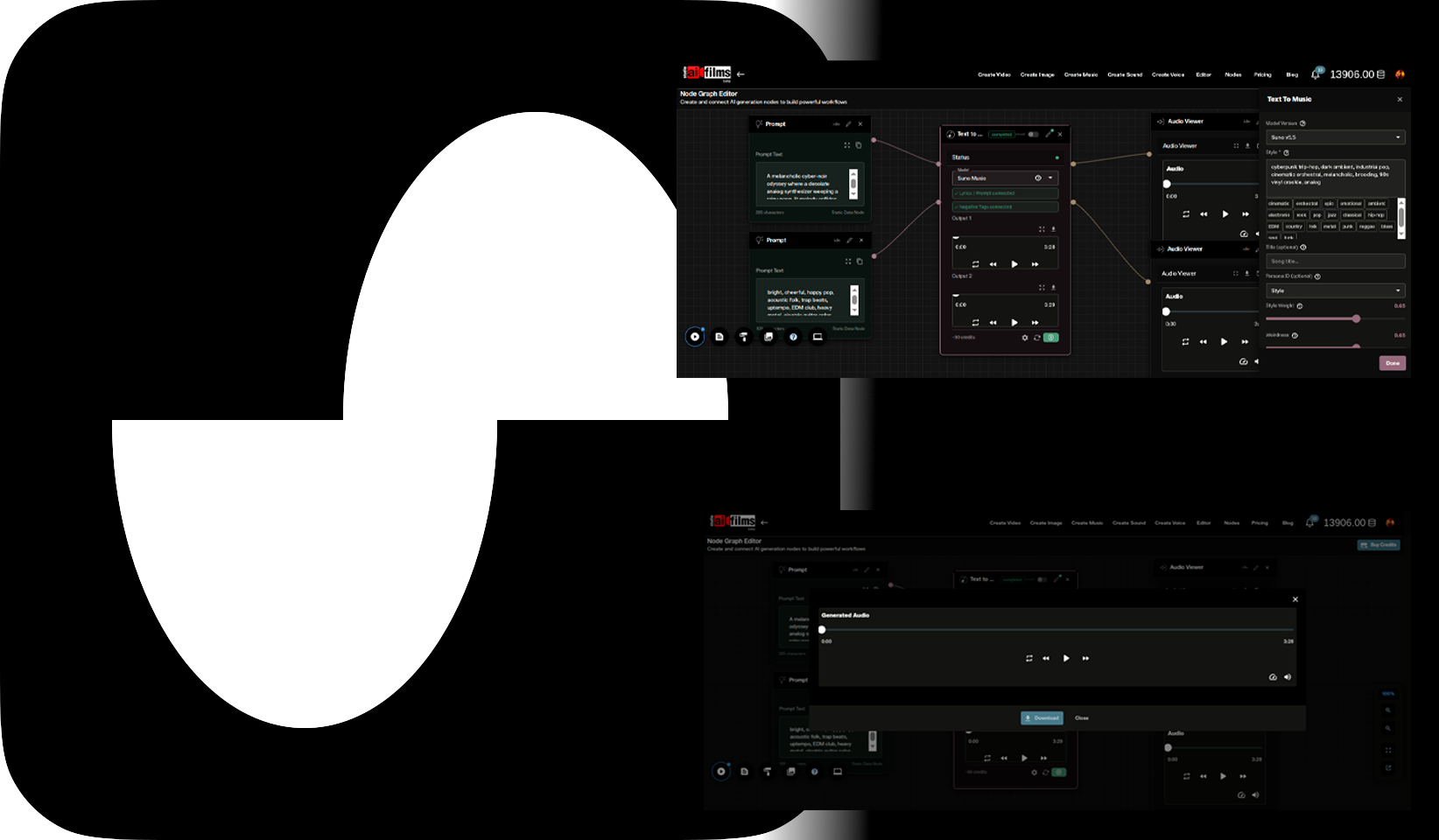
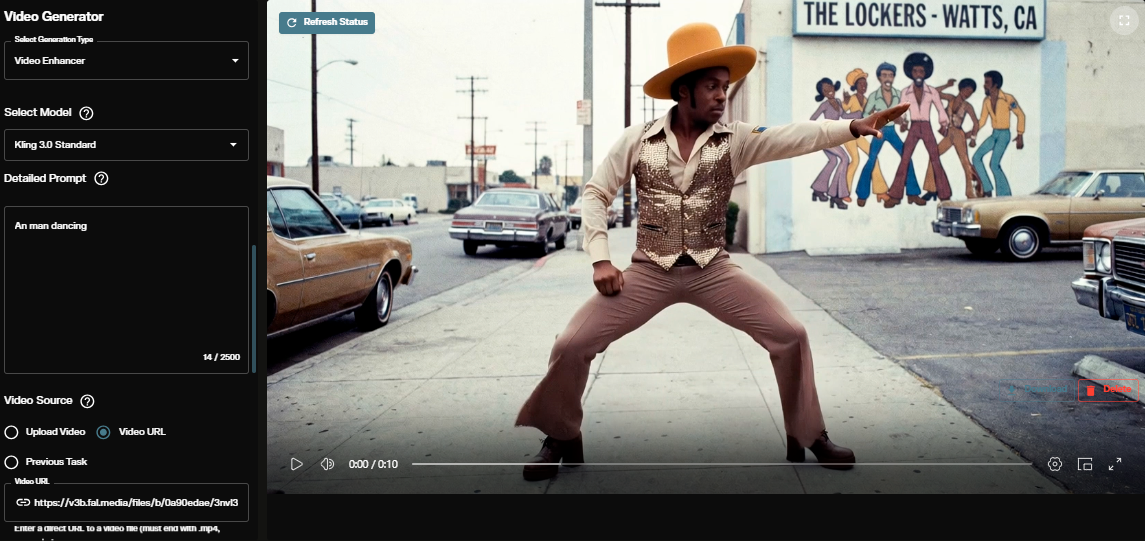
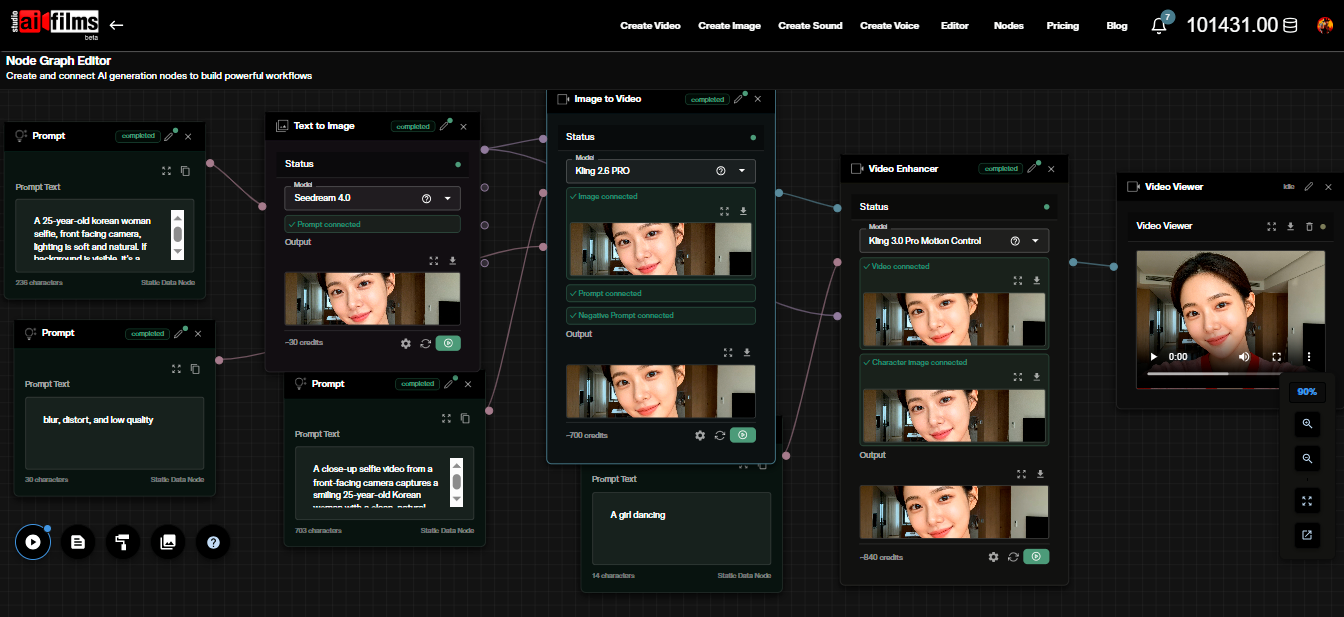
Filmmakers who want to generate tracks directly inside the browser without a local install can use Suno in the AI FILMS Studio music workspace. The step by step guide below covers every parameter.
Another MIT licensed option in the open source music space is ACE-Step 1.5 from ACE Studio and StepFun, which generates full songs in under two seconds on an A100 and outperforms Suno v5 on SongEval benchmarks.
Update (August 19, 2026): A second open weight option now covers speech as well as music and sound effects. MiDashengLM-Gen shipped under Apache 2.0 in August 2026 with a six field text brief format. Full story here.
Sources
Project Page: Meet Stable Audio 3 (Stability AI) HuggingFace: stabilityai/stable-audio-3-small-music · stabilityai/stable-audio-3-small-sfx · stabilityai/stable-audio-3-medium License: Stability AI Community License TechCrunch: Stability AI releases a new audio model that can create 6-minute songs Digital Music News: Stability AI Releases Stable Audio 3.0, Authorized Training Music Business Worldwide: Stability AI launches new audio models that can generate 6-minute music tracks
Continue Reading
.jpg?w=3840)


Video & LipSync
- Video Generator
- Text to Video
- Image to Video
- Start-End Frame to Video
- Draw to Video
- Motion Control
- Video Enhancer
- Video Upscaler
- Video Extend
- Video to Video LipSync
- Audio to Video LipSync
- Image to Video LipSync
- Video FaceSwap
- Seedance 2.5
- WAN 3.0
- Seedance 2
- FLUX 3
- Minimax H3
- Vidu Q3 Pro
- Grok Imagine Video 1.5
- Gemini Omni
- Google Veo 3.1
- Kling 3.0 Pro
- Luma Ray 3.2
- LTX 2.3
- Happy Horse 1.1
- Kling 3.0 Motion
- ByteDance Upscaler
- InfiniteTalk
- InsightFace
Image & Edit
- AI Character
- AI Actor
- Art Generator
- Text to Image
- Image to Image
- LoRA Image to Image
- Draw to Edit
- Image LoRA Training
- Remove Background
- Image Enhancer
- MidJourney 8.0
- Krea 2
- OpenAI GPT Image 2.0
- Nano Banana Pro Ultra
- Nano Banana 2 Lite
- Nano Banana Pro
- Minimax Image
- Clarity Pro
- Z-Image Turbo LoRA
- Krea 2 Turbo LoRA
- Z-Image LoRA Trainer
- Qwen Image LoRA Trainer
- Background Erase Network 2 (BEN2)