
Christopher Nolan Opens DGA Contract Talks With Studios
.jpg?w=3840&q=90)
HellaCinema, CC BY-SA 4.0, via Wikimedia Commons
Share this post:
Christopher Nolan Opens DGA Contract Talks With Studios
The Directors Guild of America formally opened contract talks with the Alliance of Motion Picture and Television Producers on May 11, 2026. The DGA is the last of Hollywood's three major creative guilds to enter negotiations this cycle, following deals completed by the WGA in April 2026 and SAG-AFTRA on May 2.
Three Demands on the Table
The DGA has entered talks with three stated priorities: job scarcity for members, the financial health of the guild's pension and health plan, and AI protections. Of the three, job scarcity is the most immediate concern for working directors and first assistant directors, who have seen a significant drop in available productions.
The AI question carries the most weight over time. Studios agreed with the WGA and SAG-AFTRA only to notify those unions if AI training becomes a revenue source. They have not agreed to determine what that training would be worth to the people whose work is used.
A Health Plan in Crisis
The DGA health plan lost $38.8 million in 2024, following a $4.6 million loss in 2023. The plan has already imposed benefit modifications on members, and the DGA has made higher employer contributions a firm demand going into these talks.
Nolan said employers have no option but to increase their contributions, calling it "just a fact of life." DGA executive director Russ Hollander has described the financial shortfall as the most urgent issue the union faces.
Nolan at the Table
Christopher Nolan was elected DGA president in late 2025 and has been preparing for this negotiation while directing "The Odyssey," currently in production. He is leading the union's bargaining committee in talks with the AMPTP.
Before formal talks began, Nolan outlined his three priorities for the DGA: AI protections, healthcare funding, and job preservation for members. His public profile gives the DGA's demands a platform well beyond the usual trade coverage of contract negotiations.
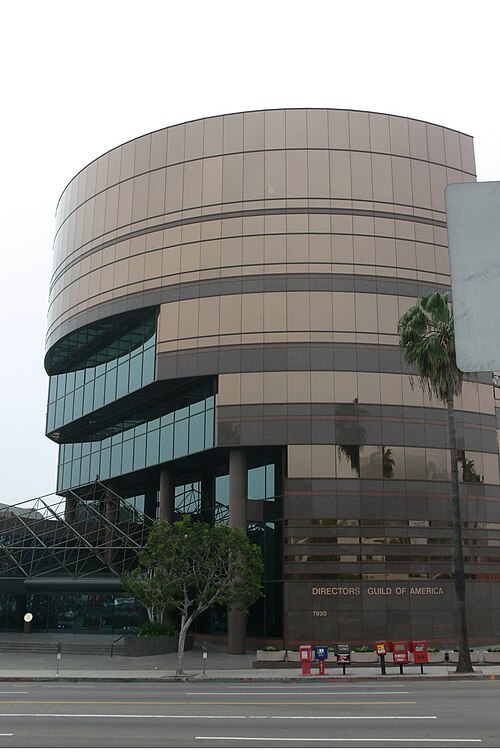
Mike Dillon (assumed), CC BY-SA 3.0, via Wikimedia Commons
The DGA opened talks as the last of Hollywood's three major guilds to enter the 2026 negotiating cycle. That sequencing matters. The WGA and SAG-AFTRA agreements set the terms the studios have already accepted, and the DGA is negotiating with full knowledge of those precedents on both sides of the table.
Nolan's position as a working director with a major production in progress adds a specific dimension to his role as bargaining committee chair. His decisions at the table are not purely representative. The contract he negotiates will directly govern the next phase of his own career.
The Road to a Deal
The DGA contract expires on June 30, 2026. The union is unlikely to accept the AMPTP's preferred five year term. Both the WGA and SAG-AFTRA signed four year contracts, and Nolan said before talks opened that the DGA would resist a longer commitment.
Both sides have signaled they expect a deal before the expiration date. The DGA has historically gone first in Hollywood labor cycles, setting the template that other guilds follow. This year the pattern reversed, with the WGA and SAG-AFTRA closing before the DGA opened.
What AI Protections Mean for Directors
The AI protections the DGA is seeking go beyond the notification agreements the WGA and SAG-AFTRA accepted. The DGA is asking for provisions that govern how a director's creative decisions can be used to train AI systems.
A director's body of work represents a codified visual language built over years of production choices. Camera placement, color treatment, pacing, and visual storytelling decisions are all learnable by AI systems from analysis of finished films. The DGA's negotiating position is that using that body of work to train AI models without consent or compensation is a rights issue comparable to using a writer's screenplay or an actor's performance.
The precedent from the WGA and SAG-AFTRA deals, which required only that studios notify those guilds if training becomes a revenue source, is the floor the DGA is building from. What the directors can negotiate beyond that notification baseline is the central question of the 2026 round.
The Job Scarcity Problem
Available productions for DGA members dropped significantly between 2022 and 2025 as studios absorbed losses from peak streaming spend. The contraction hit working directors and first assistant directors below the A-list hardest, as mid budget productions dried up faster than the high profile projects that continued regardless of market conditions.
First assistant directors are the operational backbone of any production. Their employment tracks production volume directly. Fewer productions means fewer FADs working, regardless of how active individual directors remain. That direct relationship between total production volume and working member employment is why job scarcity affects both categories the DGA represents under a single contract.
AI enters this calculation at the development and pre production stage. Projects that fail to get greenlit are often the ones with the thinnest commercial projections. Whether AI tools for audience analytics and pitch development shift which projects reach greenlight, and in which direction, will be partly answered by the production data the next several years accumulate.
The First AD Stakes
First assistant directors are the working population most directly affected by the job scarcity demand. A director of Nolan's stature does not depend on total production volume for employment. A first AD working across mid budget productions does. That disparity within the DGA's membership makes the job scarcity demand politically significant inside the union as well as at the bargaining table.
The DGA's bargaining committee represents both groups under a single negotiating framework. Agreement on any clause that touches job protection must account for the different ways those protections apply to a director producing one major project per year and a first AD who requires consistent volume across multiple productions each year.
The Historical Pattern This Cycle Broke
The DGA has traditionally gone first in Hollywood labor negotiations, setting a pattern the WGA and SAG-AFTRA follow. This cycle reversed that sequence entirely. The WGA and SAG-AFTRA both completed their 2026 agreements before the DGA opened its talks in May.
That reversal changes the DGA's negotiating position. Arriving last means arriving with full knowledge of what the studios agreed to elsewhere. It also means the studios have already made their arguments about what they can and cannot accept, and the DGA is negotiating against an established baseline rather than setting a fresh one.
For AI protections specifically, the late position cuts both ways. The DGA can argue that what the WGA and SAG-AFTRA accepted was insufficient and push for stronger provisions. The studios can argue they have already set the market rate for AI protections across two agreements and that the DGA should accept comparable terms.
How the DGA Contract Closes the Cycle
The 2026 Hollywood contract cycle is the first to address AI across all three major creative guilds simultaneously. The WGA agreement established that AI generated material cannot replace human writers without consent. SAG-AFTRA ratified provisions requiring that synthetic performers deliver "significant additional value" before substituting for live actors. What the DGA adds to that framework will define how AI affects the director's role specifically.
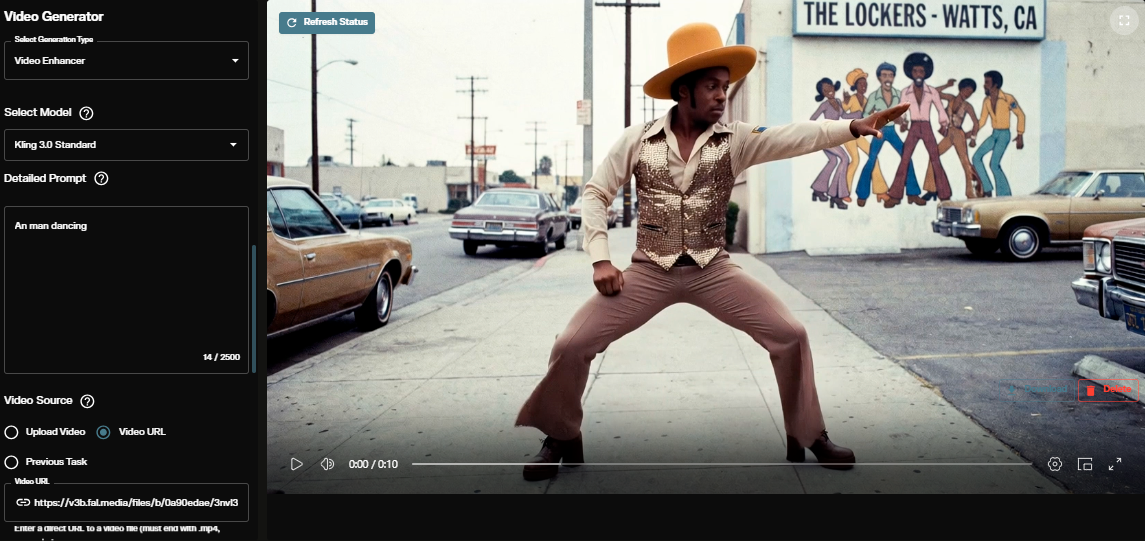
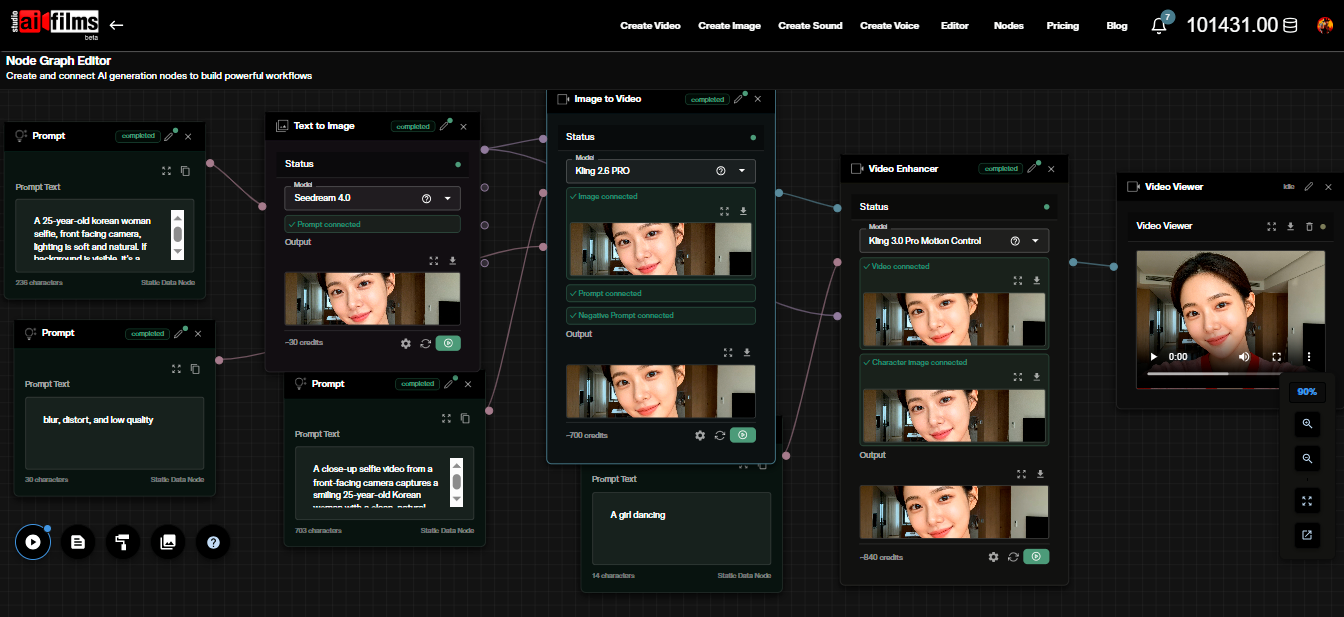
The original announcement of the May 11 start date outlined the schedule but not the specific AI proposals the DGA is bringing to the table. Those details will emerge as talks proceed. Independent filmmakers can access AI FILMS Studio to work with the AI tools now at the center of these negotiations, without the union rules that govern studio productions.
The AI Training Revenue Question
The WGA and SAG-AFTRA agreements require studios to notify those guilds if AI training on members' work becomes a revenue source. Neither agreement specifies what compensation looks like if that threshold is reached. The DGA is negotiating in that gap.
A notification requirement creates a record. It does not establish a rate, a consent mechanism, or a dispute resolution process for cases where the guild believes training revenue was generated without adequate disclosure. What the DGA pushes for beyond notification will determine whether the 2026 cycle actually addresses AI compensation or defers it to the next round.
The studios' position going in is that AI training is still in an exploratory phase and that locking in specific compensation structures before the revenue model is clear creates legal and commercial exposure they are unwilling to accept. The DGA's counterargument is that waiting until the revenue model is clear means waiting until the studios have established practices the union will then have to unwind.
The Five-Year Term Dispute
The AMPTP has proposed a five year contract term across the 2026 negotiating cycle. The WGA and SAG-AFTRA both agreed to four years, which the DGA is pointing to as the established market rate for this cycle.
A four year term is preferable to the DGA for the same reason the WGA and SAG-AFTRA accepted it. AI production tools are changing fast enough that a contract signed in 2026 will cover a different technological landscape by 2030. A five year term would extend DGA members' commitments into 2031 under terms negotiated with no knowledge of what the tools can do by then.
The studios' argument for five years is stability. Longer terms reduce the cost and disruption of repeated negotiating cycles and give productions more visibility into labor costs over the duration of their development slates. That argument is commercially coherent and does not resolve the DGA's concern about locking in AI terms for longer than the technology's development cycle.
What the Contract Means for Independent Film
DGA contracts govern productions that meet specific budget and scope thresholds. Independent productions below those thresholds operate outside the DGA's jurisdiction. The contract the DGA negotiates in 2026 will set the terms for studio productions but will not directly affect independent filmmakers who work outside the guild system.
That distinction matters for understanding which part of the AI filmmaking conversation the DGA negotiations actually address. The most aggressive AI production experiments are happening in independent productions that are not subject to DGA minimums, consultation requirements, or AI use restrictions. What the DGA negotiates governs what happens on studio productions with institutional infrastructure, not on solo director projects or small independent teams.
The indirect effect is a different matter. DGA contract terms influence what practices become standard across the industry over time. If the DGA establishes specific AI consent and compensation requirements for studio productions, those requirements tend to migrate into how the broader industry thinks about the same questions, even for productions not directly covered by the contract.
How AI Changes the Director's Leverage
Directors have historically commanded their leverage in negotiations from the combination of creative authority and scheduling control. A director with final cut and the ability to slow or accelerate a production calendar has specific power in a studio relationship that the DGA contract formalizes.
AI tools do not directly change either of those leverage sources. A director who uses AI for development work still controls the production calendar and the creative decisions during shooting. What AI changes is the cost of development work that a director previously had to fund from their own budget or negotiate into pre production deals.
That cost shift is actually favorable to directors in development. AI tools that reduce the cost of concept development, visual lookbooks, and pre production materials allow directors to develop more projects before committing to a production deal. The DGA's challenge is making sure that advantage is paired with protection against studios using the same tools to reduce what they pay for director development work.
The Outcome of 2026 Negotiations
Both sides entered talks expecting a deal before the June 30 contract expiration. The pattern from earlier 2026 guild negotiations, in which the WGA and SAG-AFTRA both reached agreements before their deadlines, created an environment where a DGA work stoppage was considered unlikely. The outstanding questions about AI protection scope, healthcare contribution levels, and contract term length were all identified before talks opened, allowing both sides to arrive with prepared positions rather than discovering their disagreements during negotiations.
The DGA contract that emerges from these talks will be the last major piece of the 2026 Hollywood labor settlement. Together with the WGA and SAG-AFTRA agreements, it defines the industry's formal position on AI for the next four years. What all three guilds collectively accepted or refused in 2026 will be the baseline from which the 2030 cycle begins.
Nolan's dual role, as a filmmaker actively working with AI in development on The Odyssey and as the union president negotiating AI terms on behalf of every director in the guild, makes him a more credible voice at the table than a DGA president without direct production experience of the tools at the center of the negotiation.
Sources
Variety | Deadline | The Hollywood Reporter
Continue Reading
.jpg?w=3840)


Video & LipSync
- Video Generator
- Text to Video
- Image to Video
- Start-End Frame to Video
- Draw to Video
- Motion Control
- Video Enhancer
- Video Upscaler
- Video Extend
- Video to Video LipSync
- Audio to Video LipSync
- Image to Video LipSync
- Video FaceSwap
- Seedance 2.5
- WAN 3.0
- Seedance 2
- FLUX 3
- Minimax H3
- Vidu Q3 Pro
- Grok Imagine Video 1.5
- Gemini Omni
- Google Veo 3.1
- Kling 3.0 Pro
- Luma Ray 3.2
- LTX 2.3
- Happy Horse 1.1
- Kling 3.0 Motion
- ByteDance Upscaler
- InfiniteTalk
- InsightFace
Image & Edit
- AI Character
- AI Actor
- Art Generator
- Text to Image
- Image to Image
- LoRA Image to Image
- Draw to Edit
- Image LoRA Training
- Remove Background
- Image Enhancer
- MidJourney 8.0
- Krea 2
- OpenAI GPT Image 2.0
- Nano Banana Pro Ultra
- Nano Banana 2 Lite
- Nano Banana Pro
- Minimax Image
- Clarity Pro
- Z-Image Turbo LoRA
- Krea 2 Turbo LoRA
- Z-Image LoRA Trainer
- Qwen Image LoRA Trainer
- Background Erase Network 2 (BEN2)