
Peter Chan: AI Will Replace Blockbuster Films Within Three Years
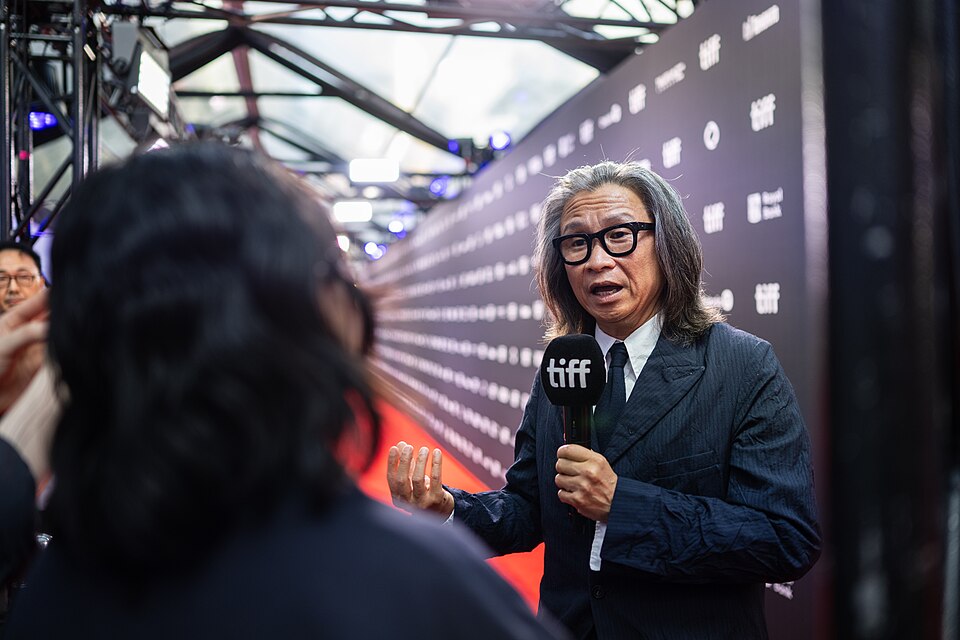
Gabriel Hutchinson, CC BY-SA 4.0, via Wikimedia Commons
Share this post:
Peter Chan: AI Will Replace Blockbuster Films Within Three Years
"Basically, AI can replace any blockbuster or commercial film in three years, I believe". Peter Chan Ho-sun, one of the most commercially successful directors in Chinese language cinema, delivered that verdict at the Hong Kong International Film and Television Market in March 2026. He was not predicting a distant future. He was describing a shift he believes is already underway.
Chan offered the timeline at a Filmart panel on international co-production, alongside Singapore director Anthony Chen and Janet Yang, the first Chinese American president of the Academy of Motion Picture Arts and Sciences. The panel covered industry fragmentation, audience behavior, and the specific threat AI poses to commercially oriented production.
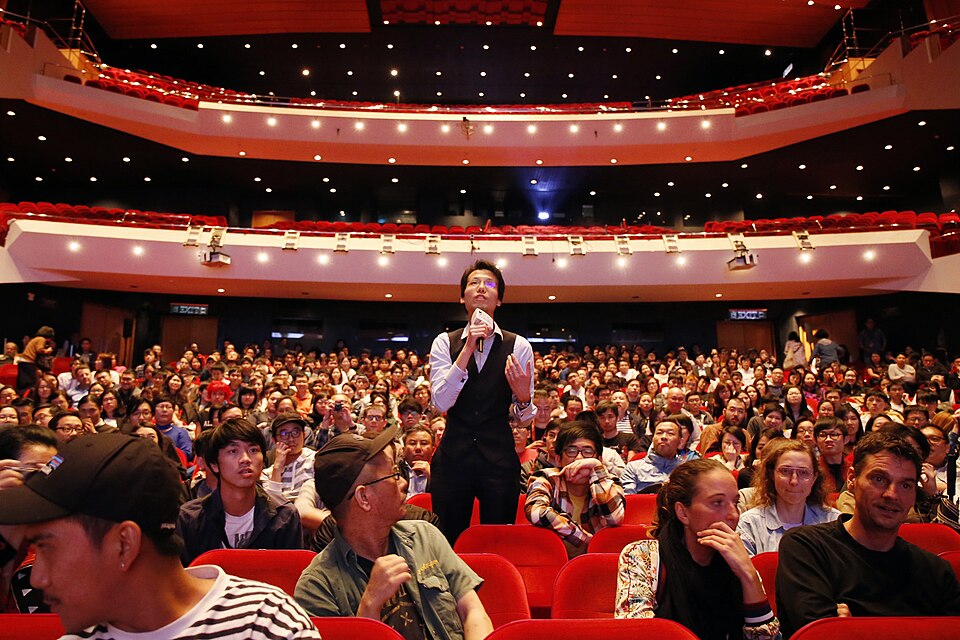
HKIFFMarketing, CC BY-SA 4.0, via Wikimedia Commons
Hong Kong International Film and Television Market is the largest film market in Asia and one of the largest in the world. Filmart 2026 drew buyers, distributors, and filmmakers from across the region at a moment when Chinese-language cinema is navigating both AI's cost implications and a consolidating theatrical market. Chan's remarks came in that specific context, not as a general observation about global film economics.
Peter Chan's Career as Context
Chan's authority on commercial filmmaking derives from a body of work that has operated across multiple registers of the Chinese language market. "Comrades: Almost a Love Story" (1996) won seven Hong Kong Film Awards and is regarded as one of the defining films of the decade. "Perhaps Love" (2005) was Hong Kong's submission for the Academy Award for Best Foreign Language Film. "Dearest" (2014) was a commercial drama about child abduction that grossed over $36 million in China.
That range, from critical prestige to mass commercial drama, gives Chan a vantage point on the market that directors working in only one category do not have. When he says AI will replace commercial blockbusters but not auteur cinema, he is not speculating about a category he has never occupied. He has made both types of film and understands the specific inputs that differentiate them.
The Distinction He Drew
Chan was precise about what AI can and cannot replace. "I don't think AI is an enemy to auteur film. But AI would be an enemy to mediocre blockbusters". The logic follows commercial production's structure: if a film exists to fulfill genre expectations, satisfy market testing, and hit demographic targets, an AI system can approximate that function at far lower cost.
Art house cinema, by contrast, depends on a filmmaker's individual observation of the world. Chan, whose films include "Comrades: Almost a Love Story", "Perhaps Love", and "Dearest", built his reputation on exactly that kind of observation. Personal cinema is, in his framing, the category AI cannot reach.
Big Data and the Industry's Mistake
Chan was equally direct about the industry habits that accelerated this vulnerability. He called reliance on big data "one of the dirtiest words I've ever heard for creative people", pointing to a cycle in which studios replaced creative judgment with audience analytics and produced films that now have no advantage over what an AI system can generate from the same inputs.
"Those days of the blockbusters are gone", he said. The franchise model and the commercial calculation behind it are, in Chan's reading, the precise characteristics that make a film type susceptible to AI replacement.
The Three Year Timeline
Chan's three-year prediction places the commercial blockbuster's displacement in 2029. The timeline is rooted in a specific argument about cost, not capability. AI does not need to surpass human directed blockbusters in artistic quality to displace them commercially. It needs to be good enough at fulfilling genre expectations at a price point that undercuts conventional production economics.
The cost curves in AI video generation support the timeline. Generation quality for action sequences, crowd scenes, and digital environments has improved substantially in each of the past three years. The gap between what AI can produce and what a $150 million blockbuster produces is narrowing faster than the gap between AI and auteur cinema, which depends on human specificity rather than production scale.
Which Blockbuster Genres Face the Most Pressure
Chan did not specify which genres face the earliest displacement, but the logic of his argument points to categories where AI can most easily approximate the core product. Action blockbusters built on spectacle rather than character, disaster films, franchise sequels driven by IP recognition rather than narrative novelty, and genre films satisfying predictable formula expectations are all more susceptible than films whose commercial appeal depends on a specific performer or a director's singular vision.
Films where the audience is primarily buying a visual experience at scale, the kind of film where the marketing centers on the destruction, the chase, or the battle sequence, are the clearest near-term targets. Films where the audience is buying a performance by a specific actor or a story from a specific filmmaker are not, because those elements cannot be replicated by generating similar looking footage.
Jia Zhangke's position at the same market offers a contrast. The filmmaker behind "Platform", "Still Life", and "Ash Is Purest White" approached AI as a creative tool to explore rather than a threat to manage. He presented AI shorts made with Seedance 2.0 and Kling and described facing new technology "without making premature judgments". Chan's alarm and Jia's curiosity occupied the same hall.
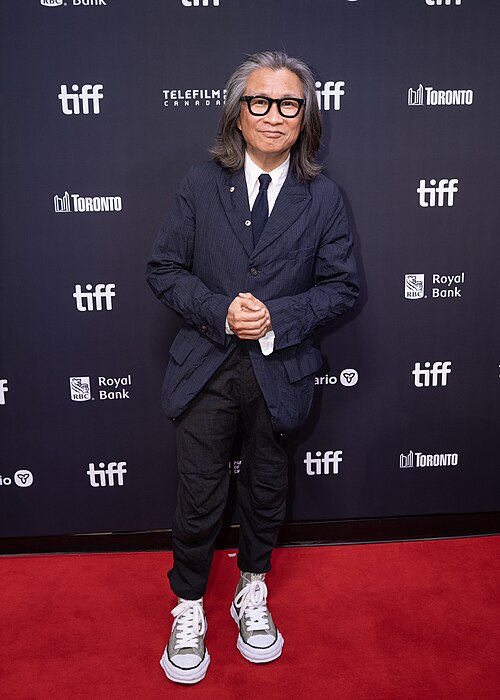
Gabriel Hutchinson, CC BY-SA 4.0, via Wikimedia Commons
Filmart 2026: A Different Register
Chan's remarks came at one of 28 sessions devoted to AI at the market. The Hollywood Reporter described AI as having "virtually taken over Filmart", a stark contrast with the labor driven AI debates in Hollywood, where guild protections and contract negotiations dominate the conversation.
The same event produced a very different kind of statement from Chinese director Jia Zhangke, who presented AI shorts made with Seedance 2.0 and Kling and described facing new technology "without making premature judgments". Chan's alarm and Jia's curiosity occupied the same hall. Both agreed the technology would not replace their own kind of filmmaking.
The 28 AI Sessions at Filmart
The volume of AI sessions at Filmart 2026 is itself a data point. The 28 sessions covered a range of topics from AI production tools to distribution economics to co-production structures that incorporate AI stages. No single previous Filmart had dedicated that proportion of its programming to a specific technology.
The Hong Kong market's AI programming reflected the Chinese industry's position: ahead of Hollywood in treating AI as a production variable rather than a labor relations problem, and more focused on the economic opportunity than the workforce implications. Sessions at Filmart 2026 addressed AI applications across every stage of the production pipeline, from development to post, with the heaviest concentration on visual effects and production design.
Hong Kong Cinema's Specific Position
Hong Kong cinema occupies a particular position in the AI transition. The industry has contracted significantly since its peak in the 1980s and 1990s, when it was the third largest film producer globally. The current Hong Kong market is smaller, more integrated with mainland China's commercial system, and more dependent on co-production structures than on a standalone domestic theatrical market.
That position makes AI adoption both more urgent and more accessible than in Hollywood. The cost pressure to find ways to produce commercially viable content at lower budgets is higher. The absence of a strong guild system equivalent to SAG-AFTRA or the WGA means that AI adoption faces fewer formal institutional constraints. The speed at which Filmart 2026's programming reflected operational AI use, rather than theoretical discussion, is consistent with that structural difference.
Anthony Chen's Position as a Contrast
Singapore director Anthony Chen offered a different perspective on the same panel. Chan comes from Hong Kong commercial cinema, which has always operated with an eye on the mass market. Chen, whose films include "Ilo Ilo" and "Drift", works in a more personal register. The two directors framing AI from different points on the commercial-to-personal spectrum gave the panel a more complete picture of how the industry is processing the technology.
Chen's presence also reflected the Southeast Asian dimension of the AI filmmaking conversation. Singapore's film industry is small but well-funded and internationally connected. Its directors often co-produce with European and North American partners. That position in the co-production market gives Southeast Asian filmmakers a specific angle on AI. Tools that reduce the cost barrier for co-productions increase the range of projects that become viable.
The Broader Chinese Cinema Context
Chan's remarks landed in a Chinese-language film market that has been contracting since its 2021 peak. The mainland Chinese box office, which reached 47 billion yuan in 2021, fell significantly over subsequent years before beginning a partial recovery in 2024 and 2025. That contraction was not caused by AI but by a combination of platform competition, content quality issues, and shifting audience behavior. Chan's argument is that AI will accelerate the displacement of the type of content most associated with the market's boom period.
That context shapes how his prediction should be read. He is not predicting that AI will replace cinema generally. He is predicting that the specific type of high-budget, data-driven commercial production that dominated the Chinese market's growth years will lose its cost advantage relative to AI-generated content within three years. For the producers and distributors in the Filmart audience who built their businesses on that model, the prediction has immediate strategic implications.
Janet Yang's Position on the Panel
Janet Yang's presence on the Filmart panel alongside Chan and Anthony Chen gave the discussion an Academy dimension that Asian film panels rarely carry. As the first Chinese American president of the Academy of Motion Picture Arts and Sciences, Yang occupies a position where AI policy decisions affect how films from every market are evaluated for awards consideration.
Yang has been careful in public statements about AI, neither endorsing wholesale adoption nor opposing AI tools as a category. Her participation in the Filmart panel suggests that the Academy's leadership is listening to how Asian filmmakers are framing the AI question, not only how Hollywood directors and guild leaders are framing it. The international perspective from a market where AI adoption is faster and labor constraints are different is relevant data for anyone designing global policy around AI in filmmaking.
What Chan's Analysis Implies for Co-Productions
The international co-production context of the Filmart panel is significant for how Chan's prediction lands. International co-productions between Asian and Western studios typically sit in the commercial middle ground. They are produced for markets on both sides of the Pacific, often carrying elements of franchise IP or genre formulas designed to travel across cultures.
That is precisely the category Chan describes as most vulnerable. A co-production built around satisfying predictable market expectations in multiple territories is a more expensive version of the commercial formula film he says AI can replace. The producers and distributors in the Filmart audience who most need to think about Chan's timeline are likely the ones financing the commercial co-productions that currently fill that market.
Chan's Previous Statements on the Industry's Future
Chan's Filmart 2026 remarks are not an isolated pronouncement. He has made compatible observations about the commercial film industry's structural fragility at multiple industry events over the past three years, each time framing the vulnerability of formula filmmaking as a long running problem that AI is accelerating rather than creating from scratch.
His consistency on this argument gives the three-year prediction more weight than a one-time conference remark would carry. He has been building toward this conclusion publicly for several years and arrived at the three-year timeline through a process of observation rather than reacting to a single development. Industry observers who have tracked his statements describe the Filmart position as the most specific and concrete articulation of a view he has held for some time.
The View From Hollywood
Western directors have largely framed AI as a tool question rather than an industry structure question. Kathleen Kennedy has questioned whether AI generated work can achieve what she considers great filmmaking. Carlos Saldanha brought a comparable director's perspective to Busan, focused on the creative choices that separate human from machine production.
Chan's framing is more structural. He is not primarily concerned with whether AI can be creative. He is arguing that the commercial film industry organized itself around criteria that AI can now satisfy more cheaply. The guild negotiations now underway in Hollywood, including the DGA contract talks opening May 11, are in part a response to the same structural shift Chan described.
Chan's three-year prediction and Jia Zhangke's openness to AI experimentation represent two different responses to the same set of tools arriving at the same time. Both responses are coherent given each filmmaker's body of work and commercial position. The productive question for producers and distributors watching the Filmart conversation is not which filmmaker is right but what each response implies for their own strategic decisions over the next three years.
The 2029 timeline Chan identified is now a reference point in Hong Kong and mainland Chinese production circles. Directors and financiers who attended Filmart 2026 are working backward from that date when evaluating which projects to greenlight and which production models to invest in building.
For filmmakers who want to work with AI video generation now, outside the commercial production system, AI FILMS Studio offers text-to-video and image-to-video tools that do not require studio infrastructure.
Sources
Variety | Deadline | The Hollywood Reporter
Continue Reading
.jpg?w=3840)


Video & LipSync
- Video Generator
- Text to Video
- Image to Video
- Start-End Frame to Video
- Draw to Video
- Motion Control
- Video Enhancer
- Video Upscaler
- Video to Video LipSync
- Audio to Video LipSync
- Image to Video LipSync
- Video FaceSwap
- Seedance 2.5
- WAN 3.0
- Seedance 2
- FLUX 3
- Minimax H3
- Vidu Q3 Pro
- Grok Imagine Video 1.5
- Gemini Omni
- Google Veo 3.1
- Kling 3.0 Pro
- Luma Ray 3.2
- LTX 2.3
- Happy Horse 1.1
- Kling 3.0 Motion
- ByteDance Upscaler
- InfiniteTalk
- InsightFace
Image & Edit
- AI Character
- AI Actor
- Art Generator
- Text to Image
- Image to Image
- LoRA Image to Image
- Draw to Edit
- Image LoRA Training
- Remove Background
- Image Enhancer
- MidJourney 8.0
- Krea 2
- OpenAI GPT Image 2.0
- Nano Banana Pro Ultra
- Nano Banana 2 Lite
- Nano Banana Pro
- Minimax Image
- Clarity Pro
- Z-Image Turbo LoRA
- Krea 2 Turbo LoRA
- Z-Image LoRA Trainer
- Qwen Image LoRA Trainer
- Background Erase Network 2 (BEN2)