
Kuaishou Plans $20 Billion Spinoff of Kling AI Video Unit
.jpg?w=3840&q=90)
Share this post:
Kuaishou Plans $20 Billion Spinoff of Kling AI Video Unit
Kuaishou Technology is evaluating a spinoff of its Kling AI video unit at a valuation of approximately $20 billion, according to reporting from South China Morning Post, The Information, and Caixin Global. The company confirmed the proposal in a Hong Kong Stock Exchange filing, stating it is "assessing a proposal to restructure Kling" while noting negotiations remain preliminary and no agreements have been signed.
The Restructuring Plan
Kuaishou is seeking roughly $2 billion in pre-IPO funding ahead of a planned 2027 Kling IPO.
The $2 billion pre-IPO raise would give Kling approximately 10 percent of its target valuation in working capital before listing. Pre-IPO rounds at this stage typically involve growth equity firms and sovereign wealth funds rather than venture capital, because the risk profile of a pre-IPO business is different from an early-stage startup. Tencent's reported involvement places a strategic investor in the cap table rather than a purely financial one. Tencent and Kuaishou have a long-standing relationship: Tencent was an early investor in Kuaishou and remains a significant shareholder in the parent company. Placing Tencent in the Kling pre-IPO round extends that relationship into the spinoff structure. Tencent Holdings is among the investors being approached, according to The Information. A standalone Kling entity would give the AI video unit its own capitalization and allow institutional investors to take a direct position in AI generated video.
The confirmation arrived through regulatory channels. Kuaishou filed an acknowledgment with the Hong Kong Stock Exchange after market reports crossed the threshold requiring a formal response, which means the disclosure is obligatory rather than promotional.
Revenue Growth Behind the Valuation
Kling is running at an annualized revenue rate of $500 million, according to The Information. That figure is roughly double the platform's revenue rate before the Lunar New Year holiday earlier in 2026, indicating the acceleration is recent and steep.
The Lunar New Year period in early 2026 produced a significant spike in AI video generation demand in China, as consumer adoption of Kling accelerated during the holiday period when new content creation peaks. The doubling from that baseline to $500 million ARR over the following months reflects sustained growth rather than a holiday spike that subsequently faded. The pace of that growth after the holiday normalization is what supports the $20 billion valuation target.
The $20 billion target implies a multiple on revenue consistent with high growth AI infrastructure companies rather than traditional software. The enterprise revenue stream, spanning advertising production, animation, gaming, and film workflows, is what supports that multiple. Consumer subscription revenue alone would not justify the valuation.
What $500 Million ARR Means for the AI Video Market
$500 million in annualized revenue from AI video generation is the first publicly disclosed figure at that scale. Most AI video platforms have not released revenue figures. Runway, Pika, and Hailuo have disclosed user numbers and funding rounds but not revenue run rates.
Kling's revenue comes primarily from enterprise contracts rather than consumer subscriptions. Enterprise clients in advertising, animation, gaming, and film production pay for volume, reliability, and dedicated API access at rates that individual subscriptions do not match. The 30,000 enterprise client figure explains the revenue more directly than the 60 million total creator count.
The $20 billion valuation at $500 million in ARR implies a 40x revenue multiple. That multiple is consistent with high growth AI infrastructure companies that are expanding revenue quickly enough to justify pricing the future rather than the present. Whether the 2027 IPO can sustain that multiple depends on whether the doubling pace from early 2026 continues through the listing.
Who Uses Kling for Film Production
Enterprise clients in film production use Kling primarily for three tasks: generating background environments for scenes with insufficient location coverage, creating establishing shots of locations that are either prohibitively expensive or unavailable, and generating digital doubles for action sequences where a performer's safety or availability limits what can be physically captured.
At 1080p and three minutes of continuous output per generation, Kling 3.0's capabilities are sufficient for these use cases in productions distributed digitally. Theatrical exhibition at 4K requires additional upscaling, which is handled by separate upscaling pipelines downstream of Kling generation. Character consistency using a reference image is the feature most frequently cited by production teams, because it allows the same character to appear across multiple generated shots without rebuilding the character description for each individual generation.
The Stock Market's Response
Kuaishou shares surged as much as 10% on the Hong Kong Stock Exchange on May 12 before settling at a gain of 3.49%, closing at HK$53.4. The move reflects market confidence that separating Kling from the broader Kuaishou business would unlock value currently embedded in the parent company's stock.
A subsidiary IPO creates a direct investment vehicle for funds that want exposure specifically to AI video generation without taking on the full risk profile of Kuaishou's broader short video and social commerce business. Kuaishou's valuation includes businesses with very different growth profiles from Kling: a short video platform in a competitive domestic market, an e-commerce livestreaming operation, and a suite of other technology products.
Investor interest in AI video as a standalone category has grown steadily in 2026 as platforms move from demo usage to billing real enterprise clients. A defined IPO timeline gives funds a way to price and hold that exposure directly.
,_Hong_Kong_Stock_Exchange,_Hong_Kong_SAR,_China_(Ank_Kumar,_Infosys_Limited)_04.jpg)
Ank Kumar, CC BY-SA 4.0, via Wikimedia Commons
Kling's Scale in the Creator Economy
Kling has reached 60 million creators, 600 million videos generated, and more than 30,000 enterprise clients as of May 2026. The enterprise base spans advertising agencies, animation studios, gaming companies, and film production teams.
Enterprise penetration at that scale is what separates Kling from competing platforms with larger consumer audiences but thinner commercial revenue. Advertising and film production clients pay for volume and reliability at a level consumer subscriptions do not match.
Kuaishou's research division built toward this commercial position over several years. The VideoCanvas unified video generation system, developed by Kuaishou's Kling team alongside researchers from the Chinese University of Hong Kong, demonstrated the technical foundation before Kling's commercial expansion.
Kling's Technical Capabilities in 2026
Kling 3.0 supports video generation at up to 1080p resolution at 24 FPS with up to three minutes of continuous output per generation. The platform's character consistency capability allows a subject to be maintained across multiple shots using a reference image, which is the feature most directly applicable to narrative film production.
Motion control in Kling 3.0 enables motion transfer from a reference video onto a new character, which means a production team can capture reference footage of a stunt or movement and apply it to a generated character rather than relying entirely on text description. This puts Kling in a different category from pure text-to-video models for productions that require controlled performance.
Kling 3.0 Feature Set in Production Context
Kling 3.0 supports video generation at 1080p and 24 FPS with up to three minutes of continuous output. At that length and resolution, a single generation can produce an entire scene, not just a clip. Three minutes at 24 FPS is 4,320 individual frames, enough to cover a standard dramatic scene with multiple beats.
The character consistency feature using a reference image allows a subject established in one generation to appear in subsequent generations without re-describing their appearance in each prompt. For productions building episodic or multi-scene AI content, character consistency is the capability that makes continuity possible at a pace the production timeline requires. Kling's motion transfer feature, which applies captured reference motion to a generated character, extends this further: a single physical performance can be applied across multiple generated characters in multiple generated environments.
What Happens to Kling After the Spinoff
A standalone Kling entity has different strategic options from a business unit within Kuaishou. It can pursue acquisitions without requiring Kuaishou's approval, negotiate platform integrations on its own terms, and raise additional capital without diluting Kuaishou shareholders. It also becomes a target for acquisition itself: a $20 billion AI video company with $500 million in ARR and a clear 2027 IPO timeline is the kind of asset that large technology companies with AI strategy gaps would consider acquiring.
That acquisition scenario is one reason the spinoff structure includes pre-IPO rather than simply proceeding to listing immediately. A pre-IPO raise at a defined valuation gives Kling a market price anchor that disciplines any acquisition conversation. A suitor cannot offer below $20 billion without triggering the IPO option as the more attractive alternative.
The Competitive Context
The spinoff plan arrives as AI video generation consolidates around a small number of platforms with real revenue. ByteDance suspended the global launch of Seedance 2.0 in March 2026 under copyright pressure from Hollywood studios, leaving a market gap that Kling and a handful of Western competitors are now absorbing.
A standalone Kling at $20 billion would rank among the most valuable AI video companies in the world. Runway, its closest Western competitor by filmmaker adoption, has not disclosed comparable revenue figures publicly.
The Chinese AI Video Market in Context
Kling's spinoff plan arrives at a moment when Chinese AI companies are competing directly with US platforms for global enterprise contracts. Sora, Runway, and Pika are Kling's main Western competitors by filmmaker adoption. Each has disclosed funding but not revenue. Kling's published $500 million ARR figure is the first revenue metric in the AI video generation space that allows a direct comparison to conventional software multiples.
The Chinese government has provided regulatory support for domestic AI development that Western competitors do not have. Data localization requirements that affect Western platforms in China have not limited Kling's international expansion. The platform operates in both Chinese and international markets simultaneously, which gives it a larger total addressable market than a platform restricted to one regulatory environment.
What a 2027 IPO Window Means for Kling's Roadmap
A 2027 IPO target requires completing approximately 12 to 18 months of pre-IPO preparation: audits, governance formalization, a defined corporate structure for the standalone entity, and the $2 billion pre-IPO raise that Kuaishou is currently seeking. The listing is planned for Hong Kong, which has a track record with Chinese technology companies and is accessible to both mainland Chinese and international institutional investors.
The IPO timeline creates pressure to demonstrate continuing revenue growth between now and listing. An ARR that doubles in the first half of 2026 needs to show a credible trajectory by the time the prospectus is filed. That pressure will shape which product features and enterprise sales efforts Kling prioritizes through 2026.
The Consumer Subscription Model and Its Limits
Kling's 60 million creator count reflects consumer subscription adoption. The consumer tier provides metered access to generation capacity, priced at levels where individuals and small teams can use it for personal and small commercial projects. Consumer subscriptions at $10-30 per month generate revenue volume through scale, not per-seat value.
Enterprise contracts function differently. A single enterprise client in advertising or film production pays for dedicated API access, volume generation capacity, and integration support at rates that represent a much higher per-seat value than consumer subscriptions. The 30,000 enterprise client figure driving the $500 million ARR is a small fraction of the user base by count but the large majority of the revenue.
This structure is common in AI platform businesses: a large consumer base provides training signal, model improvement data, and market visibility, while a smaller enterprise base generates the revenue that justifies the valuation. Kling's ratio of 60 million consumers to 30,000 enterprise clients is consistent with that model.
Kling for Filmmakers
The revenue and creator figures reflect what practitioners in AI film production have observed directly: Kling's motion quality, physics fidelity, and scene control have reached a level where they belong in production workflows, not just demonstrations.
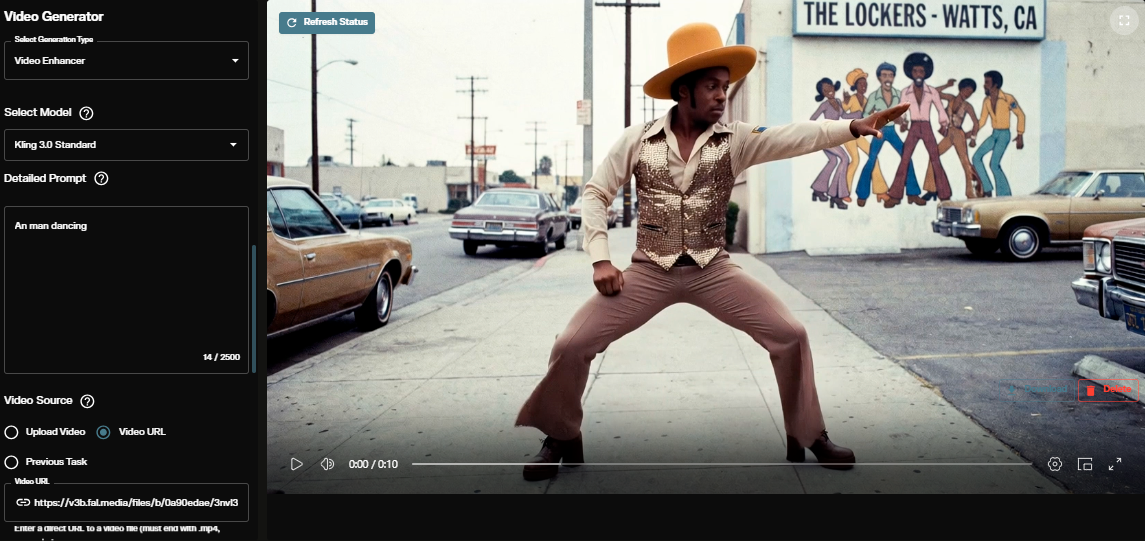
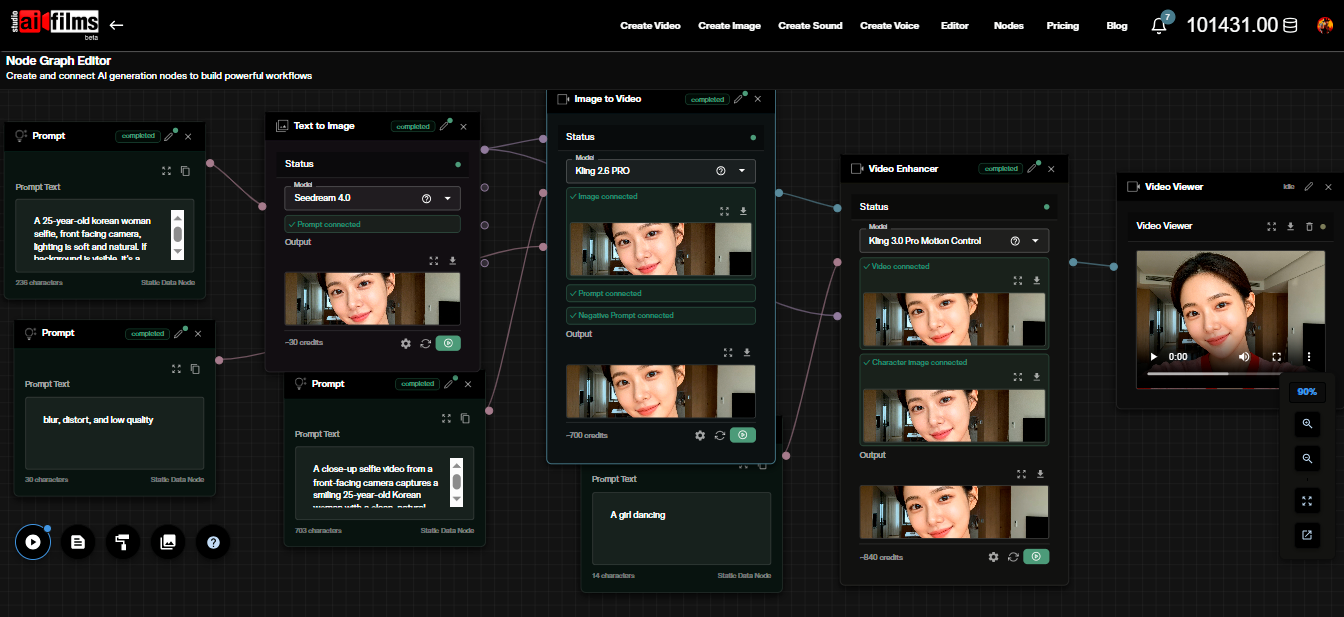
Filmmakers working with Kling through the AI FILMS Studio video workspace can start with the Kling 3.0 and O1 video generation tutorial, which covers text-to-video, image-to-video, and start and end frame generation. The Kling 3.0 Motion Control tutorial covers motion transfer from a reference video onto a new character, one of the platform's most used enterprise features.
The Kling team continued their AI filmmaking research in June 2026, publishing OmniDirector, an open source method for cloning camera motions from reference videos to animate static images under the MIT license.
The Tencent Relationship and What a Strategic Investor Changes
Tencent is not a passive financial investor in Kuaishou. It holds a significant equity stake in the parent company and has commercial relationships across multiple Kuaishou business lines. Placing Tencent in the Kling pre-IPO round extends that relationship into the spinoff structure, which means Kling's cap table at listing will include a shareholder with distribution reach across WeChat, QQ Video, and the Tencent Games ecosystem.
That distribution relationship matters specifically for Kling's enterprise business. An advertising agency using Kling to generate video assets for a WeChat campaign has a direct connection between the generation tool and the distribution platform if Tencent holds equity in both. Enterprise clients who run media campaigns across Tencent properties have a commercial reason to prefer a vendor that Tencent has underwritten. Whether Tencent's participation produces formal distribution integrations or simply market credibility, the effect on enterprise sales pipeline is the same.
Sources
South China Morning Post | The Information | Caixin Global | TechNode
Continue Reading
.jpg?w=3840)


Video & LipSync
- Video Generator
- Text to Video
- Image to Video
- Start-End Frame to Video
- Draw to Video
- Motion Control
- Video Enhancer
- Video Upscaler
- Video Extend
- Video to Video LipSync
- Audio to Video LipSync
- Image to Video LipSync
- Video FaceSwap
- Seedance 2.5
- WAN 3.0
- Seedance 2
- FLUX 3
- Minimax H3
- Vidu Q3 Pro
- Grok Imagine Video 1.5
- Gemini Omni
- Google Veo 3.1
- Kling 3.0 Pro
- Luma Ray 3.2
- LTX 2.3
- Happy Horse 1.1
- Kling 3.0 Motion
- ByteDance Upscaler
- InfiniteTalk
- InsightFace
Image & Edit
- AI Character
- AI Actor
- Art Generator
- Text to Image
- Image to Image
- LoRA Image to Image
- Draw to Edit
- Image LoRA Training
- Remove Background
- Image Enhancer
- MidJourney 8.0
- Krea 2
- OpenAI GPT Image 2.0
- Nano Banana Pro Ultra
- Nano Banana 2 Lite
- Nano Banana Pro
- Minimax Image
- Clarity Pro
- Z-Image Turbo LoRA
- Krea 2 Turbo LoRA
- Z-Image LoRA Trainer
- Qwen Image LoRA Trainer
- Background Erase Network 2 (BEN2)