

Character reference sheet example from MiniMax-H3 Character Swap Space (akatz-ai)
Share this post:
MiniMax-H3 Character Swap: Open Source Video Recast
Replacing a live performer inside an existing video plate without losing their timing, gaze, or scene lighting has traditionally required motion capture suits and full 3D character rigs. MiniMax-H3 Character Swap LoRA (akatz-ai/MiniMax-H3-Character-Swap-LoRA), which crossed 128,000 downloads on Hugging Face since late September 2026, adapts the open weights MiniMax-H3 Ref2VA video foundation model for direct video-to-video character replacement. The recommended V1.5 checkpoint swaps a target person in <Video 1> with any character from <Picture 1> while keeping the background, camera motion, and other actors intact. You can test this open source model free in your browser below with zero login.
Studio availability. Try the public Hugging Face demo below; MiniMax-H3 Character Swap LoRA is not part of a paid AI FILMS Studio plan (use MiniMax H3 Image to Video in the video workspace for example instead).
Try MiniMax-H3 Character Swap Live
Upload a short source performance video and a character reference image in the public Space below to preview identity preservation and pose transfer directly in your browser.
Architecture and Technical Design
MiniMax-H3 Character Swap is a model only LoRA adapter trained on top of the MiniMax-H3 Ref2VA (Reference to Video and Audio) architecture. Instead of running face only 2D warping, the adapter injects reference identity tokens into the joint spatiotemporal attention layers so the new character inherits full head geometry, hair physics, wardrobe silhouette, and lighting response from the source shot.
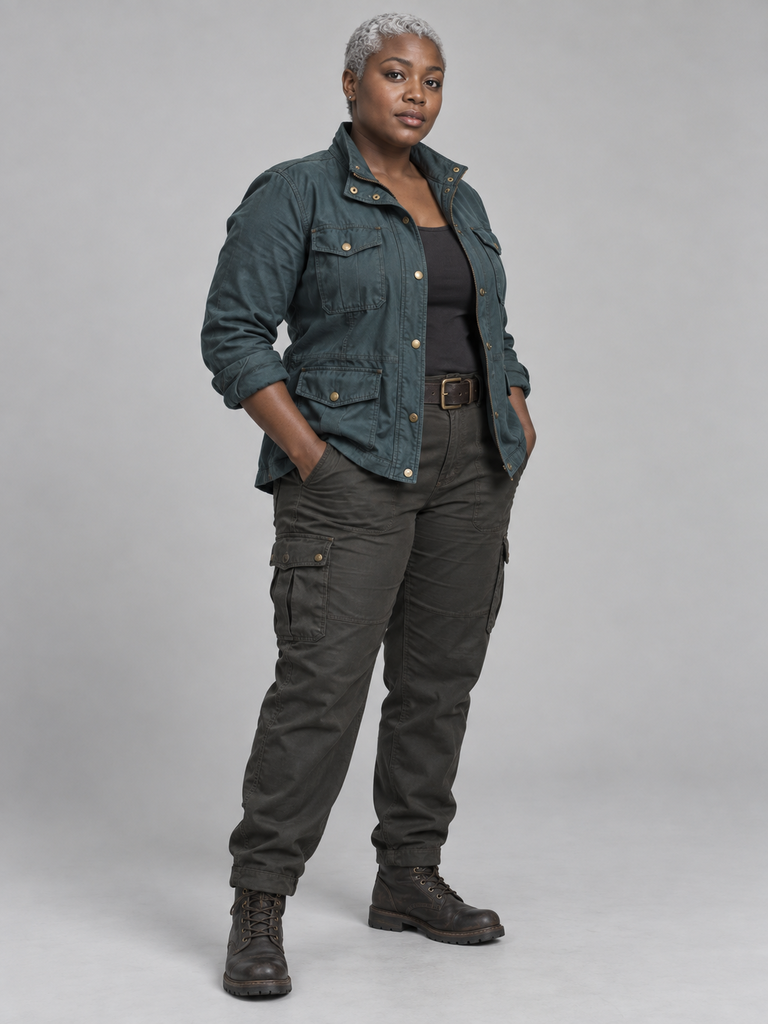
Photorealistic character reference input from MiniMax-H3 Character Swap Space
Version 1.5 (h3_character_swap_v1.5.safetensors) improves identity lock on difficult head turns and stylized designs compared to the initial V1 release (h3_character_swap_pro4500_1000.safetensors). Where V1 occasionally drifted back toward the source actor's facial proportions mid clip, V1.5 holds the reference face, hairstyle, and outfit more consistently across continuous 24 fps shots.
The tested production recipe pairs the Ref2VA INT8 base checkpoint with the V1.5 character adapter at strength 1.0 and an 8 step Turbo acceleration LoRA at strength 1.0, running in just 8 steps with CFG = 1.0.
The accompanying H3 Relay 2.0 toolchain (github.com/akatz-ai/h3-relay) adds SAM segmentation masking, optional scene anchors, source audio passthrough, and continuation windows for extending character swaps across longer beats.
Because the adapter operates inside a full video diffusion backbone, it handles both photorealistic actor recasting and stylized animated characters driven by live action reference performances. Directors can shoot rough blocking on a smartphone with stand in actors, then recast the clip into an illustrated hero or costume variant without reshoots.
Keep in mind that original source audio is retained as a passthrough export feature by the host tool rather than regenerated with exact phonetic lip sync by the LoRA itself.
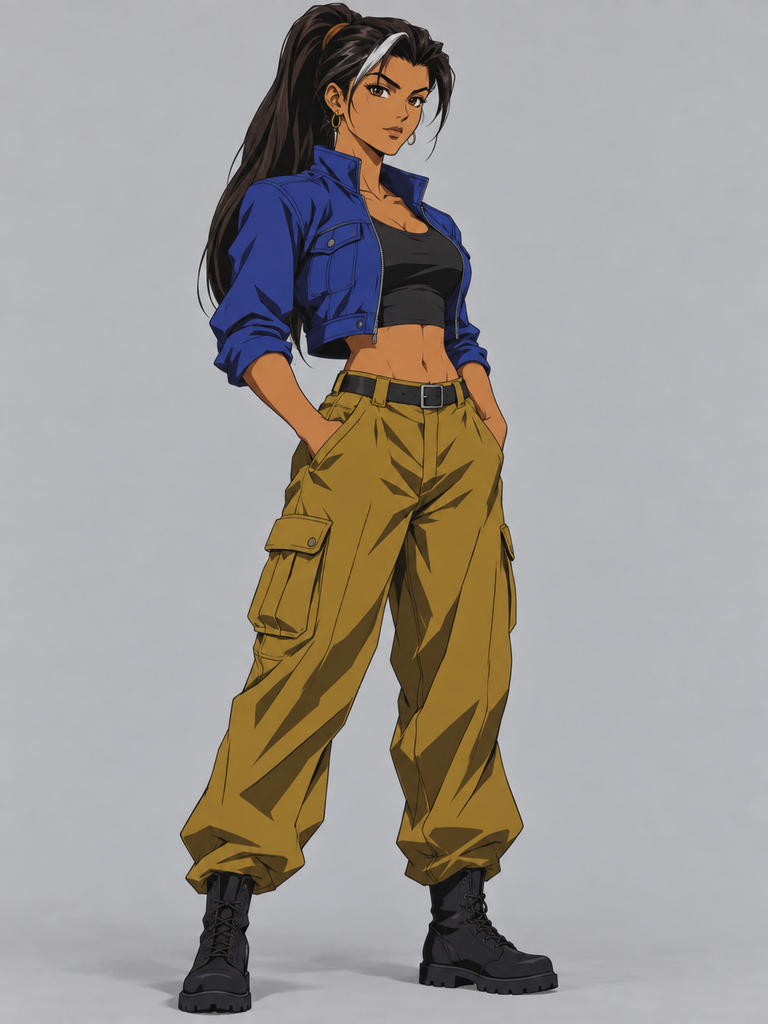
Stylized character reference input from MiniMax-H3 Character Swap Space
Hardware, VRAM, and License Matrix
| Component / Setup | Precision / Format | Typical VRAM | Inference Speed | License | Intended Use |
|---|---|---|---|---|---|
h3_character_swap_v1.5.safetensors + Ref2VA INT8 |
INT8 Base + BF16 LoRA | ~16 to 24 GB | 8 steps with Turbo LoRA | MiniMax-H3 Community License | Recommended character recasting |
h3_character_swap_pro4500_1000.safetensors (V1) |
BF16 LoRA | ~16 to 24 GB | 8 to 30 steps | MiniMax-H3 Community License | Reproducible baseline comparisons |
| Ref2VA Full BF16 + V1.5 LoRA | Full BF16 | ~32 to 48 GB | High fidelity 768p | MiniMax-H3 Community License | Hero studio shots and look dev |
The adapter is not a standalone checkpoint. It requires the MiniMax-H3 Ref2VA base weights, text encoder, and VAEs under the MiniMax-H3 Community License Agreement.
Parameter Reference
| Parameter | Recommended Value | Behavior in Video Recasting |
|---|---|---|
| Adapter checkpoint | h3_character_swap_v1.5.safetensors |
Stronger identity retention on turns and stylized faces |
| LoRA strength | 1.0 |
Full swap transfer without bleeding source identity |
| Turbo recipe steps | 8 (CFG = 1.0, er_sde) |
Fast 768p iteration when paired with the 8 step Turbo adapter |
| Frame rate | 24 fps |
Matches native MiniMax-H3 temporal grid and cinema cuts |
| Prompt tags | <Video 1> and <Picture 1> |
Explicitly binds source motion to reference identity |
Local Python and CLI Setup
Download the V1.5 LoRA weights and the companion H3 Relay 2.0 helper tools from GitHub to prepare masked reference workflows locally.
pip install -U huggingface_hub torch safetensors
hf download akatz-ai/MiniMax-H3-Character-Swap-LoRA h3_character_swap_v1.5.safetensors --local-dir ./loras
git clone https://github.com/akatz-ai/h3-relay && cd h3-relay
Use the structured reference prompt format below whenever invoking the Ref2VA pipeline with <Video 1> as the source performance and <Picture 1> as the target character sheet:
Replace the selected person in <Video 1> with the character in <Picture 1>.
Keep the reference character's face, hair and clothing.
Follow the source performance's pose, gaze, expression and movement.
Preserve the scene and the other people.
Filmmaker Production Playbook
- Start with short, continuous single camera takes. Test identity, eye line, and hand occlusions on a 3 to 5 second 24 fps shot before enabling continuation windows across longer scenes.
- Feed clean character turnarounds or front lit portraits. High contrast rim lighting or cluttered backgrounds in
<Picture 1>can bleed into the target scene. Pair this step with BRIA RMBG 3.0 to isolate your character sheet cleanly first. - Mask multi actor shots with SAM. When two actors cross paths in
<Video 1>, supply a target mask from Meta SAM 3 so the swap stays locked to the intended performer while leaving co stars untouched. - Add lip sync as a dedicated finishing pass. Because V1.5 preserves source audio via passthrough rather than tight dialogue phoneme re synthesis, run close up speaking shots through LongCat-Video-Avatar 1.6 or ByteDance LipSync in AI FILMS Studio.
Related Reading
- Viggle Remake & Animate: Open Source Video Recast AI
- BFS Best Face Swap: Open Source LoRA VFX Replacement
- Meta SAM 3: Open Source Promptable Video Segmentation
- Explore cloud video models on the AI Image to Video Generator page.


Sources
Continue Reading


Video & LipSync
- Video Generator
- Text to Video
- Image to Video
- Start-End Frame to Video
- Draw to Video
- Motion Control
- Video Enhancer
- Video Upscaler
- Video Extend
- Video to Video LipSync
- Audio to Video LipSync
- Image to Video LipSync
- Video FaceSwap
- Seedance 2.5
- WAN 3.0
- Seedance 2
- FLUX 3
- Minimax H3
- Vidu Q3 Pro
- Grok Imagine Video 1.5
- Gemini Omni
- Google Veo 3.1
- Kling 3.0 Pro
- Luma Ray 3.2
- LTX 2.3
- Happy Horse 1.1
- Kling 3.0 Motion
- ByteDance Upscaler
- InfiniteTalk
- InsightFace
Image & Edit
- AI Character
- AI Actor
- Art Generator
- Text to Image
- Image to Image
- LoRA Image to Image
- Draw to Edit
- Image LoRA Training
- Remove Background
- Image Enhancer
- MidJourney 8.0
- Krea 2
- OpenAI GPT Image 2.0
- Nano Banana Pro Ultra
- Nano Banana 2 Lite
- Nano Banana Pro
- Minimax Image
- Clarity Pro
- Z-Image Turbo LoRA
- Krea 2 Turbo LoRA
- Z-Image LoRA Trainer
- Qwen Image LoRA Trainer
- Background Erase Network 2 (BEN2)