

OpenSenseNova (SenseNova-U1.6 showcase render, Apache 2.0)
Share this post:
SenseNova-U1.6: Open Source 8B Multimodal Image AI
Art departments normally juggle one model for text-to-image storyboards, a second model for local wardrobe edits, and a separate vision language model to inspect whether prompts actually landed. SenseNova-U1.6-8B-MoT, released by SenseTime's OpenSenseNova team in November 2026 under an Apache 2.0 license, unifies text-to-image generation, image editing, and interleaved self correction inside one Mixture of Transformers runtime. You can test SenseNova-U1.6 free in the embedded browser demo below with zero login.
Studio availability. Try the public Hugging Face demo below; SenseNova-U1.6-8B-MoT is not part of a paid AI FILMS Studio plan (use FLUX.2 PRO Image to Image in the image workspace for example instead).
Try SenseNova-U1.6 Live
Switch between Generate and Edit modes inside the official SenseNova U1.6 Studio Hugging Face Space below to create concept frames or upload a source plate for direct editing in your browser.
Architecture and Technical Design
SenseNova-U1.6-8B-MoT uses a Mixture of Transformers (MoT) architecture built specifically for the SenseNova-U1 runtime. Total parameter count across the unified BF16 safetensors shards reaches 17.53B parameters, pairing an 8B understanding pathway with an 8B visual synthesis expert that share multimodal attention layers without colliding in capacity.
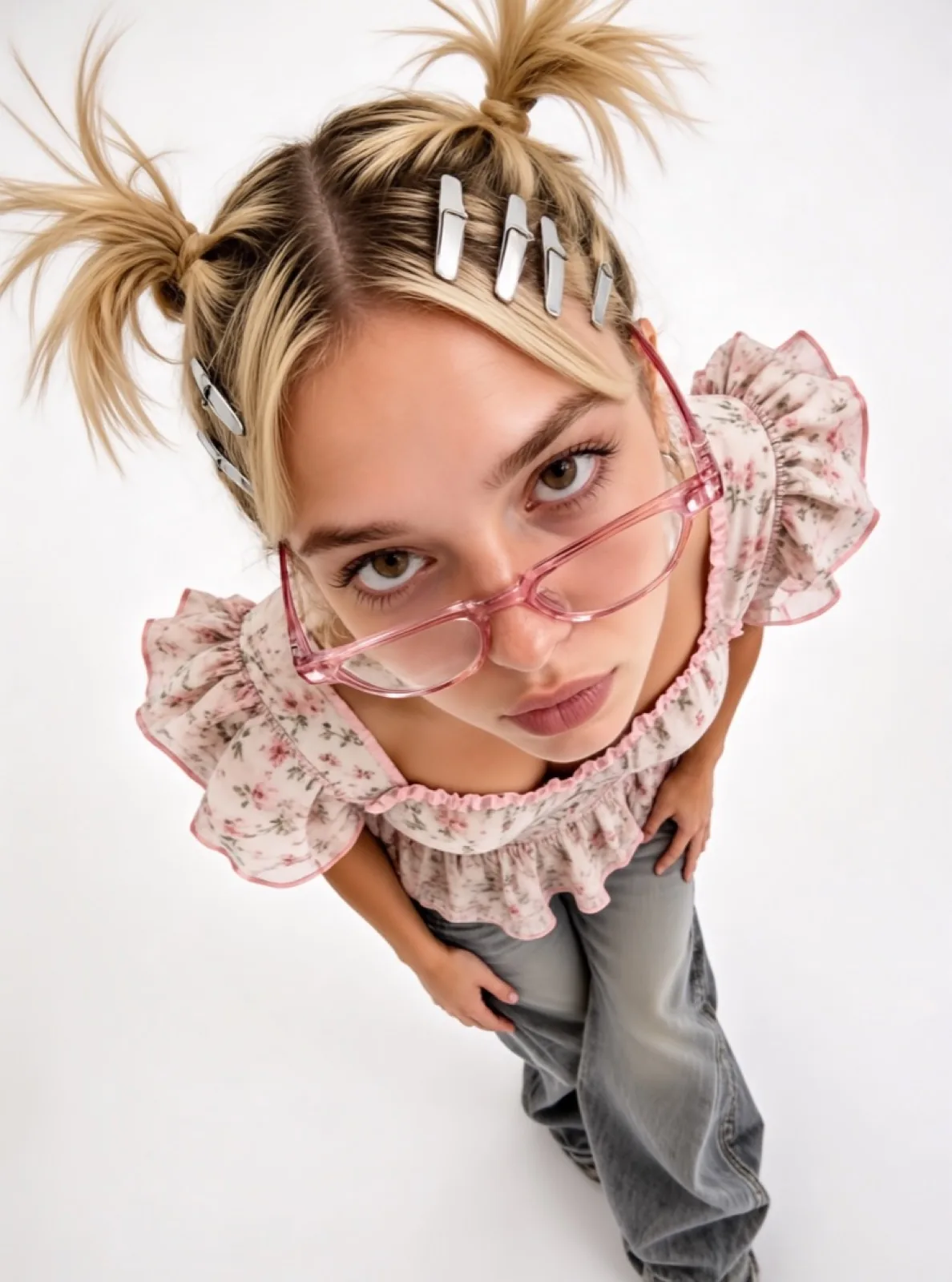
SenseNova-U1.6 text-to-image showcase by OpenSenseNova (Apache 2.0)
The headline addition in the U1.6 release is its native interleaved self correction protocol. Instead of stopping after one blind diffusion pass, the runtime can critique its initial frame against the prompt inside the same checkpoint and issue a targeted revision pass to fix misplaced props, lighting balance, or framing errors.
Because both bilingual English and Chinese prompt comprehension live inside the same MoT weights, art directors can describe exact lighting setups, camera lenses, and wardrobe revisions without translating between mismatched encoders.
OpenSenseNova also ships official companion checkpoints alongside the full BF16 checkpoint. Filmmakers running consumer hardware can pull Native weights, quantized GGUF files, or distilled 4 step and 8 step LoRA adapters from the official Hugging Face collection to cut render latency dramatically during look development.
For local deployment, the SenseNova-U1 runtime exposes explicit VRAM management flags such as --vram_mode balanced and automatic attention backend selection (--attn_backend auto). These options allow 1024 x 1024 concept generation to scale cleanly across workstation GPUs.
The authors note that dense small text, intricate crowded hands, and long multi reference editing chains still benefit from manual verification, so filmmakers should inspect self corrected outputs at full resolution before locking hero plates.
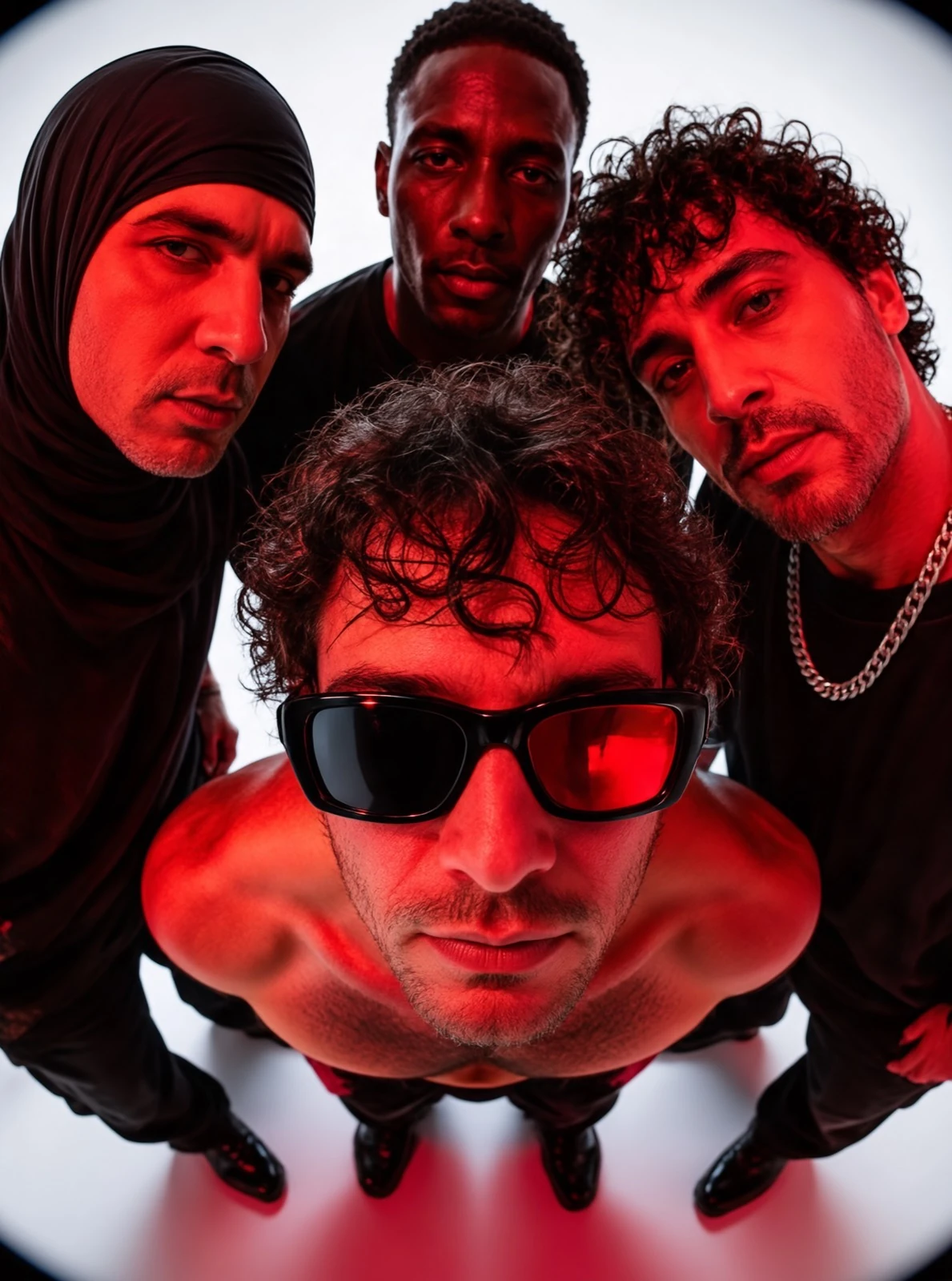
Cinematic lighting and portrait texture sample from SenseNova-U Showcases (Apache 2.0)
Hardware, VRAM, and License Matrix
| Variant / Artifact | Parameters / Format | Precision & Steps | Hardware Target | License | Production Role |
|---|---|---|---|---|---|
sensenova/SenseNova-U1.6-8B-MoT |
17.53B total (8B MoT pair) | BF16 Safetensors, 50 steps default | 24 GB to 48 GB CUDA GPU (--vram_mode balanced) |
Apache 2.0 | Full fidelity generation, editing, and self correction |
sensenova/SenseNova-U1.6-8B-MoT-Native |
Native runtime format | BF16 | Single CUDA workstation | Apache 2.0 | Direct SenseNova-U1 native inference |
sensenova/SenseNova-U1.6-8B-MoT-GGUF |
Quantized GGUF shards | Low bit quantization | 12 GB to 16 GB consumer GPUs | Apache 2.0 | Memory constrained local look development |
sensenova/SenseNova-U1.6-8B-MoT-LoRAs |
4 step & 8 step adapters | Distilled LoRA | Single consumer GPU | Apache 2.0 | Rapid storyboard exploration and interactive drafts |
Every checkpoint, GGUF build, and distilled LoRA in the U1.6 release carries the permissive Apache 2.0 license, enabling unrestricted commercial film, advertising, and game art workflows.
Parameter Reference
| Flag / Setting | Recommended Value | Production Effect |
|---|---|---|
--width / --height |
1024 x 1024 (or widescreen 16:9 class) |
Controls canvas dimensions for storyboard and concept plates |
--num_steps |
50 (base) or 4 to 8 (with official LoRAs) |
Balances micro detail against turnaround speed |
--dtype |
bfloat16 |
Reference numerical precision for BF16 weights |
--vram_mode |
balanced |
Manages GPU memory footprint across MoT experts on single GPUs |
--attn_backend |
auto |
Automatically picks the fastest supported CUDA attention kernel |
--seed |
Fixed integer (such as 42) |
Locks sampling noise for repeatable client review rounds |
Local Python and CLI Setup
The Hugging Face repository holds weights and tokenizer files, while the model classes and U1.6 self correction protocol live in the OpenSenseNova/SenseNova-U1 GitHub repository. Always match the U1.6 runtime revision rather than older U1.5 scripts.
git clone https://github.com/OpenSenseNova/SenseNova-U1.git
cd SenseNova-U1
uv sync --locked
source .venv/bin/activate

MODEL_DIR=./models/SenseNova-U1.6-8B-MoT
hf download sensenova/SenseNova-U1.6-8B-MoT \
  --include 'model-*-of-*.safetensors' \
  --include model.safetensors.index.json \
  --include config.json --include tokenizer_config.json \
  --include vocab.json --include merges.txt \
  --include special_tokens_map.json --include added_tokens.json \
  --include LICENSE \
  --local-dir "$MODEL_DIR"

python examples/t2i/inference.py \
  --model_path "$MODEL_DIR" \
  --prompt "Wide anamorphic film still of a rain soaked neon alley in Tokyo, tungsten street lamps, shallow depth of field, 35mm film grain." \
  --width 1024 --height 1024 --num_steps 50 --seed 42 \
  --device cuda --dtype bfloat16 --attn_backend auto --vram_mode balanced \
  --output u16_base.png
Filmmaker Production Playbook
Draft fast with 8 step LoRAs, finish at 50 steps
During director pitch sessions, attach the official 4 step or 8 step LoRA to test twenty lighting and lens concepts in minutes. Once the director picks a composition, lock the seed and re render with the full 50 step BF16 schedule for clean texture detail.
Use self correction for art direction notes
When a first pass drops a key story prop or misplaces set dressing, trigger the U1.6 interleaved self correction loop rather than starting over with a random seed. Keeping the revision inside one unified checkpoint preserves staging and color temperature.
Export clean keyframes for image-to-video pipelines
Because SenseNova-U1.6 ships under Apache 2.0 and generates crisp 1024 px stills, it slots cleanly ahead of video generators. Create consistent hero start frames locally, then animate camera moves in cloud or local video pipelines.
Known Limitations and Validation Notes
OpenSenseNova documents two important engineering constraints on the U1.6 checkpoint. The Hugging Face repo ships safetensors shards, index files, and tokenizers only, so every local deployment must pull the matching SenseNova-U1 GitHub revision to register model classes properly. Applying older U1.5 interleaved generation scripts without validation can produce broken outputs.
Art departments should also inspect dense micro typography, small distant hands, and long multi reference edit chains closely. Running a second pass at full 50 step BF16 resolution or lowering prompt density resolves most small detail drift.
Frequently Asked Questions
Is SenseNova-U1.6-8B-MoT cleared for commercial film projects?
Yes. The base BF16 checkpoint, Native weights, quantized GGUF builds, and distilled 4 step and 8 step LoRAs are all released under the Apache 2.0 license.
How many parameters does SenseNova-U1.6-8B-MoT actually contain?
Although named after its 8B Mixture of Transformers dual pathways, the unified BF16 safetensors checkpoint totals 17.53 billion parameters combining multimodal understanding and visual synthesis experts.
Can I run SenseNova-U1.6 on a 12 GB or 16 GB GPU?
Yes. Download the official SenseNova-U1.6-8B-MoT-GGUF quantized release alongside the 4 step or 8 step LoRA adapters and enable --vram_mode balanced inside the SenseNova-U1 runtime.
Related Reading
- Compare 1024 px Apache 2.0 concept art generation in Kromoss open source concept art image AI.
- Explore structured JSON parameter editing in BRIA FIBO 2.0 Edit open source JSON image editing.
- Review 4K multi reference open weights in MiniMax H3 Image open weights 4K multi reference AI.
- For cloud text-to-image and image-to-image tools inside AI FILMS Studio, open the AI Image to Image Generator page.

Sources
Continue Reading


Video & LipSync
- Video Generator
- Text to Video
- Image to Video
- Start-End Frame to Video
- Draw to Video
- Motion Control
- Video Enhancer
- Video Upscaler
- Video Extend
- Video to Video LipSync
- Audio to Video LipSync
- Image to Video LipSync
- Video FaceSwap
- Seedance 2.5
- WAN 3.0
- Seedance 2
- FLUX 3
- Minimax H3
- Vidu Q3 Pro
- Grok Imagine Video 1.5
- Gemini Omni
- Google Veo 3.1
- Kling 3.0 Pro
- Luma Ray 3.2
- LTX 2.3
- Happy Horse 1.1
- Kling 3.0 Motion
- ByteDance Upscaler
- InfiniteTalk
- InsightFace
Image & Edit
- AI Character
- AI Actor
- Art Generator
- Text to Image
- Image to Image
- LoRA Image to Image
- Draw to Edit
- Image LoRA Training
- Remove Background
- Image Enhancer
- MidJourney 8.0
- Krea 2
- OpenAI GPT Image 2.0
- Nano Banana Pro Ultra
- Nano Banana 2 Lite
- Nano Banana Pro
- Minimax Image
- Clarity Pro
- Z-Image Turbo LoRA
- Krea 2 Turbo LoRA
- Z-Image LoRA Trainer
- Qwen Image LoRA Trainer
- Background Erase Network 2 (BEN2)