
Share this post:
Spielberg at SXSW 2026: Never Used AI in Any of His Films
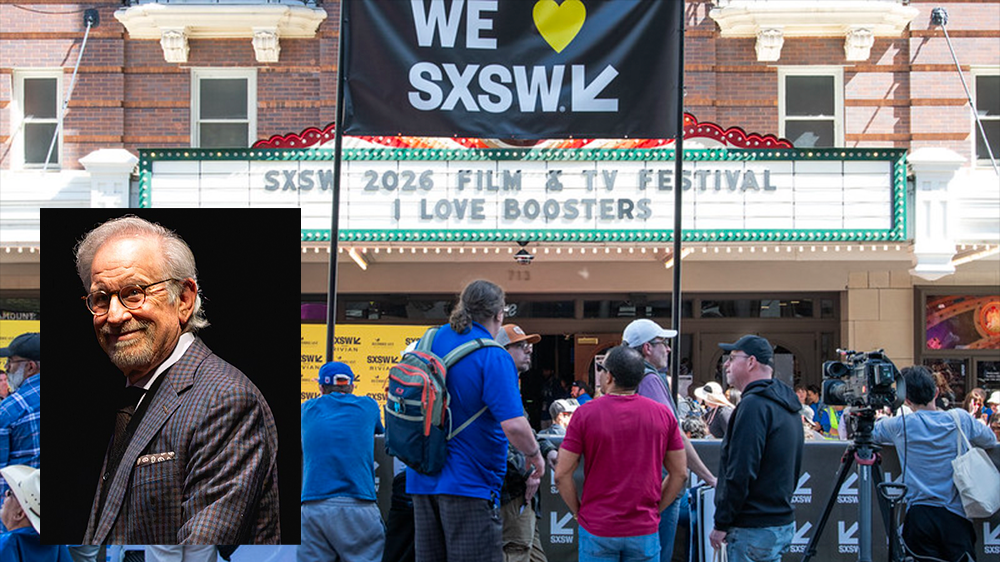
Steven Spielberg told a packed SXSW audience on March 13 that he has never used AI in any of his films. The statement drew loud applause from the crowd in Austin.
What He Said in Austin
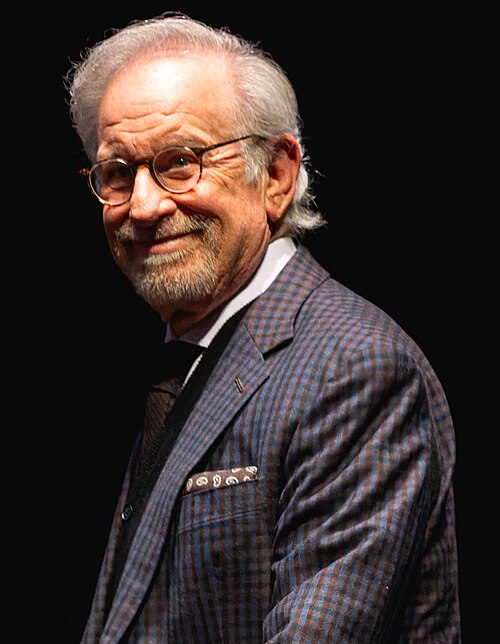
"I've never used AI on any of my films yet," Spielberg said during an on stage conversation at South by Southwest. He added: "I am not for AI if it replaces a creative individual."
The director of Jaws, Schindler's List, Saving Private Ryan, and more than 30 other feature films did not hedge. 57 years in film make the statement specific: this is not a principle without a resume behind it.

That public position sits alongside a quieter connection to the sector. Spielberg serves on the advisory board of Wonder Dynamics, a production tools startup cofounded by actor Tye Sheridan and engineer Nikola Todorovic that uses AI to automate VFX and character work for filmmakers, with the Russo brothers among the other backers. The company targets production infrastructure rather than creative authorship, which explains why his involvement has drawn little contradiction from his SXSW stance: AI may streamline the making of images, but should not author the stories or displace the people who do.
A Career Built on New Tools
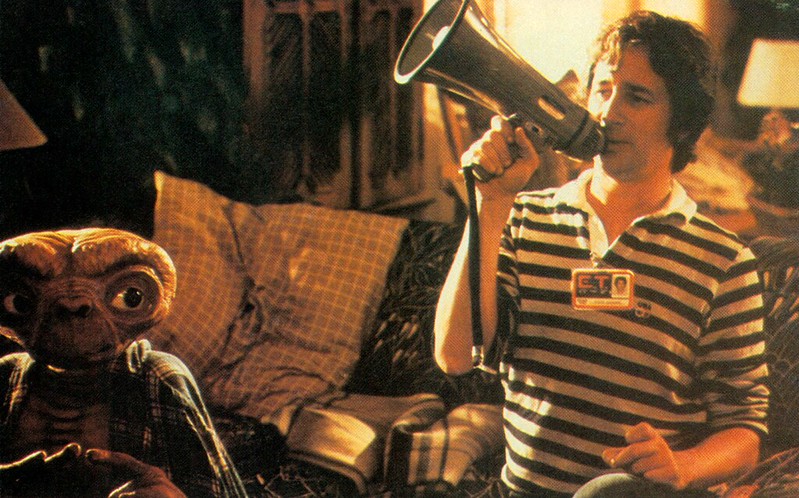
Spielberg has built his career on new tools. The mechanical shark in Jaws forced him to develop off screen suspense. He helped pioneer photo real CG with the dinosaurs in Jurassic Park in 1993. Digital intermediate grading became a mainstream creative option partly through his early adoption of it.
His SXSW remarks were consistent with that history. He said he supports "the technology in many disciplines." His objection is specific: AI that generates the creative work itself, rather than extending what artists can do.
"No Empty Chair With a Laptop"
On writers' rooms specifically, Spielberg gave a concrete image. "There is not an empty chair with a laptop in front of it," he said. For him, story architecture is a human collaborative process, and AI does not hold a seat at that table.
The Straits Times, citing AFP coverage of the event, noted that he described collaboration between writers, actors and directors as "the magic" of filmmaking. His position is that this collaboration cannot be handed to a machine without changing what the thing being made actually is.
Hollywood's AI Tension
His comments arrived at a tense moment for the industry. The 2023 WGA and SAG-AFTRA strikes produced contract language restricting AI use on covered productions: AI cannot be credited as a writer and cannot undercut human minimums. Those clauses were hard fought and remain contested.
Studios are pressing forward regardless. Amazon MGM Studios launched a closed beta for AI production tools in March 2026, targeting character consistency, pre production pipelines and VFX work. Questions about how studios use AI in practice have grown louder, with some reporting suggesting the gap between public statements and actual usage may be significant. The article Is Hollywood Hiding How Much AI It Really Uses? examines that gap in detail.
Spielberg's statement cuts through the ambiguity. He is the most commercially successful director in Hollywood history and he chose to say, publicly and without qualification, that he has not used it. Del Toro took the same position. His Best Visual Effects Oscar win for Frankenstein then set off a separate debate about AI tools operating below the director level in production pipelines.
Where Other Hollywood Voices Stand
Spielberg is not alone in drawing a line, but he is not speaking in chorus either. George Miller, another Oscar winner whose career spans four decades, has embraced AI as a filmmaking tool and chairs the jury of Australia's Omni AI Film Festival, comparing the technology to the Renaissance. Darren Aronofsky partnered with Google DeepMind and TIME Studios to create a generative historical series.
James Woods warned that AI could replace human actors entirely by citing Moore's Law. Matthew McConaughey and Timothée Chalamet predicted AI performers would infiltrate the Oscars at a CNN/Variety town hall earlier this year. Joseph Gordon-Levitt went further and launched a Creators Coalition on AI to build compensation frameworks for artists whose work trains these systems.
The industry has not reached consensus. Spielberg's contribution to that debate is the weight of his own biography: 57 years of filmmaking, none of it with AI.
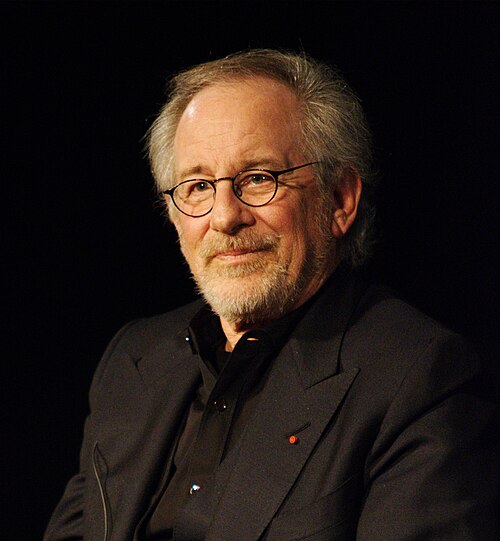
In 2001, Spielberg directed A.I. Artificial Intelligence. Kubrick had developed the project for decades before passing it to him. The film asks whether machines can be subjects of experience, and his SXSW remarks draw the same line: authorship belongs to humans, not machines.
Sources
TechCrunch | National Today | Yahoo Entertainment | YMCinema | Digital Trends | The Straits Times | Variety
Continue Reading
.jpg?w=3840)


Video & LipSync
- Video Generator
- Text to Video
- Image to Video
- Start-End Frame to Video
- Draw to Video
- Motion Control
- Video Enhancer
- Video Upscaler
- Video Extend
- Video to Video LipSync
- Audio to Video LipSync
- Image to Video LipSync
- Video FaceSwap
- Seedance 2.5
- WAN 3.0
- Seedance 2
- FLUX 3
- Minimax H3
- Vidu Q3 Pro
- Grok Imagine Video 1.5
- Gemini Omni
- Google Veo 3.1
- Kling 3.0 Pro
- Luma Ray 3.2
- LTX 2.3
- Happy Horse 1.1
- Kling 3.0 Motion
- ByteDance Upscaler
- InfiniteTalk
- InsightFace
Image & Edit
- AI Character
- AI Actor
- Art Generator
- Text to Image
- Image to Image
- LoRA Image to Image
- Draw to Edit
- Image LoRA Training
- Remove Background
- Image Enhancer
- MidJourney 8.0
- Krea 2
- OpenAI GPT Image 2.0
- Nano Banana Pro Ultra
- Nano Banana 2 Lite
- Nano Banana Pro
- Minimax Image
- Clarity Pro
- Z-Image Turbo LoRA
- Krea 2 Turbo LoRA
- Z-Image LoRA Trainer
- Qwen Image LoRA Trainer
- Background Erase Network 2 (BEN2)